AQA · GCSE · Chemistry
Course version: 8462 · Version from Sept 2018
Algae and plants produced the oxygen that is now in the atmosphere by…
Full specification wording
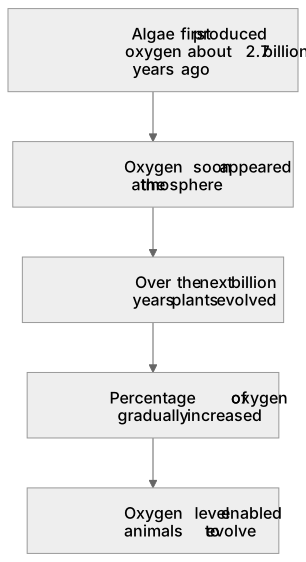
How oxygen increased: Algae and plants produced the oxygen that is now in the atmosphere by photosynthesis, which can be represented by the equation: Algae first produced oxygen about 2.7 billion years ago and soon after this oxygen appeared in the atmosphere. Over the next billion years plants evolved and the percentage of oxygen gradually increased to a level that enabled animals to evolve.
This statement explains how oxygen levels in the atmosphere increased due to photosynthesis by algae and plants.
Study notes
From the teaching notes for this specification point.
The idea
This statement explains how oxygen levels in the atmosphere increased due to photosynthesis by algae and plants. You need to know that algae first produced oxygen about 2.7 billion years ago, and that oxygen soon appeared in the atmosphere. Over the next billion years, plants evolved and the percentage of oxygen gradually increased until it was high enough for animals to evolve. The process of photosynthesis can be represented by the equation: carbon dioxide + water → glucose + oxygen, or 6CO₂ + 6H₂O → C₆H₁₂O₆ + 6O₂. You should be able to describe this sequence and explain the link between photosynthesis and rising oxygen levels. This is assessed by your ability to recall the timeline and explain the cause of oxygen increase.
What earns the marks
- State that algae first produced oxygen about 2.7 billion years ago.
- Describe how oxygen appeared in the atmosphere soon after algae began photosynthesis.
- Explain that over the next billion years plants evolved and gradually increased the percentage of oxygen.
- Recall the word equation for photosynthesis: carbon dioxide + water → glucose + oxygen.
- Recall the balanced symbol equation for photosynthesis: 6CO₂ + 6H₂O → C₆H₁₂O₆ + 6O₂.
- Explain that the increase in oxygen enabled animals to evolve.
Common mistakes and how to put them right
Confusing the order of events, such as stating that plants evolved before algae.
Put it right: Algae first produced oxygen about 2.7 billion years ago, and plants evolved later.
Writing the photosynthesis equation incorrectly, such as omitting water or glucose.
Put it right: Ensure the equation includes carbon dioxide, water, glucose, and oxygen, and is balanced.
Thinking that oxygen levels increased suddenly rather than gradually.
Put it right: Emphasise that the percentage of oxygen gradually increased over about a billion years.
Exam tips
- Learn the timeline: algae (2.7 billion years ago), then oxygen appearance, then plants evolving, then gradual increase in oxygen.
- Practice writing both the word and balanced symbol equations for photosynthesis, ensuring correct formulas and state symbols if required.
- When explaining how oxygen increased, always link it to photosynthesis by algae and plants.
Try the lesson
The start of the How oxygen increased: Algae and plants produced the oxygen that is now in the atmosphere by photosynthesis, which can be represented by the equation: Algae first produced oxygen about 2.7 billion years ago and soon after this oxygen appeared in the atmosphere. Over the next billion years plants evolved and the percentage of oxygen gradually increased to a level that enabled animals to evolve. lesson, made from teaching notes for this specification point.
Have a go first
Which process in algae and plants added oxygen to the early atmosphere?
Listen
This statement explains how oxygen levels in the atmosphere increased due to photosynthesis by algae and plants. You need to know that algae first produced oxygen about 2.7 billion years ago, and that oxygen soon appeared in the atmosphere. Over the next billion years, plants evolved and the percentage of oxygen gradually increased until it was high enough for animals to evolve. The process of photosynthesis can be represented by the equation: carbon dioxide + water → glucose + oxygen, or 6CO₂ + 6H₂O → C₆H₁₂O₆ + 6O₂. You should be able to describe this sequence and explain the link between photosynthesis and rising oxygen levels. This is assessed by your ability to recall the timeline and explain the cause of oxygen increase. A strong answer earns marks for these points. State that algae first produced oxygen about 2.7 billion years ago. Describe how oxygen appeared in the atmosphere soon after algae began photosynthesis. Explain that over the next billion years plants evolved and gradually increased the percentage of oxygen. Recall the word equation for photosynthesis: carbon dioxide + water → glucose + oxygen. A common slip: Confusing the order of events, such as stating that plants evolved before algae. Instead, algae first produced oxygen about 2.7 billion years ago, and plants evolved later. Exam tip: Learn the timeline: algae (2.7 billion years ago), then oxygen appearance, then plants evolving, then gradual increase in oxygen.
See it
Put it in order
Put these steps in the order they happen.
- 1. Oxygen soon appeared in the atmosphere
- 2. Over the next billion years plants evolved
- 3. Algae first produced oxygen about 2.7 billion years ago
- 4. Oxygen level enabled animals to evolve
- 5. Percentage of oxygen gradually increased
Label the diagram
Some boxes have lost their names. Pick the right name for each number.
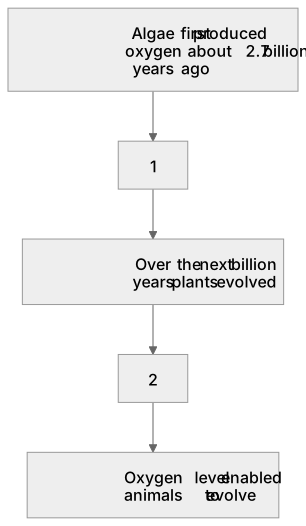
1Box 1
2Box 2
There is more to this lesson
The full lesson goes on to check your understanding and help you earn the marks. Create a free account to carry on, with your progress saved.
A week of Premium from your first lesson · Then the free plan continues · No card, no charge
Test your understanding of How oxygen increased: Algae and plants produced the oxygen that is now in the atmosphere by photosynthesis, which can be represented by the equation: Algae first produced oxygen about 2.7 billion years ago and soon after this oxygen appeared in the atmosphere. Over the next billion years plants evolved and the percentage of oxygen gradually increased to a level that enabled animals to evolve.
Active recall beats re-reading. Take an instant quiz now to test what you’ve learned and lock it into long-term memory.
A week of Premium from your first lesson · Then the free plan continues · No card, no charge