OCR · A-Level · Chemistry
Course version: H432 · Version from Sept 2017
(o) the techniques and procedures used when measuring pH with a pH meter.
Full specification wording
Acids, bases and buffers: (o) the techniques and procedures used when measuring pH with a pH meter.
A pH meter measures [H⁺] and displays pH.
- Point 26 of 26
- 4 key terms
Study notes
From the teaching notes for this specification point.
The idea
A pH meter measures [H⁺] and displays pH. Correct procedure: calibrate the meter with at least two buffer solutions of known pH that bracket the expected value, rinsing the electrode with distilled water between buffers and blotting gently. Rinse the electrode with distilled water and blot it before each measurement. Place the electrode in the sample, stir gently and wait for a stable reading before recording the pH to the precision the meter allows. Rinse the electrode with distilled water after use and store it in the recommended solution. Keep the bulb wet and handle it carefully. Record the temperature if the meter requires it, since pH depends on temperature.
What earns the marks
- Calibrates the pH meter using buffer solutions of known pH before taking measurements.
- Rinses the electrode with distilled water and blots it between buffers and before each sample.
- Places the electrode in the sample, stirs gently and waits for a stable reading before recording.
- Records the pH to the precision the meter allows and notes the temperature where relevant.
- Rinses and stores the electrode correctly after use to keep the bulb wet and undamaged.
Common mistakes and how to put them right
Skips calibration and measures directly.
Put it right: Calibrate with at least two buffers bracketing the expected pH.
Fails to rinse the electrode between solutions.
Put it right: Rinse with distilled water and blot to avoid contamination.
Reads the display before it stabilises.
Put it right: Wait for a steady value before recording.
Lets the electrode bulb dry out.
Put it right: Store it in the recommended solution to protect the bulb.
Exam tips
- Describe calibration with named buffer solutions and the rinsing step explicitly.
- State that the reading is taken once stable, and give the pH to the meter's precision.
- Mention rinsing and correct storage of the electrode as part of the procedure.
Try the lesson
The start of the Acids, bases and buffers: (o) the techniques and procedures used when measuring pH with a pH meter. lesson, made from teaching notes for this specification point.
Listen
A pH meter measures [H⁺] and displays pH. Correct procedure: calibrate the meter with at least two buffer solutions of known pH that bracket the expected value, rinsing the electrode with distilled water between buffers and blotting gently. Rinse the electrode with distilled water and blot it before each measurement. Place the electrode in the sample, stir gently and wait for a stable reading before recording the pH to the precision the meter allows. Rinse the electrode with distilled water after use and store it in the recommended solution. Keep the bulb wet and handle it carefully. Record the temperature if the meter requires it, since pH depends on temperature. A strong answer earns marks for these points. Calibrates the pH meter using buffer solutions of known pH before taking measurements. Rinses the electrode with distilled water and blots it between buffers and before each sample. Places the electrode in the sample, stirs gently and waits for a stable reading before recording. Records the pH to the precision the meter allows and notes the temperature where relevant. Exam tip: Describe calibration with named buffer solutions and the rinsing step explicitly.
See it
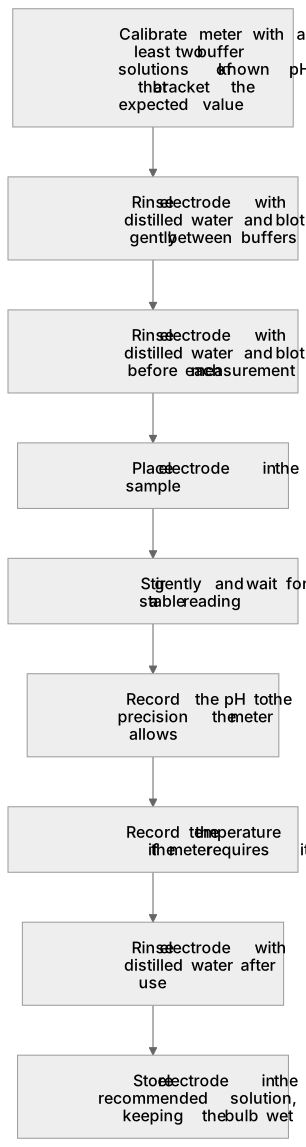
Key words
Say what each word means before you turn the card.
Calibration with buffer solutions
Try answering aloud or in your head before turning the card.
Electrode handling and rinsing
Try answering aloud or in your head before turning the card.
Obtaining a stable, precise reading
Try answering aloud or in your head before turning the card.
Care and storage of the pH electrode
Try answering aloud or in your head before turning the card.
See every definition
- Calibration with buffer solutions
- Calibrating the meter with at least two buffer solutions of known pH that bracket the expected value, rinsing the electrode with distilled water between buffers and blotting gently.
- Electrode handling and rinsing
- Rinsing the electrode with distilled water and blotting it between buffers and before each measurement.
- Obtaining a stable, precise reading
- Placing the electrode in the sample, stirring gently and waiting for a stable reading before recording the pH to the precision the meter allows.
- Care and storage of the pH electrode
- Rinsing the electrode with distilled water after use and storing it in the recommended solution, keeping the bulb wet and handling it carefully.
Label the diagram
Some boxes have lost their names. Pick the right name for each number.
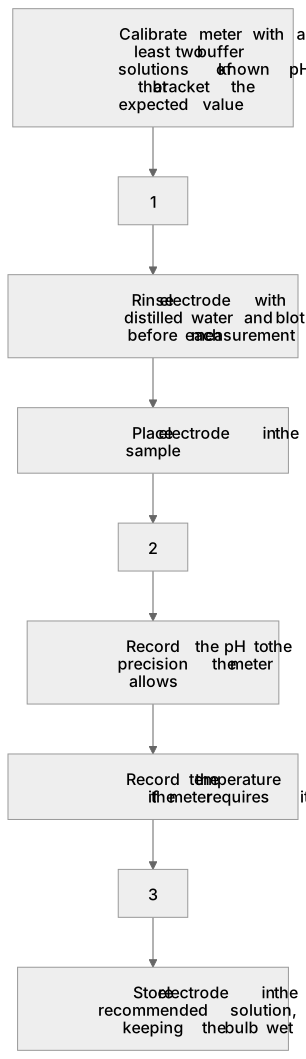
1Box 1
2Box 2
3Box 3
There is more to this lesson
The full lesson goes on to check your understanding and help you earn the marks. Create a free account to carry on, with your progress saved.
A week of Premium from your first lesson · Then the free plan continues · No card, no charge
Test your understanding of Acids, bases and buffers: (o) the techniques and procedures used when measuring pH with a pH meter.
Active recall beats re-reading. Take an instant quiz now to test what you’ve learned and lock it into long-term memory.
A week of Premium from your first lesson · Then the free plan continues · No card, no charge