OCR · A-Level · Chemistry
Course version: H432 · Version from Sept 2017
Alkenes: (i) combustion for energy production
This statement sits within the section on waste polymers, where combustion is one route for processing waste plastics and recovering energy.
- Point 24 of 27
- 3 key terms
Study notes
From the teaching notes for this specification point.
The idea
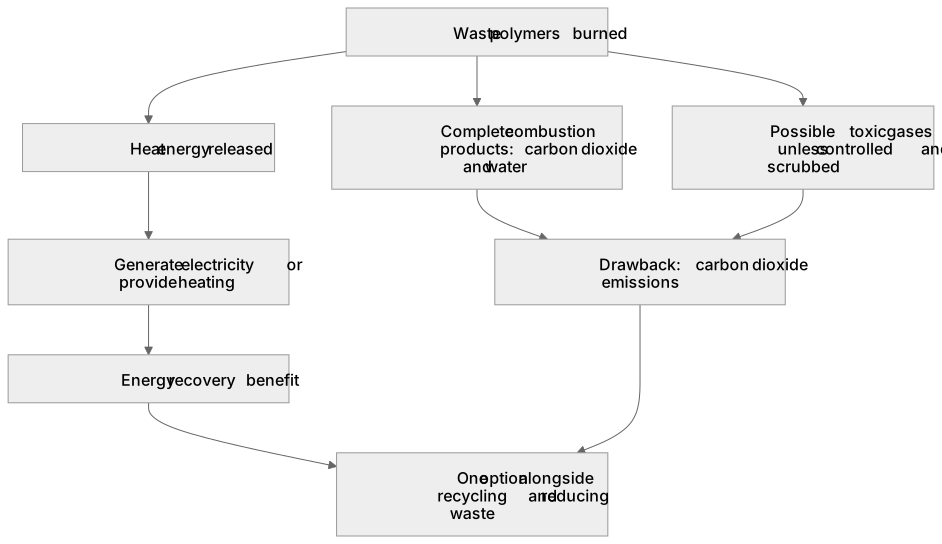
This statement sits within the section on waste polymers, where combustion is one route for processing waste plastics and recovering energy. Burning waste polymers releases heat that can generate electricity or heat buildings, so the material is used as a fuel rather than sent to landfill. The carbon and hydrogen in the polymer oxidise to carbon dioxide and water, releasing energy in an exothermic reaction. Evaluate the benefits, such as reducing landfill volume and recovering useful energy, against the drawbacks, including emission of carbon dioxide and potentially toxic gases unless the combustion is controlled and gases are scrubbed. Link the idea to sustainability: energy recovery is one option alongside recycling and feedstock reuse, and it does not remove the need to reduce plastic waste at source.
What earns the marks
- States that waste polymers can be burned to release heat energy.
- Explains that the released heat can be used to generate electricity or provide heating.
- Identifies carbon dioxide and water as the products of complete combustion of a hydrocarbon polymer.
- Evaluates energy recovery against drawbacks such as carbon dioxide emissions and the need to control toxic gases.
- Places combustion within a wider sustainability strategy alongside recycling and reducing waste.
Common mistakes and how to put them right
Describes combustion of alkene monomers rather than waste polymers.
Put it right: Focus instead on burning waste plastics for energy recovery.
Claims combustion removes all environmental problems.
Put it right: Acknowledge instead the carbon dioxide and possible toxic emissions.
Ignores the energy-recovery benefit.
Put it right: State that the heat released can generate electricity or heating.
Exam tips
- Anchor answers in the waste-polymer context rather than general alkene chemistry.
- Give one benefit and one drawback of combustion to show balanced evaluation.
- Use the term energy recovery when describing the purpose of burning waste polymers.
Try the lesson
The start of the Alkenes: (i) combustion for energy production lesson, made from teaching notes for this specification point.
Listen
This statement sits within the section on waste polymers, where combustion is one route for processing waste plastics and recovering energy. Burning waste polymers releases heat that can generate electricity or heat buildings, so the material is used as a fuel rather than sent to landfill. The carbon and hydrogen in the polymer oxidise to carbon dioxide and water, releasing energy in an exothermic reaction. Evaluate the benefits, such as reducing landfill volume and recovering useful energy, against the drawbacks, including emission of carbon dioxide and potentially toxic gases unless the combustion is controlled and gases are scrubbed. Link the idea to sustainability: energy recovery is one option alongside recycling and feedstock reuse, and it does not remove the need to reduce plastic waste at source. A strong answer earns marks for these points. States that waste polymers can be burned to release heat energy. Explains that the released heat can be used to generate electricity or provide heating. Identifies carbon dioxide and water as the products of complete combustion of a hydrocarbon polymer. Evaluates energy recovery against drawbacks such as carbon dioxide emissions and the need to control toxic gases. Exam tip: Anchor answers in the waste-polymer context rather than general alkene chemistry.
See it
Key words
Say what each word means before you turn the card.
Energy recovery
Try answering aloud or in your head before turning the card.
Combustion products
Try answering aloud or in your head before turning the card.
Sustainability trade-offs
Try answering aloud or in your head before turning the card.
See every definition
- Energy recovery
- Burning waste polymers releases heat that can generate electricity or heat buildings, so the material is used as a fuel rather than sent to landfill.
- Combustion products
- The carbon and hydrogen in the polymer oxidise to carbon dioxide and water, releasing energy in an exothermic reaction.
- Sustainability trade-offs
- Energy recovery is one option alongside recycling and feedstock reuse, and it does not remove the need to reduce plastic waste at source.
Label the diagram
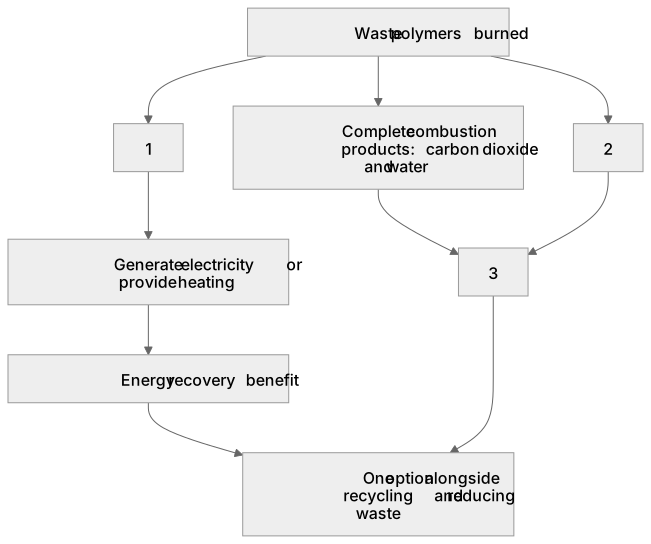
Some boxes have lost their names. Pick the right name for each number.
1Box 1
2Box 2
3Box 3
There is more to this lesson
The full lesson goes on to check your understanding and help you earn the marks. Create a free account to carry on, with your progress saved.
A week of Premium from your first lesson · Then the free plan continues · No card, no charge
Test your understanding of Alkenes: (i) combustion for energy production
Active recall beats re-reading. Take an instant quiz now to test what you’ve learned and lock it into long-term memory.
A week of Premium from your first lesson · Then the free plan continues · No card, no charge