OCR · A-Level · Chemistry
Course version: H432 · Version from Sept 2017
(d) the electrophilic substitution of aromatic compounds with:
Full specification wording
Aromatic compounds: (d) the electrophilic substitution of aromatic compounds with:
This criterion requires you to know the electrophilic substitution reactions of aromatic compounds, including the reagents and conditions that generate each electrophile and the organic product…
- Point 3 of 16
- 4 key terms
Study notes
From the teaching notes for this specification point.
The idea
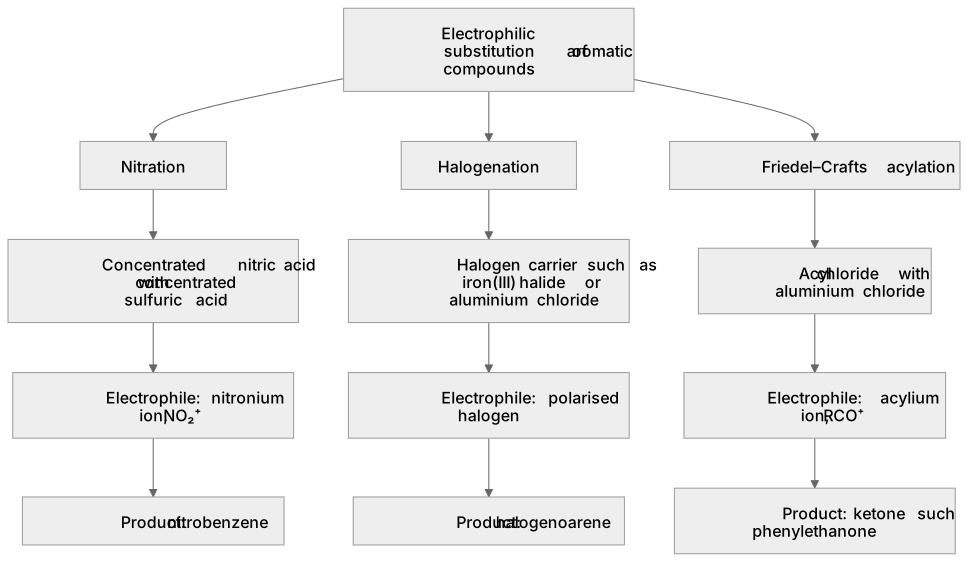
This criterion requires you to know the electrophilic substitution reactions of aromatic compounds, including the reagents and conditions that generate each electrophile and the organic product formed. For nitration, concentrated nitric acid with concentrated sulfuric acid generates the nitronium ion, NO₂⁺, which substitutes a hydrogen to give nitrobenzene. For halogenation, a halogen carrier such as a iron(III) halide or aluminium chloride polarises the halogen and produces the electrophile, giving a halogenoarene. For Friedel–Crafts acylation, an acyl chloride with aluminium chloride generates an acylium ion, RCO⁺, giving a ketone such as phenylethanone. In each case the aromatic ring is regenerated, so the reaction is substitution rather than addition.
What earns the marks
- Identifies the electrophile generated in each named reaction, such as the nitronium ion for nitration.
- States the reagents and conditions needed to generate that electrophile, for example concentrated nitric and sulfuric acids.
- Names the organic product formed, such as nitrobenzene, a halogenoarene or a ketone.
- Explains that the aromatic ring is restored after substitution rather than addition occurring.
Common mistakes and how to put them right
Names the electrophile as a neutral molecule rather than the positively charged ion.
Put it right by writing the nitronium ion with its positive charge.
Describes addition across the ring instead of substitution.
Put it right by stating that a hydrogen is replaced and aromaticity is restored.
Omits the halogen carrier or catalyst needed to generate the electrophile.
Put it right by naming the reagent that produces the attacking ion.
Exam tips
- Learn one representative reaction for each electrophile type and check the reagent that generates it.
- Write ionic charges with superscript signs and keep the aromatic ring shown in the product.
- Read the question carefully to see whether it asks for the electrophile, the reagent or the product, and answer that specific point.
Try the lesson
The start of the Aromatic compounds: (d) the electrophilic substitution of aromatic compounds with: lesson, made from teaching notes for this specification point.
Listen
This criterion requires you to know the electrophilic substitution reactions of aromatic compounds, including the reagents and conditions that generate each electrophile and the organic product formed. For nitration, concentrated nitric acid with concentrated sulfuric acid generates the nitronium ion, NO₂⁺, which substitutes a hydrogen to give nitrobenzene. For halogenation, a halogen carrier such as a iron(III) halide or aluminium chloride polarises the halogen and produces the electrophile, giving a halogenoarene. For Friedel–Crafts acylation, an acyl chloride with aluminium chloride generates an acylium ion, RCO⁺, giving a ketone such as phenylethanone. In each case the aromatic ring is regenerated, so the reaction is substitution rather than addition. A strong answer earns marks for these points. Identifies the electrophile generated in each named reaction, such as the nitronium ion for nitration. States the reagents and conditions needed to generate that electrophile, for example concentrated nitric and sulfuric acids. Names the organic product formed, such as nitrobenzene, a halogenoarene or a ketone. Explains that the aromatic ring is restored after substitution rather than addition occurring. A common slip: Names the electrophile as a neutral molecule rather than the positively charged ion. Instead, writing the nitronium ion with its positive charge. Exam tip: Learn one representative reaction for each electrophile type and check the reagent that generates it.
See it
Key words
Say what each word means before you turn the card.
Nitration and the nitronium ion
Try answering aloud or in your head before turning the card.
Halogenation with a halogen carrier
Try answering aloud or in your head before turning the card.
Friedel–Crafts acylation and the acylium ion
Try answering aloud or in your head before turning the card.
Substitution restoring aromaticity
Try answering aloud or in your head before turning the card.
See every definition
- Nitration and the nitronium ion
- Concentrated nitric acid with concentrated sulfuric acid generates the nitronium ion, NO₂⁺, which substitutes a hydrogen to give nitrobenzene.
- Halogenation with a halogen carrier
- A halogen carrier such as a iron(III) halide or aluminium chloride polarises the halogen and produces the electrophile, giving a halogenoarene.
- Friedel–Crafts acylation and the acylium ion
- An acyl chloride with aluminium chloride generates an acylium ion, RCO⁺, giving a ketone such as phenylethanone.
- Substitution restoring aromaticity
- In each case the aromatic ring is regenerated, so the reaction is substitution rather than addition.
Label the diagram
Some boxes have lost their names. Pick the right name for each number.
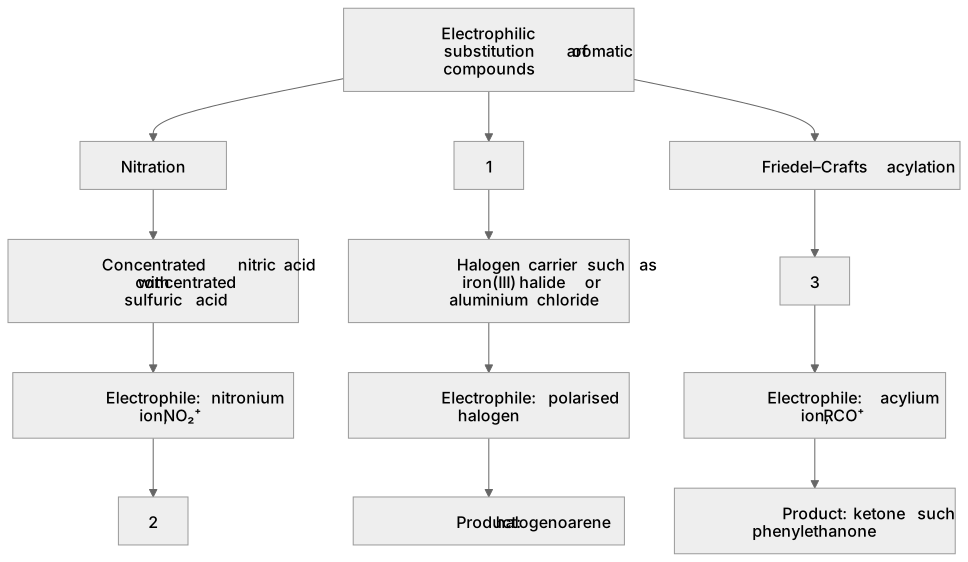
1Box 1
2Box 2
3Box 3
There is more to this lesson
The full lesson goes on to check your understanding and help you earn the marks. Create a free account to carry on, with your progress saved.
A week of Premium from your first lesson · Then the free plan continues · No card, no charge
Test your understanding of Aromatic compounds: (d) the electrophilic substitution of aromatic compounds with:
Active recall beats re-reading. Take an instant quiz now to test what you’ve learned and lock it into long-term memory.
A week of Premium from your first lesson · Then the free plan continues · No card, no charge