OCR · A-Level · Chemistry
Course version: H432 · Version from Sept 2017
(e) explanation of the term structural isomers (compounds with the same…
Full specification wording
Basic concepts of organic chemistry: (e) explanation of the term structural isomers (compounds with the same molecular formula but different structural formulae) and determination of possible structural formulae of an organic molecule, given its molecular formula
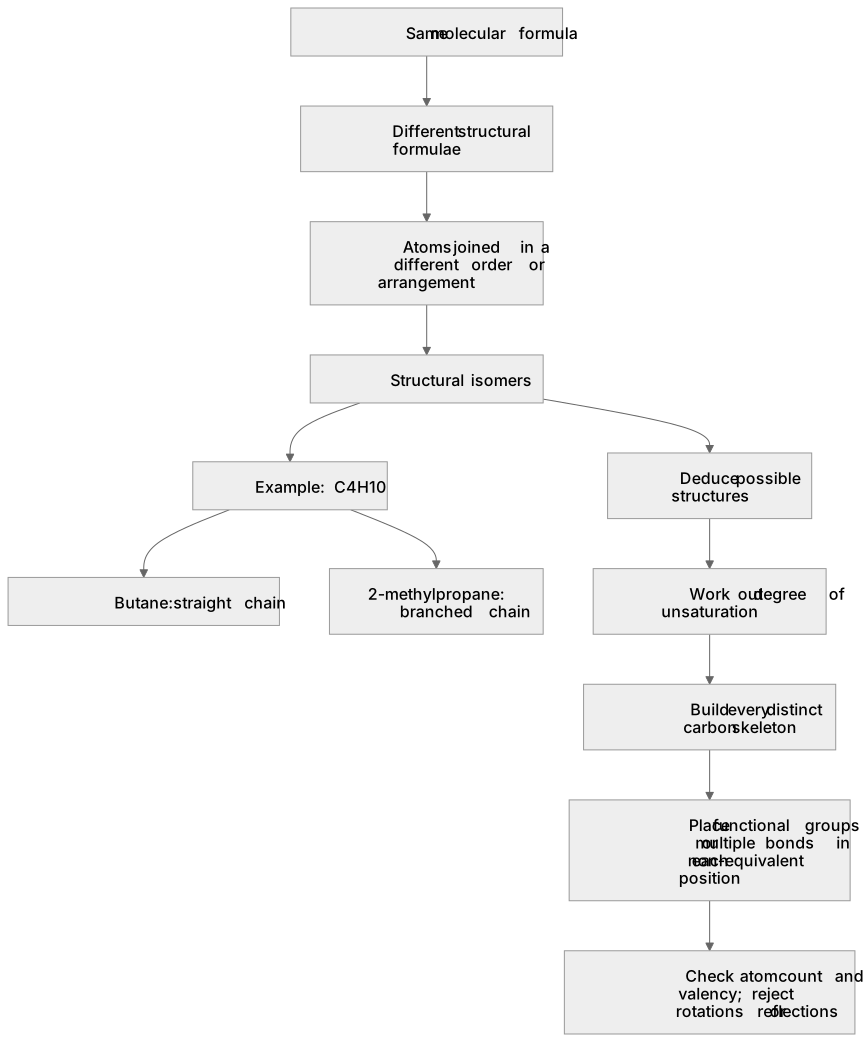
Structural isomers are compounds that share the same molecular formula but have different structural formulae, meaning the atoms are joined in a different order or arrangement.
- Point 16 of 21
- 2 key terms
Study notes
From the teaching notes for this specification point.
The idea
Structural isomers are compounds that share the same molecular formula but have different structural formulae, meaning the atoms are joined in a different order or arrangement. For example, C₄H₁₀ has two structural isomers: butane, a straight chain, and 2-methylpropane, a branched chain. To determine possible structural formulae from a molecular formula, first work out the degree of unsaturation from the carbon and hydrogen count, then build every distinct carbon skeleton, and finally place functional groups or multiple bonds in each non-equivalent position. Check each candidate by counting atoms and confirming the valency of carbon (four bonds), hydrogen (one), oxygen (two) and nitrogen (three). Two drawings that can be rotated or reflected into each other are the same isomer, not two.
What earns the marks
- States that structural isomers share the same molecular formula but differ in their structural formulae.
- Identifies a named pair such as butane and 2-methylpropane as structural isomers of C₄H₁₀.
- Builds distinct carbon skeletons before adding functional groups when deducing possible structures.
- Counts atoms in each candidate to confirm it matches the given molecular formula.
- Rejects duplicate drawings that are rotations or reflections of the same structure.
- Applies the correct valency to each atom when checking a proposed structural formula.
Common mistakes and how to put them right
Confuses structural isomers with stereoisomers.
Put it right: Keep the definition to same molecular formula and different structural formula.
Treats a rotated or reflected drawing as a new isomer.
Put it right: Compare connectivity rather than page orientation.
Ignores the hydrogen count when proposing a skeleton.
Put it right: Recount all atoms against the molecular formula.
Draws a carbon atom with more or fewer than four bonds.
Put it right: Check valency at every carbon.
Exam tips
- Write the molecular formula at the top of your working and tick off atoms as you place them.
- Draw skeletons systematically, starting from the longest chain and then shortening it to introduce branches.
- Before selecting an answer, redraw each option in a standard orientation to spot duplicates.
Try the lesson
The start of the Basic concepts of organic chemistry: (e) explanation of the term structural isomers (compounds with the same molecular formula but different structural formulae) and determination of possible structural formulae of an organic molecule, given its molecular formula lesson, made from teaching notes for this specification point.
Listen
Structural isomers are compounds that share the same molecular formula but have different structural formulae, meaning the atoms are joined in a different order or arrangement. For example, C₄H₁₀ has two structural isomers: butane, a straight chain, and 2-methylpropane, a branched chain. To determine possible structural formulae from a molecular formula, first work out the degree of unsaturation from the carbon and hydrogen count, then build every distinct carbon skeleton, and finally place functional groups or multiple bonds in each non-equivalent position. Check each candidate by counting atoms and confirming the valency of carbon (four bonds), hydrogen (one), oxygen (two) and nitrogen (three). Two drawings that can be rotated or reflected into each other are the same isomer, not two. A strong answer earns marks for these points. States that structural isomers share the same molecular formula but differ in their structural formulae. Identifies a named pair such as butane and 2-methylpropane as structural isomers of C₄H₁₀. Builds distinct carbon skeletons before adding functional groups when deducing possible structures. Counts atoms in each candidate to confirm it matches the given molecular formula. Exam tip: Write the molecular formula at the top of your working and tick off atoms as you place them.
See it
Key words
Say what each word means before you turn the card.
Structural isomers
Try answering aloud or in your head before turning the card.
Valency and atom counting
Try answering aloud or in your head before turning the card.
See every definition
- Structural isomers
- Compounds with the same molecular formula but different structural formulae, meaning the atoms are joined in a different order or arrangement.
- Valency and atom counting
- Each candidate is checked by counting atoms and confirming the valency of carbon, hydrogen, oxygen and nitrogen.
Label the diagram
Some boxes have lost their names. Pick the right name for each number.
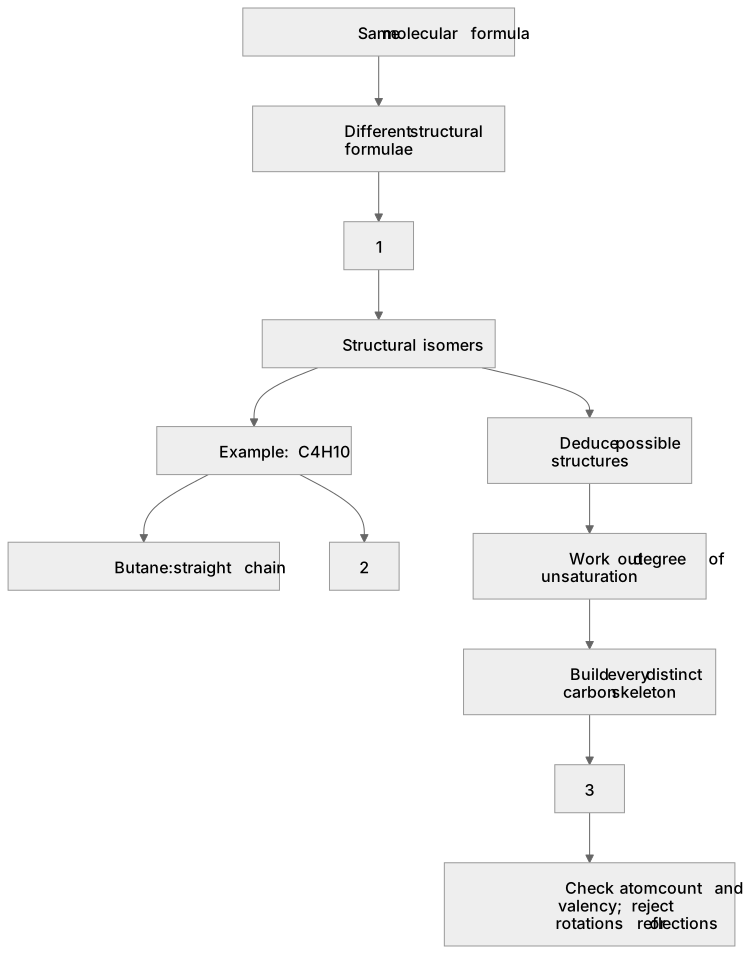
1Box 1
2Box 2
3Box 3
There is more to this lesson
The full lesson goes on to check your understanding and help you earn the marks. Create a free account to carry on, with your progress saved.
A week of Premium from your first lesson · Then the free plan continues · No card, no charge
Test your understanding of Basic concepts of organic chemistry: (e) explanation of the term structural isomers (compounds with the same molecular formula but different structural formulae) and determination of possible structural formulae of an organic molecule, given its molecular formula
Active recall beats re-reading. Take an instant quiz now to test what you’ve learned and lock it into long-term memory.
A week of Premium from your first lesson · Then the free plan continues · No card, no charge