OCR · A-Level · Chemistry
Course version: H432 · Version from Sept 2017
(a) how to use a wide range of practical apparatus and techniques correctly
Full specification wording
Implementing: (a) how to use a wide range of practical apparatus and techniques correctly
Correct use of practical apparatus means selecting the right piece of equipment for the measurement and operating it so the reading is valid.
- Point 1 of 3
- 3 key terms
Study notes
From the teaching notes for this specification point.
The idea
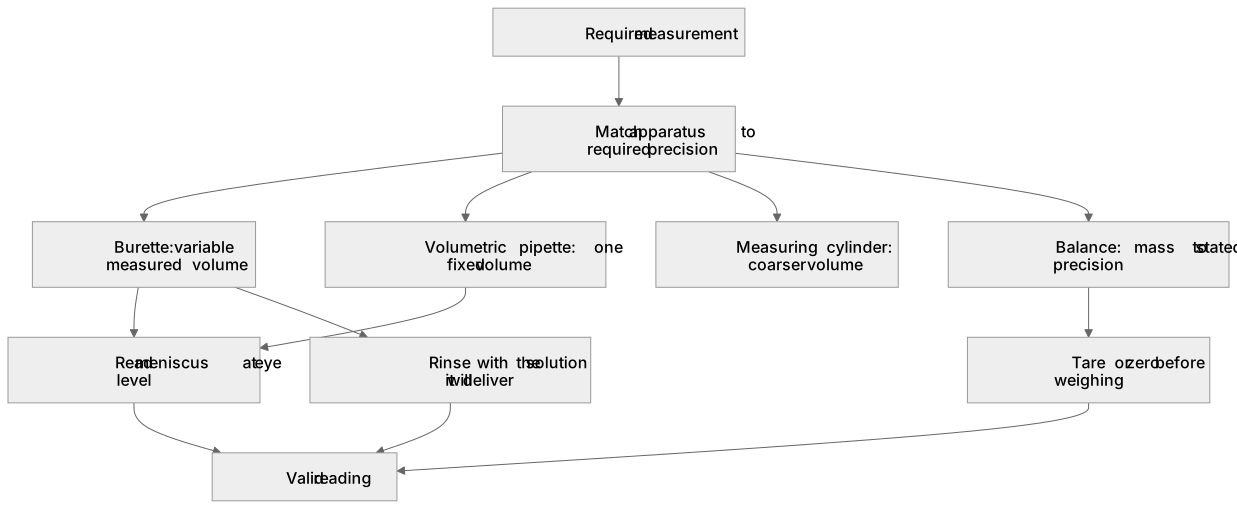
Correct use of practical apparatus means selecting the right piece of equipment for the measurement and operating it so the reading is valid. A burette delivers variable, measured volumes to ±0.05 cm³ and is read at eye level from the bottom of the meniscus; a volumetric pipette delivers one fixed volume to high precision; a measuring cylinder gives a coarser volume. A balance tared before use gives mass to its stated precision. Correct technique also covers rinsing, zeroing, reading at eye level and clamping safely. The learner should match apparatus to the required precision and describe the correct operating step, not merely name the equipment.
What earns the marks
- Selects apparatus whose precision matches the measurement required.
- Describes reading a burette or meniscus at eye level to avoid parallax error.
- Explains that a volumetric pipette delivers a single fixed volume to high precision.
- States that a balance is tared or zeroed before weighing a sample.
- Identifies the correct technique for rinsing or filling apparatus before use.
Common mistakes and how to put them right
Chooses a measuring cylinder for a precise titration volume.
Put it right: Select a burette or pipette instead.
Reads a meniscus from above or below eye level.
Put it right: Read at eye level to avoid parallax.
Uses an untared balance.
Put it right: Tare or zero it before weighing.
Rinses a burette with water only before a titration.
Put it right: Rinse with the solution it will deliver.
Exam tips
- Match the apparatus to the precision the question demands before choosing an option.
- Recall that volumetric apparatus delivers a fixed volume, not a variable one.
- Check each option for a stated operating step such as eye-level reading or taring.
- Eliminate options that name correct equipment but describe incorrect technique.
Try the lesson
The start of the Implementing: (a) how to use a wide range of practical apparatus and techniques correctly lesson, made from teaching notes for this specification point.
Listen
Correct use of practical apparatus means selecting the right piece of equipment for the measurement and operating it so the reading is valid. A burette delivers variable, measured volumes to ±0.05 cm³ and is read at eye level from the bottom of the meniscus; a volumetric pipette delivers one fixed volume to high precision; a measuring cylinder gives a coarser volume. A balance tared before use gives mass to its stated precision. Correct technique also covers rinsing, zeroing, reading at eye level and clamping safely. The learner should match apparatus to the required precision and describe the correct operating step, not merely name the equipment. A strong answer earns marks for these points. Selects apparatus whose precision matches the measurement required. Describes reading a burette or meniscus at eye level to avoid parallax error. Explains that a volumetric pipette delivers a single fixed volume to high precision. States that a balance is tared or zeroed before weighing a sample. Exam tip: Match the apparatus to the precision the question demands before choosing an option.
See it
Key words
Say what each word means before you turn the card.
Apparatus selection
Try answering aloud or in your head before turning the card.
Measurement precision
Try answering aloud or in your head before turning the card.
Correct operating technique
Try answering aloud or in your head before turning the card.
See every definition
- Apparatus selection
- Matching the piece of equipment to the required measurement so that its precision matches the measurement required.
- Measurement precision
- The fineness to which a piece of equipment gives a reading, such as a burette delivering variable, measured volumes to ±0.05 cm³.
- Correct operating technique
- Operating equipment so the reading is valid, covering rinsing, zeroing, reading at eye level and clamping safely.
Label the diagram
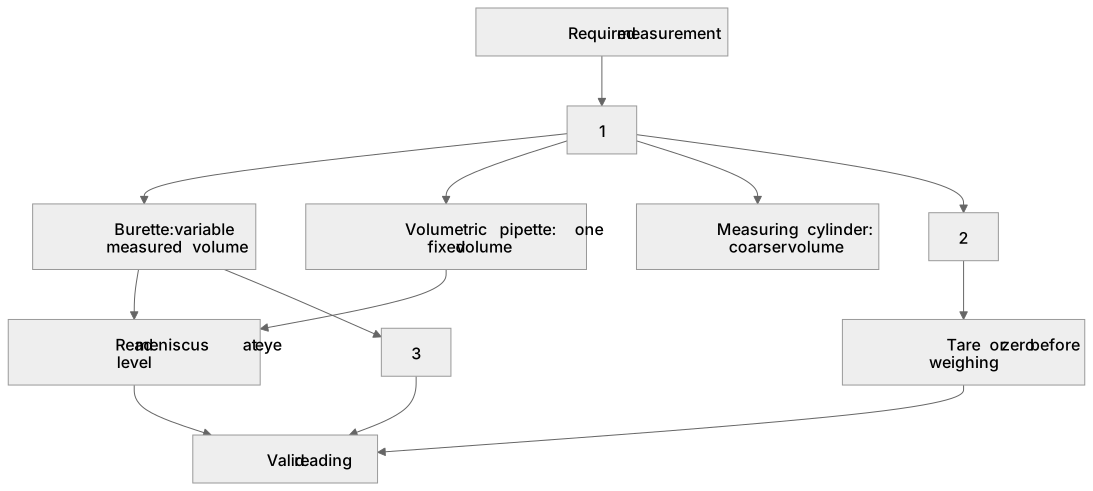
Some boxes have lost their names. Pick the right name for each number.
1Box 1
2Box 2
3Box 3
There is more to this lesson
The full lesson goes on to check your understanding and help you earn the marks. Create a free account to carry on, with your progress saved.
A week of Premium from your first lesson · Then the free plan continues · No card, no charge
Test your understanding of Implementing: (a) how to use a wide range of practical apparatus and techniques correctly
Active recall beats re-reading. Take an instant quiz now to test what you’ve learned and lock it into long-term memory.
A week of Premium from your first lesson · Then the free plan continues · No card, no charge