OCR · A-Level · Chemistry
Course version: H432 · Version from Sept 2017
(iii) reduction of Cu²⁺ to Cu⁺ and disproportionation of Cu⁺ to Cu²⁺ and Cu
Full specification wording
Transition elements: (iii) reduction of Cu²⁺ to Cu⁺ and disproportionation of Cu⁺ to Cu²⁺ and Cu
Copper shows two common aqueous oxidation states, Cu²⁺ (blue, [Cu(H₂O)₆]²⁺) and Cu⁺ (colourless, often [Cu(H₂O)₂]⁺ or as an insoluble salt).
- Point 24 of 24
- 3 key terms
Study notes
From the teaching notes for this specification point.
The idea
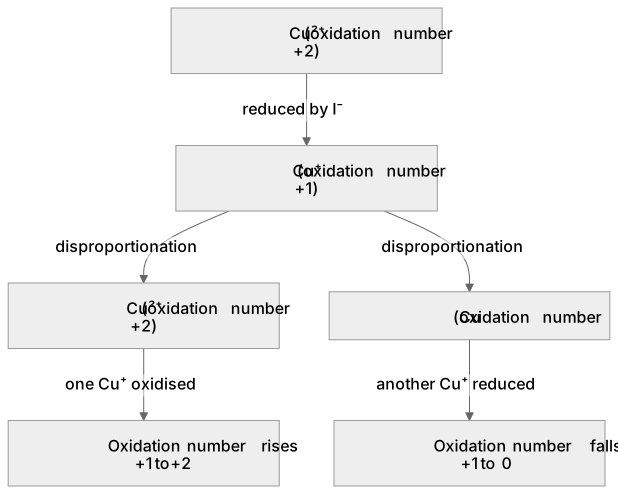
Copper shows two common aqueous oxidation states, Cu²⁺ (blue, [Cu(H₂O)₆]²⁺) and Cu⁺ (colourless, often [Cu(H₂O)₂]⁺ or as an insoluble salt). A reducing agent such as iodide ions, I⁻, reduces Cu²⁺ to Cu⁺: 2Cu²⁺ + 4I⁻ → 2CuI + I₂, giving a white precipitate of copper(I) iodide and brown iodine. Cu⁺ is unstable in aqueous solution because it can disproportionate: 2Cu⁺ → Cu²⁺ + Cu. One Cu⁺ is oxidised (oxidation number rises from +1 to +2) while another is reduced (falls from +1 to 0), so copper appears as a pink solid. The E° values make this favourable.
What earns the marks
- Identifies that Cu²⁺ is reduced to Cu⁺ by gain of one electron, with oxidation number falling from +2 to +1.
- States that disproportionation of Cu⁺ produces Cu²⁺ and Cu, with one Cu⁺ oxidised and another Cu⁺ reduced.
- Selects the equation 2Cu⁺ → Cu²⁺ + Cu as the balanced disproportionation reaction.
- Recognises that Cu⁺ is unstable in aqueous solution and that copper metal forms as a pink solid.
- Applies the definition of disproportionation as simultaneous oxidation and reduction of the same species.
Common mistakes and how to put them right
Reverses the oxidation-state changes.
Put it right: Keep Cu²⁺ → Cu⁺ as reduction and Cu⁺ → Cu²⁺ as oxidation.
Treats disproportionation as a single oxidation only.
Put it right: State that one species is both oxidised and reduced.
Writes copper as Cu²⁺ in the disproportionation product.
Put it right: Show Cu metal with oxidation number 0.
Omits balancing the disproportionation equation.
Put it right: Use 2Cu⁺ → Cu²⁺ + Cu so atoms and charge balance.
Exam tips
- Write oxidation numbers above each copper species before choosing an answer.
- Check charge balance on both sides of any equation you select.
- Link the colour change to the species: blue Cu²⁺ solution and pink copper solid.
- Read the question stem for the word disproportionation and confirm both oxidation and reduction occur.
Try the lesson
The start of the Transition elements: (iii) reduction of Cu²⁺ to Cu⁺ and disproportionation of Cu⁺ to Cu²⁺ and Cu lesson, made from teaching notes for this specification point.
Listen
Copper shows two common aqueous oxidation states, Cu²⁺ (blue, [Cu(H₂O)₆]²⁺) and Cu⁺ (colourless, often [Cu(H₂O)₂]⁺ or as an insoluble salt). A reducing agent such as iodide ions, I⁻, reduces Cu²⁺ to Cu⁺: 2Cu²⁺ + 4I⁻ → 2CuI + I₂, giving a white precipitate of copper(I) iodide and brown iodine. Cu⁺ is unstable in aqueous solution because it can disproportionate: 2Cu⁺ → Cu²⁺ + Cu. One Cu⁺ is oxidised (oxidation number rises from +1 to +2) while another is reduced (falls from +1 to 0), so copper appears as a pink solid. The E° values make this favourable. A strong answer earns marks for these points. Identifies that Cu²⁺ is reduced to Cu⁺ by gain of one electron, with oxidation number falling from +2 to +1. States that disproportionation of Cu⁺ produces Cu²⁺ and Cu, with one Cu⁺ oxidised and another Cu⁺ reduced. Selects the equation 2Cu⁺ → Cu²⁺ + Cu as the balanced disproportionation reaction. Recognises that Cu⁺ is unstable in aqueous solution and that copper metal forms as a pink solid. Exam tip: Write oxidation numbers above each copper species before choosing an answer.
See it
Key words
Say what each word means before you turn the card.
Reduction of Cu²⁺ to Cu⁺
Try answering aloud or in your head before turning the card.
Disproportionation of Cu⁺
Try answering aloud or in your head before turning the card.
Variable oxidation states of copper
Try answering aloud or in your head before turning the card.
See every definition
- Reduction of Cu²⁺ to Cu⁺
- Cu²⁺ is reduced to Cu⁺ by gain of one electron, with oxidation number falling from +2 to +1.
- Disproportionation of Cu⁺
- Simultaneous oxidation and reduction of the same species, here producing Cu²⁺ and Cu with one Cu⁺ oxidised and another Cu⁺ reduced.
- Variable oxidation states of copper
- Copper shows two common aqueous oxidation states, Cu²⁺ (blue) and Cu⁺ (colourless), with Cu⁺ unstable in aqueous solution.
There is more to this lesson
The full lesson goes on to check your understanding and help you earn the marks. Create a free account to carry on, with your progress saved.
A week of Premium from your first lesson · Then the free plan continues · No card, no charge
Test your understanding of Transition elements: (iii) reduction of Cu²⁺ to Cu⁺ and disproportionation of Cu⁺ to Cu²⁺ and Cu
Active recall beats re-reading. Take an instant quiz now to test what you’ve learned and lock it into long-term memory.
A week of Premium from your first lesson · Then the free plan continues · No card, no charge