Study Notes
Overview
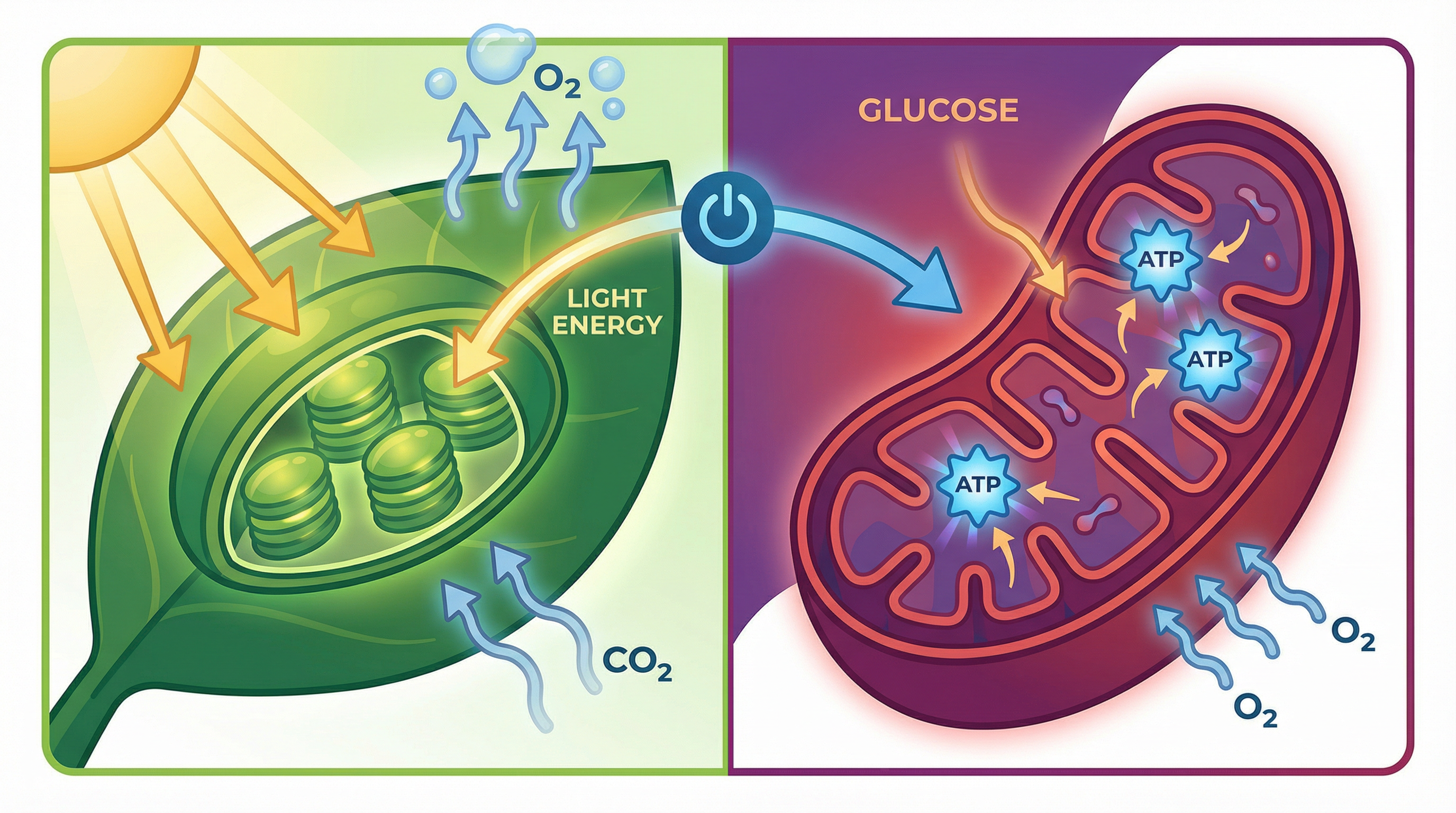
Bioenergetics is the study of how energy is transferred and transformed in living organisms. For your AQA GCSE exam, this topic focuses on two fundamental processes: photosynthesis and respiration. Photosynthesis is how plants use light energy to create their own food (glucose), an endothermic process that locks energy away. Respiration is the opposite: an exothermic process where all living cells release the energy stored in glucose to power their functions. Understanding the interplay between these two is crucial, as it forms the basis of almost all life on Earth. Examiners will test your knowledge of the word and symbol equations, the factors that limit these processes, and their real-world applications. Expect to see data analysis questions, graph interpretations, and longer 6-mark questions, particularly on the required practicals.
Key Concepts
Concept 1: Photosynthesis
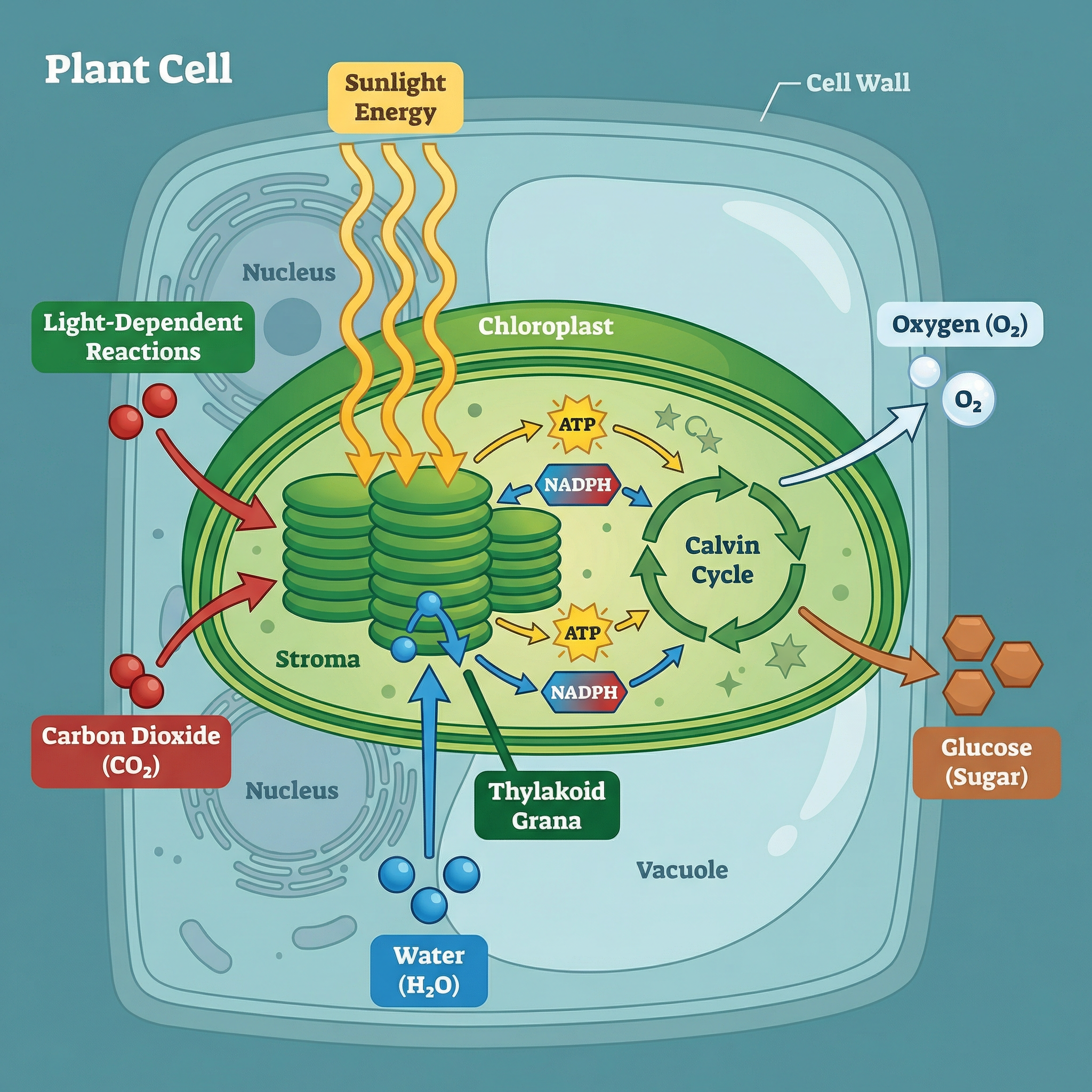
Photosynthesis is the process where plants, and some other organisms, use light energy to convert carbon dioxide and water into glucose and oxygen. This is an endothermic reaction because it takes in energy from the surroundings (light) and stores it as chemical energy in the bonds of the glucose molecule. This process occurs inside chloroplasts, which contain the green pigment chlorophyll that absorbs light energy.
The Word Equation:
Carbon Dioxide + Water --(Light Energy)--> Glucose + Oxygen
The Balanced Symbol Equation (Higher Tier):
6CO₂ + 6H₂O --(Light Energy)--> C₆H₁₂O₆ + 6O₂
Concept 2: Limiting Factors of Photosynthesis
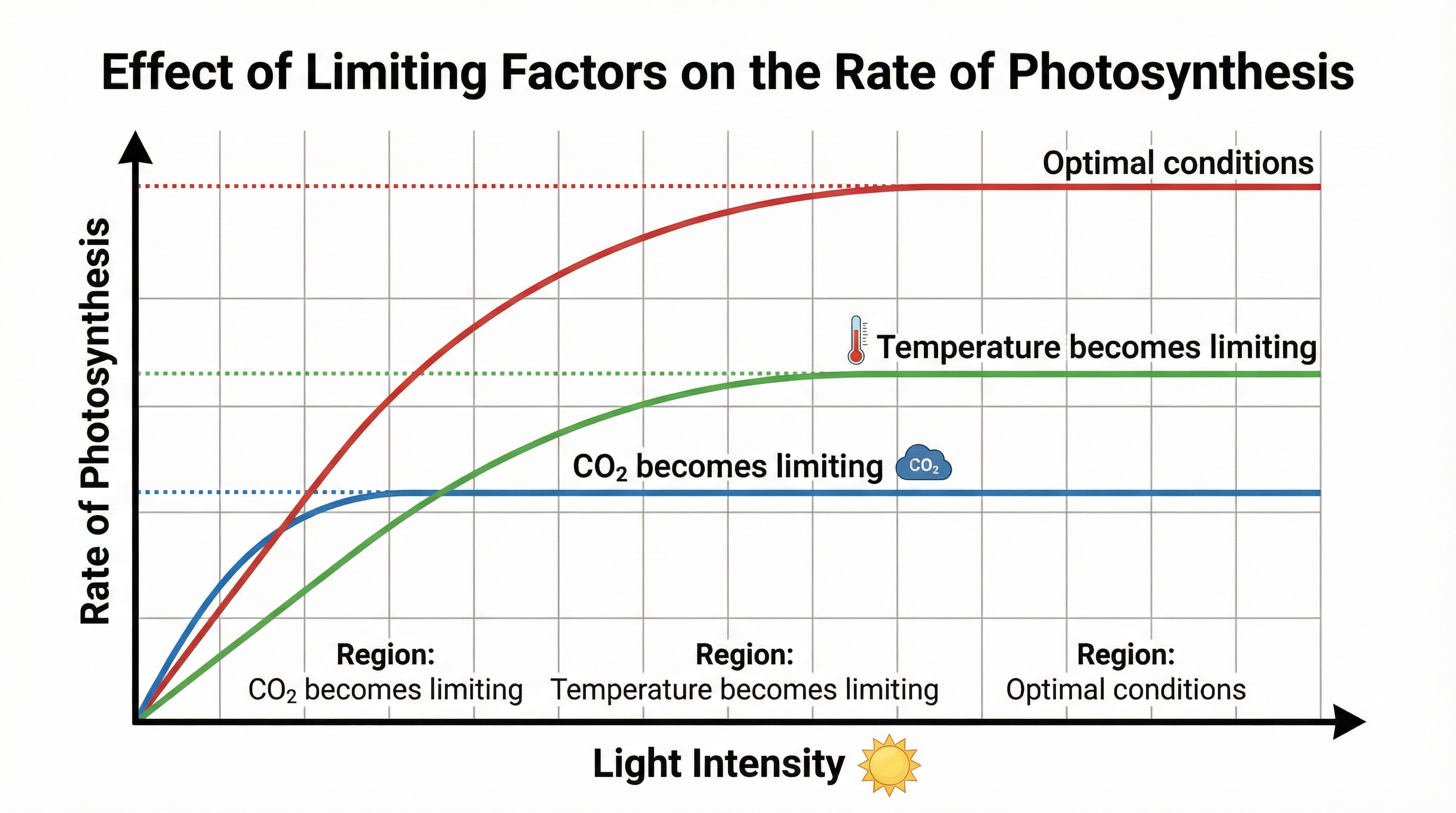
The rate of photosynthesis can be limited by several factors. If any of these are in short supply, the rate of photosynthesis will be slower, even if the other factors are abundant. The main limiting factors are:
- Light Intensity: Without enough light, photosynthesis cannot happen, no matter how much water or CO₂ is available. As light intensity increases, the rate of photosynthesis increases, until another factor becomes limiting.
- Carbon Dioxide Concentration: As with light, a shortage of CO₂ will slow the process down. Increasing CO₂ concentration will increase the rate, up to a point.
- Temperature: Photosynthesis is controlled by enzymes. At low temperatures, the enzymes work slowly. As the temperature increases, the rate increases. However, if it gets too hot (usually above 45°C), the enzymes begin to denature, their shape changes, and the rate of photosynthesis drops rapidly.
Concept 3: Respiration
Respiration is a chemical process that happens in every living cell to release energy from glucose. It is an exothermic reaction, meaning it releases energy. This energy is used for all life processes, such as muscle contraction, maintaining body temperature, and building larger molecules (metabolism). It's a common mistake to confuse respiration with breathing (ventilation), so be precise in your answers.
Aerobic Respiration
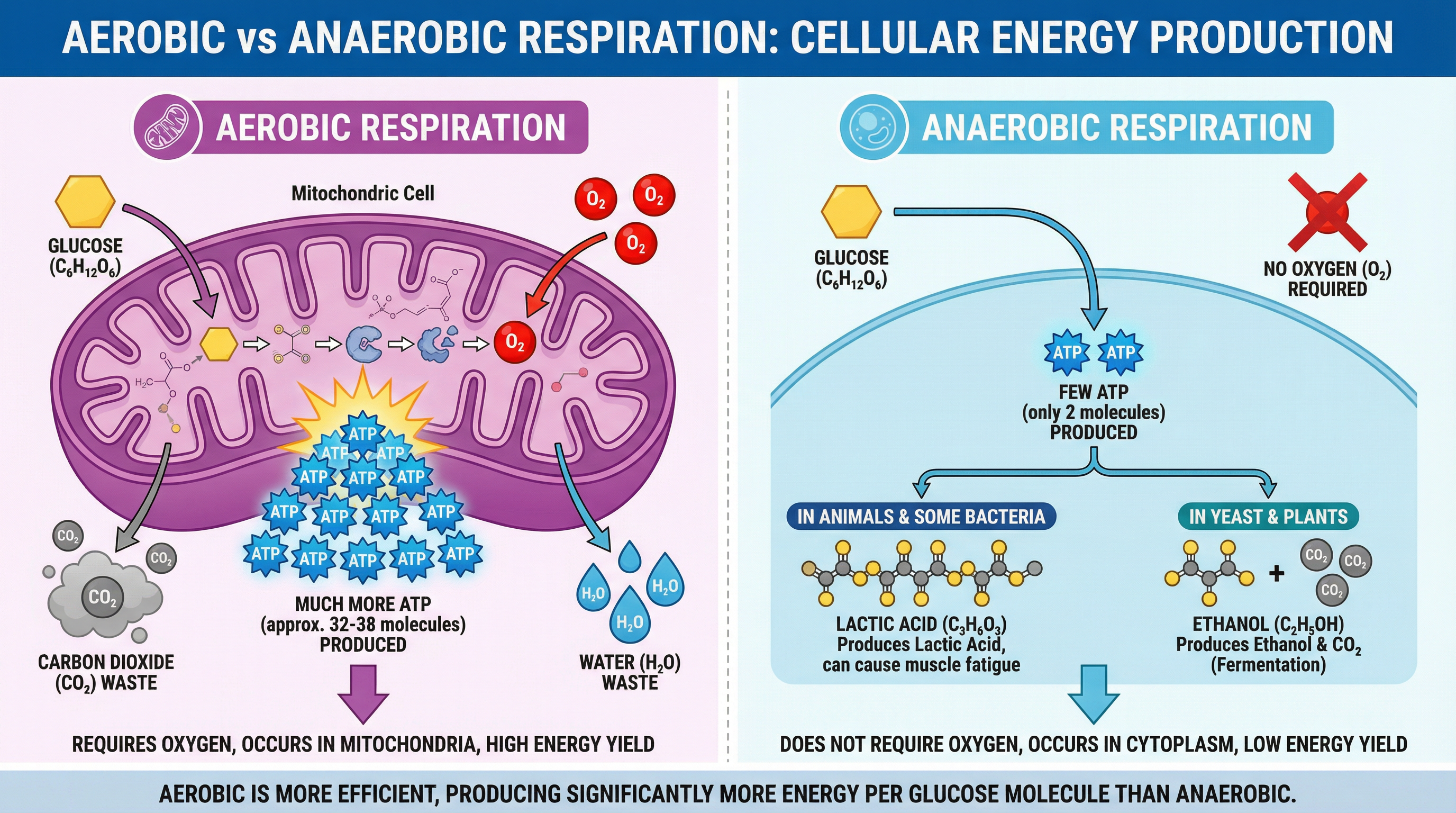
This is the most efficient form of respiration and occurs when plenty of oxygen is available. It takes place in the mitochondria of cells.
The Word Equation:
Glucose + Oxygen --> Carbon Dioxide + Water
Aerobic respiration releases a large amount of energy.
Anaerobic Respiration
This occurs when there is a shortage of oxygen. It releases much less energy than aerobic respiration because the oxidation of glucose is incomplete.
- In Animals: Glucose --> Lactic Acid. The build-up of lactic acid causes muscle fatigue.
- In Plants and Yeast: Glucose --> Ethanol + Carbon Dioxide. This process is called fermentation and is used in baking and brewing.
Mathematical/Scientific Relationships
Inverse Square Law (Higher Tier)
This law is crucial for understanding how light intensity changes with distance. It states that the intensity of light is inversely proportional to the square of the distance from the source.
- Formula: Light Intensity ∝ 1 / (distance)²
- What it means: If you double the distance (x2), the light intensity becomes four times smaller (÷4). If you halve the distance (÷2), the light intensity becomes four times greater (x4).
- Exam Tip: You must be able to apply this formula in calculations. Always show your working! This is marked as "Must memorise".
Practical Applications
Required Practical 6: Investigating the effect of a factor on the rate of photosynthesis
In this practical, you will typically use an aquatic plant like pondweed (Elodea) and measure the rate of photosynthesis by counting the number of oxygen bubbles produced per minute. You will investigate how a factor like light intensity affects the rate.
- Apparatus: Beaker, pondweed, light source (lamp), ruler, stopwatch, sodium hydrogen carbonate solution (to provide CO₂), thermometer.
- Method:
- Set up the apparatus with the pondweed in the beaker of sodium hydrogen carbonate solution.
- Place the lamp a specific distance (e.g., 10 cm) from the beaker.
- Allow the pondweed to acclimatise for 5 minutes.
- Count the number of bubbles produced in one minute. Repeat this twice more to calculate a mean.
- Move the lamp to different distances (e.g., 20 cm, 30 cm, 40 cm) and repeat the process.
- Control Variables: You must keep other factors constant. For example, when investigating light intensity, you must control the temperature (using a water bath or LED bulb that produces less heat) and the concentration of CO₂.
- Common Errors: Not waiting for the plant to acclimatise, miscounting bubbles, and allowing the temperature to change. Examiners will award marks for identifying and controlling these variables.