
Study Notes
Overview
Welcome to your deep dive into Infection and Response, a cornerstone of the WJEC GCSE Combined Science specification. This topic explores the constant battle between your body and the microscopic world of pathogens. We will investigate the intricate defence systems your body employs, from the immediate action of phagocytes to the highly specific response of lymphocytes. A significant portion of marks in this area are awarded for understanding how we can artificially stimulate this immune response through vaccination, and how we treat bacterial infections with medicines like antibiotics. You will also learn about the rigorous process of developing new drugs, a topic frequently tested in longer, structured questions. This topic is not just about memorising facts; it's about understanding processes and applying your knowledge to unfamiliar contexts, a key skill for achieving higher grades. Expect to see a mix of short-answer questions asking for definitions and longer 6-mark questions requiring detailed, sequential explanations.
Key Concepts
Concept 1: The Body's Defence System
Your body has a three-tiered defence system against pathogens. The first line of defence is non-specific and aims to prevent pathogens from entering the body in the first place. This includes physical barriers like the skin, and chemical barriers like stomach acid and enzymes in tears. If pathogens breach this first line, the second line of defence kicks in: the immune response from white blood cells. This is where phagocytes and lymphocytes come into play. The third line of defence is the production of antibodies and memory cells, providing long-term immunity.
Concept 2: Phagocytosis - The Engulfing Response
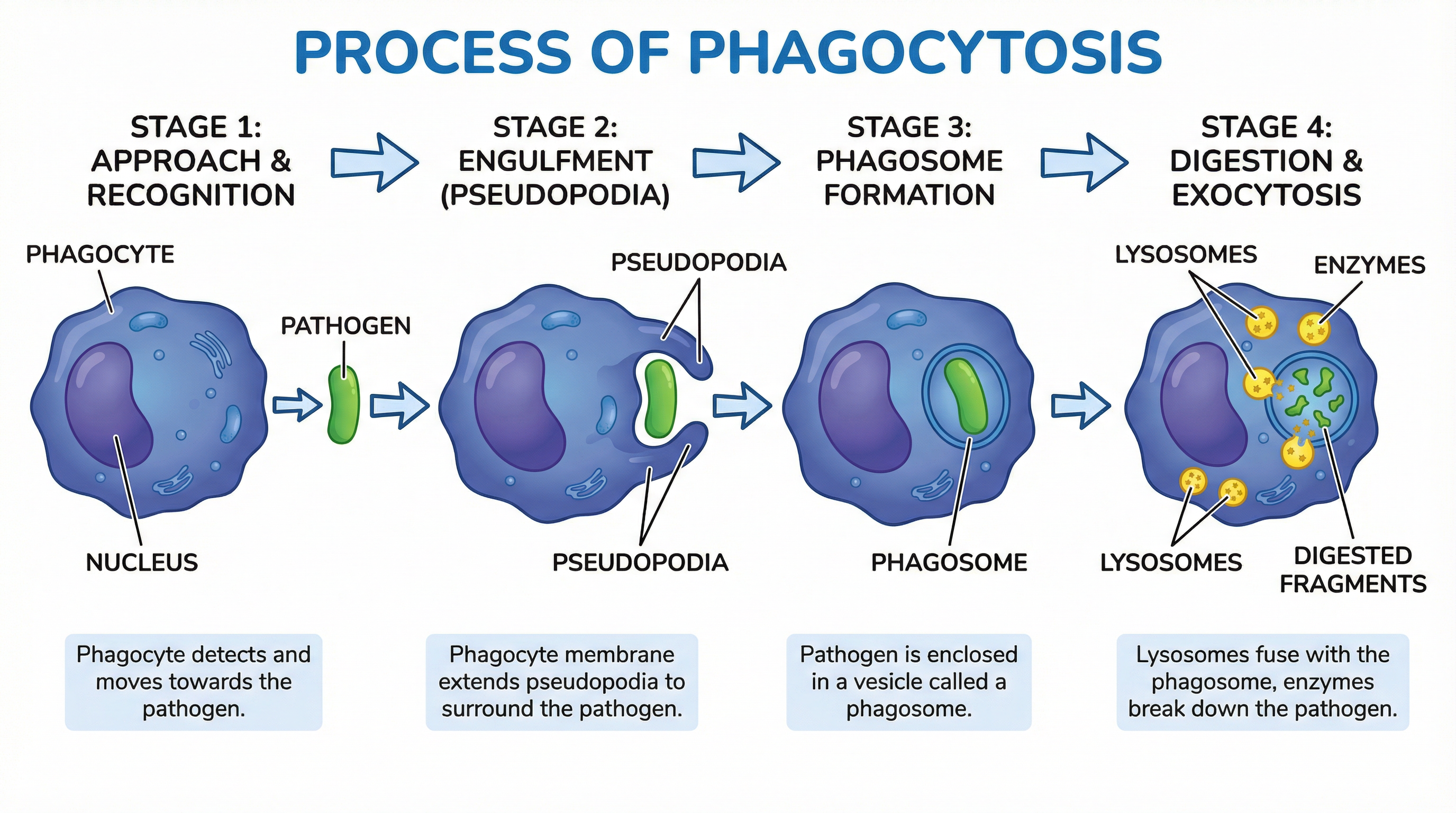
Phagocytes are a type of white blood cell that act as the immune system's 'clean-up crew'. They are non-specific, meaning they will attack any cell that they identify as foreign. The process of phagocytosis is a critical one to understand and is often tested.
The Process of Phagocytosis:
- Recognition and Approach: The phagocyte detects chemicals released by the pathogen and moves towards it.
- Engulfment: The phagocyte's cell membrane extends and surrounds the pathogen, enclosing it within a vesicle called a phagosome. These extensions are called pseudopodia.
- Digestion: Lysosomes, which are vesicles containing digestive enzymes, fuse with the phagosome. The enzymes break down the pathogen into smaller, harmless molecules.
- Exocytosis: The waste products are then expelled from the phagocyte.
Concept 3: The Lymphocyte and Antibody Production
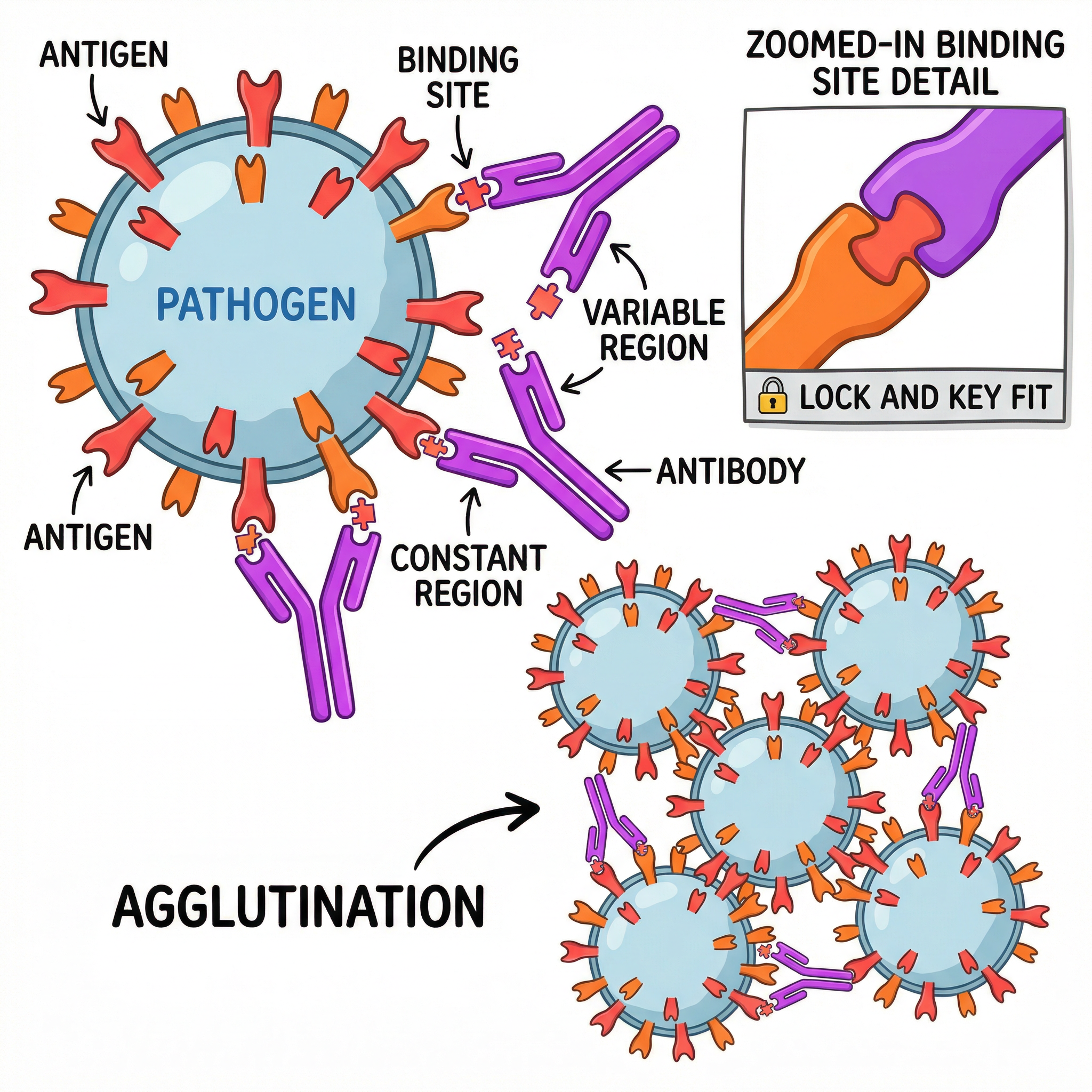
Lymphocytes are another type of white blood cell, but they provide a specific immune response. This means they can distinguish between different types of pathogens. Each pathogen has unique molecules on its surface called antigens. When a lymphocyte with a complementary receptor meets a pathogen's antigen, it is activated.
Once activated, lymphocytes do two things:
- They divide rapidly to produce a large number of identical cells.
- These cells then differentiate to produce two types of cells: plasma cells and memory cells.
Plasma cells are antibody factories. They produce vast quantities of antibodies, which are Y-shaped proteins. It is crucial to remember that antibodies do not kill pathogens directly. Instead, they bind to the antigens on the pathogen's surface. This has several effects:
- Agglutination: The antibodies cause the pathogens to clump together, making it easier for phagocytes to find and engulf them.
- Neutralisation: Antibodies can bind to toxins produced by bacteria, neutralising them.
- Marking: They act as markers, signalling to other parts of the immune system that these cells need to be destroyed.
Memory cells provide long-term immunity. They remain in the bloodstream for months or even years. If the same pathogen enters the body again, the memory cells recognise the antigens immediately and mount a much faster and stronger immune response. This is known as the secondary immune response.
Concept 4: Vaccination
Vaccination is a way of artificially inducing immunity without causing illness. A vaccine contains a safe form of a pathogen – it might be dead, inactivated, or just the antigens from the pathogen's surface. When injected, this triggers the primary immune response. Lymphocytes are activated, antibodies are produced, and, most importantly, memory cells are created. If the individual is later infected with the live pathogen, the secondary immune response is triggered, and the pathogen is destroyed before it can cause any symptoms. This is how vaccines protect us from diseases like measles, mumps, and rubella.
Concept 5: Antibiotics and Antibiotic Resistance
Antibiotics are drugs that kill bacteria or prevent them from growing. They are incredibly effective against bacterial infections, but they have no effect on viruses. This is a critical point that is frequently tested. Viruses reproduce inside our own body cells, and so are not affected by antibiotics which target bacterial processes like building cell walls. Using antibiotics for viral infections like the common cold or flu is not only ineffective but also contributes to the serious problem of antibiotic resistance.
Antibiotic resistance occurs through the process of natural selection:
- Within a population of bacteria, there is natural variation. By chance, a few bacteria may have a mutation that makes them resistant to an antibiotic.
- When the antibiotic is used, the non-resistant bacteria are killed.
- The resistant bacteria survive and reproduce, passing the resistance gene to their offspring.
- Over time, the entire population of bacteria can become resistant to the antibiotic.
Concept 6: Drug Development and Testing
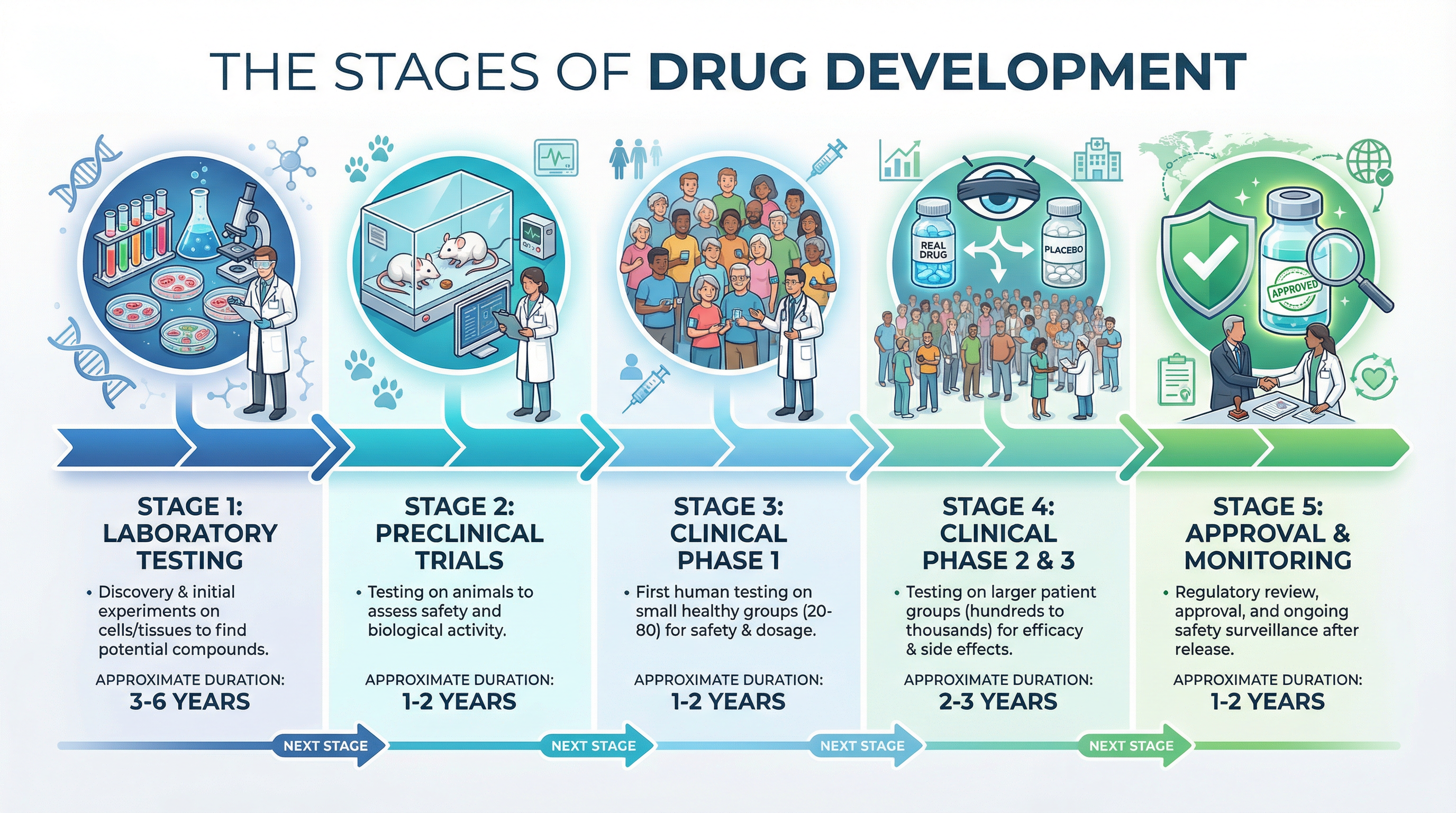
Developing new drugs is a long, expensive, and rigorous process. This is a common 6-mark question, so it is essential to know the stages in chronological order.
The Stages of Drug Development:
- Pre-clinical Testing (Laboratory): The drug is tested on cells, tissues, and then live animals. This is to test for toxicity (if it is poisonous), efficacy (if it works), and to determine the best dosage.
- Clinical Trials (Humans): If the drug is successful in pre-clinical trials, it moves on to human testing. This is split into phases:
- Phase 1: The drug is given to a small number of healthy volunteers to check for side effects and confirm safe dosage.
- Phase 2 & 3: The drug is given to a larger group of patients to test its efficacy and monitor side effects. To ensure the results are valid, these trials are often double-blind. This means that neither the patients nor the doctors know who is receiving the new drug and who is receiving a placebo (a dummy pill). This eliminates bias.
- Approval: If the drug is proven to be safe and effective, it is licensed for use.
Mathematical/Scientific Relationships
There are no specific mathematical formulas to memorise for this topic. However, you will be expected to interpret and analyse data presented in graphs, particularly those showing the primary and secondary immune responses. Key skills include:
- Reading values from the axes.
- Describing the trend shown in the graph (e.g., 'As time increases, the antibody concentration increases').
- Comparing two sets of data (e.g., 'The peak antibody concentration in the secondary response is five times higher than in the primary response').
- Calculating the difference between two values.
Practical Applications
This topic has numerous real-world applications, from the development of life-saving vaccines and antibiotics to understanding how to prevent the spread of disease. The principles of drug testing are fundamental to modern medicine, ensuring that all treatments are as safe and effective as possible. Understanding antibiotic resistance is crucial for public health, as it guides doctors in their prescribing decisions and highlights the need for developing new antimicrobial drugs.