OCR · GCSE · Economics
Development Economics (Poverty, Aid, Debt)
This study guide delves into the critical issues of poverty, aid, and debt within Development Economics for OCR GCSE. It is designed to equip candidates with the analytical skills and specific knowledge required to distinguish between economic growth and development, evaluate the effectiveness of different aid types, and understand the complexities of international debt, thereby maximizing their exam performance.
- 5 min read
- 2 worked examples
- 2 practice questions
- 6 key terms
Study Notes
Overview
This topic explores the multifaceted nature of economic development, moving beyond simple metrics like GDP to consider the broader improvements in human well-being. For the OCR GCSE Economics exam (J205), candidates are expected to demonstrate a nuanced understanding of the distinction between economic growth and economic development. A significant portion of marks are awarded for evaluating the effectiveness of various strategies aimed at promoting development, such as foreign aid, debt relief, and the role of multinational corporations. Examiners look for a clear chain of analysis, the application of specific economic concepts like the 'Cycle of Poverty', and the ability to use data to support arguments. This guide will provide the structured knowledge and exam techniques needed to excel.
Key Concepts & Developments
Economic Growth vs. Economic Development
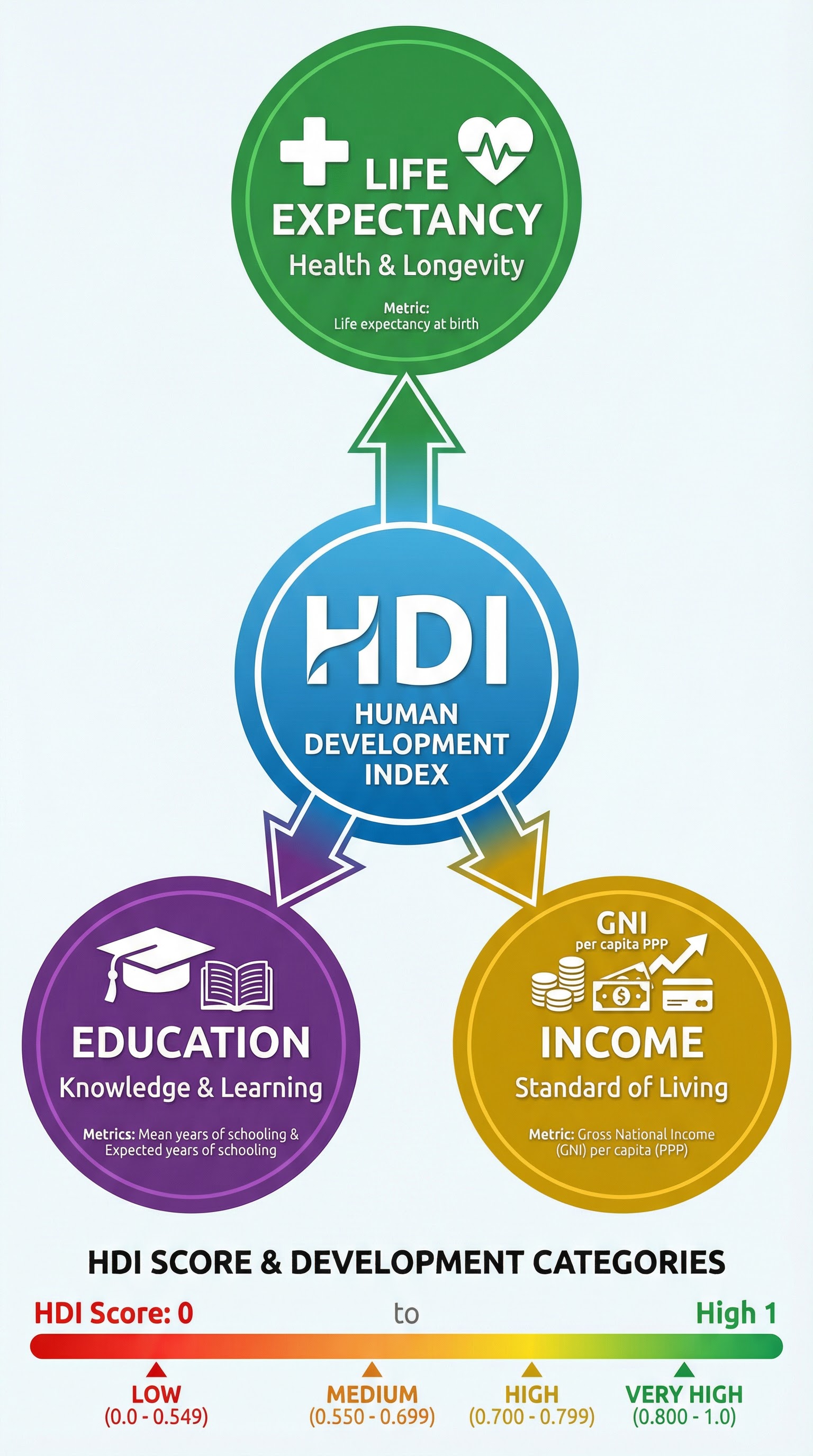
What it is: Economic growth is the increase in the real value of goods and services produced by a country, measured by the percentage change in real GDP. Economic development is a broader concept, encompassing improvements in living standards, freedom, and overall well-being. It is measured by the Human Development Index (HDI).
Why it matters: This is a foundational distinction. Marks are consistently awarded for candidates who can clearly differentiate between the two. Growth is a necessary but not sufficient condition for development. A country can have high GDP growth fueled by oil exports, but if that wealth is not used to improve healthcare, education, and infrastructure, development may not occur.
Specific Knowledge: Candidates must know the three components of the HDI: a long and healthy life (measured by life expectancy at birth), knowledge (measured by mean and expected years of schooling), and a decent standard of living (measured by GNI per capita at PPP$).

The Cycle of Poverty
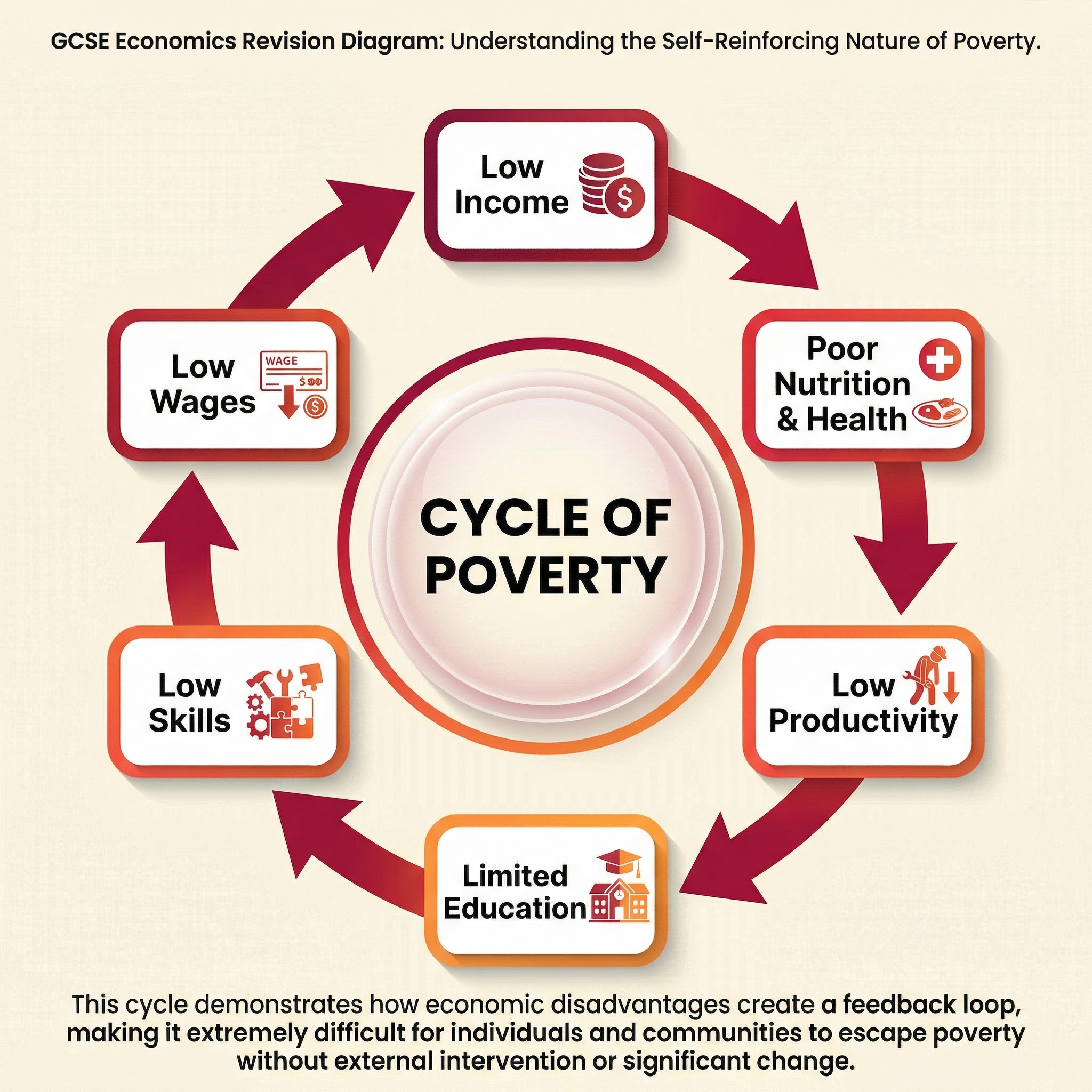
What it is: A self-perpetuating condition where poverty leads to circumstances that maintain poverty. It creates a trap from which it is very difficult for individuals or countries to escape without outside intervention.
Why it matters: This is a core analytical tool for explaining persistent poverty. It allows candidates to move beyond simple descriptions and explain the economic mechanisms that lock countries into a state of underdevelopment. Using this concept demonstrates a higher level of economic understanding.
Specific Knowledge: Be able to draw and explain the stages: Low Income → Low Savings & Investment → Low Productivity → Low Growth → Low Income. Or, from a human capital perspective: Low Income → Poor Nutrition & Health / Poor Education → Low Productivity → Low Wages → Low Income.
Foreign Aid
What it is: The international transfer of capital, goods, or services from a country or international organization for the benefit of the recipient country. It can be financial (grants, loans) or in-kind (food, machinery).
Why it matters: Aid is a major policy tool for promoting development, but its effectiveness is highly debated. Candidates must be able to evaluate the pros and cons of different types of aid, linking them to specific development outcomes.
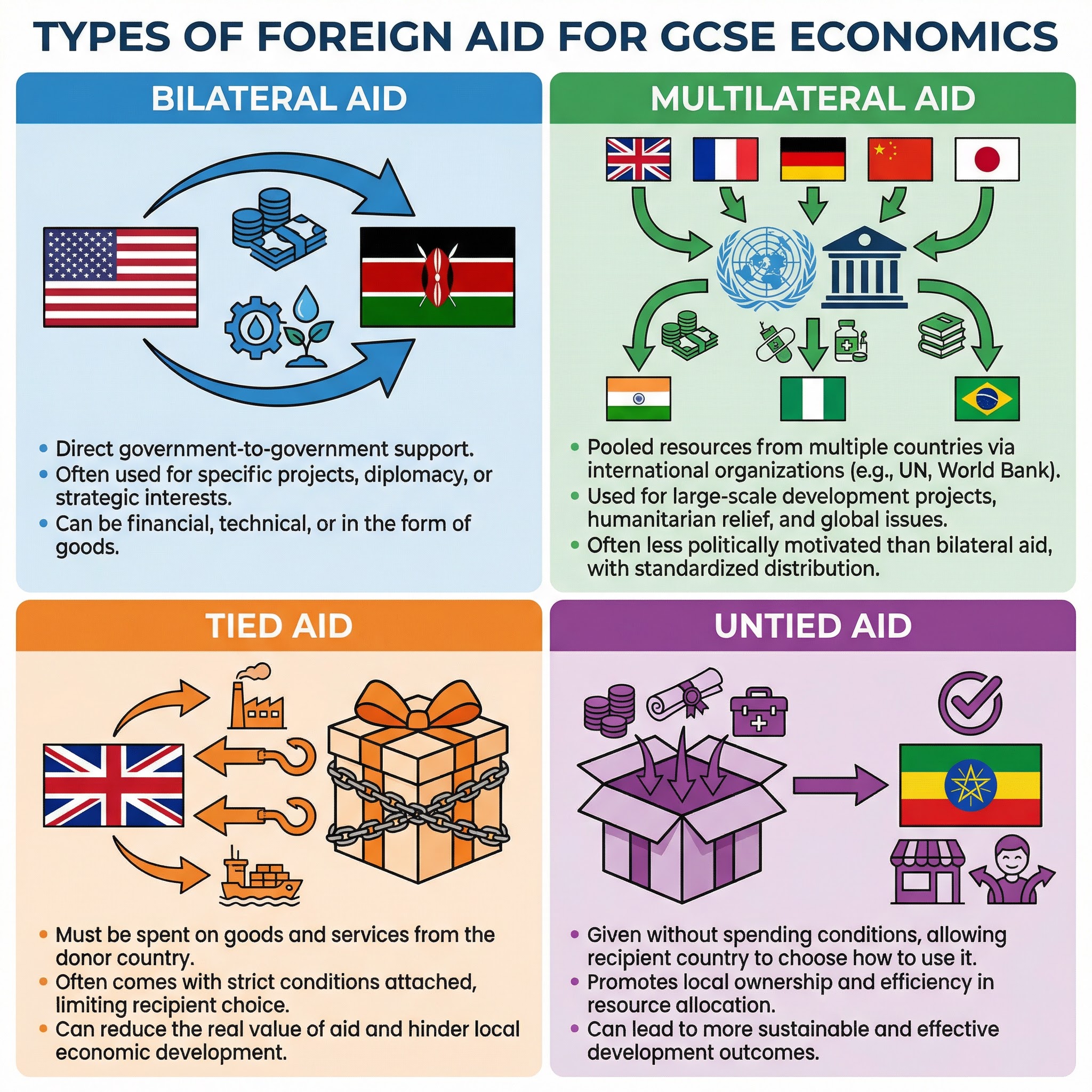
Specific Knowledge: You must be able to define and contrast: Bilateral Aid (government to government), Multilateral Aid (from international organizations like the World Bank), Tied Aid (with conditions attached, often requiring the recipient to buy goods from the donor), and Untied Aid (no conditions). Credit is given for using case studies, e.g., UK aid to Ethiopia.

Debt and Debt Relief
What it is: Many developing countries have large national debts owed to other countries or international bodies. Debt servicing (making interest payments) can consume a large portion of a government's revenue, crowding out spending on development priorities.
Why it matters: High debt levels are a significant barrier to development. Understanding the concept of 'opportunity cost' is crucial here: money spent on debt interest is money that cannot be spent on schools or hospitals. Candidates need to evaluate debt relief as a solution.
Specific Knowledge: Know about initiatives like the Heavily Indebted Poor Countries (HIPC) Initiative and the Multilateral Debt Relief Initiative (MDRI). Be able to argue that while debt relief can free up funds for development, it may also create a 'moral hazard' if countries expect future bailouts and borrow irresponsibly.
Visual Resources
3 diagrams and illustrations
Interactive Diagrams
1 interactive diagram to visualise key concepts
Conceptual Flow Outline
A Mermaid diagram illustrating the interconnected stages of the Cycle of Poverty.
Worked Examples
2 worked examples — open one to explore the question and available guidance.
Practice Questions
Test your understanding — click to reveal model answers
Explain two reasons why a country with high economic growth might still have low economic development. (6 marks)
Hint: Think about how the benefits of growth are distributed and what the money is spent on. Relate back to the components of HDI.
Discuss whether multinational corporations (MNCs) help or hinder economic development in developing countries. (12 marks)
Hint: This is an evaluation question. Consider the benefits (FDI, jobs, technology) and the drawbacks (profit repatriation, exploitation, environmental damage).
Test your understanding of Development Economics (Poverty, Aid, Debt)
Active recall beats re-reading. Take an instant quiz now to test what you’ve learned and lock it into long-term memory.
7 days Premium · Then free forever · No card, no charge