OCR · GCSE · Economics
Different market structures (perfect competition, monopolies, oligopolies etc)
This study guide provides a comprehensive overview of different market structures for OCR GCSE Economics. It is designed to be exam-focused, helping students to understand the key concepts, apply them to real-world scenarios, and ultimately, achieve higher marks.
- 3 min read
- 2 worked examples
- 3 practice questions
- 6 key terms
Study Notes
Overview
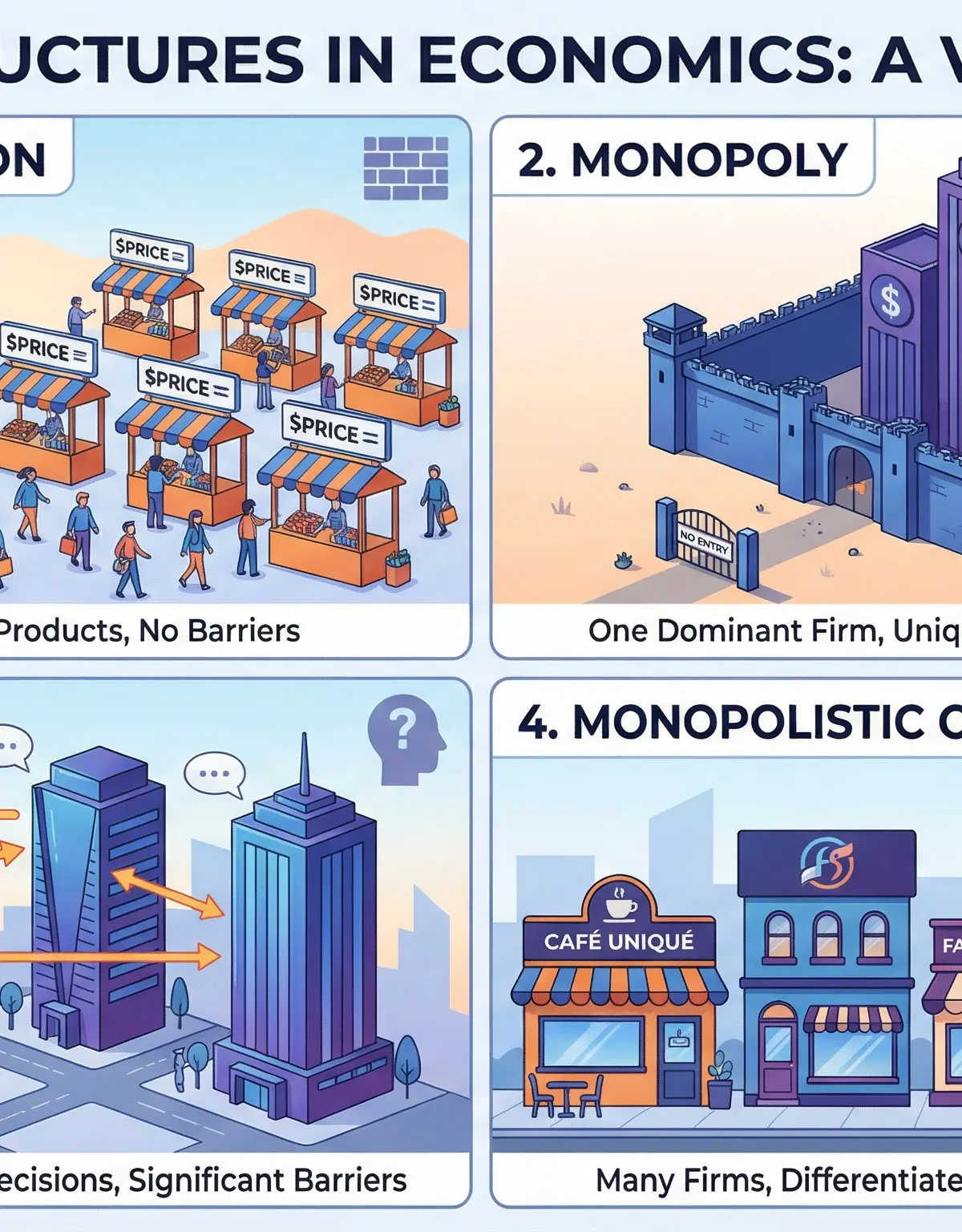
This study guide covers the essential topic of market structures, a core component of the OCR GCSE Economics (J205) specification. Candidates are expected to understand the characteristics of perfect competition, monopolistic competition, oligopoly, and monopoly, and to analyse their impact on price, output, and efficiency. Examiners will be looking for precise definitions, clear chains of reasoning, and the ability to apply theoretical knowledge to practical examples. This guide will equip you with the necessary tools to tackle a range of question types, from short-answer definitions to extended evaluative essays.
Key Market Structures
Perfect Competition
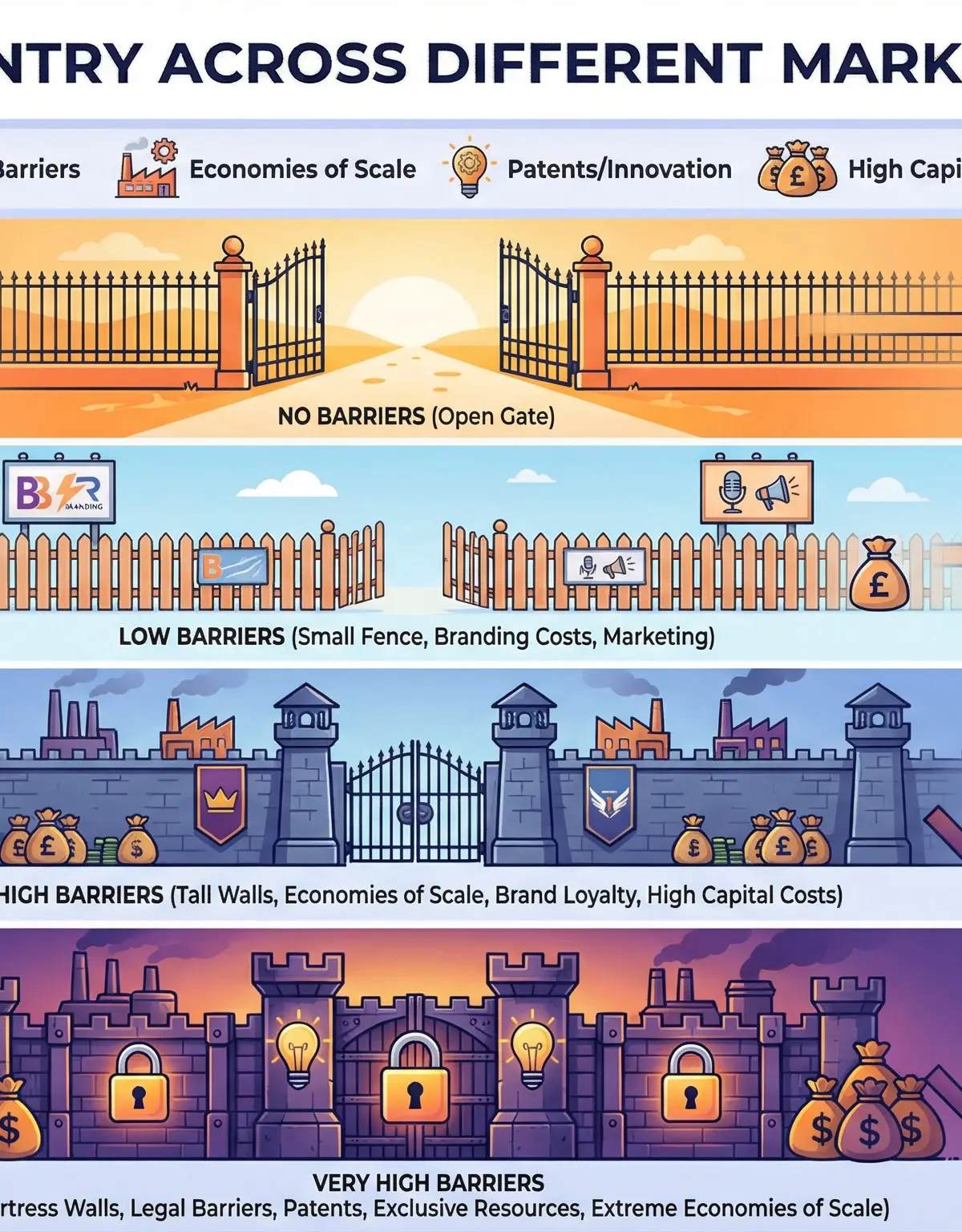
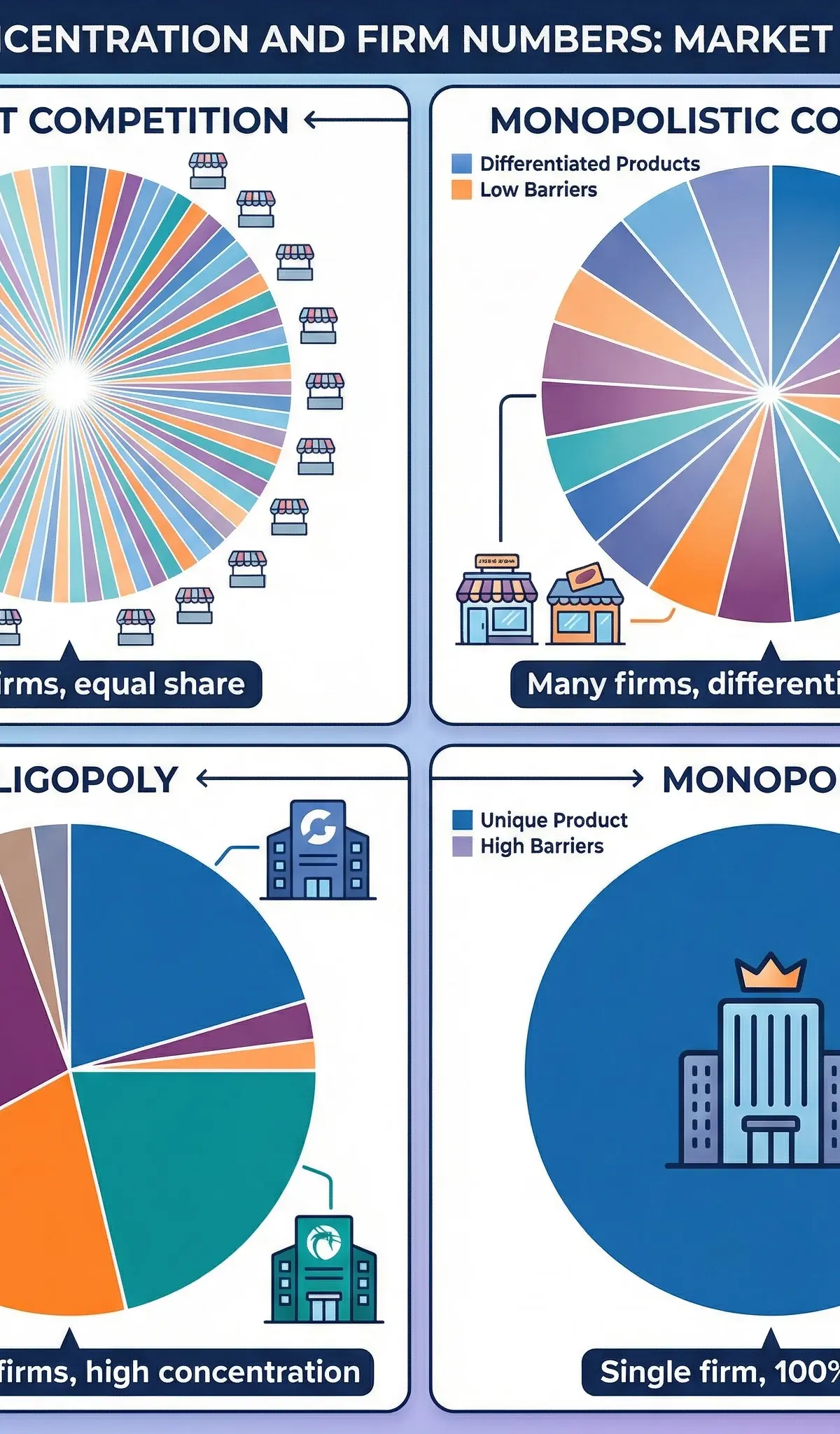
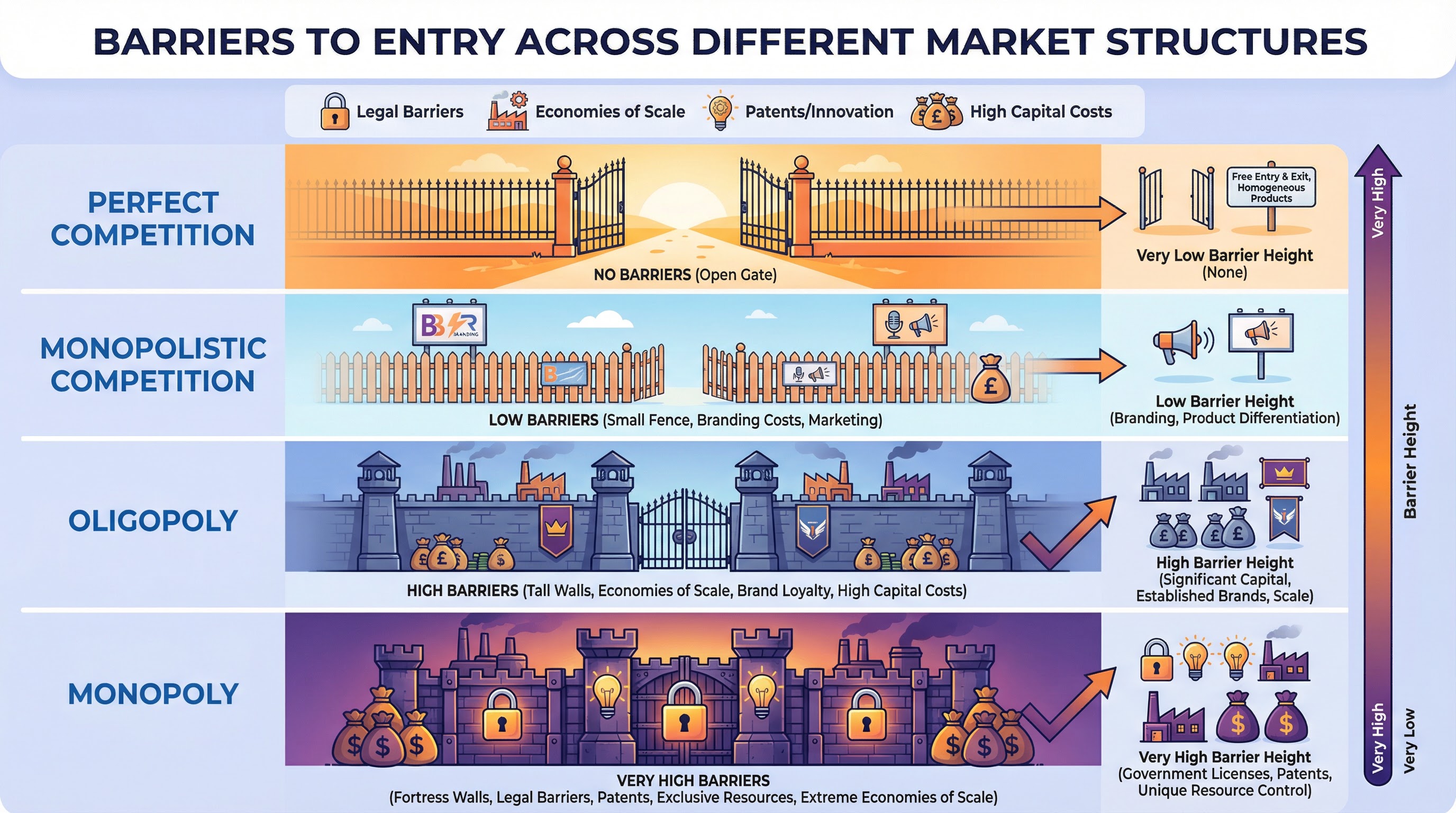
Characteristics: Many buyers and sellers, homogenous products, no barriers to entry or exit, perfect information.
What it means: In a perfectly competitive market, no single firm can influence the market price. They are "price takers". If a firm tries to increase its price, consumers will simply buy from another seller. This intense competition drives prices down to the cost of production, leading to allocative efficiency (Price = Marginal Cost).
Why it matters: While a theoretical ideal, it provides a benchmark to compare other market structures against. It helps to illustrate the benefits of competition for consumers.
Monopolistic Competition
Characteristics: Many firms, differentiated products, low barriers to entry.
What it means: Firms compete on factors other than price, such as branding, quality, and design. This gives them a small degree of market power, allowing them to be "price makers" to a limited extent. Think of the market for coffee shops or hairdressers.
Why it matters: This is a more realistic model of many everyday markets. It highlights the importance of non-price competition.
Oligopoly
Characteristics: A few large firms dominate the market, high barriers to entry, interdependence between firms.
What it means: The actions of one firm will have a direct impact on the others. This can lead to price wars, or collusion (which is illegal). Firms often compete through non-price methods like advertising and loyalty schemes. The UK supermarket industry is a classic example.
Why it matters: Oligopolies are common in many major industries. Understanding their behaviour is crucial for analysing real-world economic issues.
Monopoly
Characteristics: A single seller dominates the market, very high barriers to entry.
What it means: A monopolist has significant market power and can act as a "price maker". They can restrict output to increase prices and earn supernormal profits. However, they may also benefit from economies of scale and be dynamically efficient.
Why it matters: Monopolies can have both positive and negative impacts on consumers and the economy. Evaluating these trade-offs is a key exam skill.
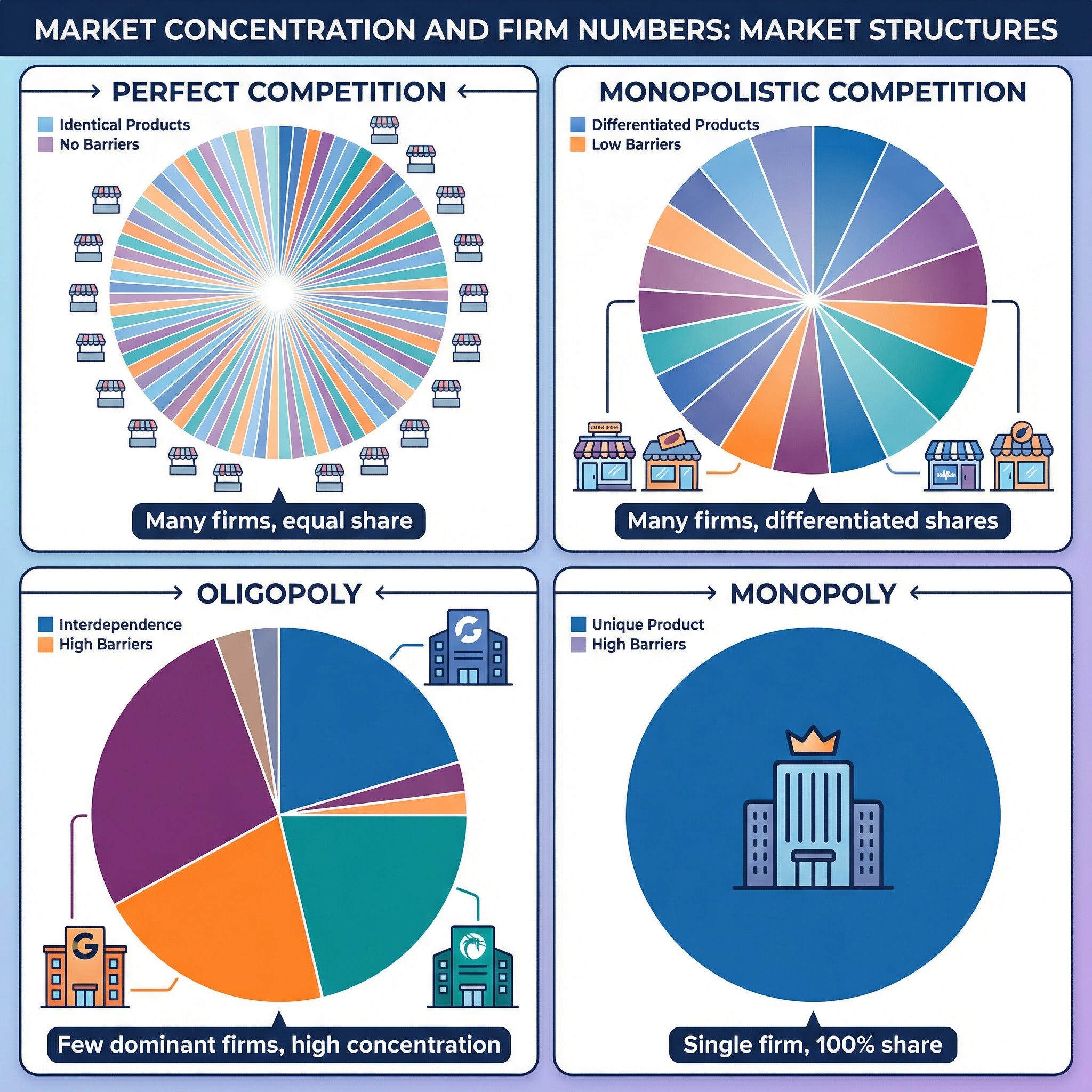
Interactive Diagrams
1 interactive diagram to visualise key concepts
Conceptual Flow Outline
A diagram showing the different types of market structures.
Worked Examples
2 worked examples — open one to explore the question and available guidance.
Practice Questions
Test your understanding — click to reveal model answers
Explain two characteristics of an oligopolistic market. (4 marks)
Hint: Think about the number of firms and how they interact.
To what extent are the characteristics of perfect competition and monopolistic competition similar? (8 marks)
Hint: Consider the number of firms, barriers to entry, and the nature of the products.
Evaluate the view that monopolies are always against the public interest. (20 marks)
Hint: Consider both the potential benefits and drawbacks of monopolies.
Test your understanding of Different market structures (perfect competition, monopolies, oligopolies etc)
Active recall beats re-reading. Take an instant quiz now to test what you’ve learned and lock it into long-term memory.
7 days Premium · Then free forever · No card, no charge