Eduqas · GCSE · English Language
Evaluation of a writer's choice of vocabulary, form, grammatical and structural features: explaining and illustrating how vocabulary and grammar contribute to effectiveness and impact, using linguistic and literary terminology accurately to do so and paying attention to detail; analysing and evaluating how form and structure contribute to the effectiveness and impact of a text
This study guide focuses on the critical skill of evaluating a writer's choices in vocabulary, form, grammar, and structure. It will help you move from simply identifying techniques to perceptively analysing their effect on the reader, a skill that is heavily rewarded across all GCSE English Language reading questions.
- 6 min read
- 3 worked examples
- 5 practice questions
- 8 key terms
Study Notes
Overview
Evaluating a writer's choices is the cornerstone of GCSE English Language. Examiners are not just looking for you to spot techniques; they want to see that you understand why the writer made those specific choices and how they impact the reader. This guide covers the essential skills for analysing vocabulary, form, grammar, and structural features across unseen texts.
The Core Skill: Effect on the Reader
The most important concept to grasp is that every word is a deliberate choice. When you analyse, you break down how a technique works. When you evaluate, you form a judgement on how effective that technique is in achieving the writer's purpose.
Listen to our 10-minute podcast episode for an in-depth discussion on these skills, including common pitfalls and an interactive recall quiz.
Reading Skills
Analysing Vocabulary and Language
When examining vocabulary, consider three key aspects: connotation (the emotional associations of a word), register (the level of formality), and precision (the exactness of the word choice).
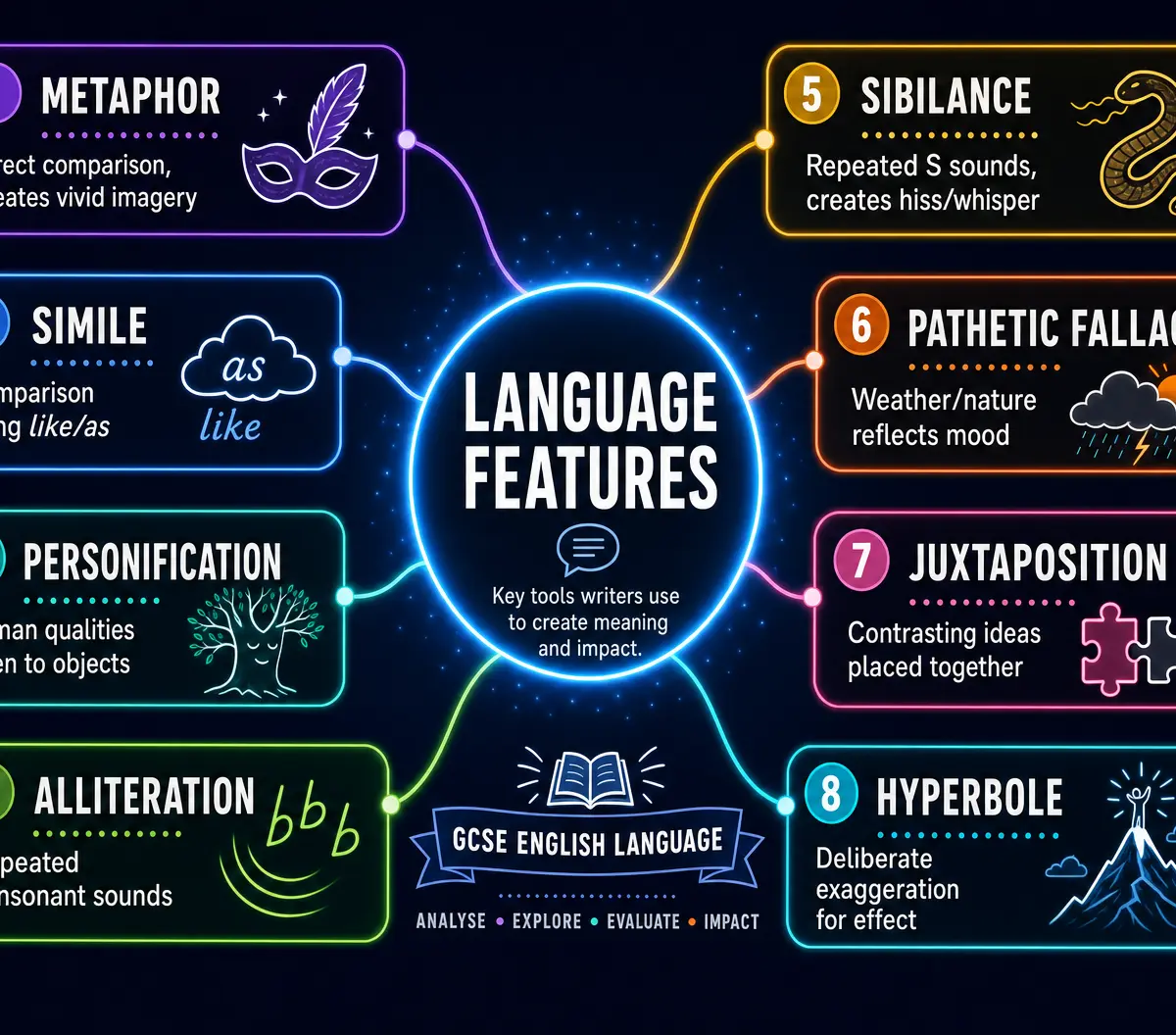
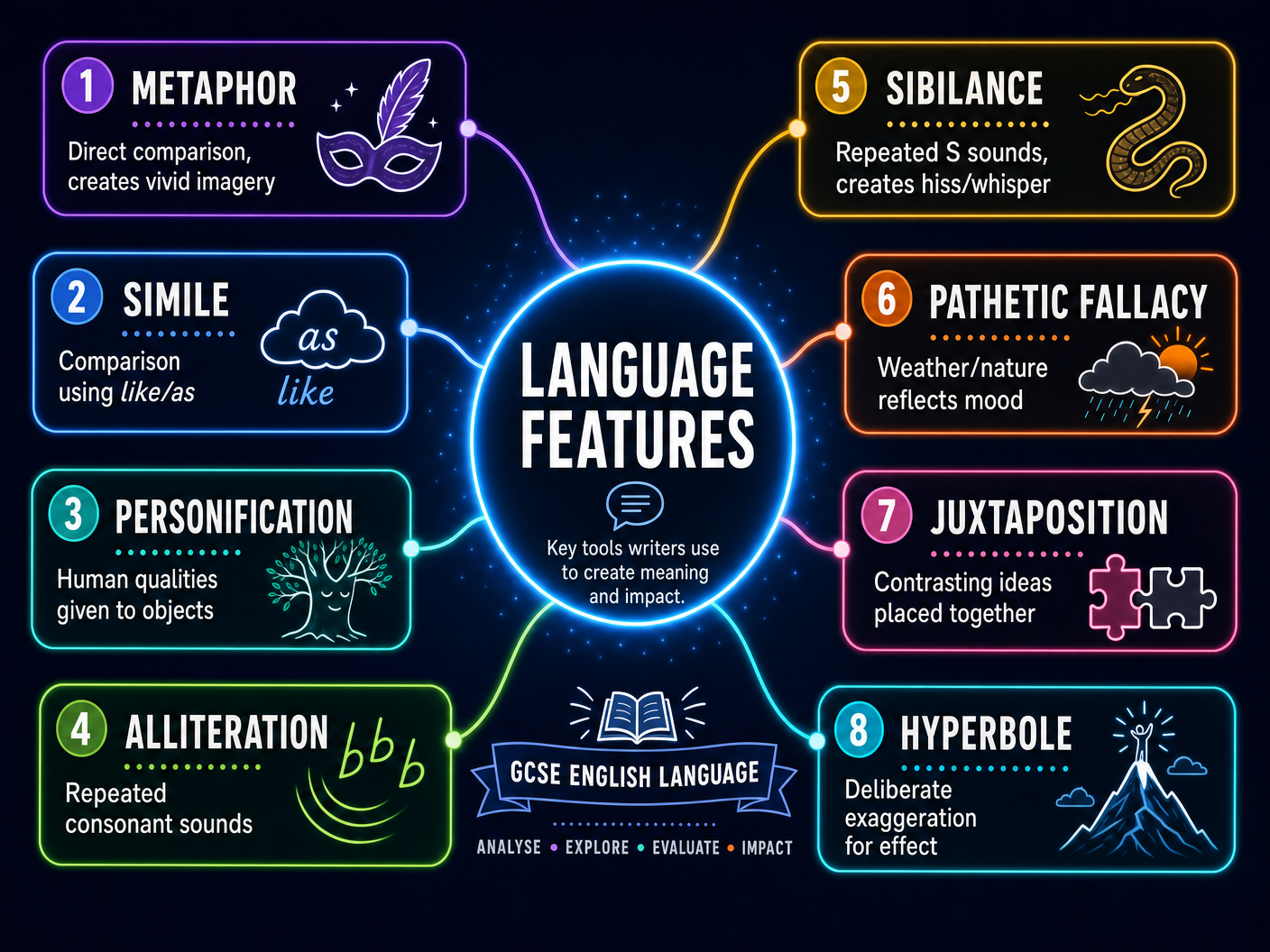
Key Language Features to Identify
| Feature | Definition | Effect on Reader | Example |
|---|---|---|---|
| Metaphor | A direct comparison saying one thing is another. | Creates vivid, intense imagery; forces the reader to view a subject in a new light. | "The classroom was a battlefield." |
| Simile | A comparison using 'like' or 'as'. | Suggests a relationship between two things, making descriptions more relatable or striking. | "Her voice was like gravel." |
| Personification | Giving human qualities to non-human things. | Builds an emotional connection; can make settings feel alive, threatening, or comforting. | "The wind howled angrily." |
| Pathetic Fallacy | When the weather/environment reflects the mood. | Establishes atmosphere and subtly hints at character emotions or future events. | A violent storm during a heated argument. |
| Alliteration | Repetition of initial consonant sounds. | Draws attention to specific phrases; hard sounds (b, d, k) create harshness, while soft sounds (l, m, w) create fluidity. | "The dark, damp, desolate street." |
| Sibilance | Repetition of 's' sounds. | Creates a hissing, whispering, or sinister auditory effect. | "The soft, slow, sliding sea." |
| Juxtaposition | Placing contrasting ideas close together. | Highlights differences, creates tension, or emphasises a specific point through contrast. | "The gleaming palace stood beside the crumbling slum." |
| Hyperbole | Deliberate exaggeration for effect. | Adds emphasis, drama, or humour; reveals the intensity of a character's feelings. | "I've told you a million times." |
Analysing Form and Structure
While language focuses on the micro-level (words and phrases), structure looks at the macro-level (how the text is built and organised).
Structural Features to Evaluate
- The Opening: How does the text begin? In media res (in the middle of the action) creates immediate tension. A descriptive opening sets the scene and mood.
- Shifts in Focus/Tone: Notice when the writer moves from the external environment to internal thoughts, or when the mood shifts from calm to chaotic. These shifts are always deliberate.
- Narrative Perspective: First-person ('I') creates intimacy and subjectivity. Third-person limited keeps us close to one character, while third-person omniscient provides a god-like overview.
- Sentence Length Variation: Short, simple sentences build pace and tension. Long, complex sentences slow the reader down, often used for detailed description or reflection.
- Cyclical Structure: Ending the text where it began. This can suggest inevitability, a lack of progress, or a sense of completion.
- Paragraphing: A single-sentence paragraph forces the reader to pause and places immense emphasis on that specific idea.
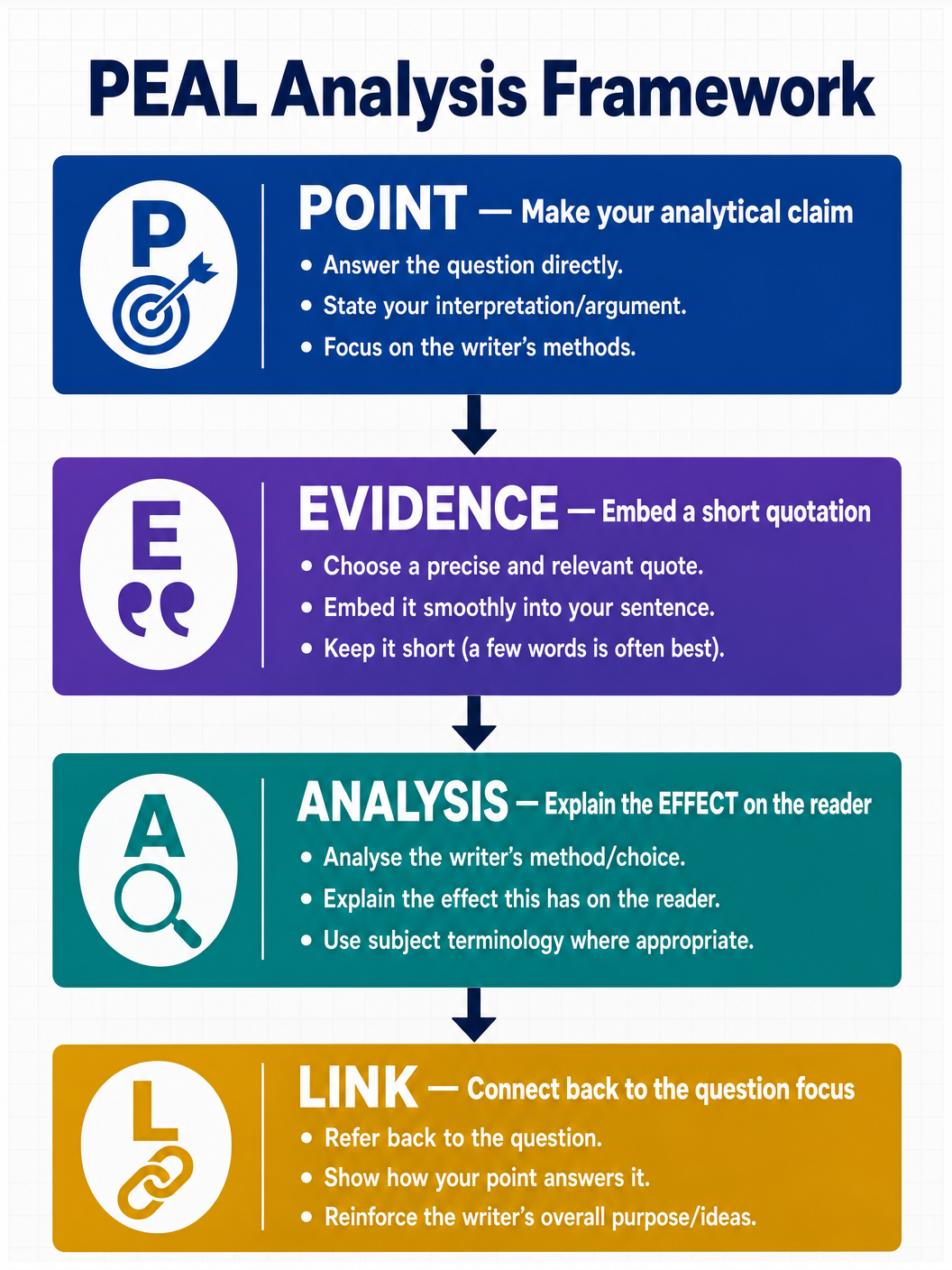
The PEAL Analysis Framework
To structure your analysis effectively, use the PEAL method:
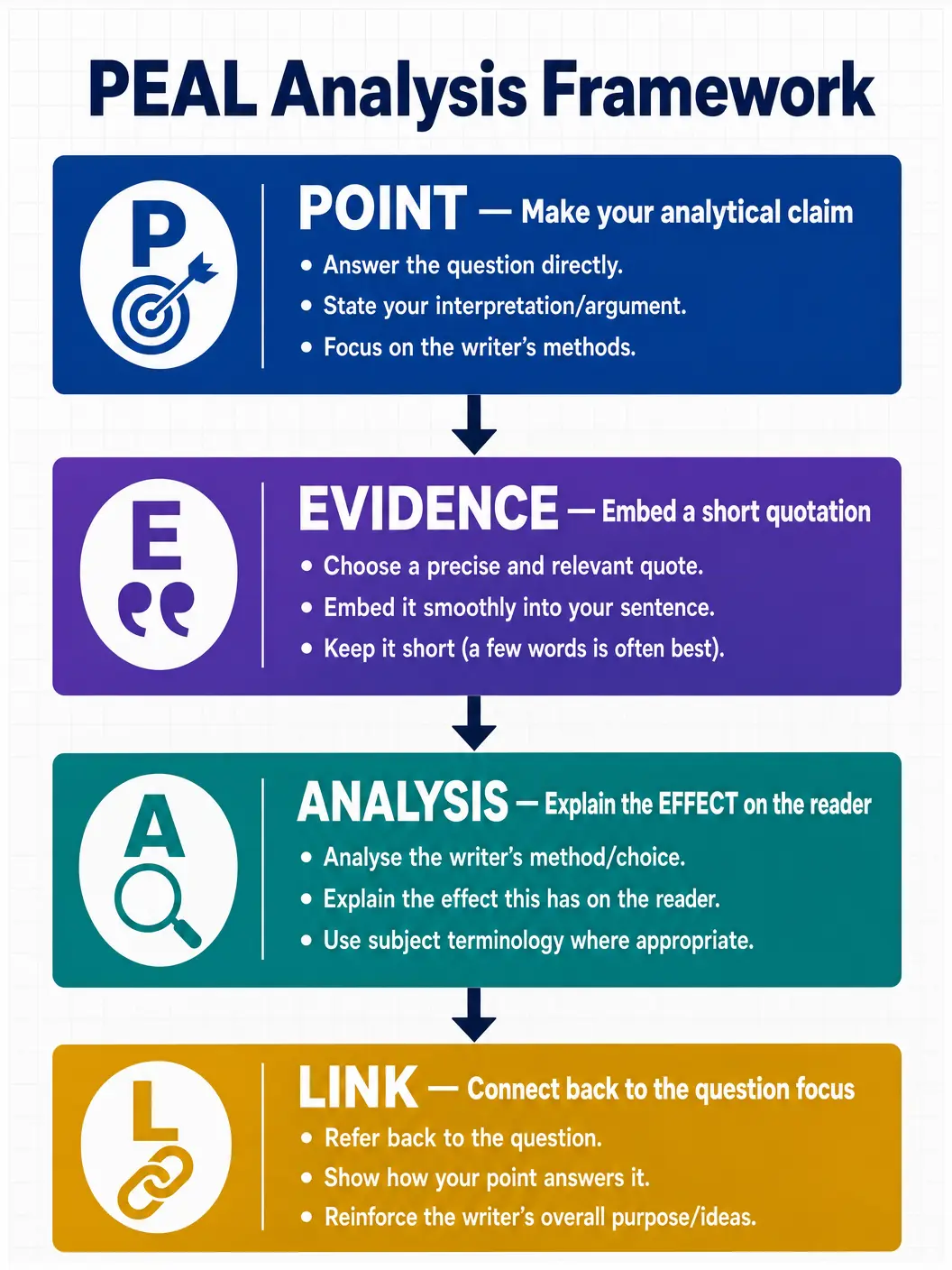
- Point: Make your analytical claim, answering the question directly.
- Evidence: Embed a short, precise quotation.
- Analysis: Explain the effect on the reader using subject terminology.
- Link: Connect your point back to the overall focus of the question.
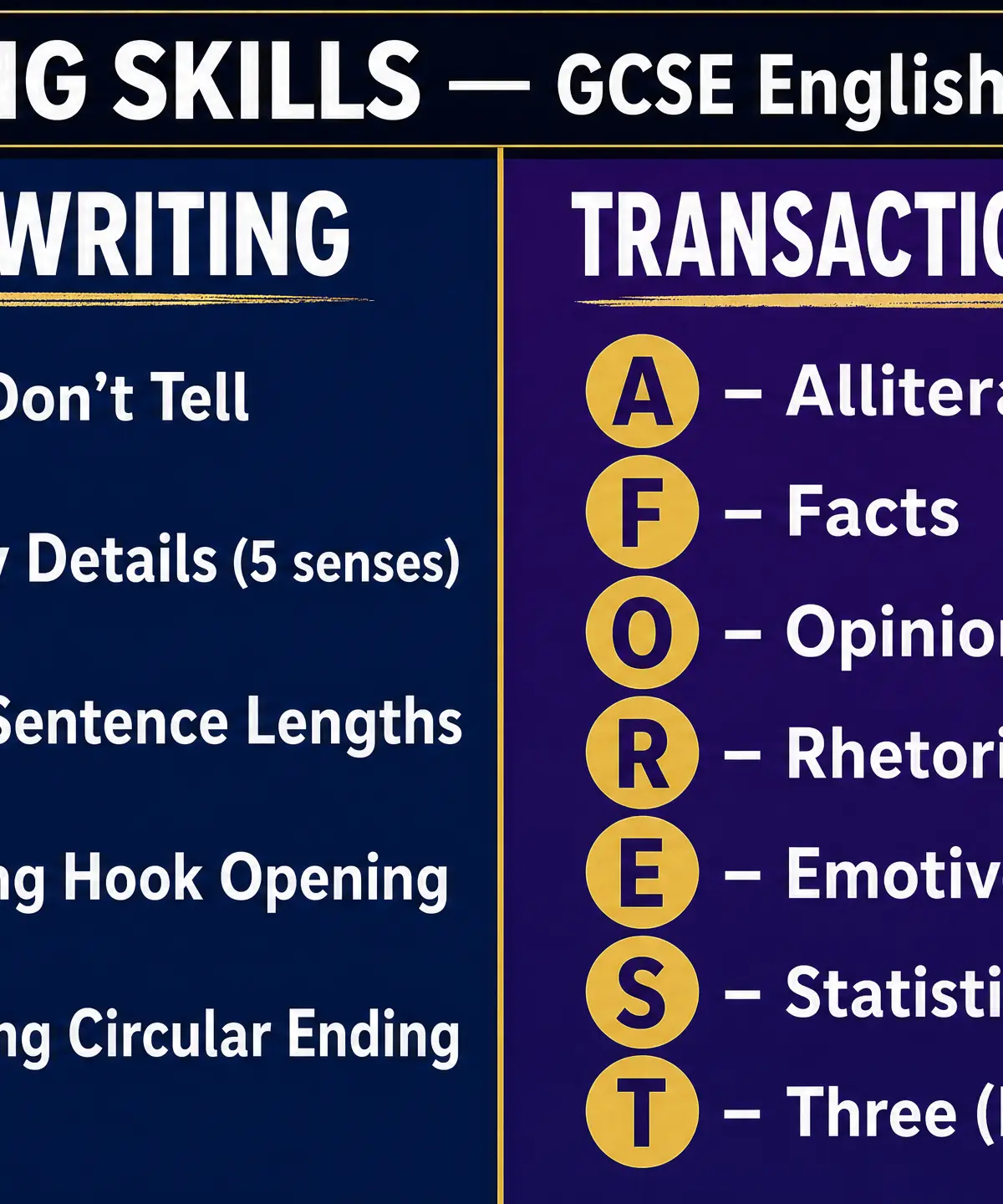
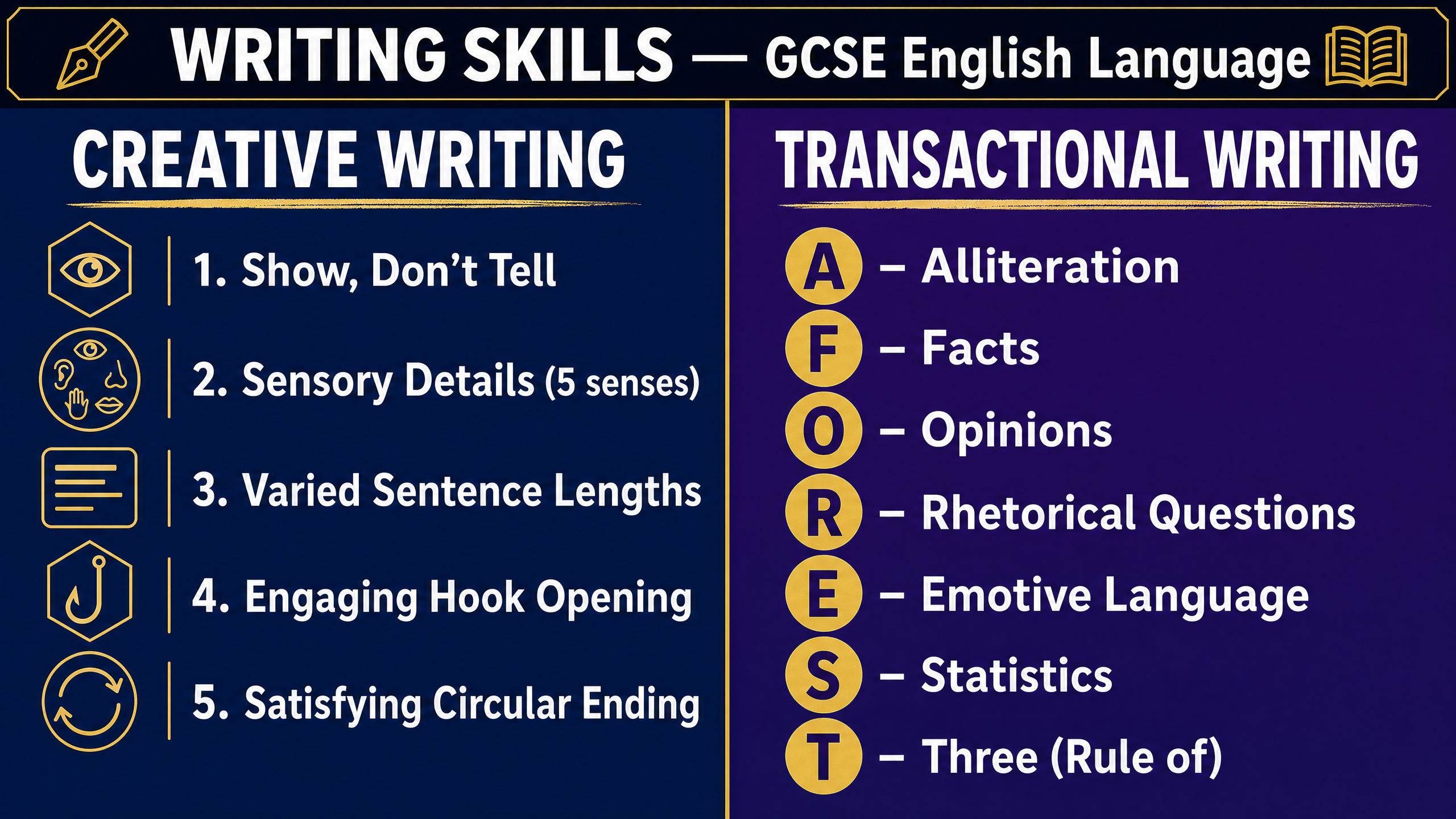
Writing Skills
The analytical skills you develop for reading are directly transferable to your writing. You must become the writer making deliberate choices.
Creative Writing (Narrative and Descriptive)
- Show, Don't Tell: Instead of saying "He was angry," describe his clenched fists and flushed face.
- Sensory Details: Engage the reader by describing what can be seen, heard, smelled, touched, and tasted.
- Varied Sentence Structures: Consciously mix short sentences for impact with complex sentences for detail.
- Engaging Openings & Satisfying Endings: Hook the reader immediately and provide a resolution (even if ambiguous) that feels earned.
Transactional Writing (Persuasive and Non-Fiction)
For tasks like articles, speeches, or letters, remember the AFOREST techniques:
- Alliteration
- Facts
- Opinions
- Rhetorical Questions
- Emotive Language
- Statistics
- Three (Rule of Three)
Technical Accuracy (SPaG)
Spelling, Punctuation, and Grammar (SPaG) carry significant weight. Use ambitious vocabulary and a range of punctuation (colons, semicolons, dashes) to demonstrate control and clarity. Ensure your paragraphs flow logically using cohesive discourse markers (e.g., 'Furthermore', 'Consequently', 'In contrast').
Visual Resources
5 diagrams and illustrations

Interactive Diagrams
2 interactive diagrams to visualise key concepts
Conceptual Flow Outline
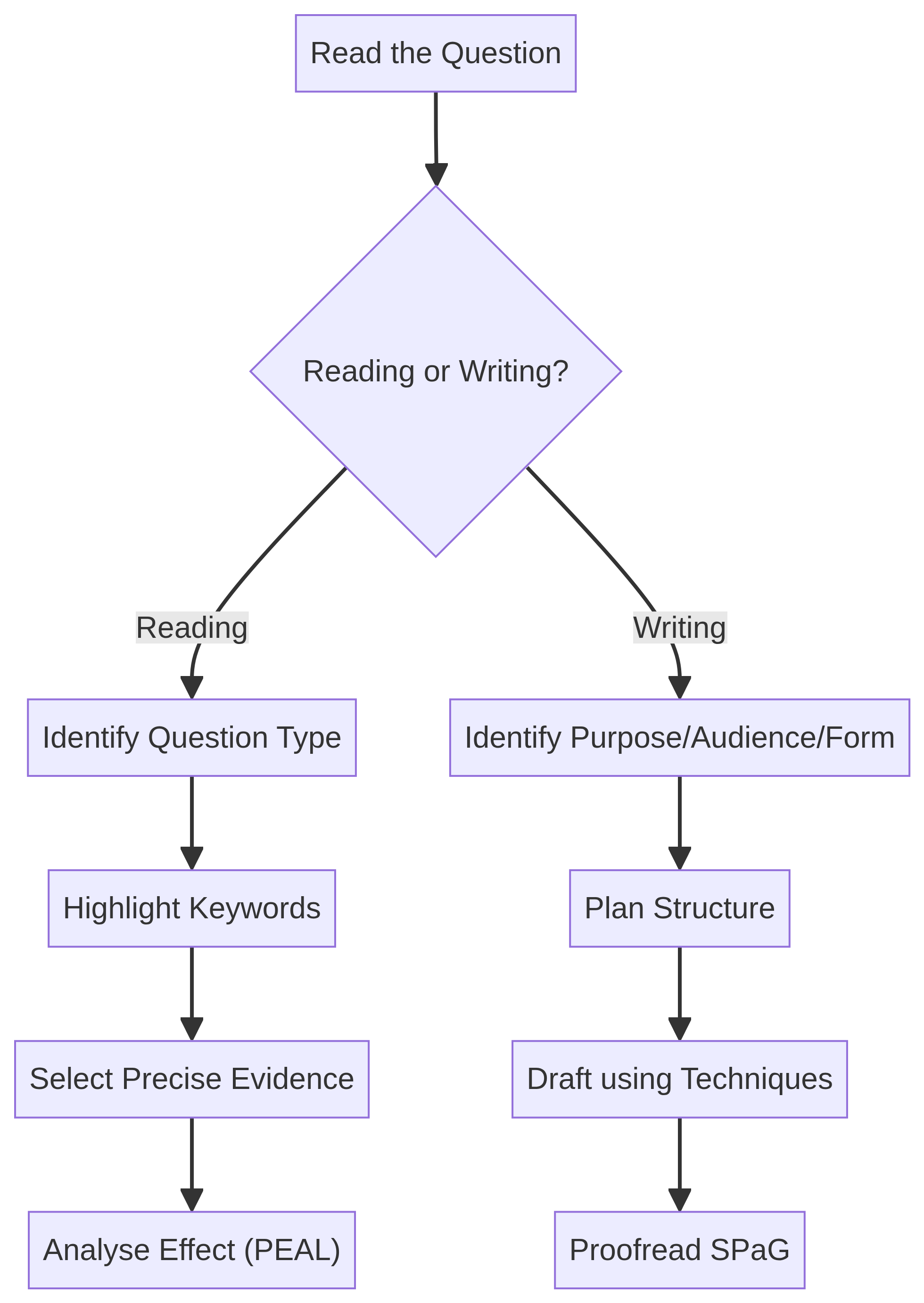
English Language Exam Approach Flowchart
Conceptual Flow Outline
The Process of Deep Language Analysis
Worked Examples
3 worked examples — open one to explore the question and available guidance.
Practice Questions
Test your understanding — click to reveal model answers
Read the sentence: 'The sun glared down mercilessly on the cracked earth.' Identify one language feature used in this sentence.
Hint: Look at how the sun is being described. Is it given human qualities?
Analyse how the writer uses language in the phrase: 'The sun glared down mercilessly on the cracked earth.'
Hint: Identify the technique, quote it, and explain what 'glared' and 'mercilessly' suggest about the heat.
Evaluate how effectively the writer structures the opening paragraph to capture the reader's attention.
Hint: Look at the first sentence, the pace of the paragraph, and what information is withheld from the reader.
Write the opening of a story set during a severe storm. (Focus on descriptive skills)
Hint: Use the 'Show, Don't Tell' rule. Focus on sensory details and vary your sentence lengths for impact.
Write a speech to your school assembly arguing that mobile phones should be banned during school hours.
Hint: Use the AFOREST techniques. Ensure your tone is persuasive and appropriate for an audience of peers and teachers.