Eduqas · GCSE · English Language
Spoken Standard English: expressing ideas using Standard English whenever and wherever appropriate
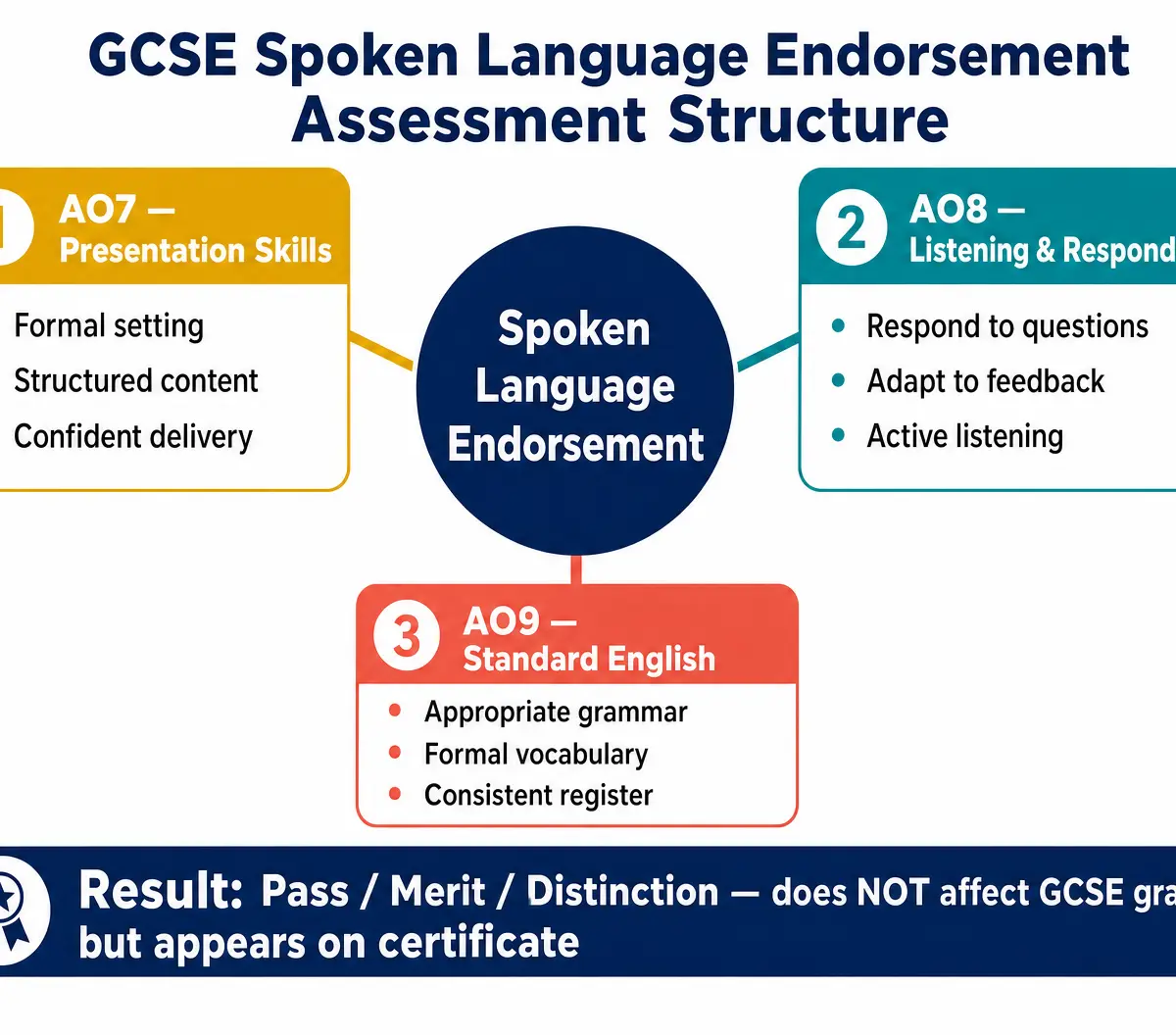
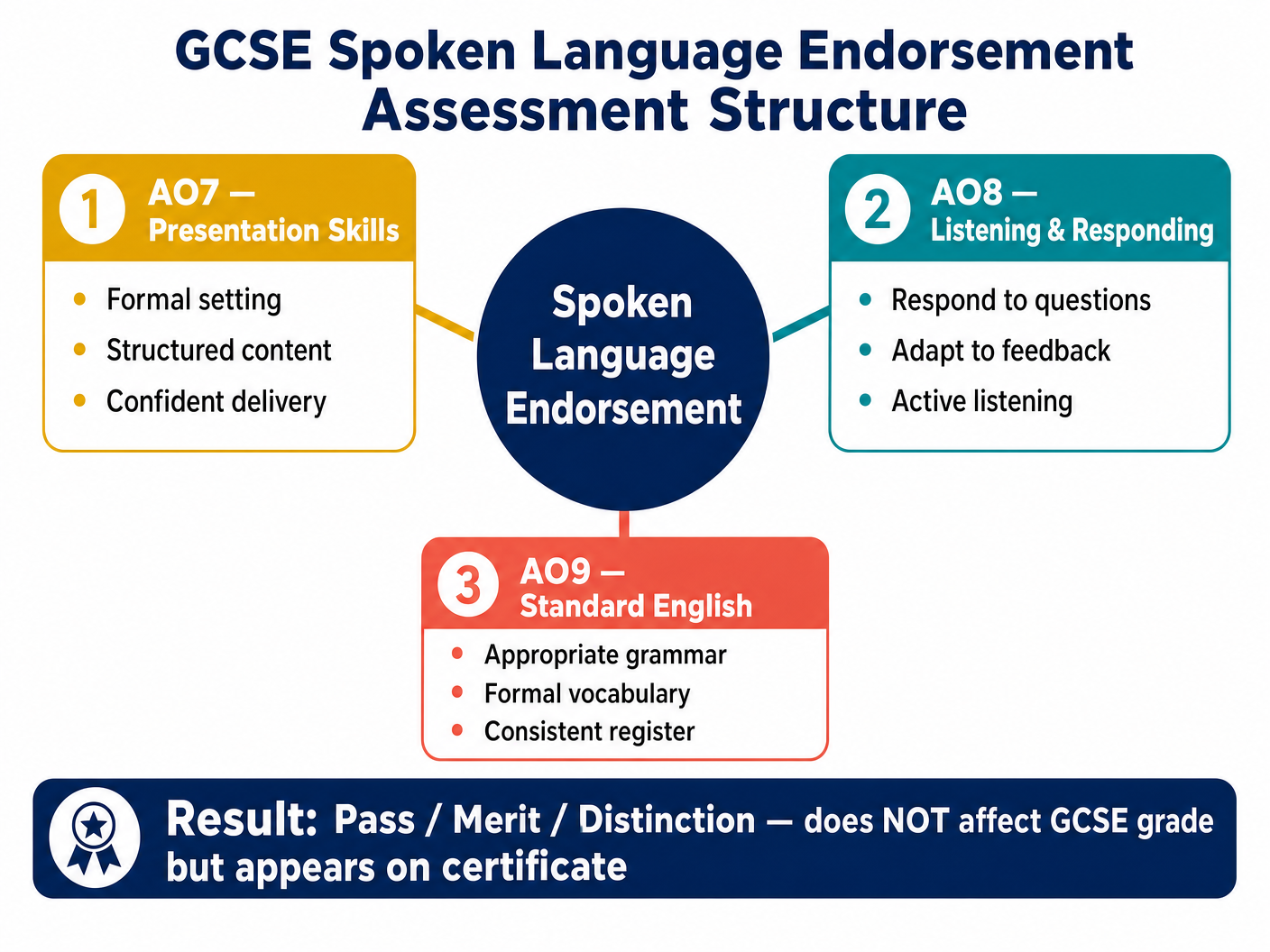
This topic focuses on the Spoken Language Endorsement, where candidates must demonstrate their ability to express ideas formally and respond to feedback using Spoken Standard English. While it doesn't numerically impact your GCSE grade, achieving a Pass, Merit, or Distinction is a mandatory requirement that appears separately on your final certificate.
- 4 min read
- 3 worked examples
- 5 practice questions
- 8 key terms
Study Notes
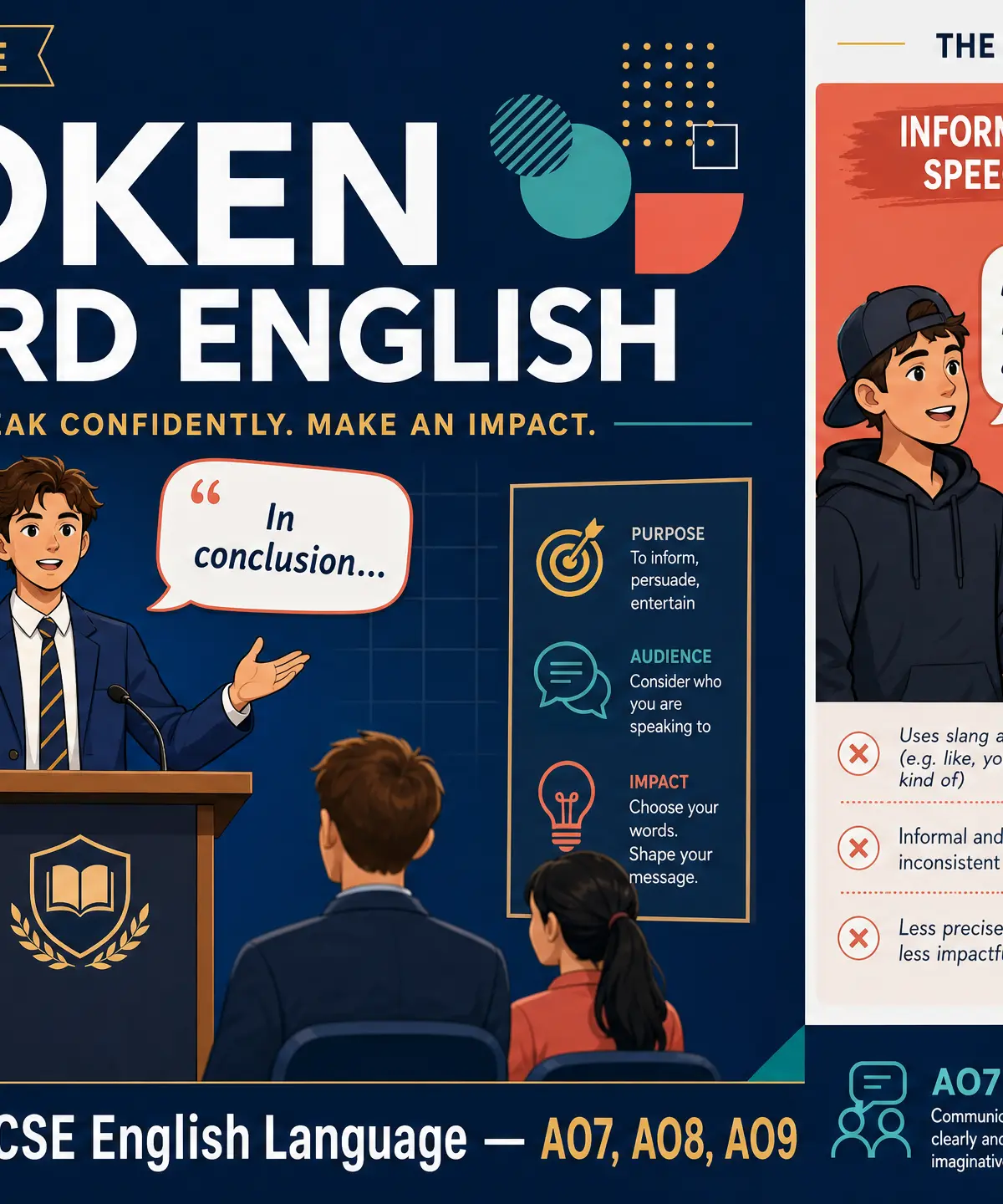
Overview
The Spoken Language Endorsement is a mandatory, internally assessed component of the GCSE English Language qualification. It tests your ability to communicate formally, structure a presentation, and respond to questions. A key requirement is the consistent use of Spoken Standard English. This means using appropriate grammar and vocabulary, regardless of your regional accent.
The Podcast
Listen to our 10-minute deep dive into the Spoken Language Endorsement. We cover the difference between Standard English and Received Pronunciation, how the Assessment Objectives work, and the most common mistakes candidates make.
Understanding the Assessment Objectives
The endorsement assesses three distinct skills:
AO7: Presentation Skills
Candidates must communicate clearly, effectively, and imaginatively. You need to select and adapt your tone, style, and register for a formal setting. This involves structuring your information logically, using discourse markers to guide the listener, and delivering your speech with confidence. Eye contact, vocal projection, and pacing are all crucial here.
AO8: Listening and Responding
After your presentation, you will face a Q&A session. Examiners are looking for active listening. You must respond appropriately to spoken language, including questions and feedback. The strongest candidates don't just give pre-prepared answers; they adapt their responses based on the specific nuances of the questions asked.
AO9: Use of Spoken Standard English
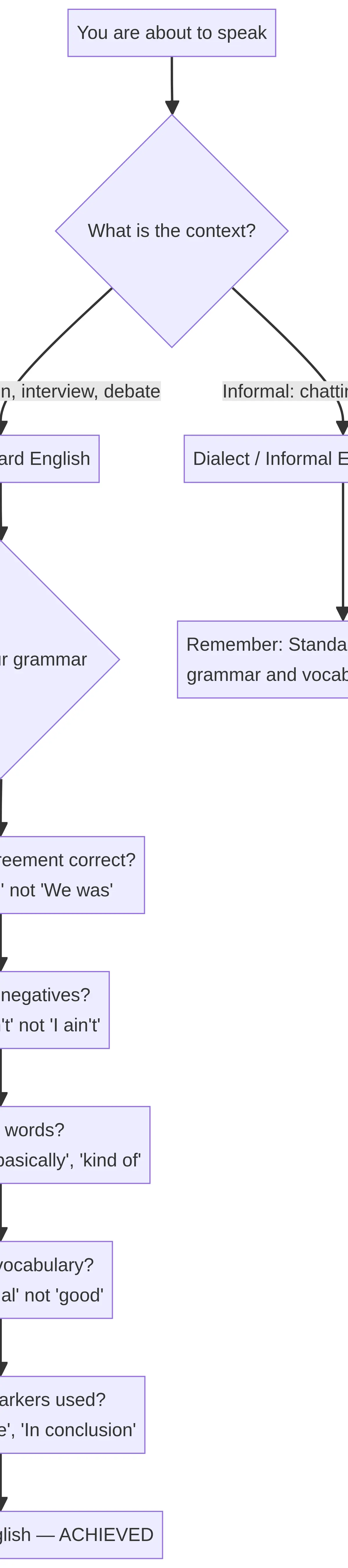
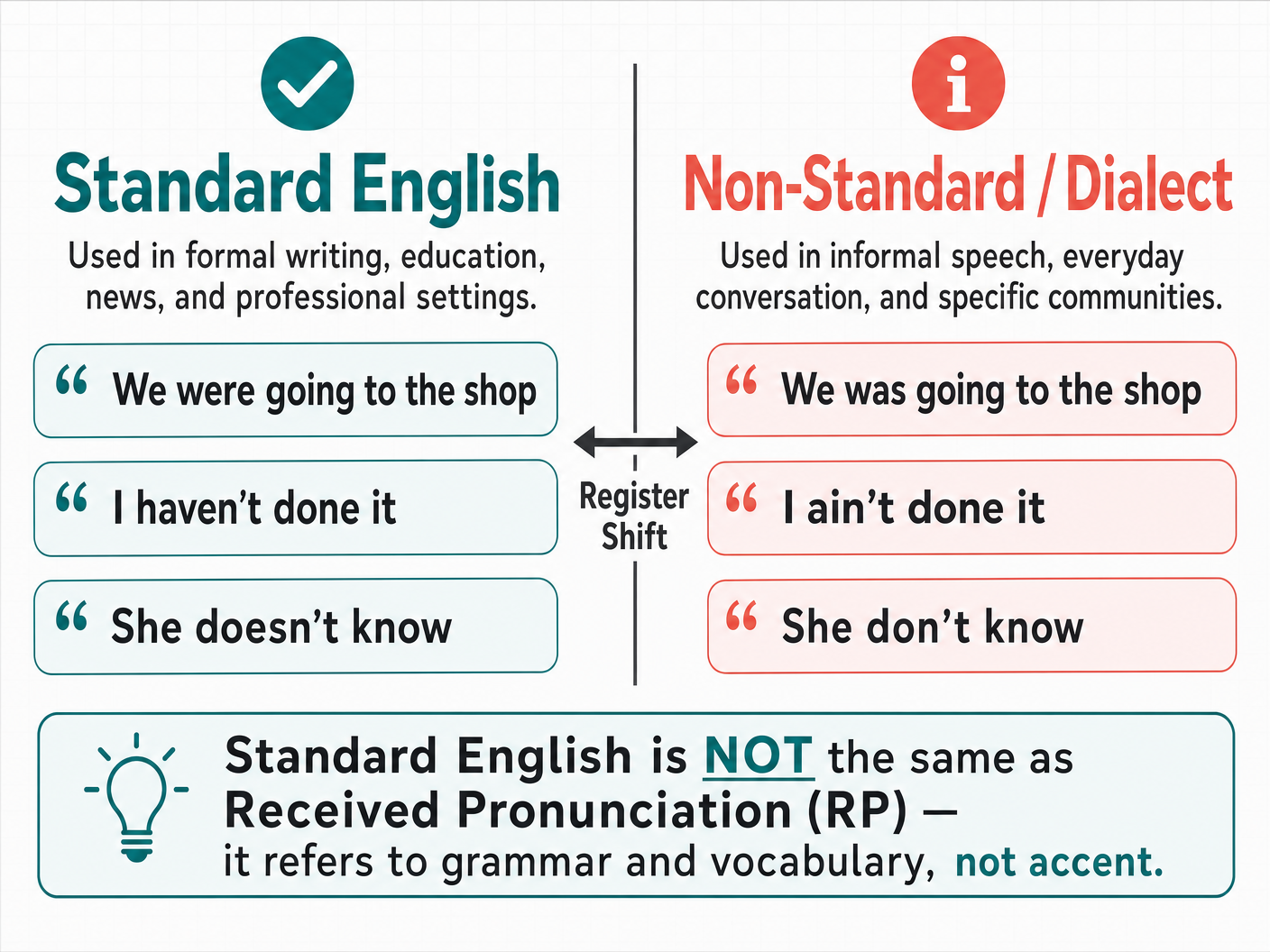
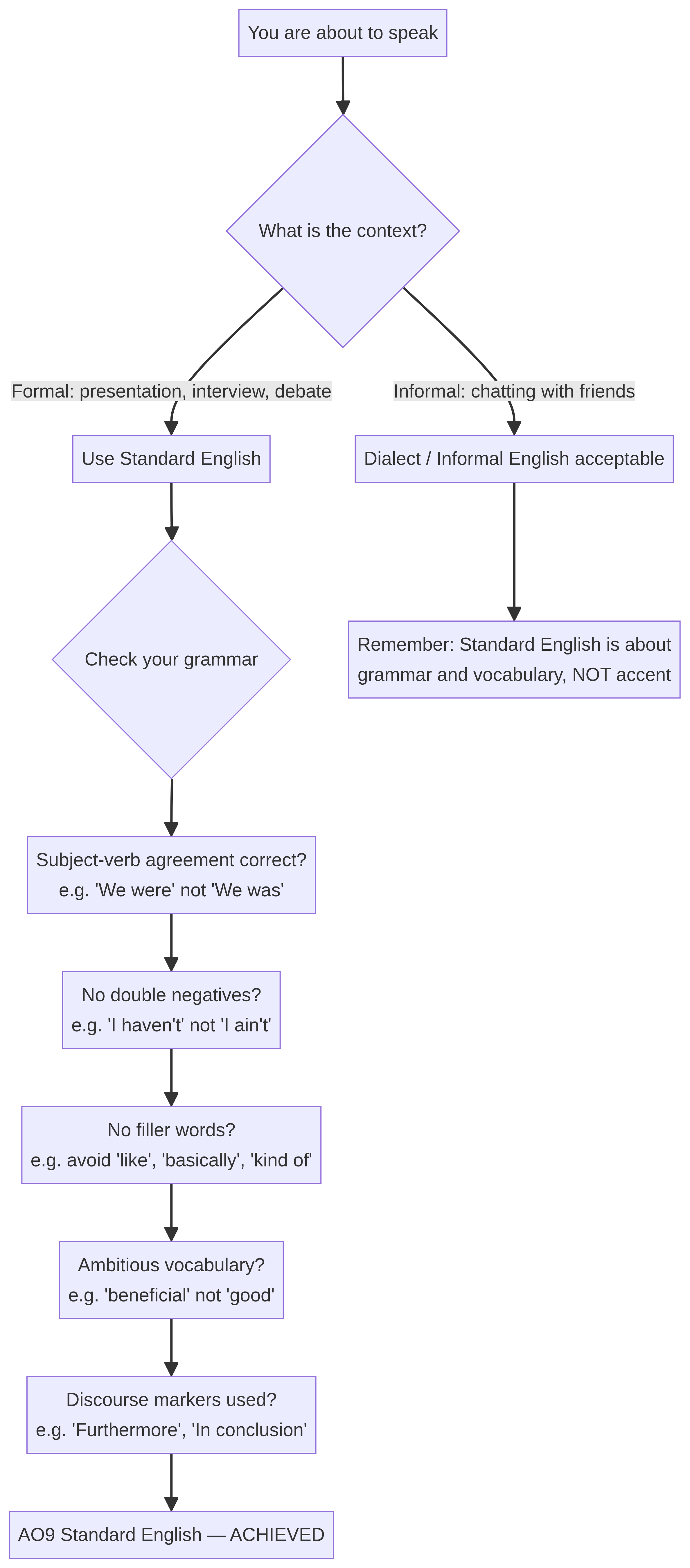
This is where many candidates lose marks. You must use spoken Standard English effectively. This means correct subject-verb agreement (e.g., 'We were' not 'We was'), avoiding double negatives, and using ambitious, formal vocabulary instead of slang or filler words.
Standard English vs. Dialect
It is vital to understand that Standard English is about grammar and vocabulary, not your accent. You can achieve a Distinction while speaking in a strong regional accent, provided your grammatical structures are standard.
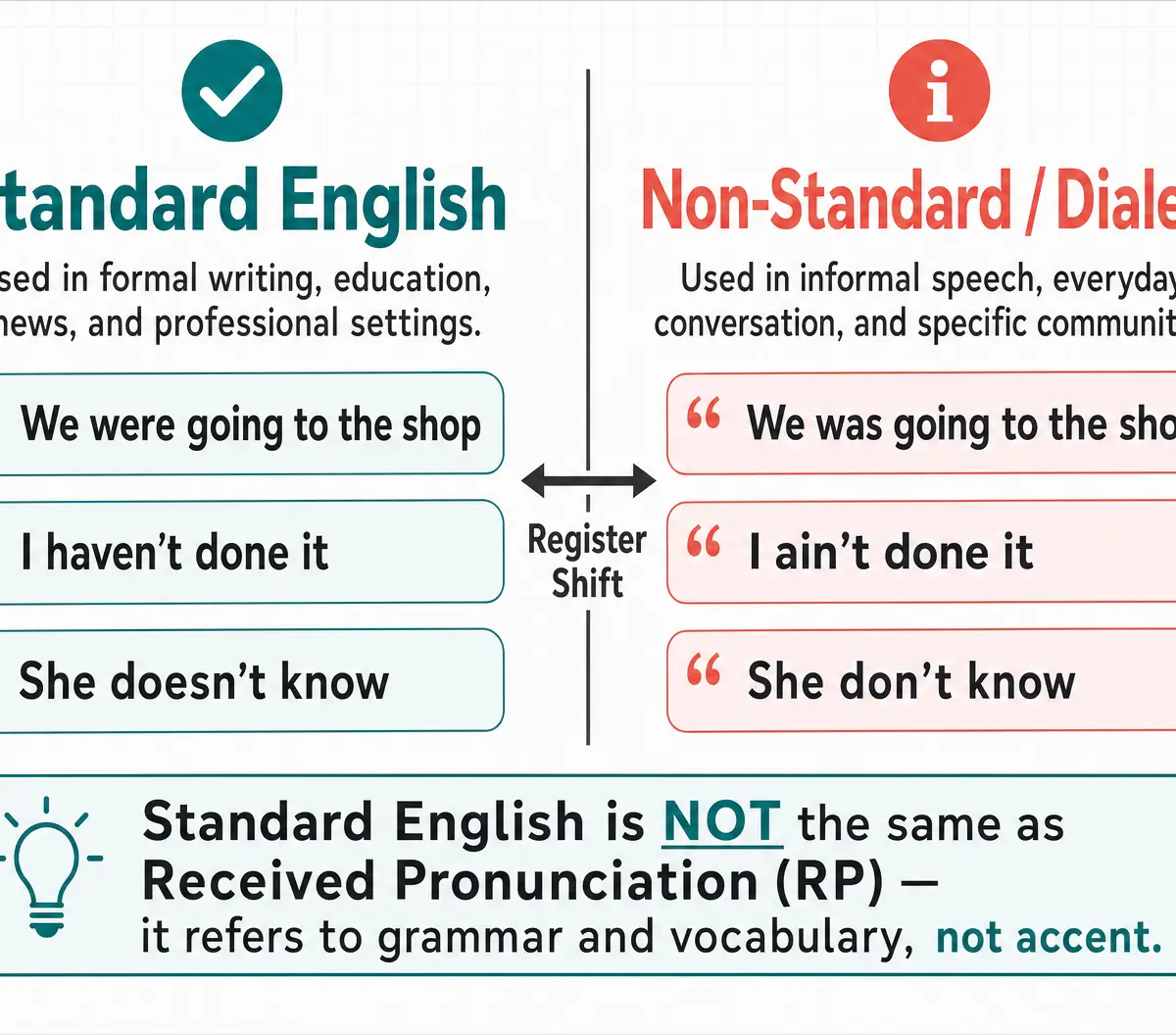
When preparing, be mindful of 'register shift'. In everyday conversation, we naturally use informal language, dialect words, and fillers ('like', 'basically'). In the formal setting of your assessment, you must consciously shift your register to Standard English.
Structuring Your Presentation
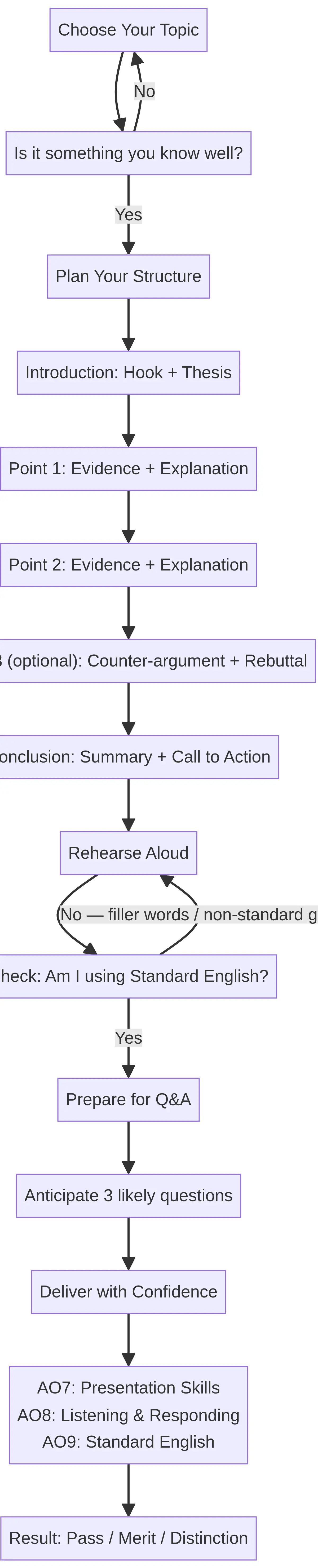
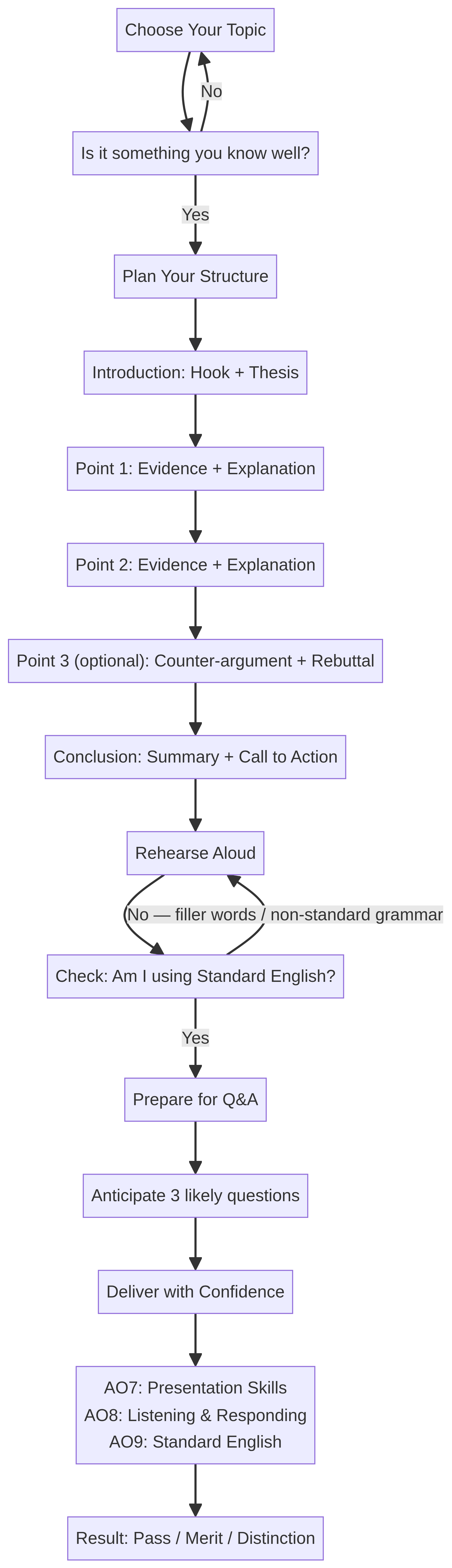
A successful presentation needs a clear structure:
- The Hook: An engaging opening that captures the audience's attention.
- The Thesis: A clear statement of what you will be discussing or arguing.
- Developed Points: Two or three main points, each supported by evidence or detailed explanation.
- The Conclusion: A summary of your main arguments and a final, memorable thought.
Preparing for the Q&A
The Q&A is not an afterthought; it is where AO8 is assessed. To prepare:
- Anticipate obvious questions and think about how you would answer them.
- Listen to the entire question before you start speaking.
- It is perfectly acceptable to pause and think. A thoughtful pause is better than a rushed, informal answer.
- Maintain your formal register (Standard English) throughout the Q&A.
Visual Resources
4 diagrams and illustrations
Interactive Diagrams
2 interactive diagrams to visualise key concepts
Conceptual Flow Outline
Spoken Language Preparation Flowchart
Conceptual Flow Outline
Register and Standard English Decision Tree
Worked Examples
3 worked examples — open one to explore the question and available guidance.
Practice Questions
Test your understanding — click to reveal model answers
Which of the following sentences uses Standard English? A) We was waiting for the bus for an hour. B) I haven't got no money left. C) She doesn't know the answer to the question. D) He done it yesterday.
Hint: Look for correct subject-verb agreement and avoid double negatives.
Rewrite the following informal sentence into formal Spoken Standard English: 'Basically, the government ain't doing enough to sort out the climate crisis, and it's like, really bad for our future.'
Hint: Remove filler words ('basically', 'like'), correct the grammar ('ain't'), and elevate the vocabulary ('sort out', 'really bad').
Explain the difference between Standard English and Received Pronunciation (RP), and why this distinction is important for the Spoken Language Endorsement.
Hint: Define both terms clearly. One is about grammar/vocabulary, the other is about accent.
During your presentation Q&A, a teacher asks a question you do not understand. Provide a response in Spoken Standard English that handles the situation effectively.
Hint: Don't panic or use informal language like 'I dunno'. Politely ask for clarification.
Evaluate the impact of using discourse markers in a formal presentation.
Hint: Think about how discourse markers affect the audience's understanding and the overall register of the speech.