Pearson Edexcel · A-Level · French
Grammar
Mastering French grammar is the key to unlocking the highest mark bands in your GCSE. This guide focuses on complex structures like the subjunctive, passive voice, and relative pronouns, providing the analytical tools needed to excel in discussions about French society.
- 4 min read
- 3 worked examples
- 5 practice questions
- 6 key terms
Study Notes
Overview
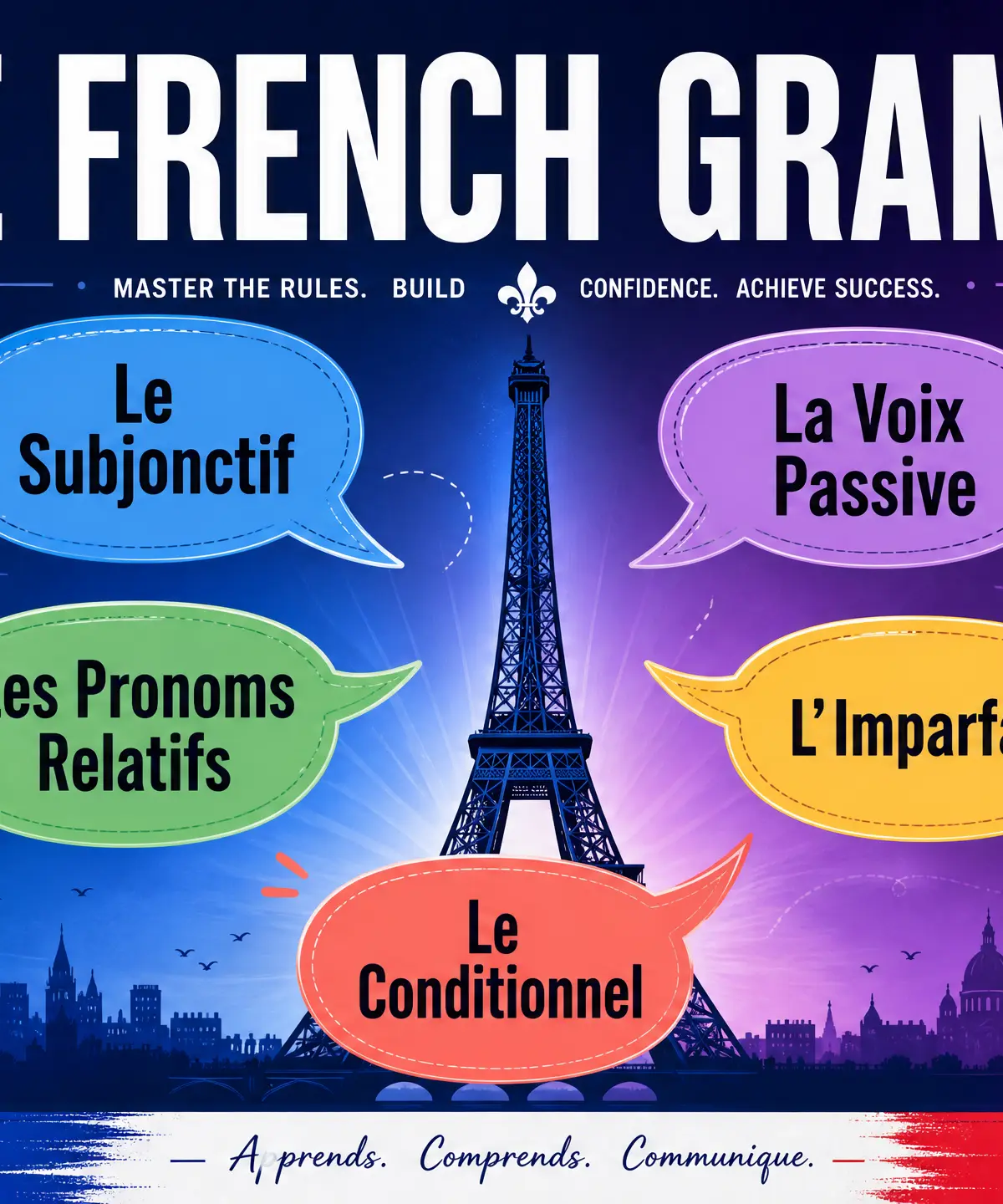
This study guide targets the most critical grammar structures required for GCSE French, specifically tailored for discussing 'Les changements dans la société française'. Examiners explicitly reward candidates who demonstrate accurate manipulation of complex language. To access the highest mark bands (Grades 7-9), you must move beyond simple description and the present tense. You are expected to present valid arguments, analyze social trends, and engage in natural discourse. This guide covers verb tenses, the subjunctive mood, the passive voice, and relative pronouns, showing you exactly how to apply them to topics like family structures, the education system, and the world of work.
Key Grammatical Structures
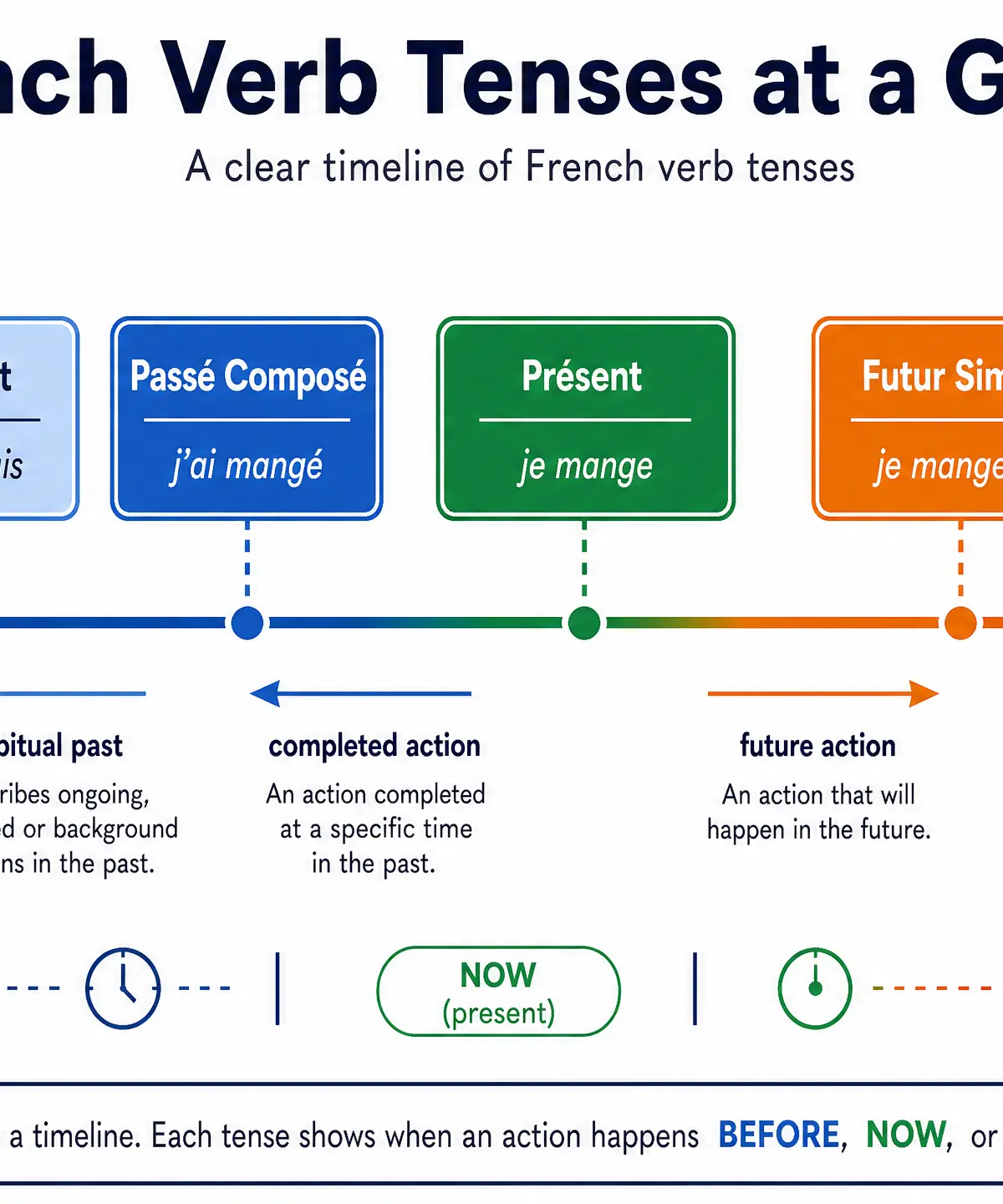
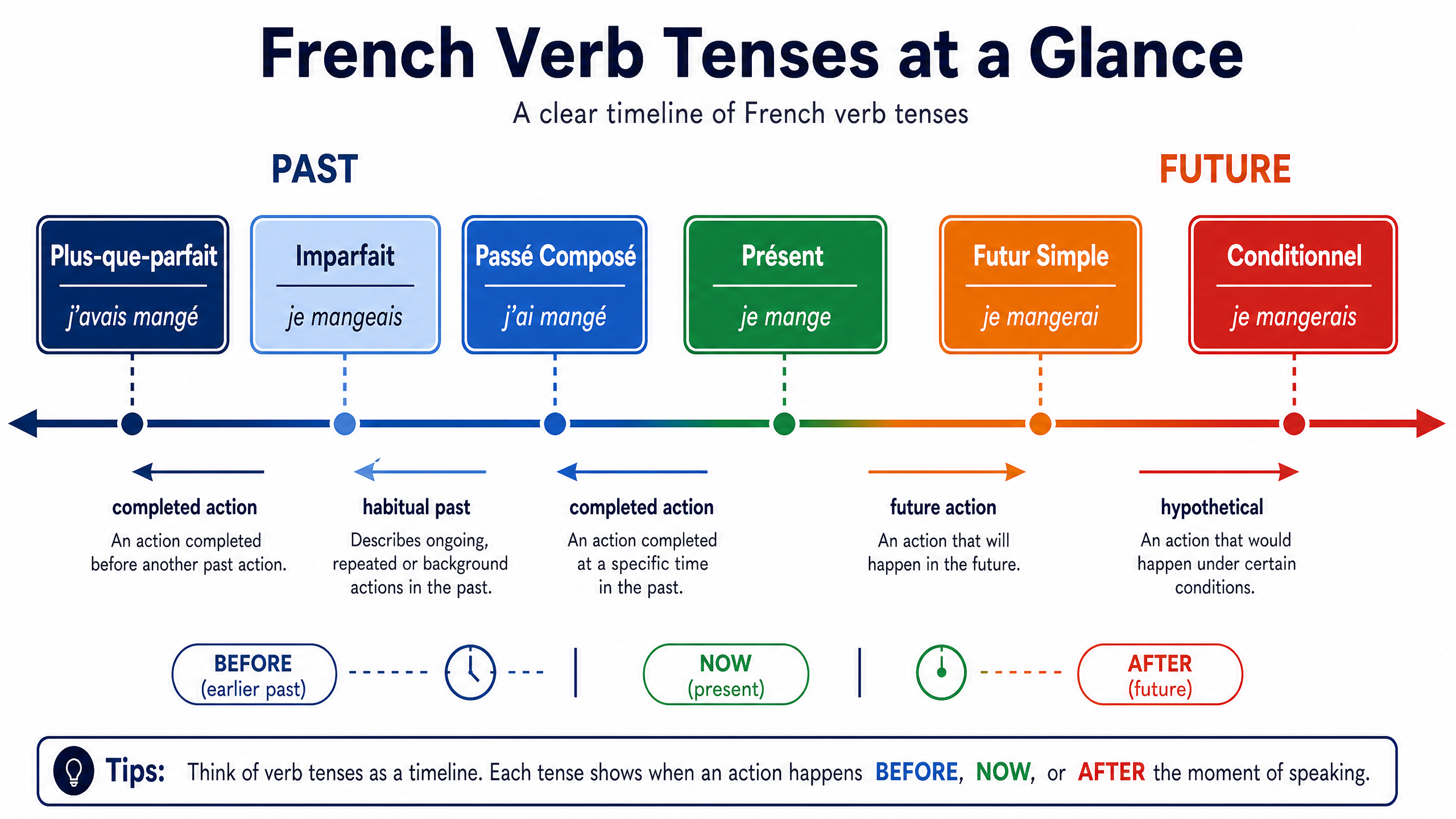
Verb Tenses: Passé Composé vs. Imparfait
When to use: The passé composé is for completed actions at a specific time in the past. The imparfait is for ongoing, habitual, or background actions.
Formation:
- Passé Composé: Present tense of avoir or être + past participle (e.g., j'ai travaillé, elle est allée).
- Imparfait: Take the nous form of the present tense, drop -ons, add -ais, -ais, -ait, -ions, -iez, -aient (e.g., je travaillais).
Why it matters: Examiners look for your ability to narrate events accurately. Confusing these two is a common error. Use the imparfait to set the scene and the passé composé for the main events.
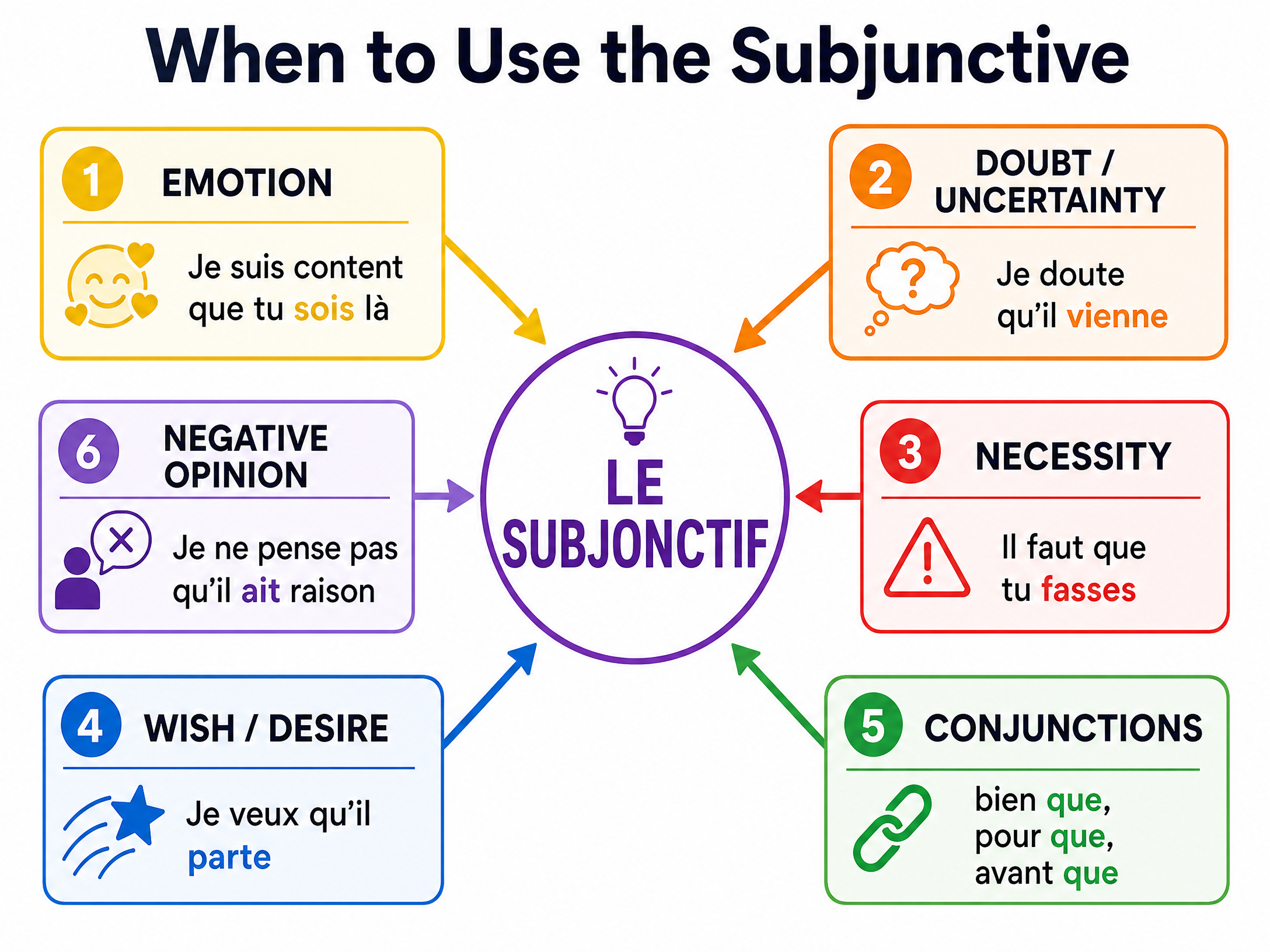
The Subjunctive Mood (Le Subjonctif)
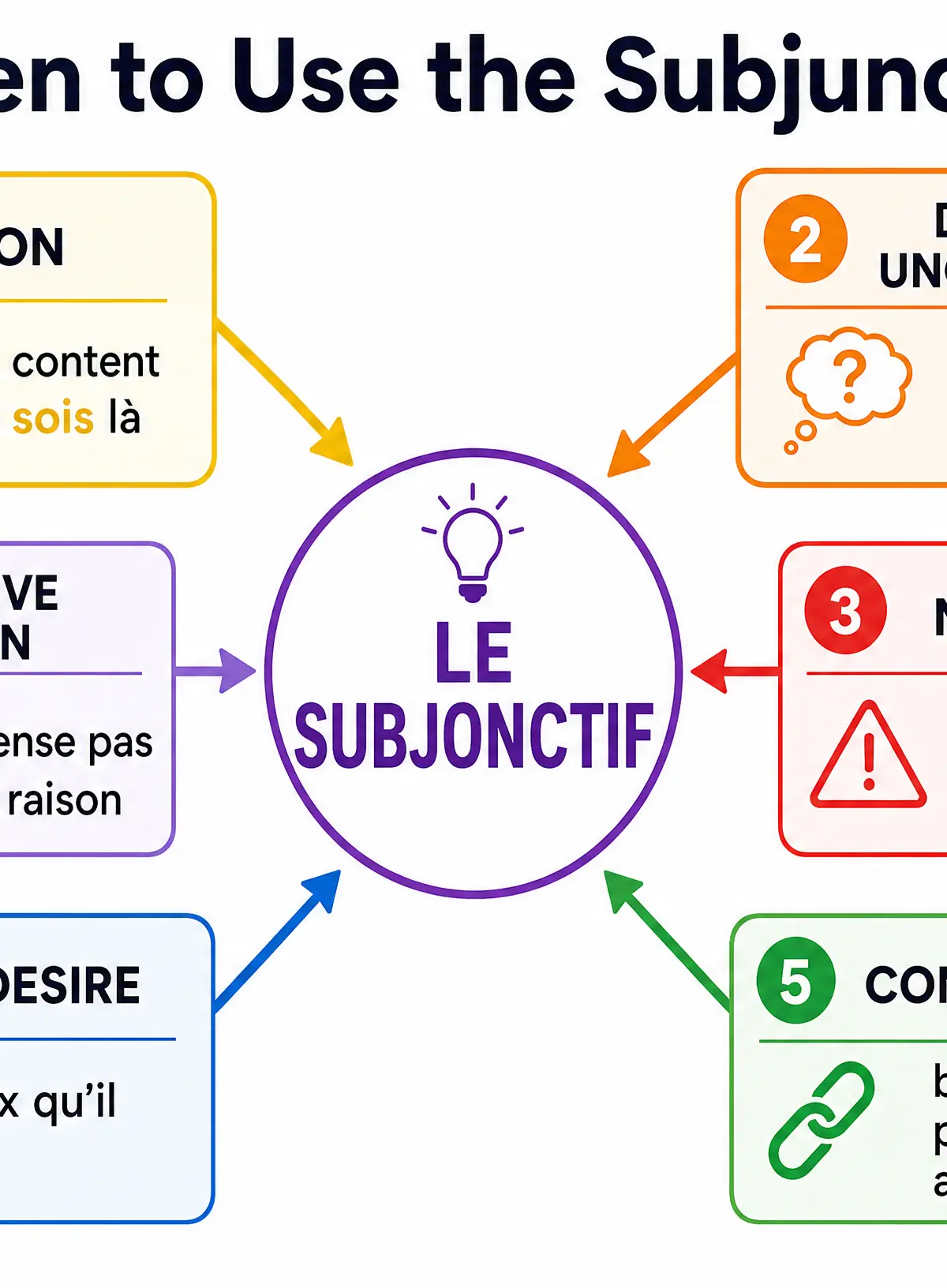
When to use: To express subjectivity, doubt, emotion, or necessity. It is almost always preceded by que.
Key Triggers:
- Il faut que (It is necessary that)
- Bien que (Although)
- Je veux que (I want)
- Je doute que (I doubt that)
Why it matters: Using the subjunctive correctly is a hallmark of an advanced candidate. It demonstrates high-level language manipulation and is perfect for expressing opinions on social issues.
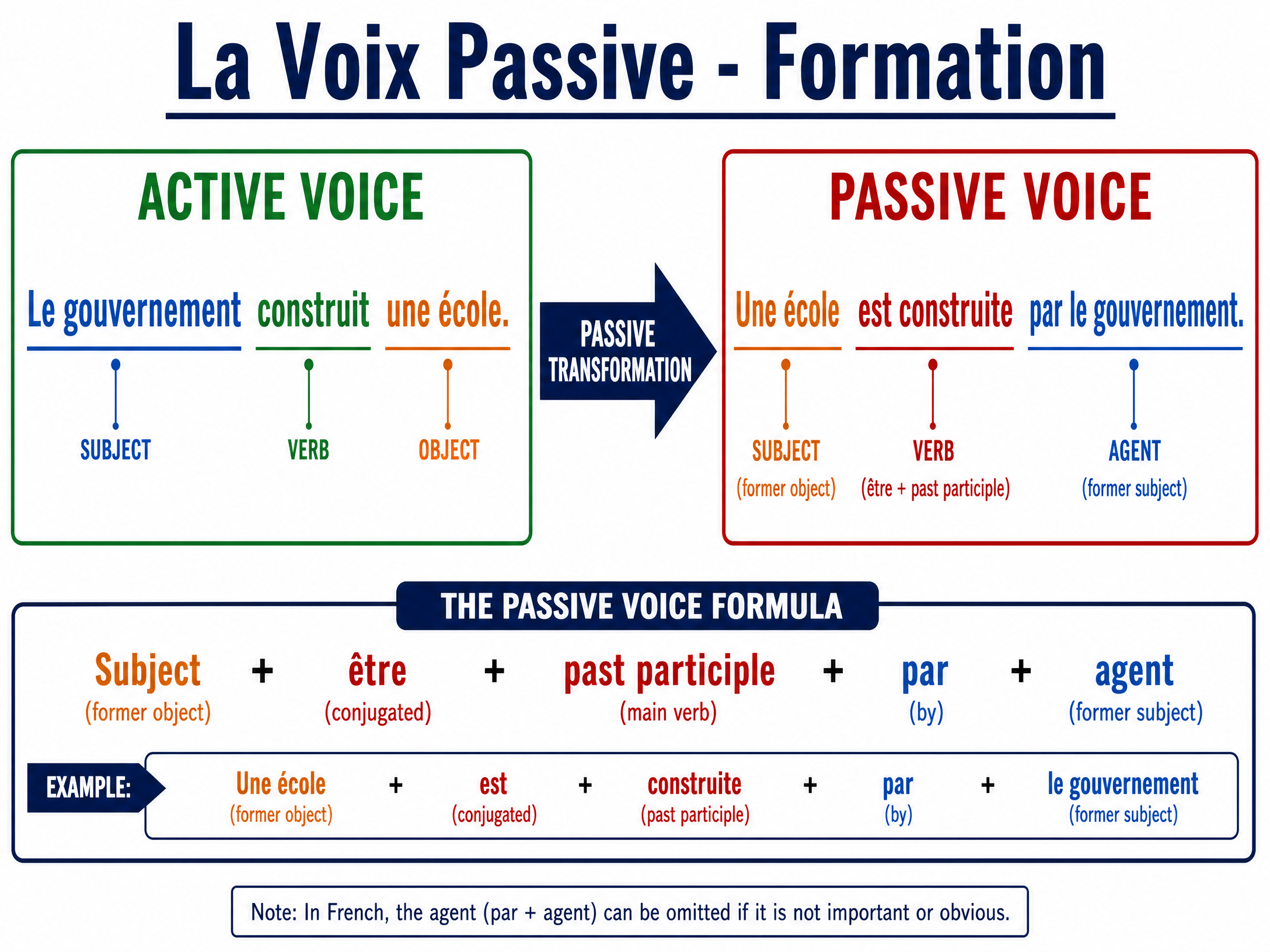
The Passive Voice (La Voix Passive)
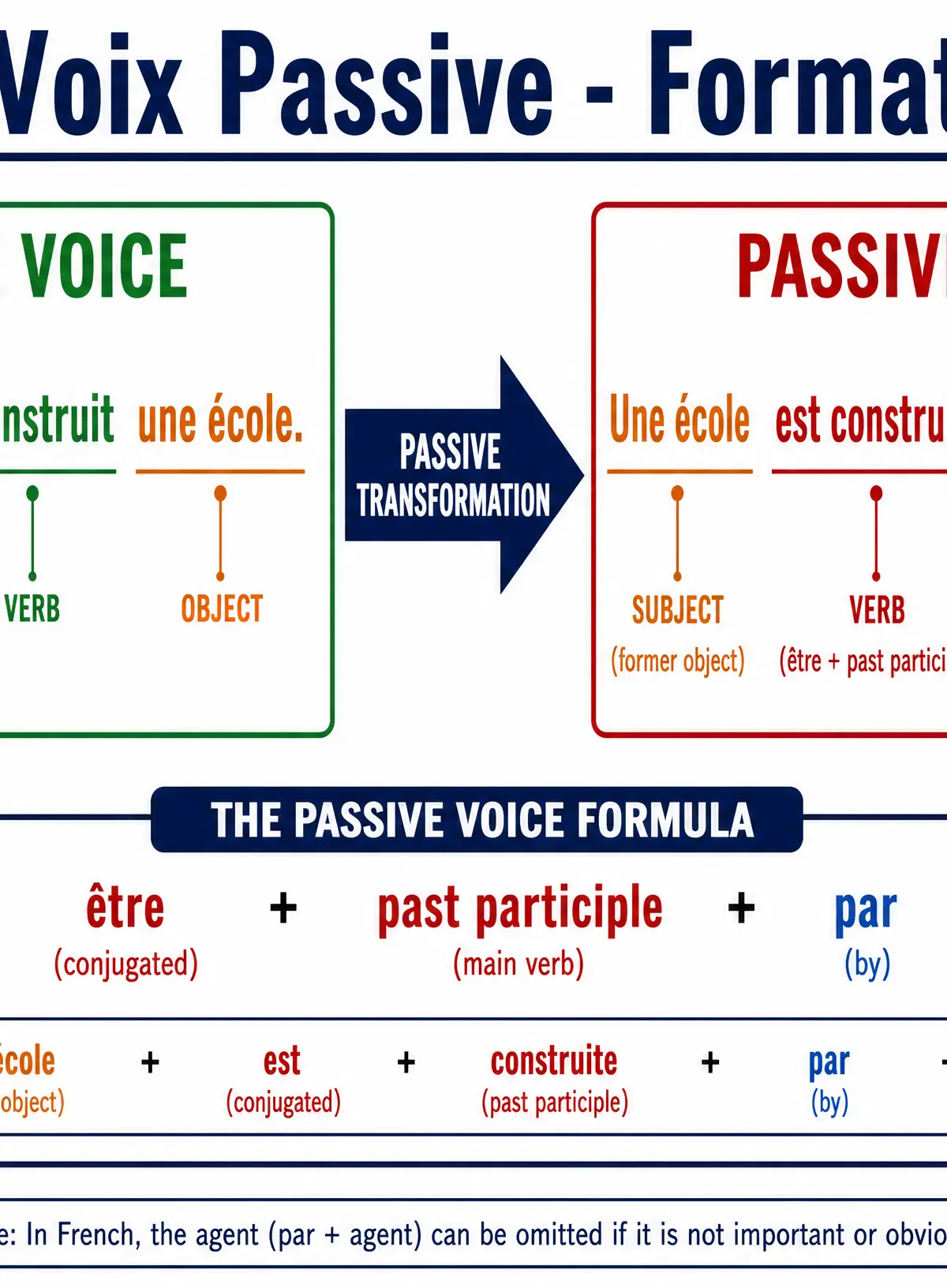
When to use: When the focus is on the action or the object receiving the action, rather than who is performing it.
Formation: Subject + être (conjugated) + past participle (must agree with subject) + par + agent.
- Active: Le gouvernement a adopté la loi.
- Passive: La loi a été adoptée par le gouvernement.
Why it matters: It adds variety to your sentence structures and sounds more formal and analytical, which is ideal for writing tasks and complex speaking responses.
Relative Pronouns (Les Pronoms Relatifs)
When to use: To link clauses and avoid repetition, creating fluid, complex sentences.
The Core Four:
- Qui: Replaces the subject (who/which/that). L'homme qui parle. (The man who is speaking.)
- Que: Replaces the object (who/whom/which/that). Le livre que je lis. (The book that I am reading.)
- Dont: Replaces de + noun (whose/of which). Le sujet dont nous parlons. (The subject of which we are speaking.)
- Où: Replaces a place or time (where/when). L'année où je suis né. (The year when I was born.)
Why it matters: These are essential for the 'natural, fluent discourse' examiners look for in the speaking assessment.
Podcast Revision
Listen to this 10-minute audio guide covering all these concepts with examiner tips and a quick-fire quiz:

Worked Examples
3 worked examples — open one to explore the question and available guidance.
Practice Questions
Test your understanding — click to reveal model answers
Translate into French: 'I want the government to do more for young people.'
Hint: Think about the trigger phrase 'I want' and what mood it requires for the following verb.
Speaking preparation: How would you express doubt about the effectiveness of a new law?
Hint: Use a subjunctive trigger for doubt.
Rewrite this sentence in the passive voice: 'Les syndicats organisent la manifestation.'
Hint: The object becomes the subject. Watch out for agreement on the past participle.
Fill in the correct relative pronoun (qui, que, dont, où): 'C'est la ville ___ j'ai grandi.'
Hint: It refers to a place.
Fill in the correct relative pronoun: 'C'est un problème ___ m'inquiète beaucoup.'
Hint: The pronoun is the subject of the verb 'inquiète'.