Pearson Edexcel · A-Level · French
Independent Research Project (IRP)
Master Theme 1 of the GCSE French IRP with this comprehensive guide to 'Les changements dans la société française'. Explore the evolution of family structures, the world of work, and the education system, while learning the analytical skills and complex language structures examiners demand.
- 4 min read
- 3 worked examples
- 5 practice questions
- 6 key terms
Study Notes
Overview
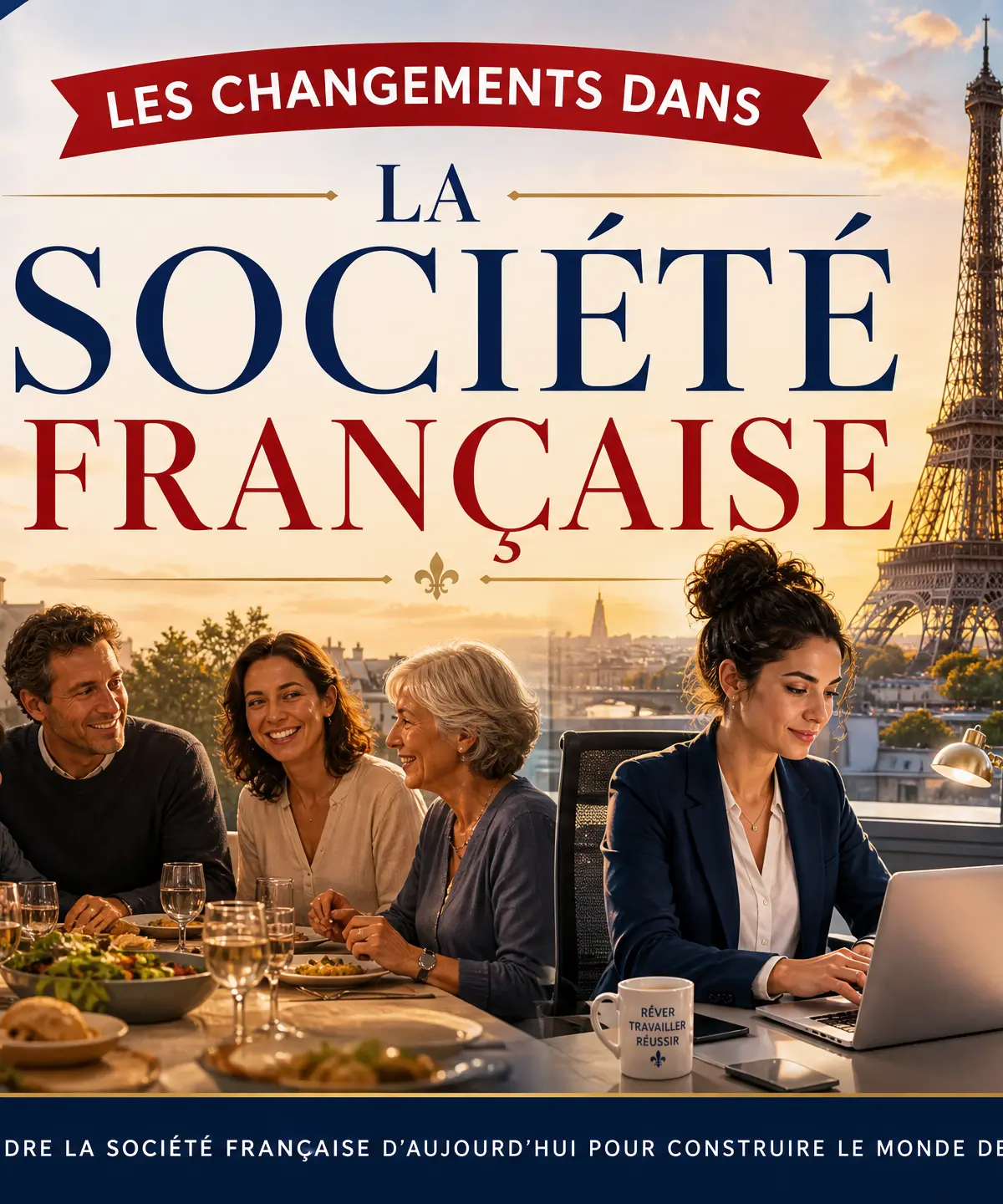
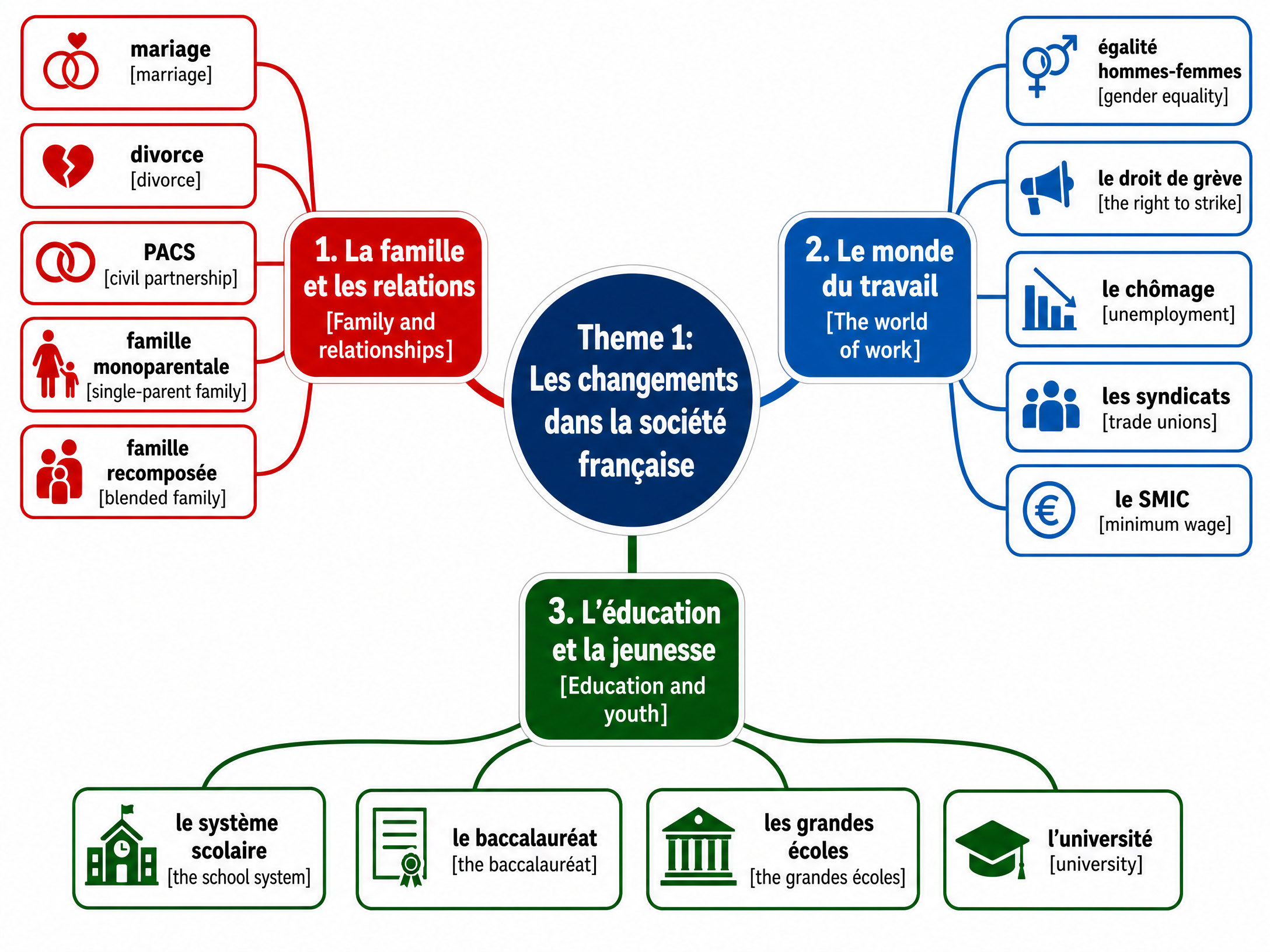
The Independent Research Project (IRP) is a crucial component of the GCSE French speaking assessment. For Theme 1, 'Les changements dans la société française' (Changes in French Society), examiners expect you to move beyond simple description and engage in critical analysis of social trends. This means not just stating that family structures have changed, but explaining how and why, supported by specific facts, statistics, and examples. You will need to demonstrate a deep understanding of the cultural and social context of France, from the rise of the PACS to the enduring significance of the droit de grève (right to strike) and the baccalauréat. Furthermore, to access the highest mark bands, you must use complex linguistic structures such as the subjunctive, the passive voice, and relative pronouns naturally within your discussion.
Key Themes & Developments
La famille et les relations (Family and Relationships)
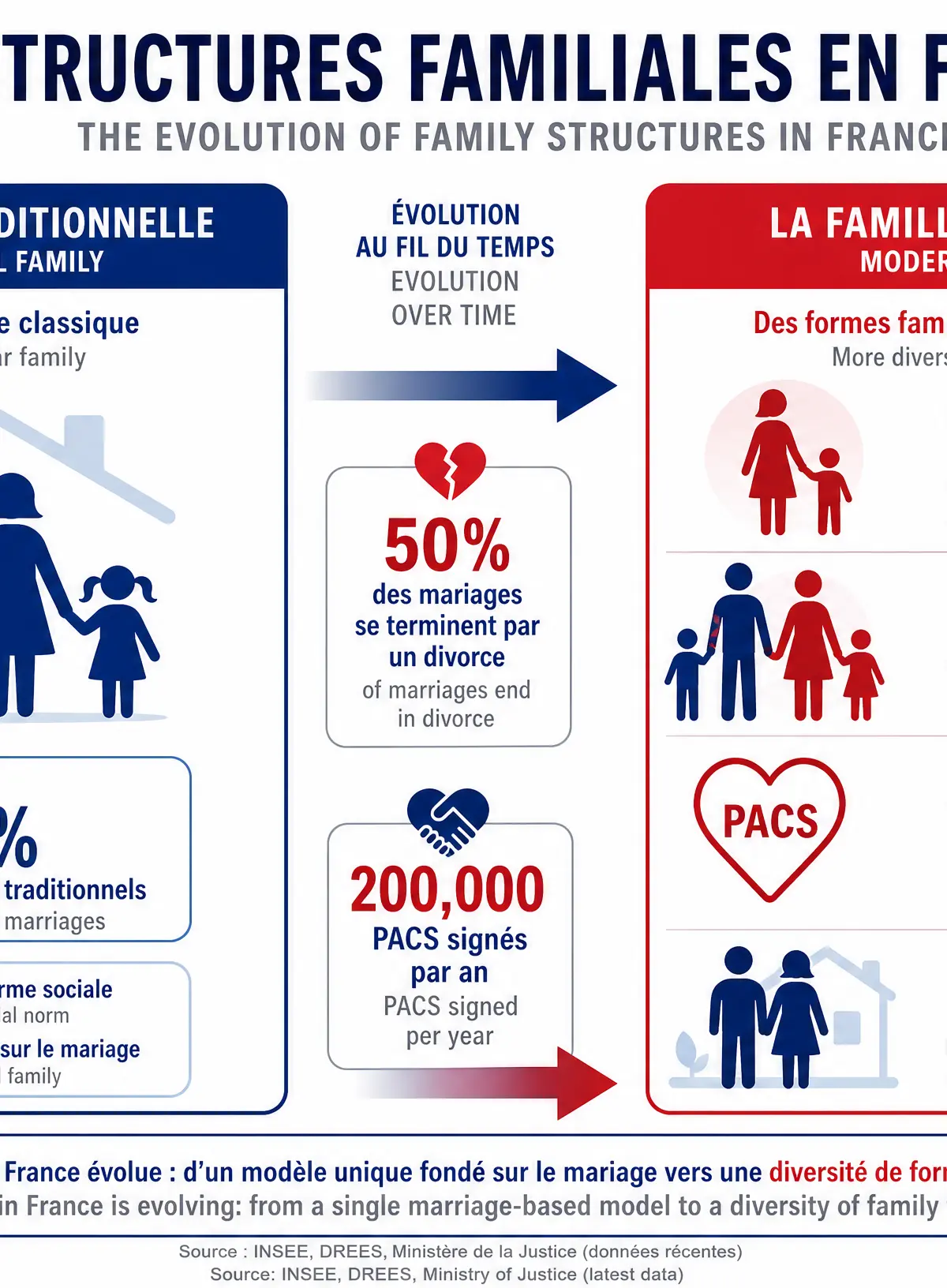
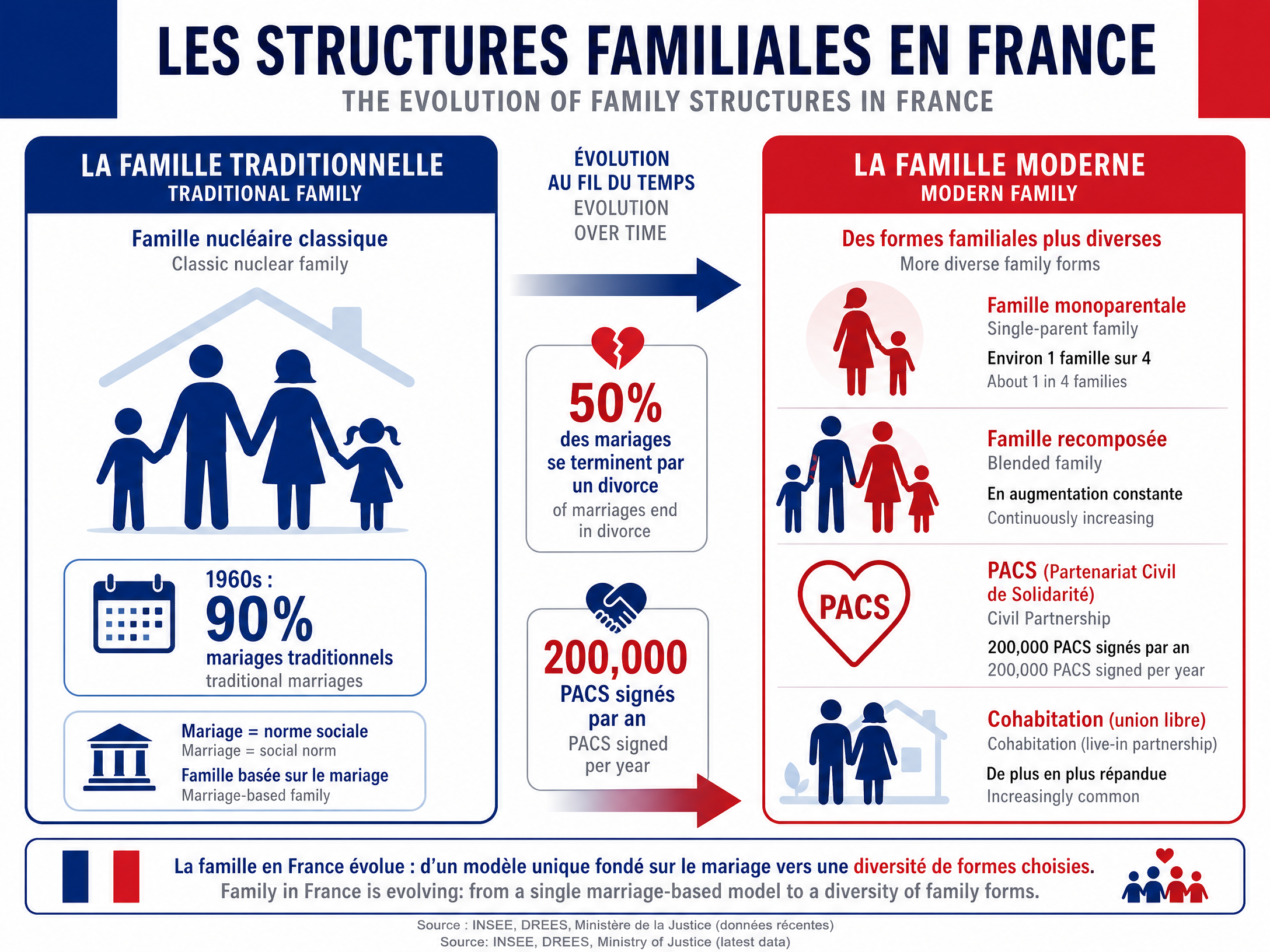
Key Trend: The shift from the traditional nuclear family to diverse family structures.
What happened: In the 1960s, marriage was the overwhelming norm. Today, approximately 50% of marriages in France end in divorce. This has led to a significant increase in familles monoparentales (single-parent families), which now make up about 1 in 4 families, and familles recomposées (blended families).
Specific Knowledge: The introduction of the PACS (Pacte Civil de Solidarité) in 1999 was a landmark change, offering legal partnership without marriage. Today, around 200,000 PACS are signed annually in France.
Why it matters: Examiners want you to analyse this shift. It reflects a secularisation of French society and a move towards individual choice over traditional religious or societal expectations.
Le monde du travail (The World of Work)
Key Trend: The balance between workers' rights and modern economic challenges.
What happened: France has a robust tradition of protecting workers, notably through the droit de grève (right to strike), which is constitutionally protected. However, challenges remain, particularly regarding l'égalité hommes-femmes (gender equality).
Specific Knowledge: Despite the 2011 loi Copé-Zimmermann requiring 40% female representation on company boards, a gender pay gap of roughly 17% persists. The SMIC (salaire minimum interprofessionnel de croissance), introduced in 1970, guarantees a minimum wage.
Why it matters: You must be able to debate these issues. Is the propensity to strike a strength of French democracy or a hindrance to the economy? How effective is legislation in achieving true gender equality?
L'éducation et la jeunesse (Education and Youth)
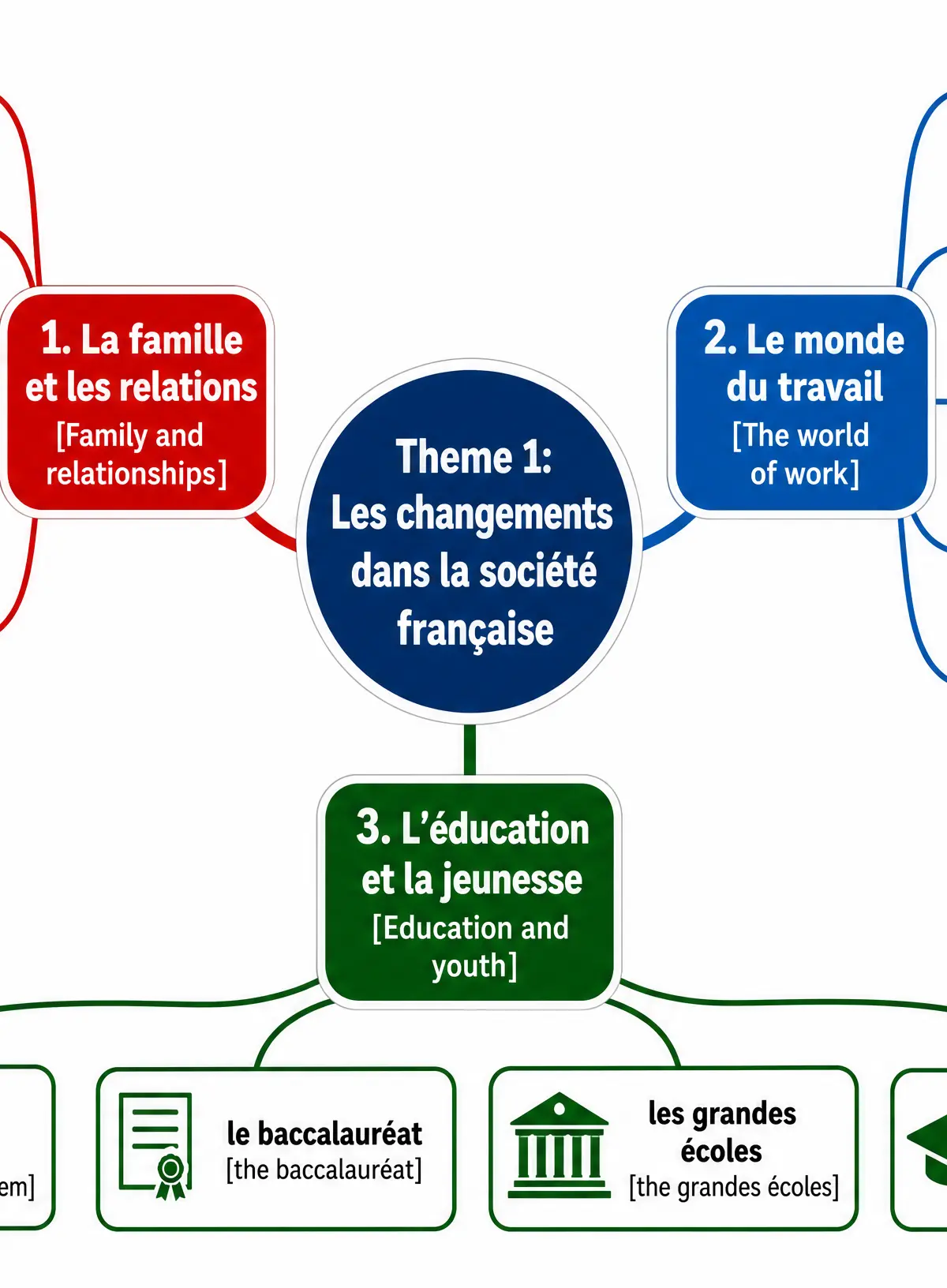
Key Trend: The role of the education system in shaping social mobility.
What happened: The French education system is highly centralised and secular (laïque). The baccalauréat (le bac), taken at age 18, is the definitive school-leaving qualification and holds immense cultural weight.
Specific Knowledge: Higher education is split between standard universities (accessible to anyone with a bac) and the highly selective grandes écoles (e.g., Sciences Po, École Polytechnique), which require rigorous preparatory classes (prépas).
Why it matters: The dual system of universities and grandes écoles is often criticised for perpetuating social inequality, as the latter are disproportionately attended by students from affluent backgrounds. This is a prime topic for analytical discussion.
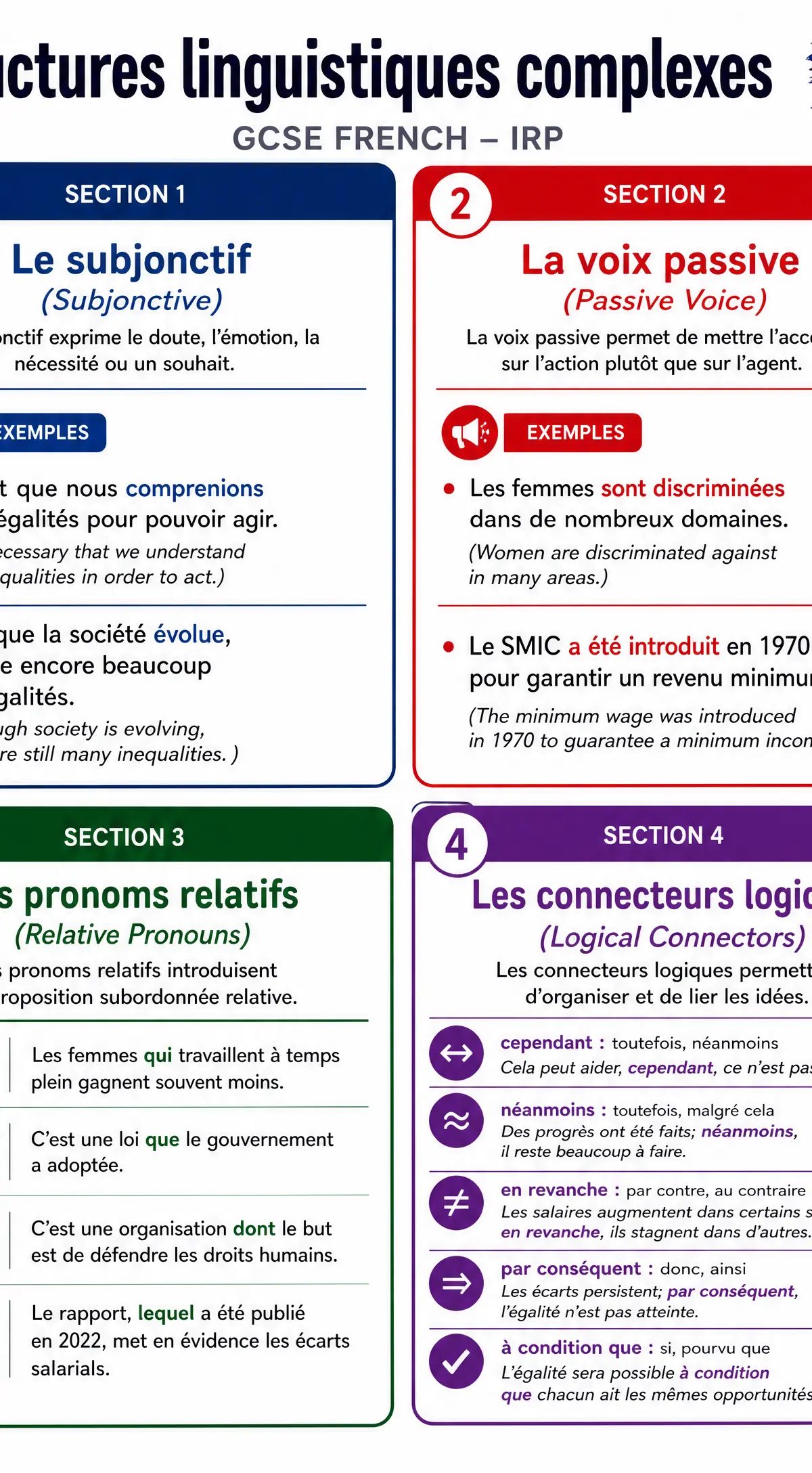
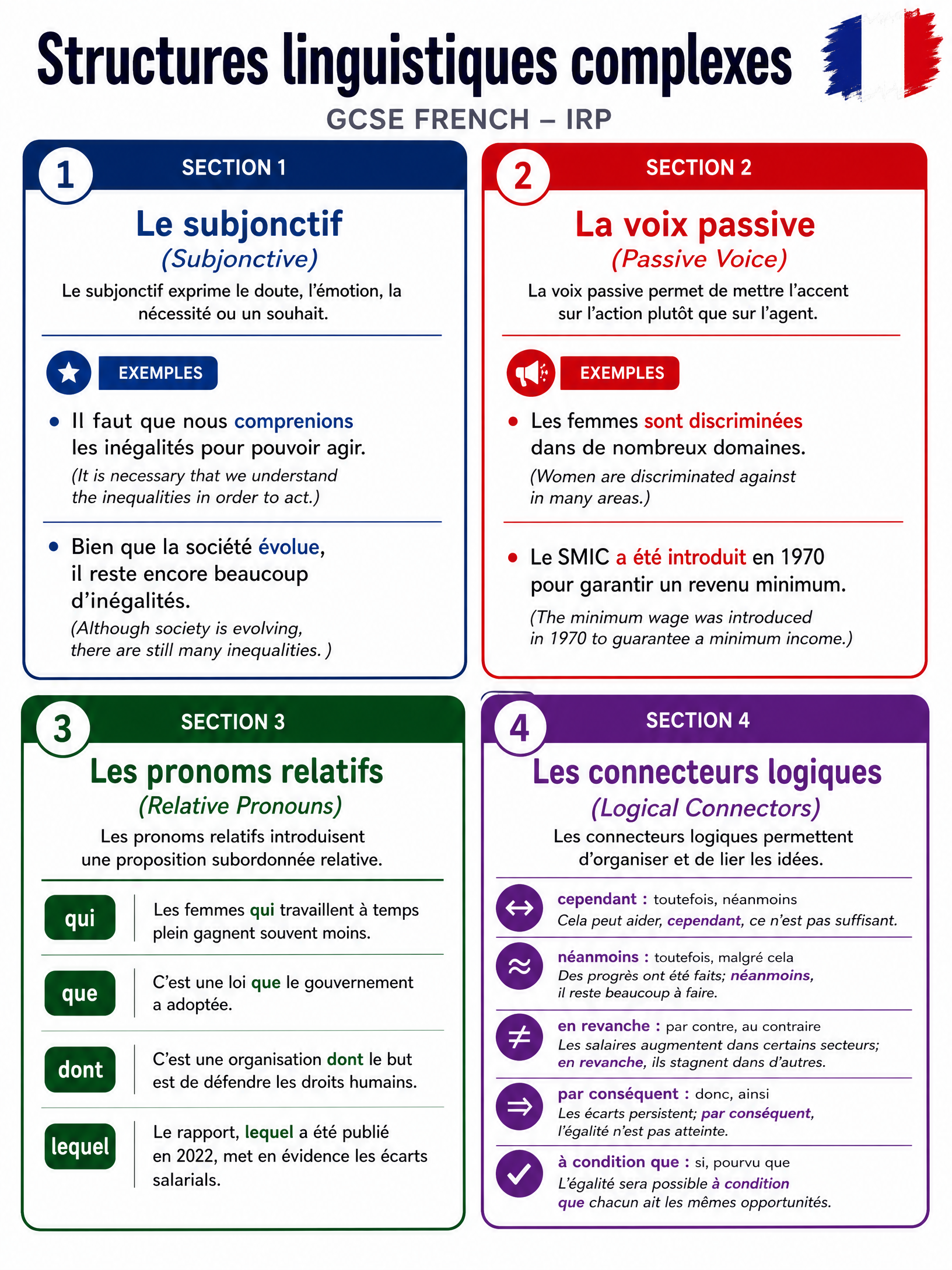
Complex Language Structures
To achieve top marks, you must integrate complex grammar.
Listen to the podcast below for a full walkthrough of the topic, including pronunciation guides and an examiner's perspective on how to succeed.

Visual Resources
3 diagrams and illustrations
Interactive Diagrams
1 interactive diagram to visualise key concepts
Diagram could not be rendered
Chronologie des changements sociaux clés
Worked Examples
3 worked examples — open one to explore the question and available guidance.
Practice Questions
Test your understanding — click to reveal model answers
Dans quelle mesure le mariage est-il encore important en France aujourd'hui ?
Hint: Provide a balanced argument. Acknowledge the decline of marriage but also mention alternative commitments like the PACS.
Pourquoi les grèves sont-elles si fréquentes en France ?
Hint: Connect the modern strikes to the historical and constitutional context of workers' rights in France.
Le système éducatif français est-il juste ?
Hint: Contrast the theoretical equality of the Republic with the practical elitism of the grandes écoles.
Quels sont les principaux défis pour les femmes dans le monde du travail en France ?
Hint: Mention the pay gap and the 'glass ceiling', but also acknowledge legislative efforts to improve the situation.
Quels sont les avantages et les inconvénients d'une famille recomposée ?
Hint: Provide a balanced view of the emotional and practical realities of blended families.