Pearson Edexcel · A-Level · French
Theme 1: Les changements dans la société française
Master Theme 1: Les changements dans la société française with this comprehensive guide. Explore the evolution of French families, the rigorous education system, and the unique world of work, while building the vocabulary and grammatical complexity needed to achieve top marks.
- 4 min read
- 3 worked examples
- 5 practice questions
- 7 key terms
Study Notes
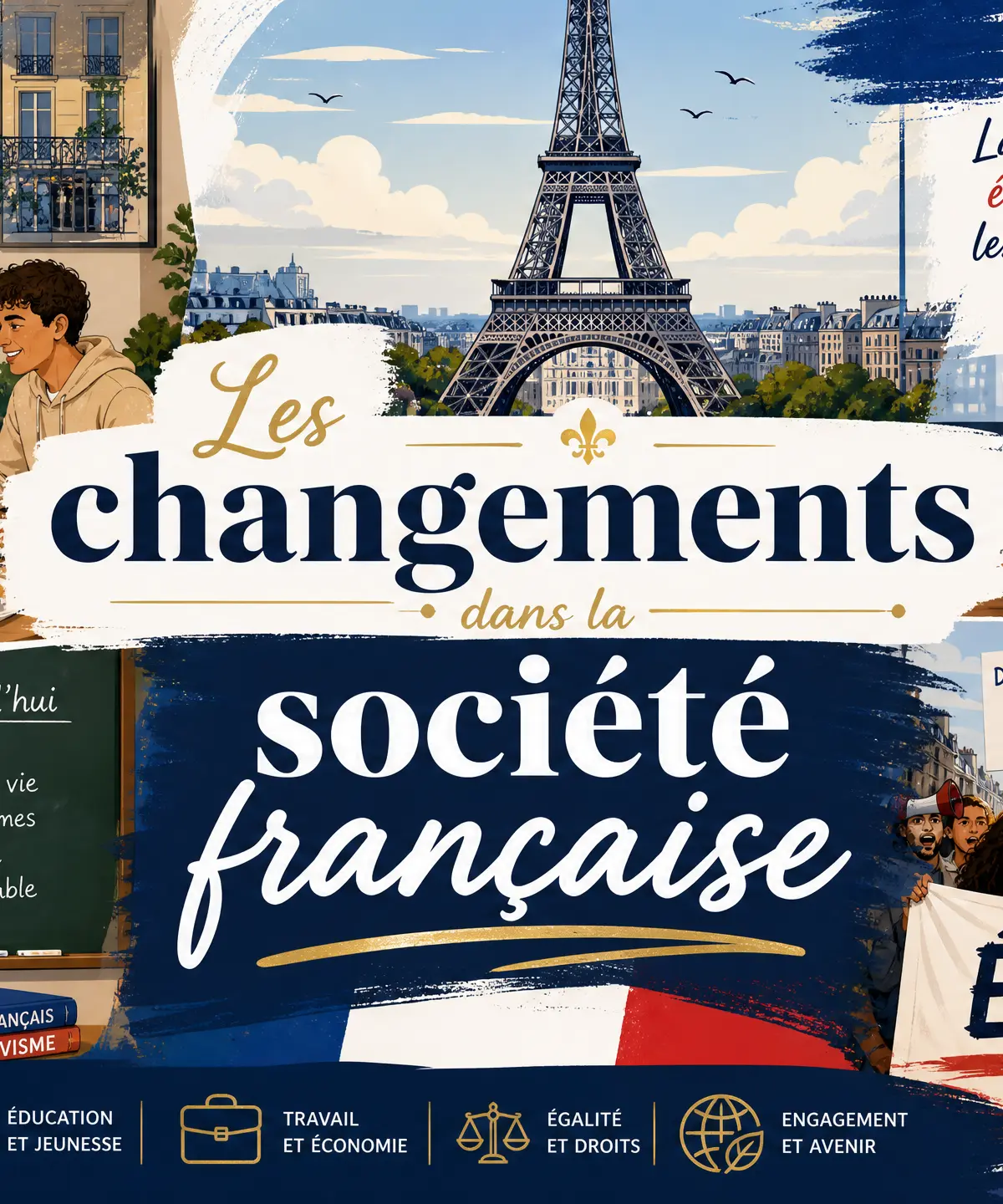
Overview
Theme 1: Les changements dans la société française is a fascinating exploration of modern France. It requires you to understand how French society has evolved over the past fifty years, moving from traditional structures to a more diverse and dynamic modern reality. Examiners expect you to go beyond simple descriptions; you must demonstrate cultural knowledge and analyze social trends. This means understanding the shift in family dynamics, the structure and pressures of the French education system, and the distinct attitudes towards work, such as the 35-hour week and the right to strike. By mastering these concepts and combining them with complex grammatical structures, you will be well-prepared to present and justify compelling arguments in your exams.
Listen to our comprehensive revision podcast to solidify your understanding:

Key Social Themes
La Famille (The Family)
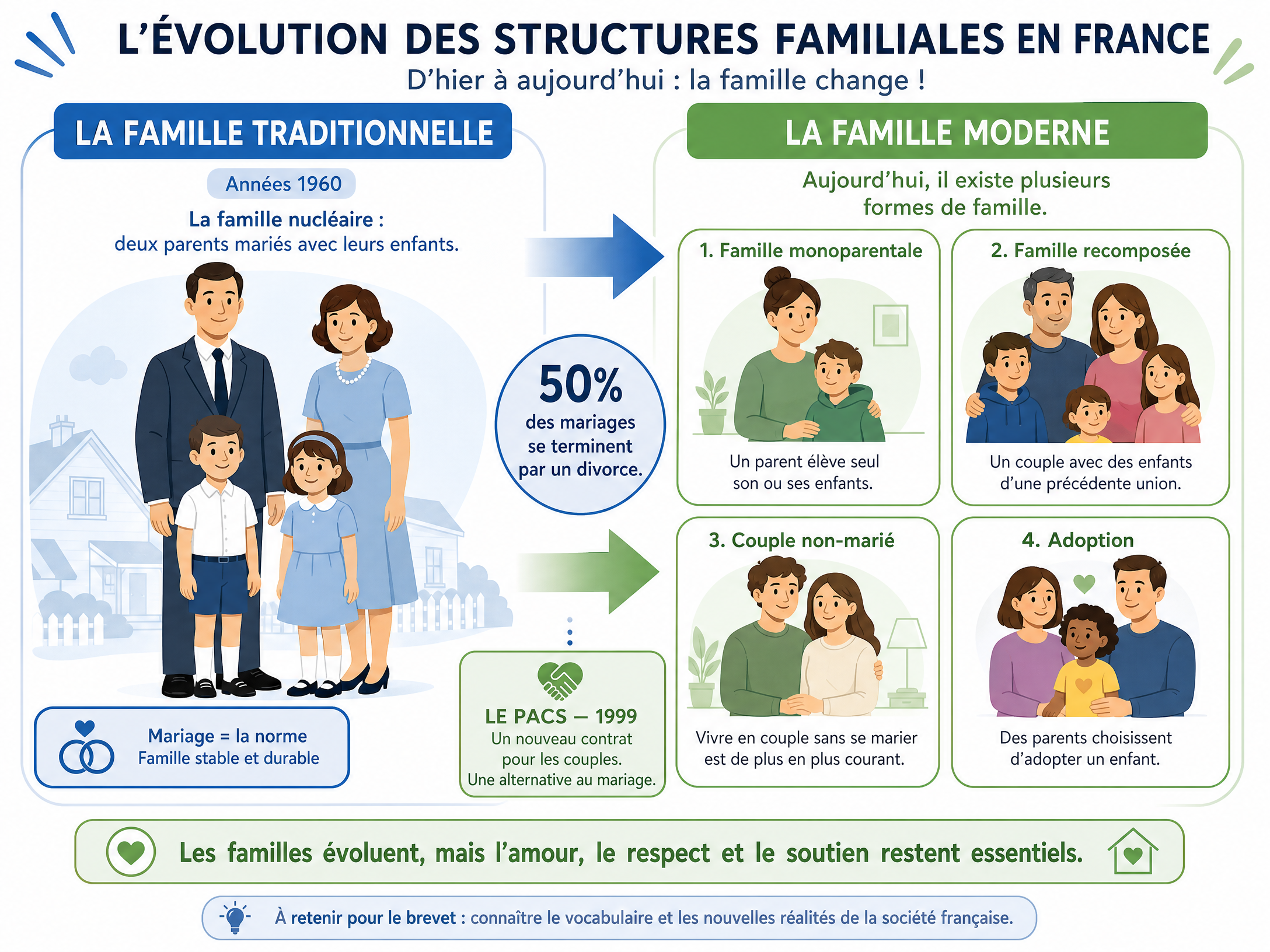
The Traditional Family: In the 1960s, the nuclear family (la famille nucléaire) was the standard, consisting of a married couple with children, where marriage was seen as a lifelong commitment.
The Modern Reality: Today, family structures are highly diverse. Around 50% of marriages in France end in divorce. This has led to a significant increase in single-parent families (la famille monoparentale) and blended families (la famille recomposée).
Key Development - Le PACS (1999): The Pacte Civil de Solidarité (PACS) was introduced in 1999. It is a civil partnership that offers legal rights to couples (both opposite-sex and same-sex) who choose not to marry. It is a crucial example of social change in France.
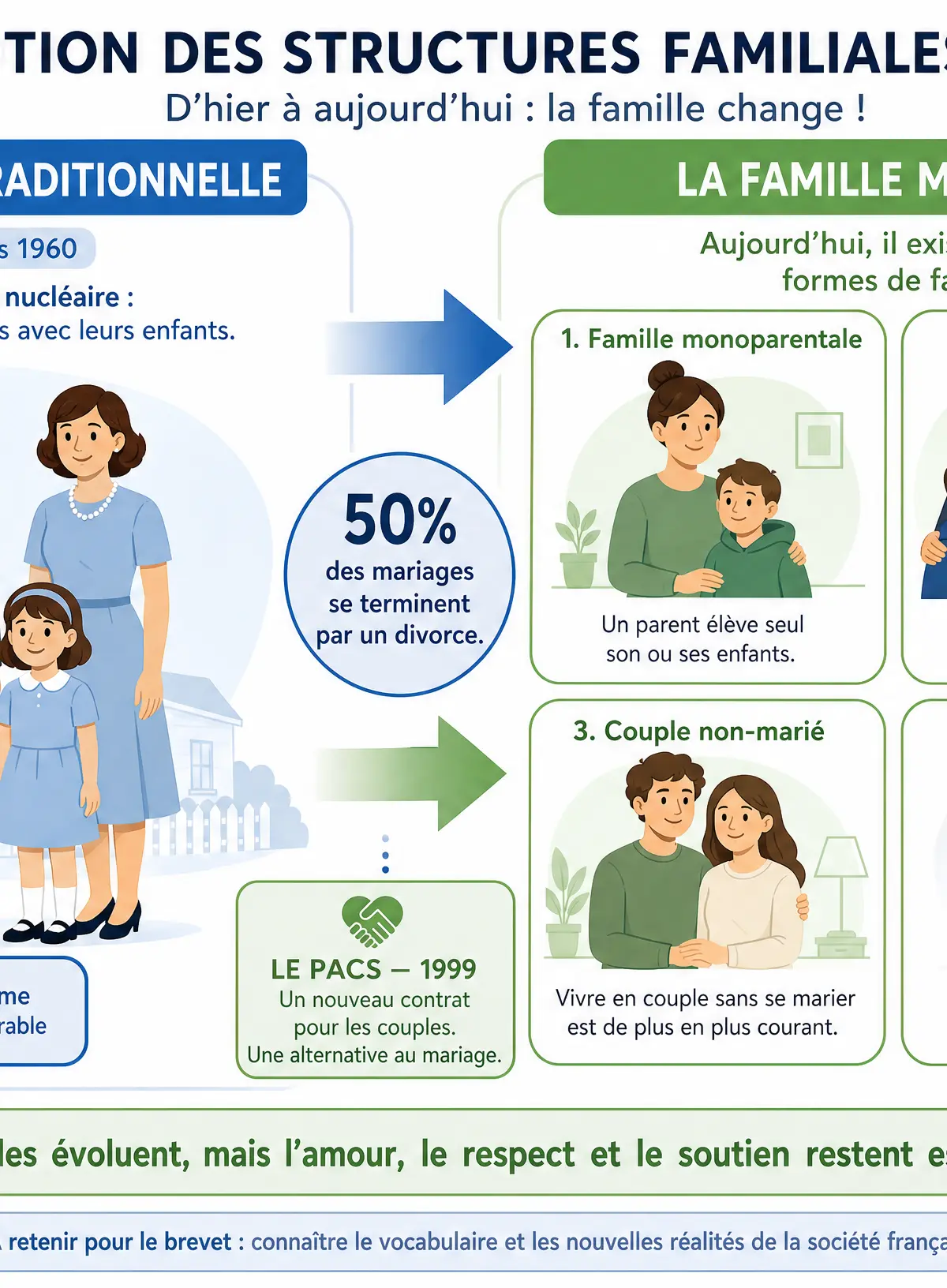
L'Éducation (Education)
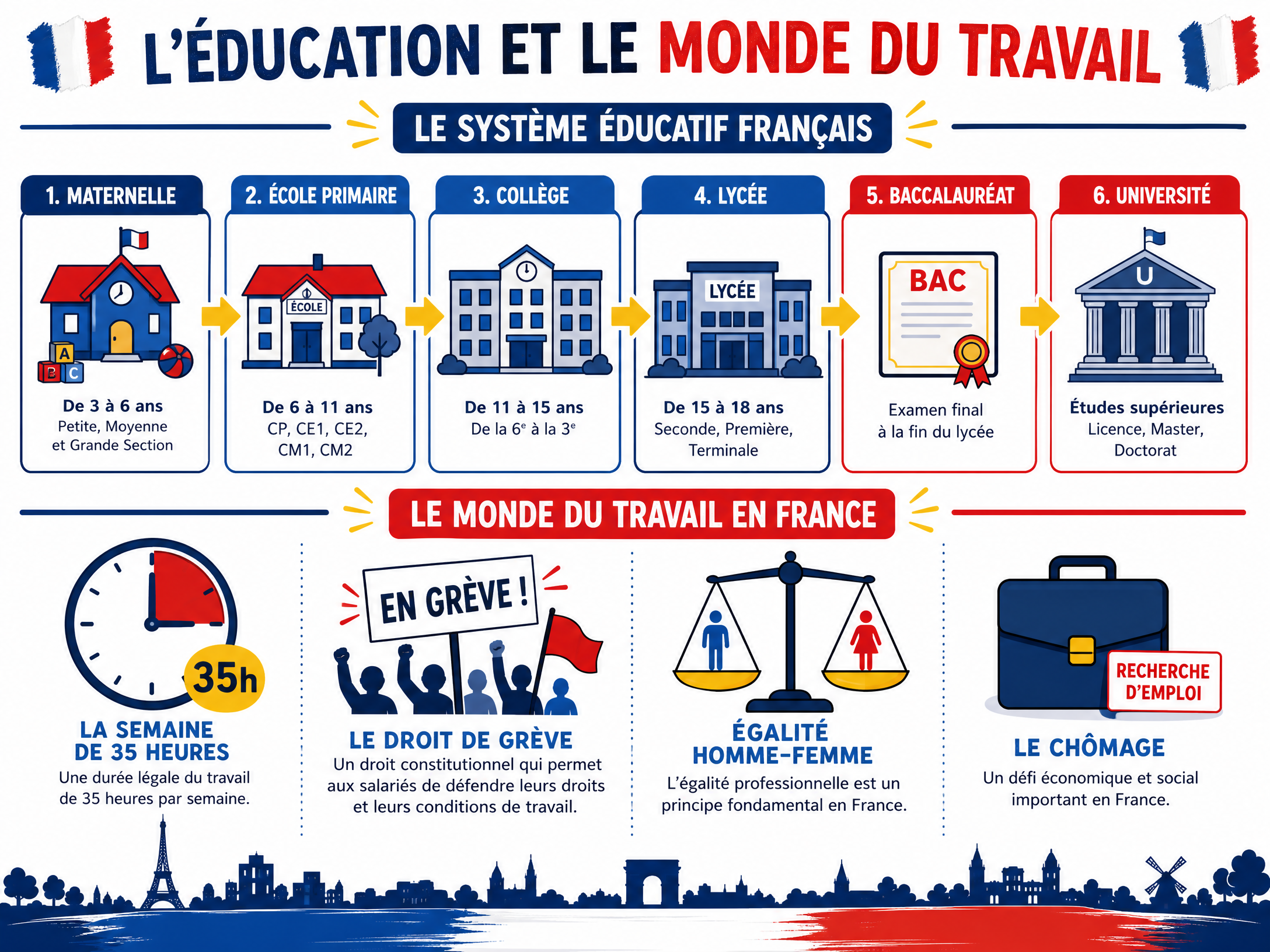
The French education system is structured, rigorous, and highly valued. It is distinct from the UK system:
- L'école maternelle: Nursery school (ages 3-6)
- L'école primaire: Primary school (ages 6-11)
- Le collège: Middle school (ages 11-15)
- Le lycée: High school (ages 15-18)
- Le baccalauréat (le bac): The national exam taken at the end of lycée, which is broader than A-Levels, often covering up to 12 subjects.
While the state provides free, secular (laïque) education, debates continue regarding the pressure placed on students and the difficulty of the baccalauréat.
Le Monde du Travail (The World of Work)
French attitudes towards work are unique and frequently debated:
- La semaine de 35 heures: Introduced in 2000 to improve work-life balance and reduce unemployment. It remains a defining feature of French employment law.
- Le droit de grève: The right to strike is enshrined in the French constitution. Trade unions (les syndicats) are powerful, and industrial action is a common method for workers to defend their rights.
- L'égalité homme-femme: While women make up nearly half the workforce, achieving true professional equality and closing the gender pay gap remains an ongoing challenge.
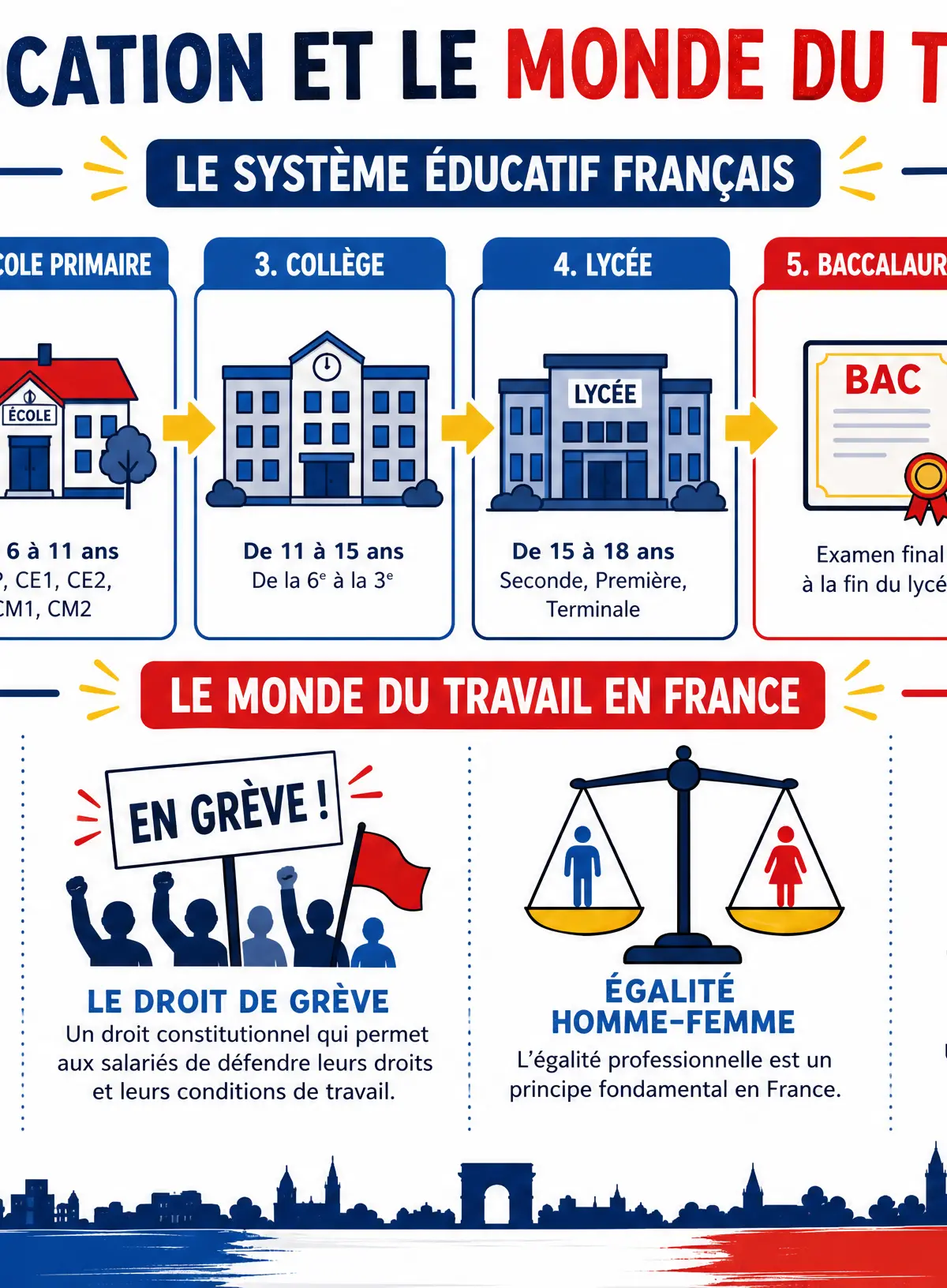
Second-Order Concepts
Change & Continuity
Understanding what has changed (e.g., the rise of the PACS and blended families) versus what has stayed the same (e.g., the value placed on academic achievement and workers' rights) is crucial for analysis.
Significance
Why do these changes matter? The shift in family structures reflects changing attitudes toward religion, personal freedom, and gender roles. The 35-hour work week reflects a cultural prioritization of work-life balance over purely economic metrics.
Visual Resources
2 diagrams and illustrations
Interactive Diagrams
1 interactive diagram to visualise key concepts
Conceptual Flow Outline
Evolution of the French Family
Worked Examples
3 worked examples — open one to explore the question and available guidance.
Practice Questions
Test your understanding — click to reveal model answers
Que penses-vous du mariage de nos jours ? (Speaking)
Hint: Mention the PACS as an alternative and give a justified opinion.
Quelles sont les différences entre une école française et une école anglaise ? (Writing)
Hint: Compare the structure (collège/lycée vs secondary school) and exams (le bac).
Pourquoi les grèves sont-elles si fréquentes en France ? (Speaking)
Hint: Mention trade unions (les syndicats) and the constitutional right to strike.
« L'égalité homme-femme existe dans le monde du travail en France. » Discutez. (Writing)
Hint: Present a balanced view: acknowledge progress (laws, quotas) but note ongoing issues (pay gap).
Comment la famille française a-t-elle changé depuis les années 50 ? (Speaking)
Hint: Contrast the nuclear family with modern structures like single-parent families.