OCR · GCSE · French
Understanding authentic texts
Mastering authentic French texts is your key to unlocking top marks in the OCR GCSE French reading exam. This guide will equip you with the essential strategies to decode everything from literary extracts to news articles, turning confusion into confidence and earning you the credit you deserve.
- 4 min read
- 3 worked examples
- 5 practice questions
- 6 key terms
Study Notes
Overview
The OCR GCSE French (J720) Reading paper is a significant component of your final grade, accounting for 25% of the total marks. This paper is entirely focused on Assessment Objective 3 (AO3), which is your ability to understand and respond to written French. Examiners are looking for candidates who can move beyond simple word-for-word translation and demonstrate a genuine comprehension of authentic texts. This includes identifying key information, understanding the nuance of different tenses, and making accurate inferences. The paper features a variety of text types, from emails and advertisements to literary extracts, requiring you to be a flexible and strategic reader. This guide will break down the core skills you need, from grammatical precision to tactical approaches, ensuring you are fully prepared to tackle any text the exam throws at you.
Core Reading Skills
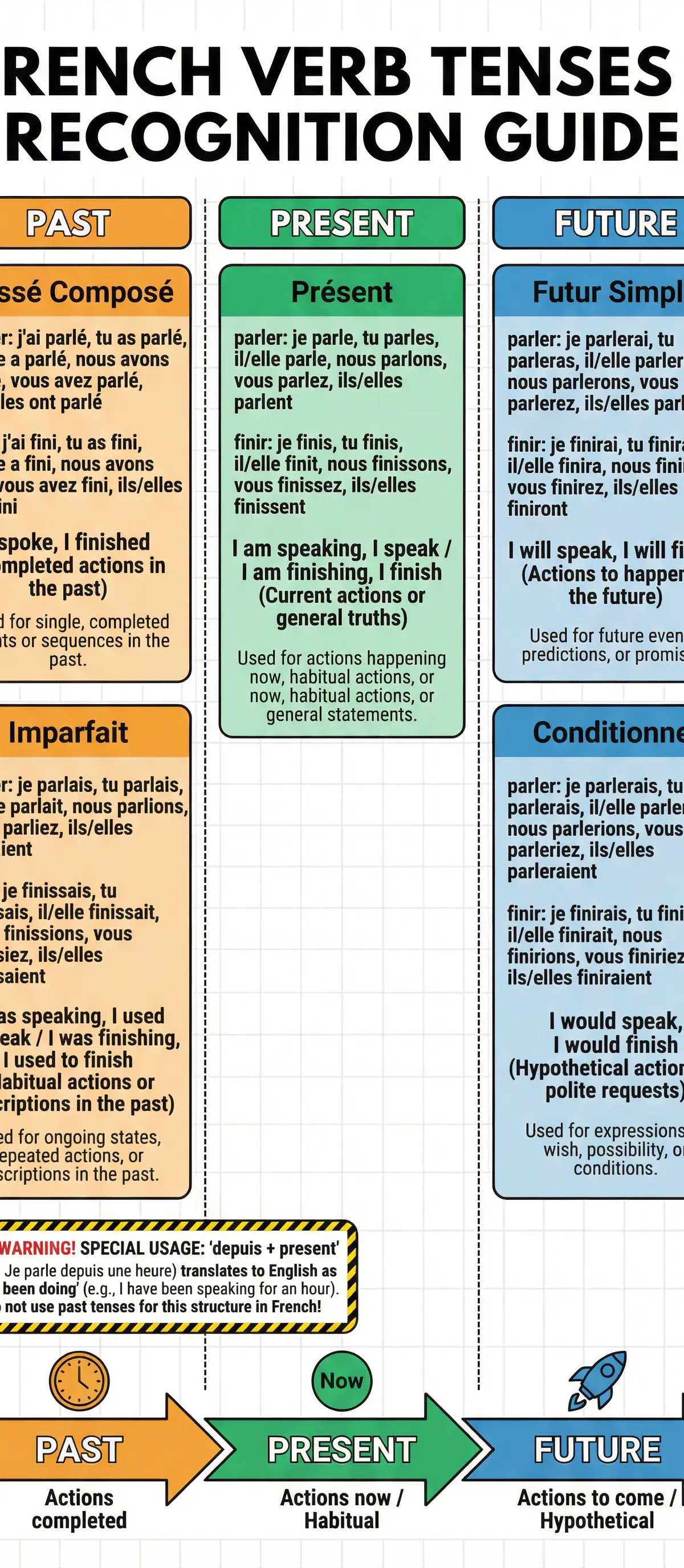
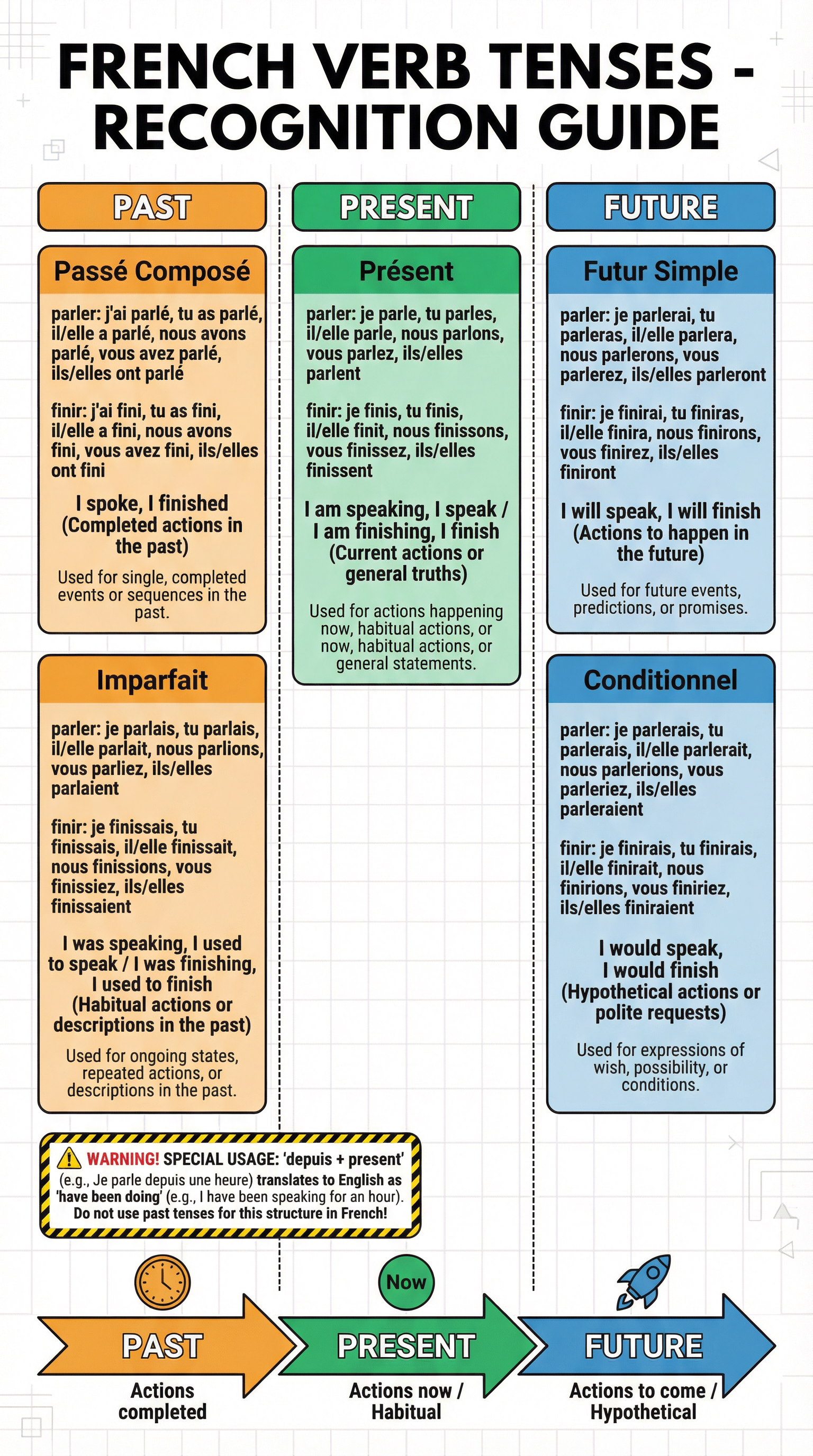
1. Verb Tense Recognition
What it is: The single most important skill for unlocking the meaning of a sentence. Identifying the verb and its tense tells you the timeframe of the action.
Why it matters: A failure to distinguish between past, present, and future tenses will lead to a fundamental misinterpretation of the text, costing you significant marks. For example, confusing 'je parlerai' (I will speak) with 'je parlais' (I was speaking) changes the entire meaning.
Specific Knowledge: You must be able to instantly recognise the endings for the Present, Passé Composé, Imparfait, Futur Simple, and Conditional tenses. Pay special attention to irregular verbs like être, avoir, aller, and faire.
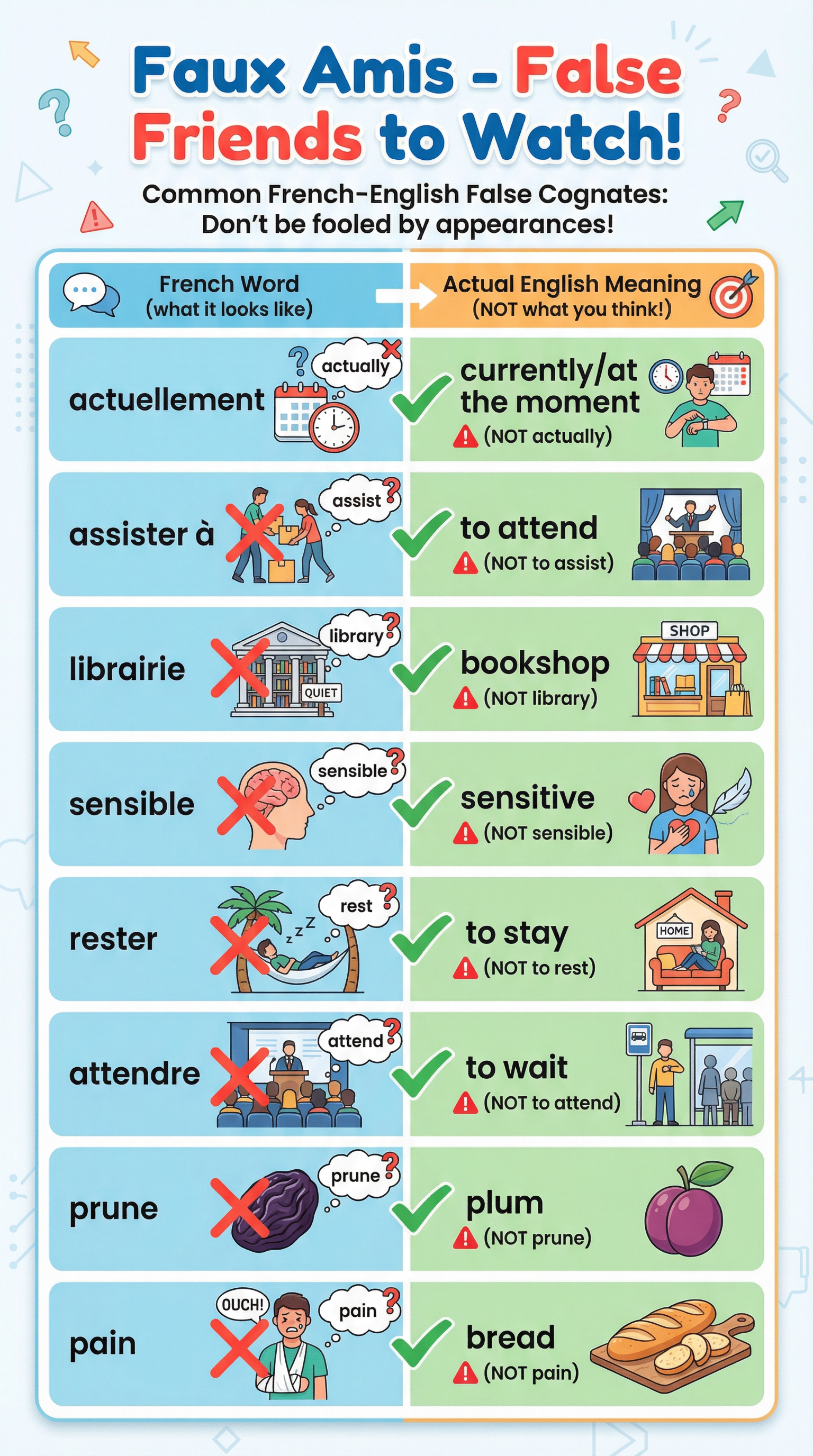
2. Navigating 'Faux Amis' (False Friends)
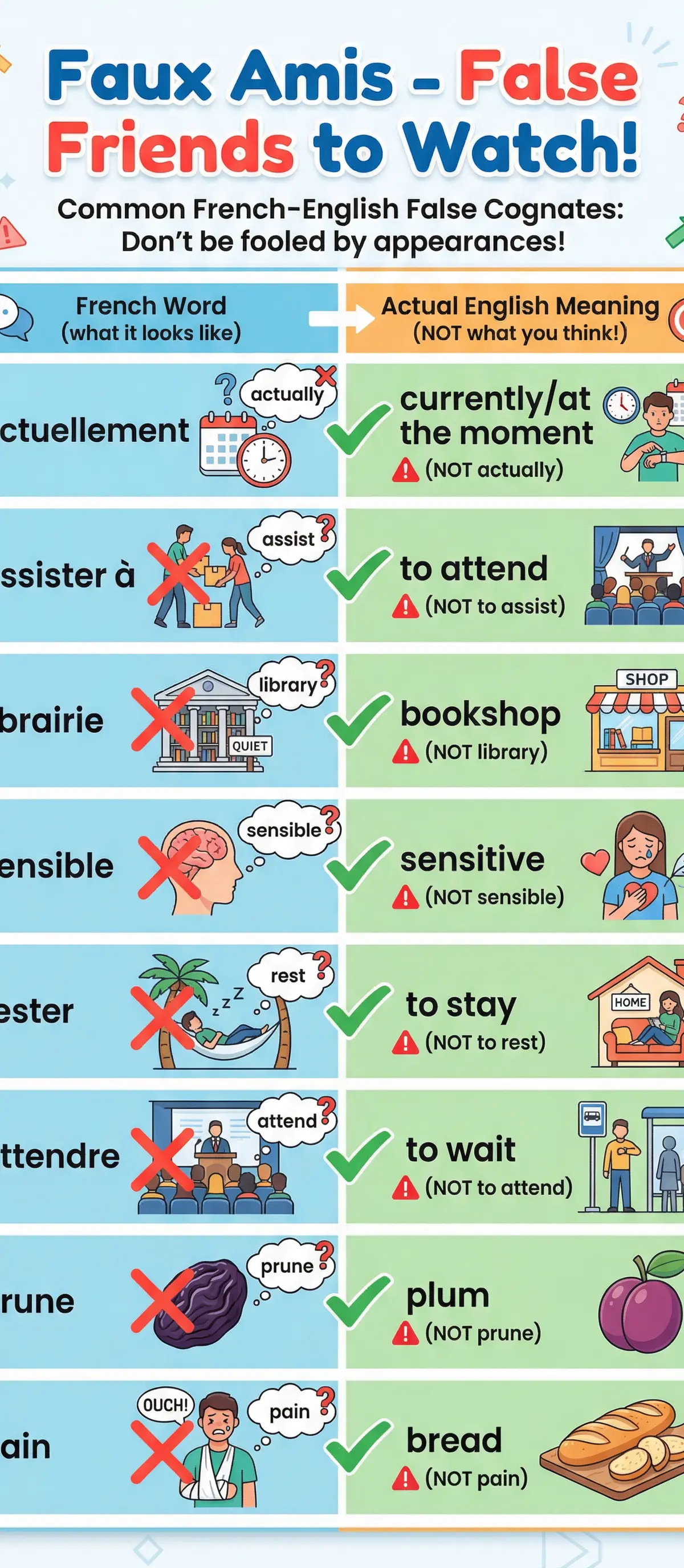
What they are: French words that look like English words but have a different meaning. Examiners use these to trap candidates who are guessing rather than reading carefully.
Why it matters: Mistaking a false friend can completely alter your understanding of a sentence. For example, if a text says a character is 'sensible', they are 'sensitive', not 'sensible'. This could be a key detail in a character description.
Specific Knowledge: Create flashcards for common faux amis. Key examples include: actuellement (currently), assister à (to attend), librairie (bookshop), and rester (to stay).
3. Understanding Negations
What it is: French has a more complex system of negation than English. You must look beyond the simple 'ne...pas' construction.
Why it matters: Missing a negative or misinterpreting its type can reverse the meaning of a sentence. The difference between 'Il ne mange pas de légumes' (He doesn't eat vegetables) and 'Il ne mange que des légumes' (He only eats vegetables) is huge, and examiners will award marks for spotting this distinction.
Specific Knowledge: Memorise the key negative constructions: ne...jamais (never), ne...rien (nothing), ne...personne (no one), and especially ne...que (only).
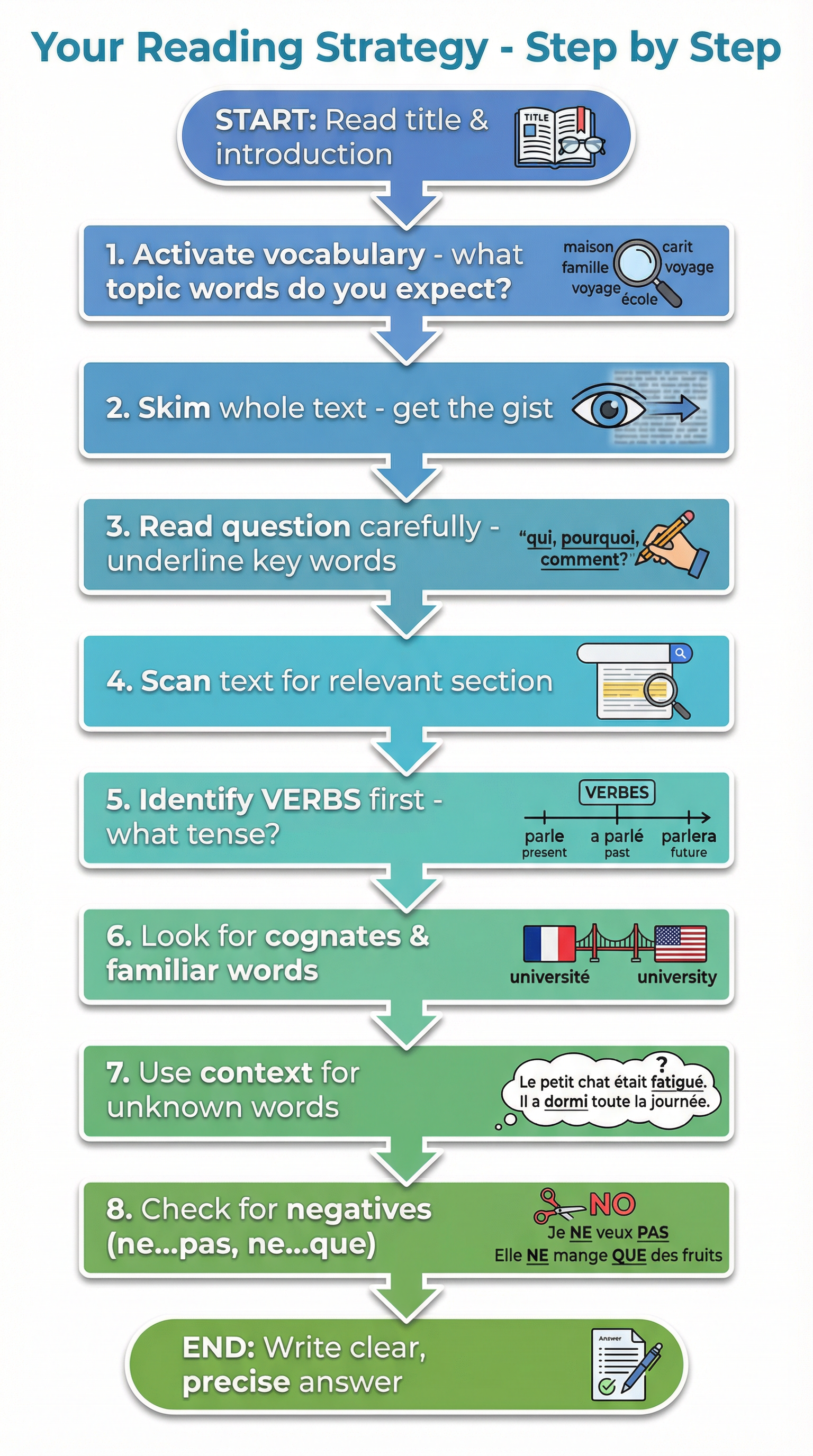
Strategic Approach to Reading
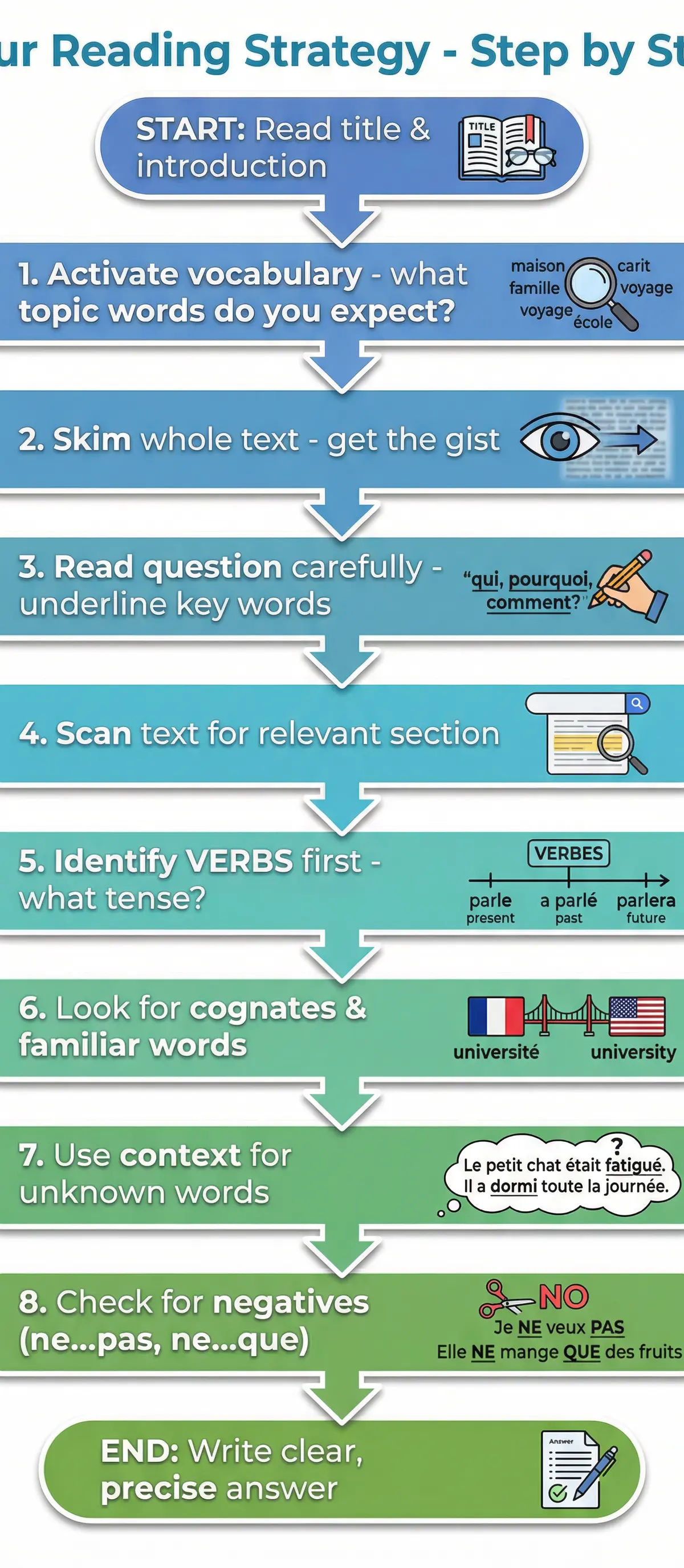
Follow a clear, repeatable process for every text you encounter in the exam. This structured approach saves time and prevents careless errors under pressure.
Visual Resources
3 diagrams and illustrations
Interactive Diagrams
1 interactive diagram to visualise key concepts
Conceptual Flow Outline
A flowchart demonstrating a systematic approach to tackling reading comprehension questions.
Worked Examples
3 worked examples — open one to explore the question and available guidance.
Practice Questions
Test your understanding — click to reveal model answers
Translate into English: Il faut que je fasse mes devoirs, mais je préférerais regarder la télévision. (4 marks)
Hint: Pay attention to the subjunctive mood ('il faut que je fasse') and the conditional ('préférerais').
Text: Le concert, qui devait commencer à 20h, a finalement débuté avec une heure de retard. Beaucoup de spectateurs sont partis avant la fin. Question: Give two details about the concert. (2 marks)
Hint: Look for specific information about the timing and the audience's reaction.
Text: Si j'avais plus d'argent, j'achèterais une nouvelle voiture. La mienne est très vieille. Question: Does the narrator have a new car? Explain your answer. (2 marks)
Hint: This is a hypothetical sentence using 'si' (if). What does that imply about the reality of the situation?
Translate into English: Bien qu'il pleuve, nous allons nous promener dans le parc. (3 marks)
Hint: 'Bien que' is a key conjunction. What mood does it trigger?
Text: Le magasin ne vend que des produits biologiques. Question: What does the shop sell? A) Nothing but organic products B) No organic products C) All kinds of products
Hint: Focus on the meaning of 'ne... que'.