OCR · GCSE · French
Verb conjugations
Mastering French verb conjugations is the single most important key to unlocking top grades in OCR GCSE French. This guide provides a complete breakdown of the three core time frames—Past, Present, and Future—showing you how to build accuracy, apply complex structures, and impress examiners in your speaking and writing assessments.
- 5 min read
- 3 worked examples
- 5 practice questions
Study Notes
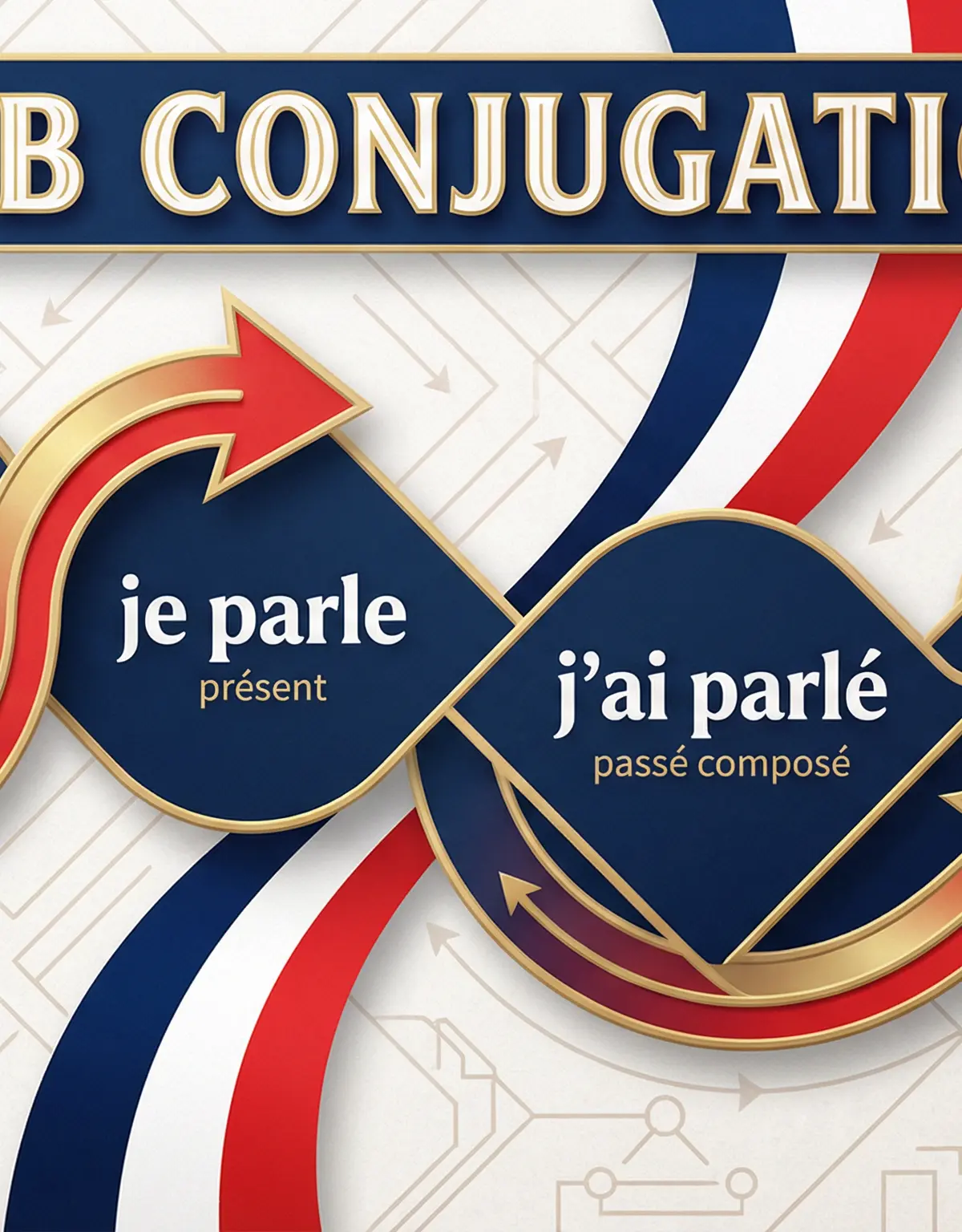
Overview
OCR GCSE French demands rigorous mastery of verb conjugations across three distinct time frames (Past, Present, Future) to access the highest bands in AO4 (Writing) and AO2 (Speaking). Candidates must demonstrate not just recall of regular patterns, but the manipulation of irregular stems and complex structures to satisfy the 'Quality of Language' criteria. This guide will equip you with the foundational knowledge of regular and irregular verbs, the nuances of past tense selection (passé composé vs. imparfait), and the confidence to deploy a range of future tenses. Examiners are looking for candidates who can move seamlessly between time frames, demonstrating both accuracy and ambition in their linguistic choices. Credit is consistently awarded for correct auxiliary verb use, past participle agreement, and the application of a wide variety of verb forms in extended written and spoken responses.
Key Concepts: The Three Time Frames
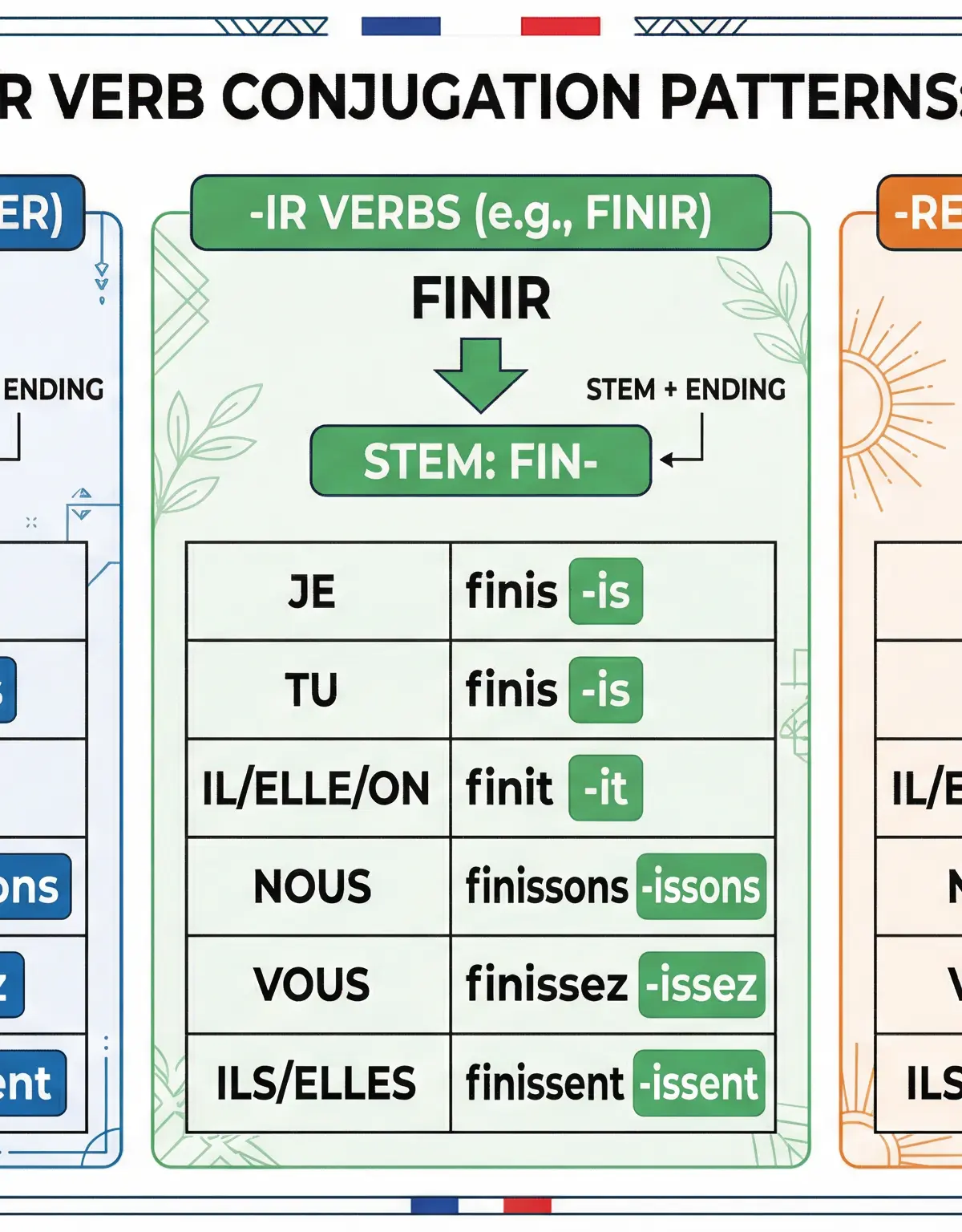
The Present Tense (Le Présent)
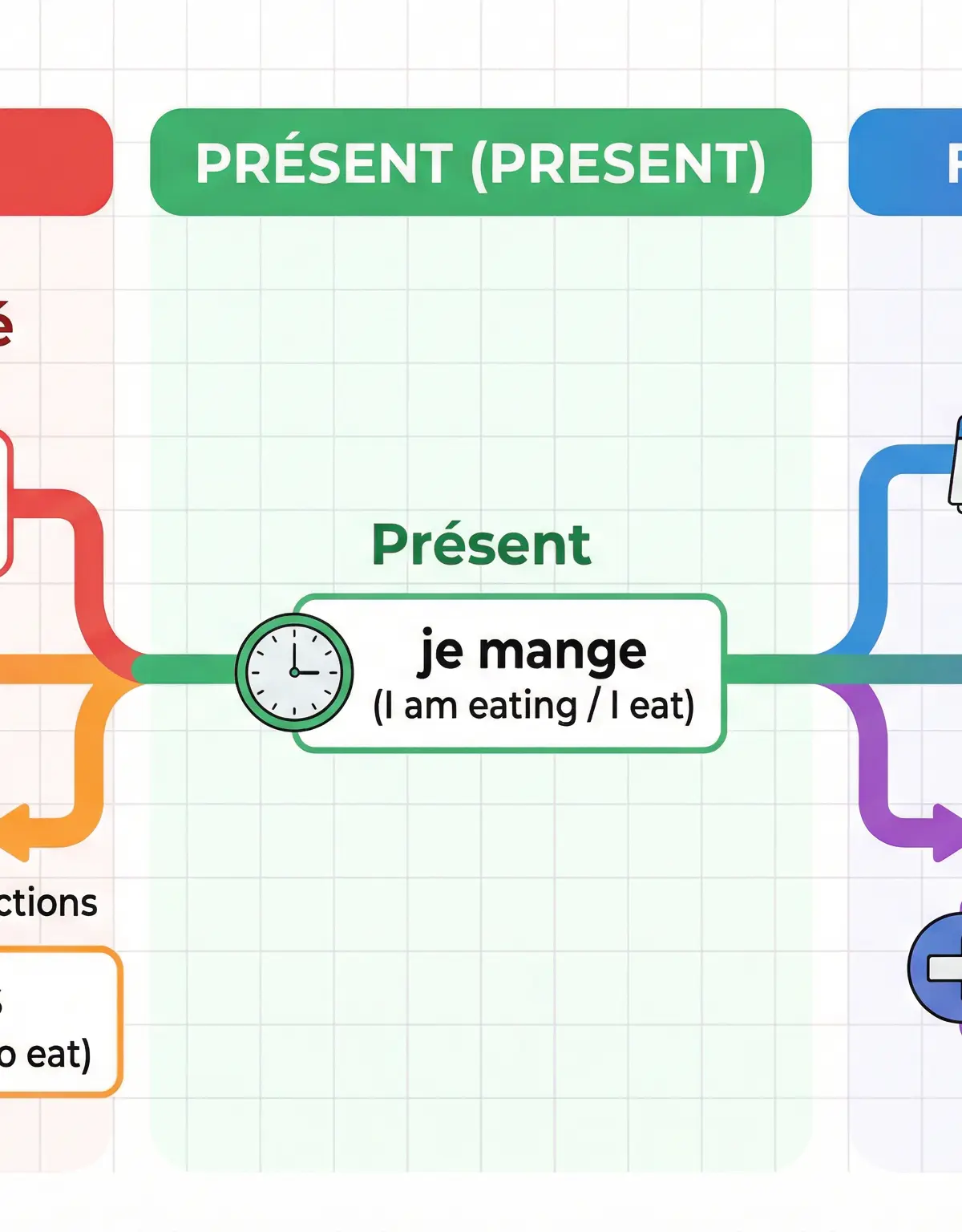
What it is: Used to describe actions happening now, habitual actions, or general truths.
Why it matters: This is the bedrock of your verb knowledge. Examiners expect flawless application of the present tense. It is also the foundation for forming other tenses, like the imperfect.
Specific Knowledge: You must know the endings for regular -ER, -IR, and -RE verbs, as well as the conjugations for critical irregular verbs like être (to be), avoir (to have), aller (to go), and faire (to do/make).
The Past Tense (Le Passé)
What it is: French uses two main past tenses at GCSE: the Passé Composé and the Imparfait.
- Passé Composé: Used for specific, completed actions in the past (e.g., J'ai visité Paris - I visited Paris). It is formed with an auxiliary verb (avoir or être) and a past participle.
- Imparfait: Used for descriptions, ongoing actions, or habitual events in the past (e.g., Il faisait beau - It was beautiful weather; Je jouais au foot - I used to play football).
Why it matters: The ability to correctly distinguish between these two tenses is a high-level skill that examiners reward. Using the wrong tense can change the meaning of a sentence and limit access to top marks.
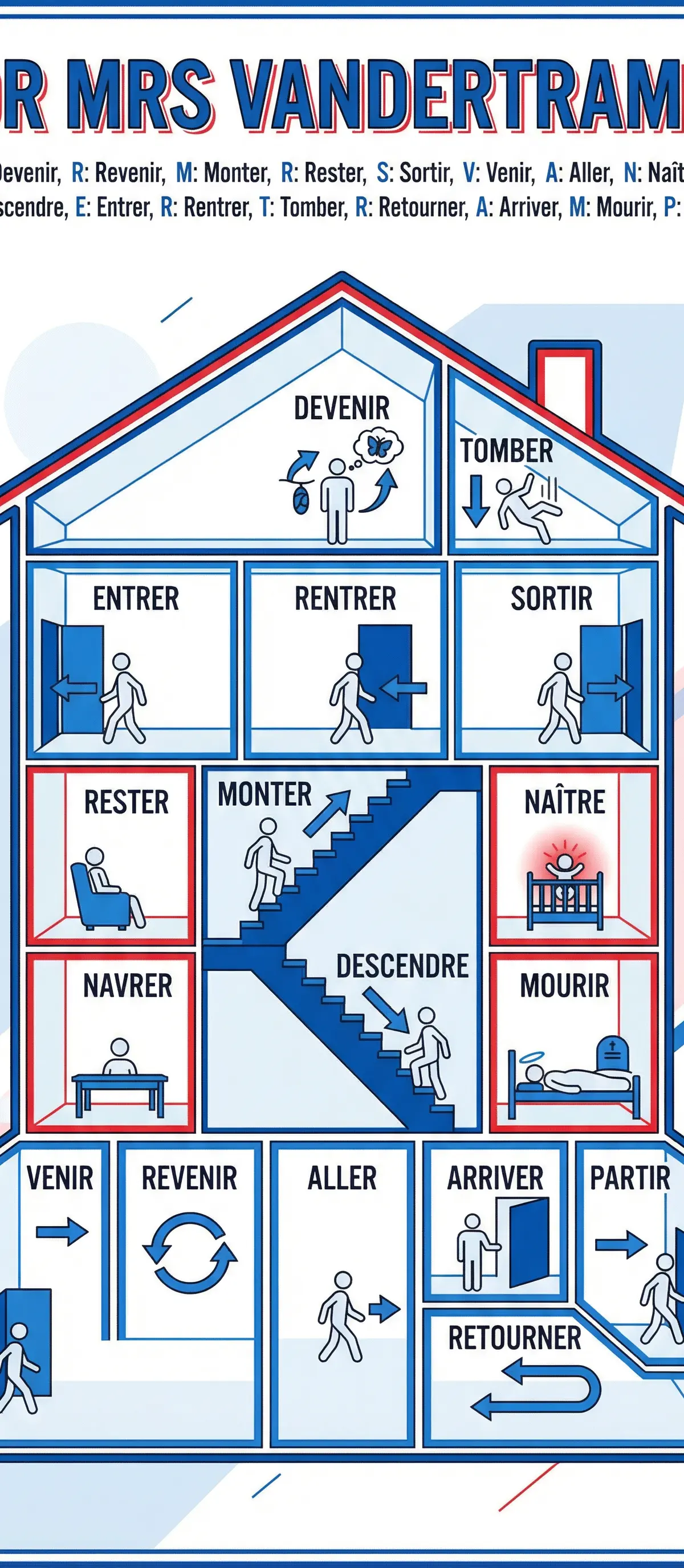
Specific Knowledge: Memorise the DR MRS VANDERTRAMP verbs that take être. For these verbs, and all reflexive verbs, the past participle must agree with the subject in gender and number. This is a key area where marks are won and lost.
The Future Tenses (Le Futur)
What it is: There are two primary ways to express the future.
- Futur Proche (Near Future): Formed with the present tense of aller + infinitive (e.g., Je vais manger - I am going to eat). It's common in spoken French and signals immediate intention.
- Futur Simple (Simple Future): Formed by adding future endings to the infinitive stem (e.g., Je mangerai - I will eat). It is used for more distant or certain future events.
Why it matters: Using both future tenses demonstrates a wider range of language. For the 150-word writing task, including both shows examiners you have a confident grasp of future expressions.
Specific Knowledge: You must learn the irregular stems for the futur simple, such as ser- for être, aur- for avoir, and ir- for aller. These are non-negotiable for high grades.
Key Individuals (The Irregular Verbs)
Think of the main irregular verbs as 'key individuals' you must know intimately. They appear in almost every sentence.
Être (to be)
Role: The most fundamental verb. Used for descriptions, identity, and as an auxiliary for certain past tense verbs.
Key Conjugations: (Présent) je suis, tu es, il est, nous sommes, vous êtes, ils sont. (Passé Composé) j'ai été. (Imparfait) j'étais. (Futur Simple) je serai.
Impact: Failure to conjugate être correctly is a major red flag for examiners.
Avoir (to have)
Role: Crucial for possession and as the auxiliary verb for the majority of verbs in the passé composé.
Key Conjugations: (Présent) j'ai, tu as, il a, nous avons, vous avez, ils ont. (Passé Composé) j'ai eu. (Imparfait) j'avais. (Futur Simple) j'aurai.
Impact: Incorrect use of avoir as an auxiliary is one of the most common mistakes at GCSE.
Aller (to go)
Role: Essential for talking about movement and for forming the futur proche.
Key Conjugations: (Présent) je vais, tu vas, il va, nous allons, vous allez, ils vont. (Passé Composé) je suis allé(e). (Imparfait) j'allais. (Futur Simple) j'irai.
Impact: Note that aller uses être in the passé composé, a frequent point of error.
Faire (to do/make)
Role: A versatile verb used in a vast number of idiomatic expressions.
Key Conjugations: (Présent) je fais, tu fais, il fait, nous faisons, vous faites, ils font. (Passé Composé) j'ai fait. (Imparfait) je faisais. (Futur Simple) je ferai.
Impact: Knowing faire allows for more sophisticated and natural-sounding French.
Worked Examples
3 worked examples — open one to explore the question and available guidance.
Practice Questions
Test your understanding — click to reveal model answers
Translate into French: 'Last year, my family and I went to France. We stayed in a hotel by the sea. I swam every day.'
Hint: You will need to use both the passé composé and the imperfect tense here.
Write a short paragraph in French about your ambitions for the future. (approx. 50 words)
Hint: Try to use both the futur proche and the futur simple.
Fill in the blank with the correct form of the verb in brackets: Hier, elles ______ (arriver) en retard.
Hint: Arriver is a DR MRS VANDERTRAMP verb. The subject is feminine and plural.
Translate into English: 'Quand j'étais jeune, je jouais du piano.'
Hint: Notice the tense is the imperfect. How do we express this in English?
Rewrite the sentence from the present to the passé composé: 'Nous finissons nos devoirs.'
Hint: Finir is a regular -IR verb and uses 'avoir'.