AQA · A-Level · Physical Education
Course version: 7582 · Version from Sept 2016
Energy systems: Impact of specialist training methods on energy systems.
Specialist training methods are designed to stress particular energy systems so that the body adapts to produce energy more effectively for a given event.
Checked against the AQA 7582 specification (opens in a new tab) on .
- Point 22 of 26
- 4 key terms
Study notes
From the checked teaching notes for this specification point.
The idea
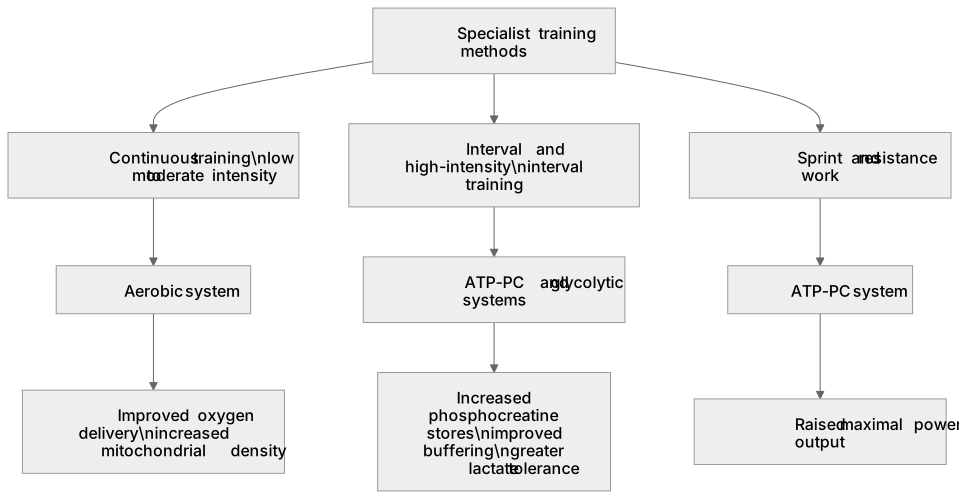
Specialist training methods are designed to stress particular energy systems so that the body adapts to produce energy more effectively for a given event. Continuous training at low to moderate intensity develops the aerobic system by improving oxygen delivery and mitochondrial density. Interval and high-intensity interval training repeatedly challenge the ATP-PC and glycolytic systems, increasing phosphocreatine stores, buffering capacity and tolerance of lactate accumulation. Sprint and resistance work can raise maximal power output of the ATP-PC system. A student should match a method to the system it targets, explain the adaptation, and justify the choice for a performer's event.
For example: A 100 m sprinter benefits from short maximal repetitions with long recoveries, while a marathon runner needs prolonged continuous work.
What earns the marks
- Continuous training at low to moderate intensity primarily develops the aerobic system.
- Interval and high-intensity interval training stress the ATP-PC and glycolytic systems.
- Adaptations include increased phosphocreatine stores, improved buffering and greater lactate tolerance.
- Aerobic adaptations include improved oxygen delivery and increased mitochondrial density.
- Training method should be matched to the dominant energy system of the performer's event.
- Recovery duration and work-to-rest ratio determine which system is predominantly stressed.
Common mistakes and how to put them right
Assuming any training improves all energy systems equally.
Put it right: The method, intensity and work-to-rest ratio determine which system adapts most.
Believing high-intensity interval training only improves the ATP-PC system.
Put it right: It also stresses the glycolytic system and can develop aerobic capacity.
Thinking continuous training is useless for team-sport players.
Put it right: It builds the aerobic base that supports recovery between high-intensity efforts.
Ignoring recovery duration: short recoveries keep stressing the glycolytic system, while long recoveries allow ATP-PC resynthesis.
Exam tips
- Name the training method, identify the energy system it targets, then state the specific adaptation it produces.
- Use the performer's event to justify the method rather than describing the method in isolation.
- Refer to work-to-rest ratios and intensity when explaining why a method stresses one system more than another.
Try the lesson
The start of the Energy systems: Impact of specialist training methods on energy systems. lesson, made from checked teaching notes for this specification point.
Have a go first
A sprinter performs repeated maximal 60-metre efforts with long recovery periods. Which energy system is primarily being trained by this method?
Listen
Specialist training methods are designed to stress particular energy systems so that the body adapts to produce energy more effectively for a given event. Continuous training at low to moderate intensity develops the aerobic system by improving oxygen delivery and mitochondrial density. Interval and high-intensity interval training repeatedly challenge the ATP-PC and glycolytic systems, increasing phosphocreatine stores, buffering capacity and tolerance of lactate accumulation. Sprint and resistance work can raise maximal power output of the ATP-PC system. A student should match a method to the system it targets, explain the adaptation, and justify the choice for a performer's event. For example, a 100 m sprinter benefits from short maximal repetitions with long recoveries, while a marathon runner needs prolonged continuous work. A strong answer earns marks for these points. Continuous training at low to moderate intensity primarily develops the aerobic system. Interval and high-intensity interval training stress the ATP-PC and glycolytic systems. Adaptations include increased phosphocreatine stores, improved buffering and greater lactate tolerance. Aerobic adaptations include improved oxygen delivery and increased mitochondrial density. Exam tip: Name the training method, identify the energy system it targets, then state the specific adaptation it produces.
See it
Key words
Say what each word means before you turn the card.
Training specificity
Try answering aloud or in your head before turning the card.
Aerobic and anaerobic adaptation
Try answering aloud or in your head before turning the card.
Work-to-rest manipulation
Try answering aloud or in your head before turning the card.
Matching training to event demands
Try answering aloud or in your head before turning the card.
See every definition
- Training specificity
- Matching a training method to the energy system it targets so that the body adapts to produce energy more effectively for a given event.
- Aerobic and anaerobic adaptation
- Continuous training at low to moderate intensity develops the aerobic system through improved oxygen delivery and increased mitochondrial density, while interval work raises phosphocreatine stores, buffering capacity and lactate tolerance.
- Work-to-rest manipulation
- Recovery duration and the work-to-rest ratio determine which energy system is predominantly stressed, with short recoveries keeping stress on the glycolytic system and long recoveries allowing ATP-PC resynthesis.
- Matching training to event demands
- A method should be matched to the dominant energy system of the performer's event, explaining the adaptation and justifying the choice for that event.
Label the diagram
Some boxes have lost their names. Pick the right name for each number.
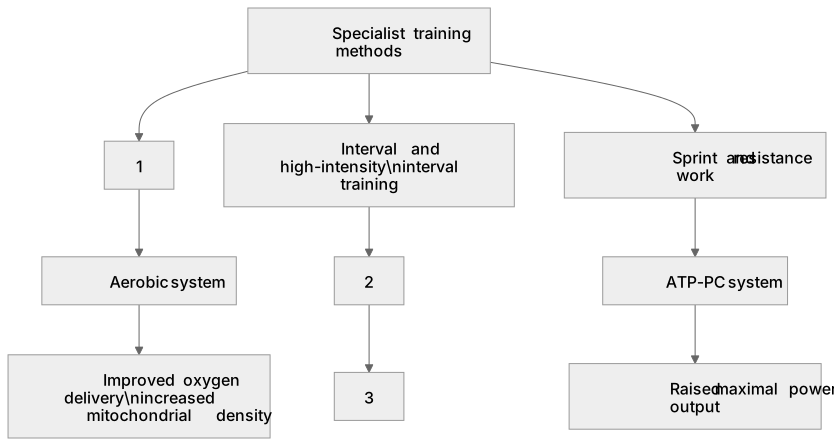
1Box 1
2Box 2
3Box 3
There is more to this lesson
The full lesson goes on to check your understanding and help you earn the marks. Create a free account to carry on, with your progress saved.
A week of Premium from your first lesson · Then the free plan continues · No card, no charge
Test your understanding of Energy systems: Impact of specialist training methods on energy systems.
Active recall beats re-reading. Take an instant quiz now to test what you’ve learned and lock it into long-term memory.
A week of Premium from your first lesson · Then the free plan continues · No card, no charge