AQA · A-Level · Physical Education
Course version: 7582 · Version from Sept 2016
Injury prevention and the rehabilitation of injury: Protective equipment.
Protective equipment is any item worn or used by a performer to reduce the risk of injury during physical activity.
Checked against the AQA 7582 specification (opens in a new tab) on .
- Point 6 of 12
- 2 key terms
Study notes
From the checked teaching notes for this specification point.
The idea
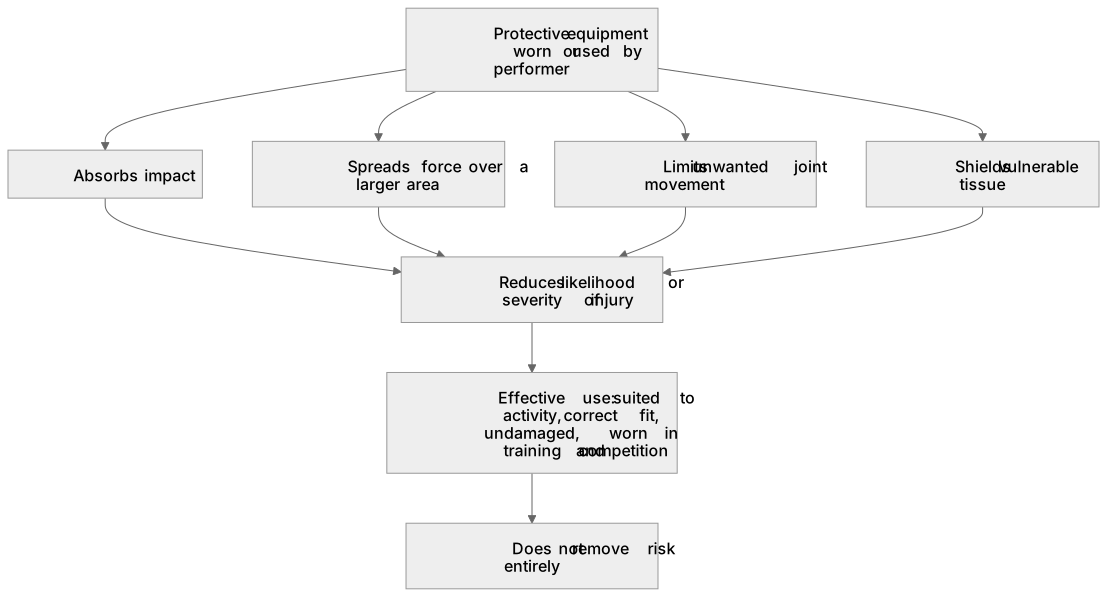
Protective equipment is any item worn or used by a performer to reduce the risk of injury during physical activity. It works by absorbing impact, spreading force over a larger area, limiting unwanted joint movement or shielding vulnerable tissue. Common examples include shin pads in football, gum shields in rugby, helmets in cycling and cricket, and padded gloves in boxing. Effective use depends on choosing equipment suited to the activity, ensuring correct fit, checking it is undamaged and wearing it consistently in training and competition. Equipment does not remove risk entirely; it lowers the likelihood or severity of injury when combined with safe technique, rules and officiating.
What earns the marks
- Protective equipment reduces injury risk by absorbing or dispersing impact forces.
- Correct fit and condition are essential for equipment to work effectively.
- Different activities require different equipment matched to their specific risks.
- Equipment supplements, but does not replace, safe technique and adherence to rules.
- Examples include shin pads, gum shields, helmets and padded gloves.
Common mistakes and how to put them right
Thinking protective equipment eliminates all injury risk.
Put it right: It only reduces the likelihood or severity of injury.
Assuming any equipment will do regardless of sport.
Put it right: Equipment must match the specific demands and risks of the activity.
Ignoring fit and condition.
Put it right: Poorly fitted or damaged equipment provides little protection and may itself cause harm.
Believing equipment is only for competition.
Put it right: It should be used in training as well.
Exam tips
- Link each piece of equipment to the specific injury it helps prevent, such as shin pads reducing impact to the tibia.
- Check whether the question asks for a benefit or a limitation, and answer accordingly.
- Use precise terms like absorb impact, spread force or restrict movement rather than vague phrases like keep safe.
Try the lesson
The start of the Injury prevention and the rehabilitation of injury: Protective equipment. lesson, made from checked teaching notes for this specification point.
Have a go first
How do shin pads function biomechanically to reduce the risk of a fracture during a tackle in football?
Listen
Protective equipment is any item worn or used by a performer to reduce the risk of injury during physical activity. It works by absorbing impact, spreading force over a larger area, limiting unwanted joint movement or shielding vulnerable tissue. Common examples include shin pads in football, gum shields in rugby, helmets in cycling and cricket, and padded gloves in boxing. Effective use depends on choosing equipment suited to the activity, ensuring correct fit, checking it is undamaged and wearing it consistently in training and competition. Equipment does not remove risk entirely; it lowers the likelihood or severity of injury when combined with safe technique, rules and officiating. A strong answer earns marks for these points. Protective equipment reduces injury risk by absorbing or dispersing impact forces. Correct fit and condition are essential for equipment to work effectively. Different activities require different equipment matched to their specific risks. Equipment supplements, but does not replace, safe technique and adherence to rules. Exam tip: Link each piece of equipment to the specific injury it helps prevent, such as shin pads reducing impact to the tibia.
See it
Key words
Say what each word means before you turn the card.
Impact absorption
Try answering aloud or in your head before turning the card.
Equipment suitability
Try answering aloud or in your head before turning the card.
See every definition
- Impact absorption
- The way equipment works to reduce injury risk by absorbing or dispersing impact forces during physical activity.
- Equipment suitability
- Effective use depends on choosing equipment suited to the activity and matched to its specific risks, with correct fit and undamaged condition.
Label the diagram
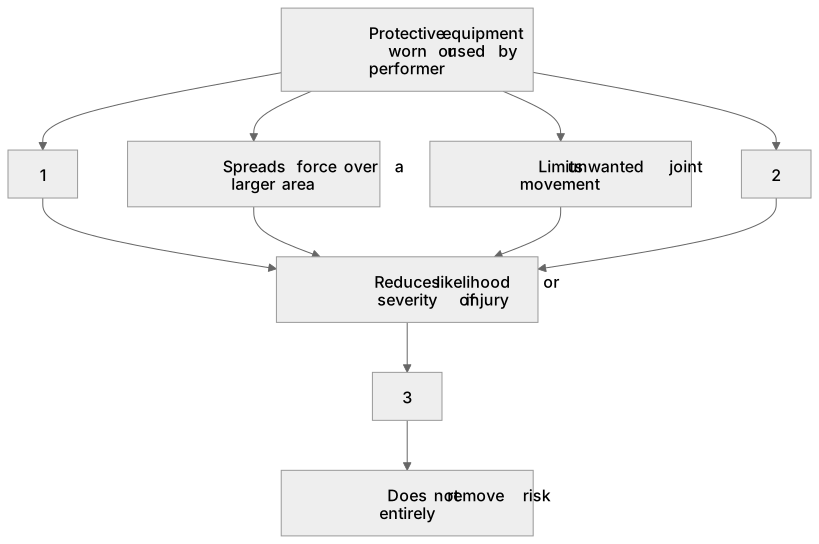
Some boxes have lost their names. Pick the right name for each number.
1Box 1
2Box 2
3Box 3
There is more to this lesson
The full lesson goes on to check your understanding and help you earn the marks. Create a free account to carry on, with your progress saved.
A week of Premium from your first lesson · Then the free plan continues · No card, no charge
Test your understanding of Injury prevention and the rehabilitation of injury: Protective equipment.
Active recall beats re-reading. Take an instant quiz now to test what you’ve learned and lock it into long-term memory.
A week of Premium from your first lesson · Then the free plan continues · No card, no charge