OCR · GCSE · Physical Education
Engagement Patterns: Factors Influencing Participation in Sport
This topic requires candidates to analyse why participation in sport and physical activity varies significantly across different social groups, including gender, age, ethnicity, and disability. Understanding the structural, social, and economic barriers that limit engagement — and the strategies used to overcome them — is essential for both AO1 knowledge questions and AO3 data interpretation tasks. This is one of the highest-value theory areas on the OCR GCSE PE specification and appears in some form on every exam paper.
- 9 min read
- 4 worked examples
- 4 practice questions
- 9 key terms
Study Notes
Overview
Engagement Patterns (OCR Topic 6.1) is one of the most consistently examined theory areas in GCSE Physical Education. Candidates are expected to demonstrate a sophisticated understanding of why participation rates differ across distinct social groups and to evaluate the effectiveness of strategies designed to increase engagement. This is not simply a matter of listing barriers — examiners at OCR reward candidates who can link specific barriers to specific groups, interpret participation data, and make informed judgements about the success of real-world initiatives.

Key Knowledge & Theory
The Four Social Groups
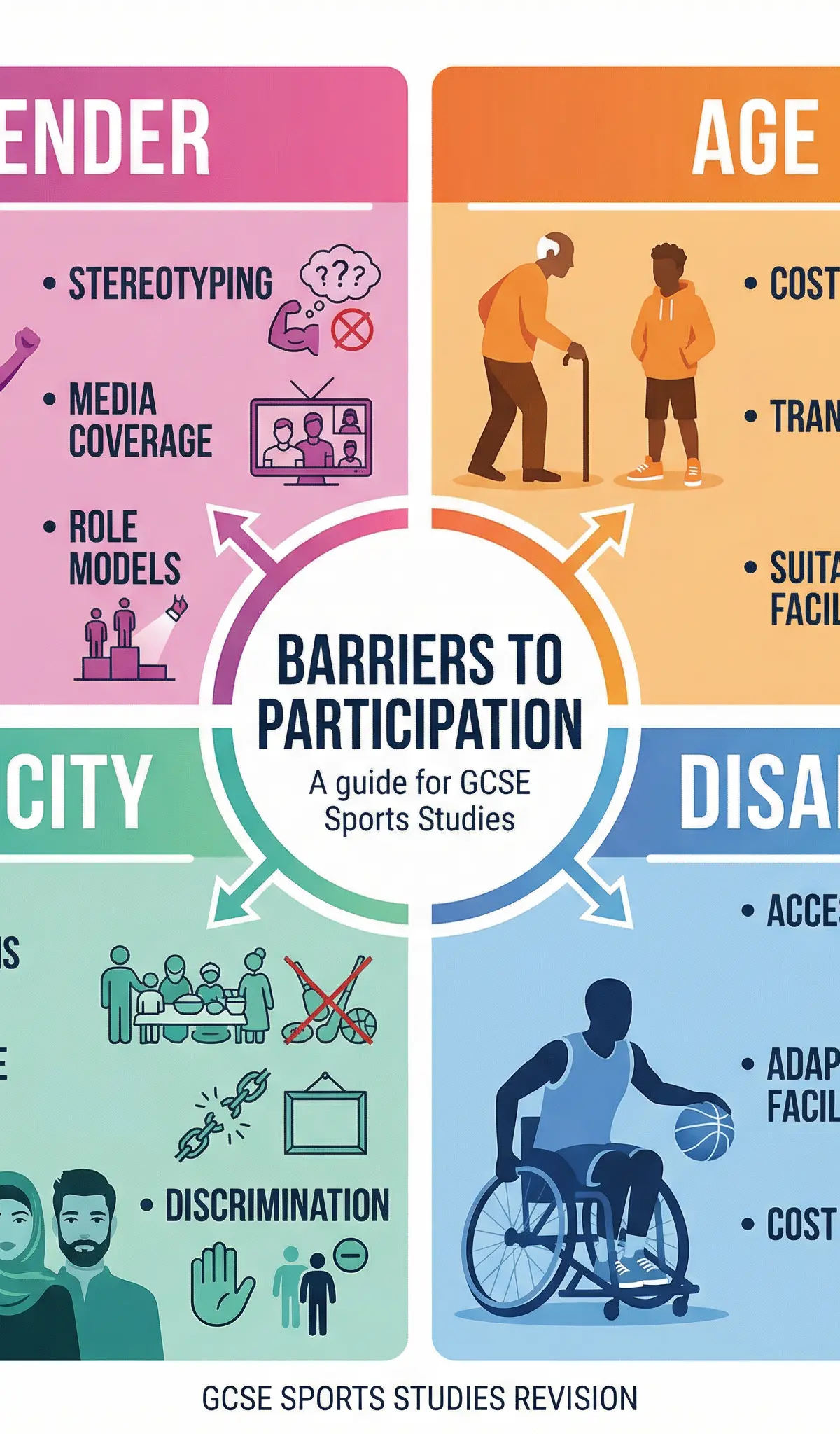
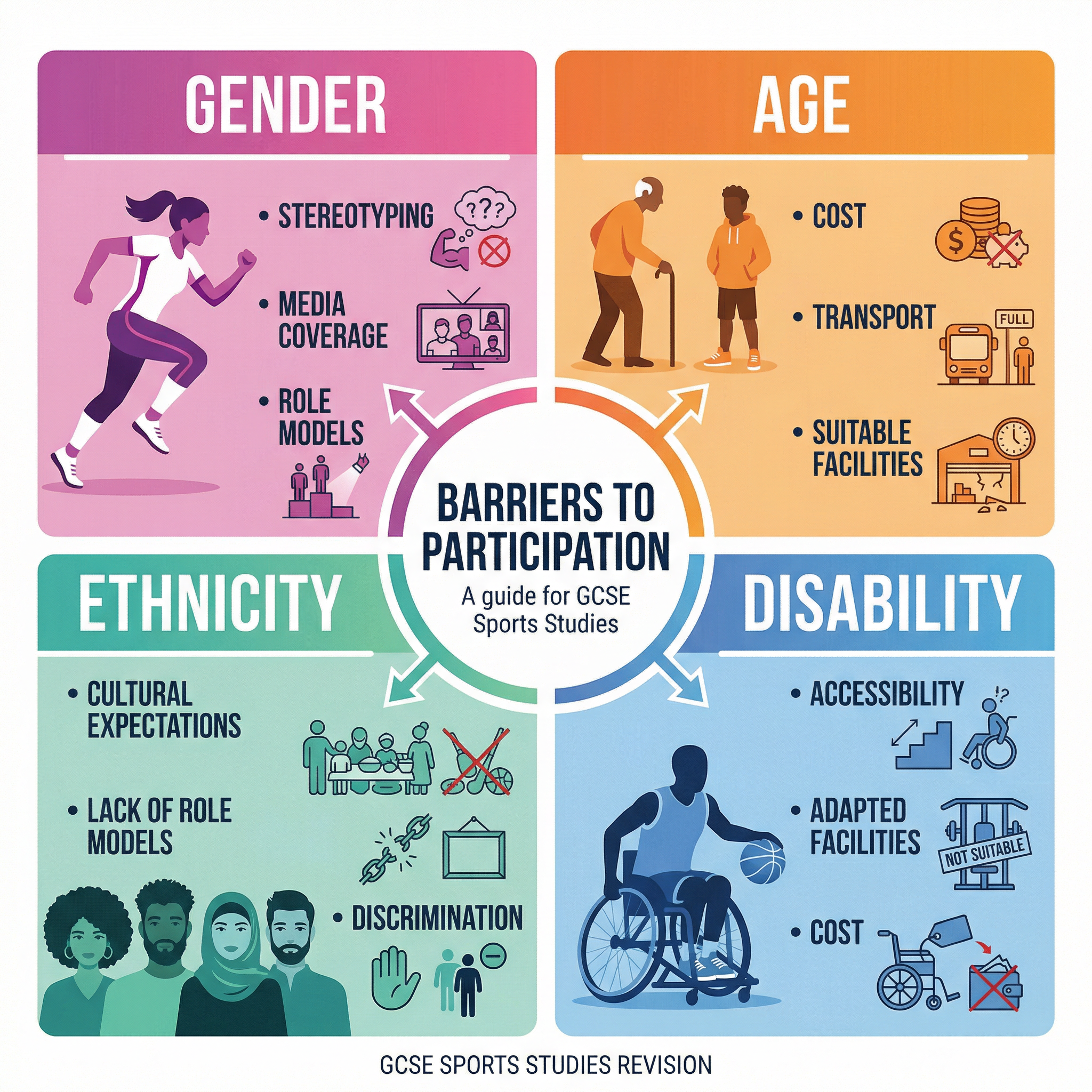
The OCR specification identifies four primary social groups whose engagement patterns must be analysed: gender, age, ethnicity, and disability. For each group, candidates must be able to identify barriers to participation and suggest appropriate strategies to increase engagement. Examiners will not award marks for generic responses — every barrier must be explicitly linked to the relevant social group.
Gender
Women and girls historically participate in sport at lower rates than men and boys, though this gap has narrowed significantly over the past two decades. The key barriers include gender stereotyping (the perception that certain sports are 'masculine' and therefore inappropriate for women), disproportionate media coverage (women's sport receives approximately 4–7% of total sports media coverage in the UK), a lack of visible female role models in many sports, and family and domestic commitments which disproportionately affect women's available leisure time.
Key initiatives include Sport England's This Girl Can campaign, which directly challenged stereotypes and reached over 7 million women in its first phase, and the FA's Wildcats programme for girls aged 5–11. In evaluate questions, candidates must comment on the effectiveness of such campaigns — not merely describe them.
Age
Participation rates peak in the 16–24 age group and decline with age. For young people, barriers include cost of equipment and club membership, lack of transport to facilities, and limited provision of youth sport in some areas. For older adults (50+), barriers shift to physical decline, fear of injury, lack of age-appropriate programmes, and social isolation. Candidates must distinguish between these two sub-groups within the age category, as examiners credit specificity.
Initiatives targeting older adults include walking football, Masters Games, and Age UK's activity programmes. For young people, the Sainsbury's School Games and StreetGames are relevant NGB-supported examples.
Ethnicity
Participation among people from ethnic minority backgrounds is influenced by a combination of structural and cultural factors. The lack of role models from ethnic minority backgrounds in many sports — particularly swimming, cycling, and rowing — reduces aspirational motivation. Cultural and religious factors may make mixed-gender sessions or certain dress codes a barrier for some communities. Discrimination and racism — which must be distinguished from stereotyping — actively deter participation. Socio-economic factors also intersect here, as some ethnic minority communities face higher rates of poverty, limiting access to paid sport.
Key initiatives include Sporting Equals, the FA's Kick It Out campaign, and British Swimming's diversity programmes.
Disability
For disabled participants, barriers fall into two distinct categories that examiners specifically reward candidates for distinguishing:
Physical barriers relate to the built environment — lack of wheelchair access, absence of adapted equipment, inaccessible changing facilities, and unsuitable playing surfaces.
Logistical barriers relate to practical and financial constraints — the high cost of specialist equipment (e.g., racing wheelchairs, prosthetics), transport difficulties, lack of trained adapted-sport coaches, and insurance complications.
The critical conceptual point is that disability itself is not the barrier — it is the environment and system that creates barriers. Initiatives include the English Federation of Disability Sport (EFDS), Disability Sport Wales, and the legacy of the London 2012 Paralympic Games, which significantly raised the profile of disability sport in the UK.
The Golden Triangle
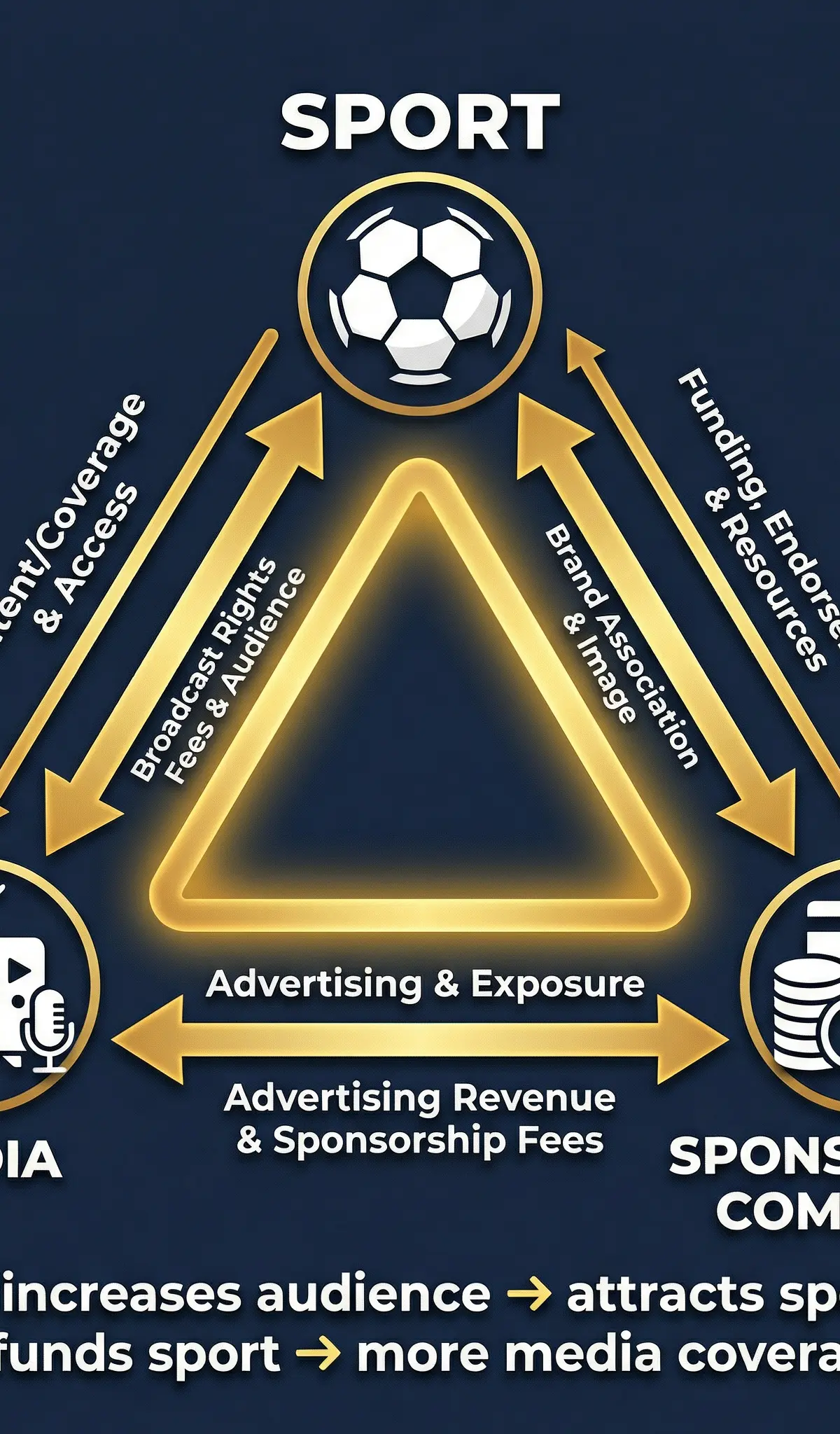
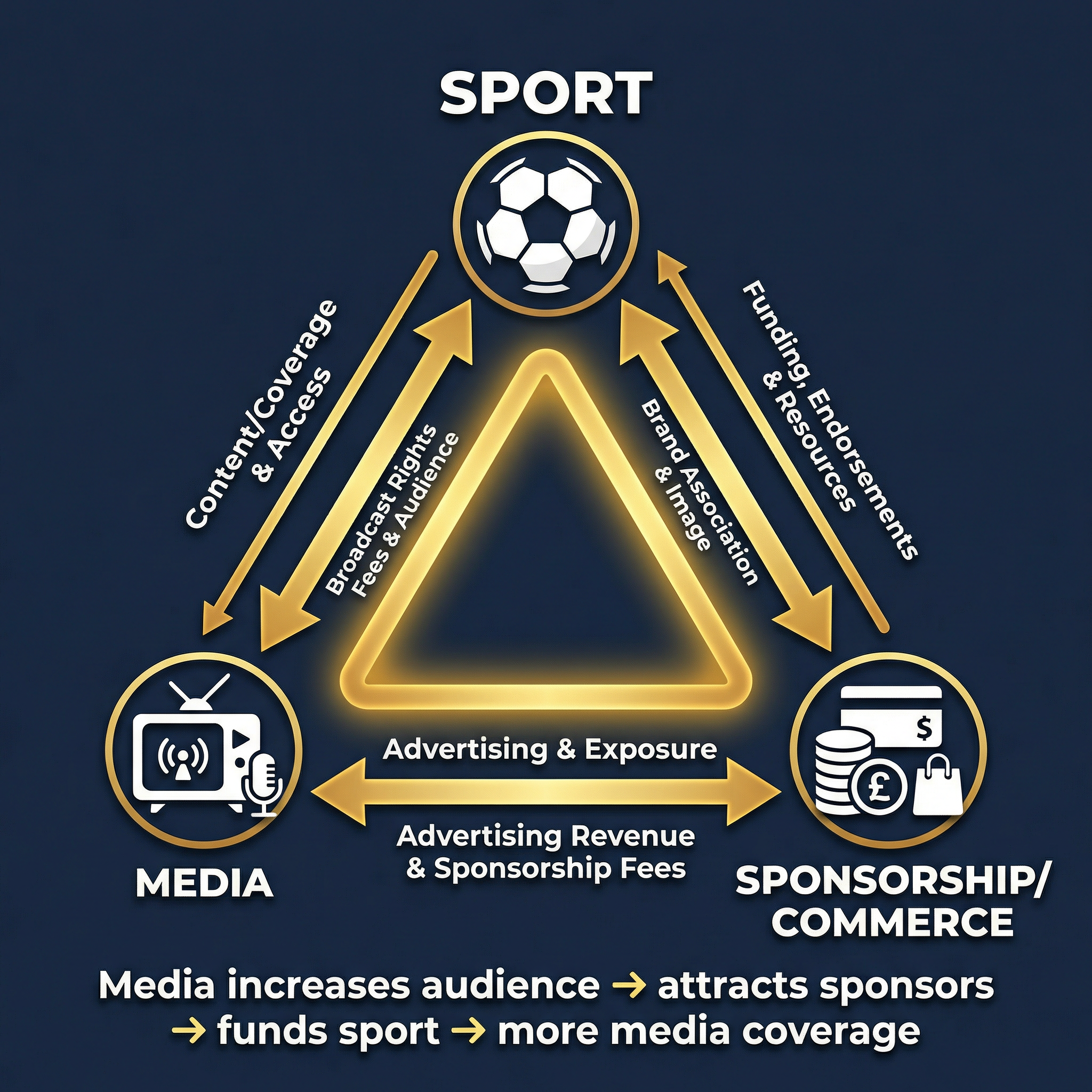
The Golden Triangle describes the mutually reinforcing relationship between sport, media, and sponsorship/commerce. Media coverage attracts audiences; large audiences attract commercial sponsors; sponsorship revenue funds sport development; better-funded sport attracts more media coverage. This cycle primarily benefits high-profile, commercially attractive sports — football, rugby, tennis, and cricket — while under-represented sports receive less coverage, less funding, and consequently lower participation rates.
This mechanism is directly relevant to engagement patterns because sports popular with women, disabled athletes, and ethnic minority communities have historically received less media coverage, meaning they benefit less from the Golden Triangle. Candidates who can make this evaluative link in extended response questions will access the highest mark bands.
Strategies to Increase Participation: The PPA Framework
The three key strategies for increasing participation can be remembered using the acronym PPA:
| Strategy | Definition | Example |
|---|---|---|
| Promotion | Raising awareness, changing attitudes, marketing sport to target groups | This Girl Can, Kick It Out, Sainsbury's School Games |
| Provision | Creating new opportunities, facilities, and programmes | Women-only swimming sessions, adapted sports clubs, walking football leagues |
| Access | Removing practical and financial barriers | Subsidised memberships, free transport, wheelchair-accessible facilities |
National Governing Bodies (NGBs)
NGBs are the organisations responsible for governing and developing individual sports in the UK. Each NGB has a Whole Sport Plan approved by Sport England, which includes specific targets for increasing participation among under-represented groups. Candidates should be able to cite specific NGB examples in AO2 application questions.
| NGB | Sport | Relevant Initiative |
|---|---|---|
| The Football Association (FA) | Football | Wildcats (girls), Disability Football, Kick It Out |
| British Cycling | Cycling | Go Ride (youth), Breeze (women) |
| England Athletics | Athletics | RunTogether (adult beginners), disability athletics |
| British Swimming | Swimming | Swim England Inclusive Swimming |
| Lawn Tennis Association (LTA) | Tennis | Tennis Opened Up (disability), LTA Youth |
Practical Skills
Techniques & Processes
While this is primarily a theory topic, candidates should be able to interpret data presented in graphs, tables, and charts showing participation rates across different demographics. This is assessed under AO3 and accounts for 30% of marks in this topic area. Key skills include:
- Identifying trends in participation data (e.g., 'participation among women aged 16–24 increased by 12% between 2012 and 2022')
- Comparing participation rates between groups
- Suggesting reasons for observed trends using subject knowledge
- Evaluating the impact of specific initiatives on participation data
Materials & Equipment
For data interpretation tasks, candidates should be comfortable reading: bar charts, line graphs, pie charts, and percentage tables. Always quote specific figures from the data in your answer — examiners credit the use of data evidence.
Portfolio/Coursework Guidance
Assessment Criteria
This topic feeds directly into the written theory paper (Component 3: Physical Education in Practice). There is no coursework component for this specific topic, but the knowledge gained here supports analysis questions in the practical assessment where candidates reflect on participation and performance contexts.
Building a Strong Knowledge Base
For this topic, candidates should build a bank of real-world examples — specific initiatives, named NGBs, and statistical evidence — that can be deployed in application and evaluation questions. Revision should focus on being able to explain why barriers exist (not just what they are) and how effectively strategies address them.
Exam Component
Written Exam Knowledge
This topic appears in the OCR GCSE PE Theory Paper (J587/01 or J587/02 depending on tier). Questions range from 1-mark identification tasks to 6-mark extended response questions. The assessment objective split for this topic is: AO1 (Knowledge) 40%, AO2 (Application) 30%, AO3 (Analysis/Interpretation) 30%.
For AO1 questions: use precise terminology, name specific groups, barriers, and initiatives.
For AO2 questions: apply knowledge to a given scenario or context — e.g., 'A local sports centre wants to increase participation among elderly women. Suggest two strategies...'
For AO3 questions: interpret data, identify trends, and use evidence to support conclusions.
Practical Exam Preparation
While this topic is theory-based, candidates who participate in sport can draw on personal experience to enrich their answers. For example, if you have experienced barriers to participation yourself, you can reference this in extended response questions to demonstrate understanding. However, always ensure personal examples are framed using subject terminology.
Visual Resources
2 diagrams and illustrations
Interactive Diagrams
2 interactive diagrams to visualise key concepts
Conceptual Flow Outline
Exam answer framework for engagement patterns questions — follow this structure for any 4–6 mark question on participation barriers and strategies
Conceptual Flow Outline
The Golden Triangle — the mutually reinforcing relationship between sport, media, and sponsorship that drives commercial sport but can widen participation inequalities
Worked Examples
4 worked examples — open one to explore the question and available guidance.
Practice Questions
Test your understanding — click to reveal model answers
Identify two barriers that may prevent elderly people from participating in sport. (2 marks)
Hint: Think about what specifically affects older adults — not just 'lack of interest'. Consider physical, financial, and social factors.
Explain how the lack of media coverage of women's sport acts as a barrier to female participation. (4 marks)
Hint: Use the concept of role models and the Golden Triangle. Explain the mechanism — why does low media coverage reduce participation? Think about inspiration, visibility, and funding.
Evaluate the effectiveness of Sport England's 'This Girl Can' campaign in increasing female participation in sport. (6 marks)
Hint: For 'evaluate' questions, you must give strengths AND weaknesses, then reach a conclusion. Don't just describe the campaign — judge how well it worked and for whom.
Discuss the view that socio-economic status is the most significant barrier to sport participation for all social groups. (9 marks)
Hint: This is a 'discuss' question — you must present arguments FOR this view and AGAINST it, then reach a balanced conclusion. Consider how socio-economic status intersects with gender, age, ethnicity, and disability. Use specific examples and named initiatives.