OCR · GCSE · Physical Education
Methods of Training: Weight Training, Circuit Training, Interval Training, Continuous Training, Fartlek Training, Plyometrics
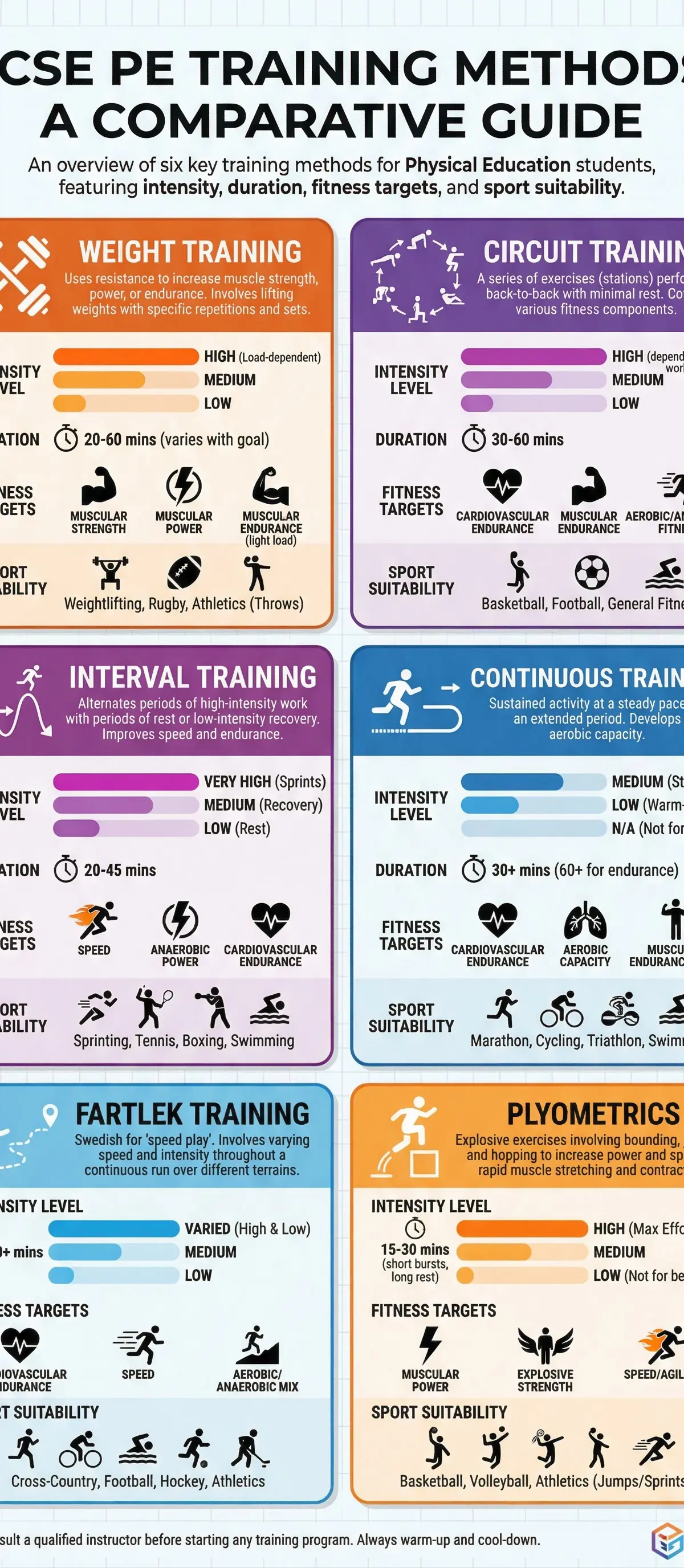
This guide provides a comprehensive breakdown of the six methods of training required for the OCR GCSE Physical Education specification (J587). Mastering these methods is crucial for success in both the theoretical exam paper and for informing practical performance.
- 6 min read
- 3 worked examples
- 4 practice questions
- 6 key terms
Study Notes
Overview
This guide provides a comprehensive breakdown of the six methods of training required for the OCR GCSE Physical Education specification (J587). Mastering these methods is crucial for success in both the theoretical exam paper and for informing practical performance. Candidates will learn to analyse the suitability of each method for different athletes and fitness goals, a key skill for achieving high marks in AO2 (Application) and AO3 (Evaluation) questions.

Key Knowledge & Theory
Core Concepts
The selection of a training method is determined by the specific component of fitness an athlete aims to improve. Each method has a unique physiological rationale and manipulates variables like intensity, duration, frequency, and rest to achieve a desired outcome. A strong understanding of the FITT principles (Frequency, Intensity, Time, Type) is essential for applying these methods effectively.
Key Practitioners/Artists/Composers
| Name | Period/Style | Key Works | Relevance |
|---|---|---|---|
| Dr. Woldemar Gerschler & Dr. Hans Reindell | 1930s | Interval Training | Pioneered interval training, discovering that the heart adapts to be able to perform more work. Their work underpins modern high-intensity training protocols. |
| Gösta Holmér | 1930s | Fartlek Training | Developed Fartlek as a less structured, more enjoyable form of training for the Swedish cross-country team, emphasising 'speed play'. |
| Dr. Tudor Bompa | 1960s-Present | Periodisation | The 'father' of modern periodisation, his work on planning training cycles is fundamental to how weight training and other methods are structured across a season. |
Technical Vocabulary
- Maximum Heart Rate (MHR): The highest number of beats per minute your heart can pump under maximal stress. Often estimated as 220 minus your age.
- Aerobic/Anaerobic Zones: Specific ranges of heart rate intensity that determine which energy system is predominantly used.
- Sets & Repetitions (Reps): The organisation of exercises in weight training. Reps are the number of times you perform an exercise; a set is a group of reps.
- Work-to-Rest Ratio: A key variable in interval training that defines the duration of the work period compared to the rest period.
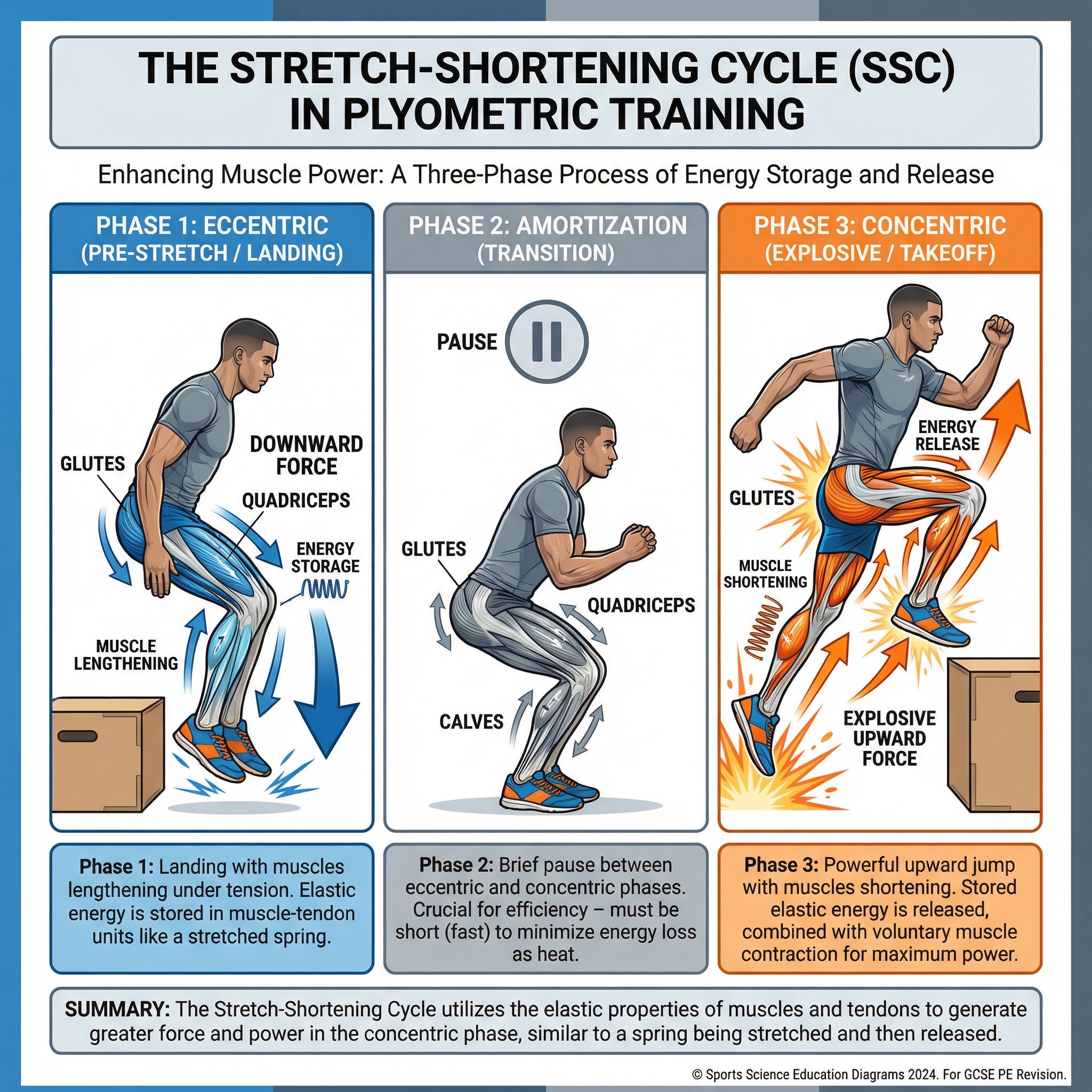
- Stretch-Shortening Cycle (SSC): The physiological basis of plyometrics, involving an eccentric contraction followed immediately by a concentric contraction.
Practical Skills
Techniques & Processes
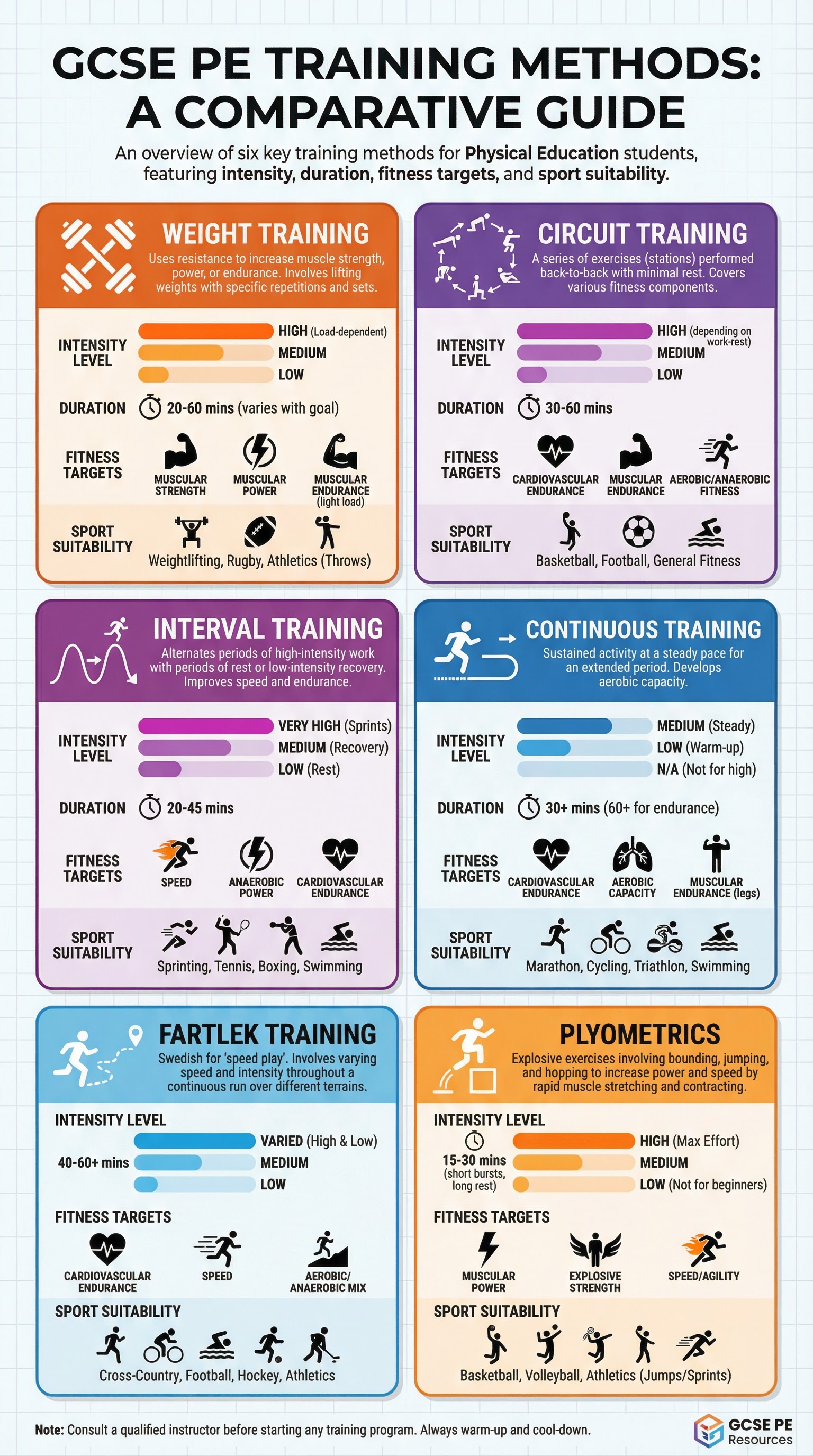
1. Continuous Training:
- Technique: Maintain a steady pace for a minimum of 20 minutes.
- Intensity: Work within the aerobic zone (60-80% of MHR).
- Example: A 30-minute run at a consistent speed where you can still hold a conversation.
2. Fartlek Training:
- Technique: A form of continuous training where the speed and intensity are varied.
- Intensity: Alternates between high, medium, and low intensity, often using natural terrain (e.g., sprint to a tree, jog up a hill).
- Example: A 40-minute run including 5 minutes of jogging, 10 sprints of 60 seconds with 2 minutes of jogging in between, and 5 minutes of running uphill.
3. Interval Training:
- Technique: Alternate between periods of high-intensity work and fixed periods of rest.
- Intensity: Work in the anaerobic zone (80-90% of MHR) during work intervals.
- Example: 10 x 200m sprints on a track, with a 90-second rest between each sprint.
4. Circuit Training:
- Technique: A series of 8-12 exercise stations arranged to work different muscle groups.
- Intensity: Can be varied to target different components of fitness. The number of circuits and rest between stations can be adjusted.
- Example: 1 minute per station of: Press-ups, Star Jumps, Sit-ups, Squats, Lunges, Tricep Dips, Shuttle Runs, Plank. 90 seconds rest between circuits.
5. Weight Training:
- Technique: Use of resistance to overload muscles.
- For Strength/Power: High weight, low reps (e.g., 4 sets of 6 reps).
- For Muscular Endurance: Low weight, high reps (e.g., 3 sets of 20 reps).
- Example (Strength): Barbell Squats - 5 sets of 5 reps at 85% of 1 Rep Max.
6. Plyometrics:
- Technique: High-impact exercises involving explosive bounding, hopping, or jumping.
- Intensity: Maximum explosive effort in each repetition.
- Example: 3 sets of 8 box jumps onto a 24-inch box, with 3 minutes rest between sets.
Materials & Equipment
- Continuous/Fartlek/Interval: Running shoes, stopwatch, heart rate monitor.
- Circuit Training: A variety of equipment depending on the exercises, such as cones, mats, benches, and medicine balls.
- Weight Training: Free weights (dumbbells, barbells), resistance machines, kettlebells.
- Plyometrics: Boxes, hurdles, cones. A non-slip surface is essential for safety.
Portfolio/Coursework Guidance
Assessment Criteria
While there is no direct coursework for this topic, your understanding of training methods is crucial for your practical performance and the Analysis and Evaluation of Performance (AEP) task. Examiners will look for your ability to:
- Justify: Explain why you have chosen specific training methods to improve your weaknesses.
- Apply: Demonstrate you can correctly perform the training and apply the FITT principles.
- Analyse: Break down the effectiveness of your training programme.
Building a Strong AEP
- Record Everything: Keep a detailed training diary. Log your sets, reps, times, and how you felt.
- Show Progression: Demonstrate how you have applied progressive overload to your training over time.
- Use Terminology: Refer to the training methods using the correct technical language.
Exam Component
Written Exam Knowledge
This topic is a favourite for the written exam, appearing in both short-answer and extended 6-mark questions. You must be able to:
- Define each training method.
- Provide practical examples of each method.
- Explain the advantages and disadvantages of each method.
- Justify the selection of a training method for a specific athlete or sport.
Practical Exam Preparation
Your practical performance in your chosen sports will be enhanced by applying the correct training methods. For example, a sprinter who has used a combination of interval training, weight training, and plyometrics will demonstrate greater speed and power.

Visual Resources
2 diagrams and illustrations
Interactive Diagrams
1 interactive diagram to visualise key concepts
Conceptual Flow Outline
Flowchart for Continuous Training
Worked Examples
3 worked examples — open one to explore the question and available guidance.
Practice Questions
Test your understanding — click to reveal model answers
Identify two components of fitness that can be improved by circuit training.
Hint: Think about the variety of exercises you can include in a circuit.
Describe how a games player could use fartlek training to improve their fitness.
Hint: Think about the different movements a games player makes in a match.
Explain the difference between training for muscular strength and muscular endurance using weight training.
Hint: Focus on the difference in sets, reps, and weight.
Evaluate the use of continuous training for a gymnast.
Hint: Consider the main components of fitness a gymnast needs. Is cardiovascular endurance the most important?