AQA · GCSE · Religious Studies
Course version: 8062 · Version from Sept 2018
Beliefs and teachings: Authority
In Islam, absolute authority rests solely with Allah, who is omnipotent and the supreme lawgiver.
Checked against the AQA 8062 specification (opens in a new tab) on .
- Point 8 of 13
- 3 key terms
Study notes
From the checked teaching notes for this specification point.
The idea
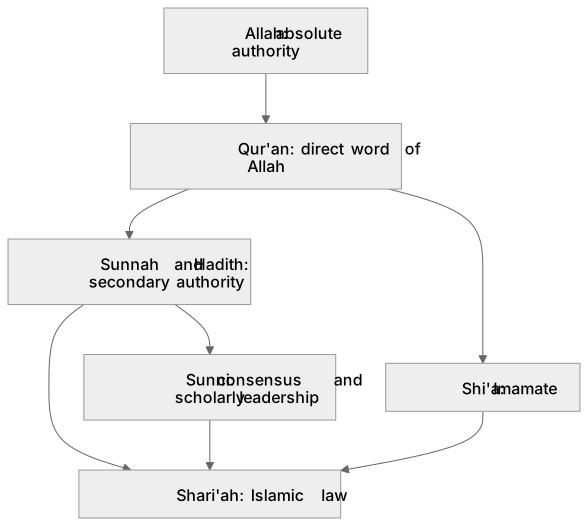
In Islam, absolute authority rests solely with Allah, who is omnipotent and the supreme lawgiver. This divine authority is communicated to humanity through the Qur'an, which Muslims consider the direct, unaltered word of God and the ultimate source of guidance. Secondary authority is found in the Sunnah and Hadith, which record the exemplary life and sayings of the Prophet Muhammad. For Shi'a Muslims, authority also extends to the Imamate, a line of divinely appointed leaders who provide infallible guidance after the Prophet. Understanding these sources of authority is crucial, as they dictate Islamic law (Shari'ah), moral conduct, and daily religious practices.
What earns the marks
- Identify Allah as the supreme and absolute source of authority in Islam.
- Explain that the Qur'an holds the highest textual authority as the direct, uncorrupted word of Allah.
- Describe the role of the Prophet Muhammad's Sunnah and Hadith as secondary sources of authority that interpret and model Qur'anic teachings.
- Distinguish Shi'a beliefs in the authority of the Imamate (divinely appointed Imams) from Sunni reliance on consensus and scholarly leadership.
Common mistakes and how to put them right
Equating the authority of the Hadith with the Qur'an; the Qur'an is the direct word of God and always takes precedence over the Hadith.
Stating that the Prophet Muhammad is worshipped.
Put it right: Muhammad is deeply respected as the final messenger and a source of authority, but worship is strictly reserved for Allah.
Assuming all Muslims follow the Imamate.
Put it right: The Imamate is a specific source of authority in Shi'a Islam, not Sunni Islam.
Exam tips
- Always rank the Qur'an as the primary source of authority when discussing how Muslims make moral decisions.
- Use the term 'Shari'ah' when explaining how sources of authority are applied to create Islamic law.
- Highlight the differences between Sunni and Shi'a sources of authority to access higher marks in evaluation questions.
Try the lesson
The start of the Beliefs and teachings: Authority lesson, made from checked teaching notes for this specification point.
Have a go first
Which of the following is considered the absolute and supreme source of authority for all Muslims?
Listen
In Islam, absolute authority rests solely with Allah, who is omnipotent and the supreme lawgiver. This divine authority is communicated to humanity through the Qur'an, which Muslims consider the direct, unaltered word of God and the ultimate source of guidance. Secondary authority is found in the Sunnah and Hadith, which record the exemplary life and sayings of the Prophet Muhammad. For Shi'a Muslims, authority also extends to the Imamate, a line of divinely appointed leaders who provide infallible guidance after the Prophet. Understanding these sources of authority is crucial, as they dictate Islamic law (Shari'ah), moral conduct, and daily religious practices. A strong answer earns marks for these points. Identify Allah as the supreme and absolute source of authority in Islam. Explain that the Qur'an holds the highest textual authority as the direct, uncorrupted word of Allah. Describe the role of the Prophet Muhammad's Sunnah and Hadith as secondary sources of authority that interpret and model Qur'anic teachings. Distinguish Shi'a beliefs in the authority of the Imamate (divinely appointed Imams) from Sunni reliance on consensus and scholarly leadership. Exam tip: Always rank the Qur'an as the primary source of authority when discussing how Muslims make moral decisions.
See it
Key words
Say what each word means before you turn the card.
Divine revelation
Try answering aloud or in your head before turning the card.
Sectarian differences (Sunni and Shi'a)
Try answering aloud or in your head before turning the card.
Religious law and ethics
Try answering aloud or in your head before turning the card.
See every definition
- Divine revelation
- Authority communicated to humanity through the Qur'an, which Muslims consider the direct, unaltered word of God and the ultimate source of guidance.
- Sectarian differences (Sunni and Shi'a)
- For Shi'a Muslims authority extends to the Imamate, a line of divinely appointed leaders, while Sunni Muslims rely on consensus and scholarly leadership.
- Religious law and ethics
- Islamic law (Shari'ah), moral conduct and daily religious practices are dictated by these sources of authority.
Label the diagram
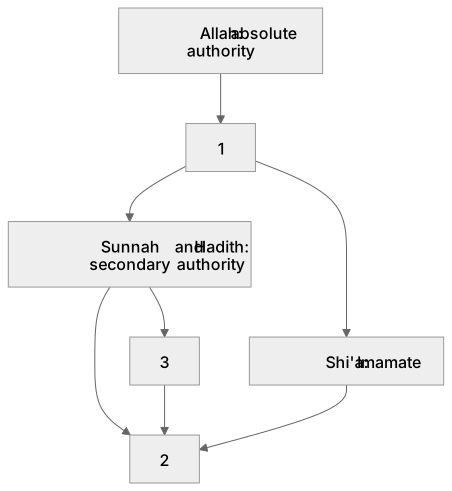
Some boxes have lost their names. Pick the right name for each number.
1Box 1
2Box 2
3Box 3
There is more to this lesson
The full lesson goes on to check your understanding and help you earn the marks. Create a free account to carry on, with your progress saved.
A week of Premium from your first lesson · Then the free plan continues · No card, no charge
Test your understanding of Beliefs and teachings: Authority
Active recall beats re-reading. Take an instant quiz now to test what you’ve learned and lock it into long-term memory.
A week of Premium from your first lesson · Then the free plan continues · No card, no charge