WJEC · GCSE · Religious Studies
Religious practices of Hinduism
This study guide provides a comprehensive overview of Hindu practices for WJEC GCSE Religious Studies. It focuses on the essential connections between rituals, festivals, and pilgrimage and the core theological concepts of Dharma, Karma, and Moksha, equipping candidates to achieve top marks.
- 5 min read
- 3 worked examples
- 5 practice questions
- 6 key terms
Study Notes
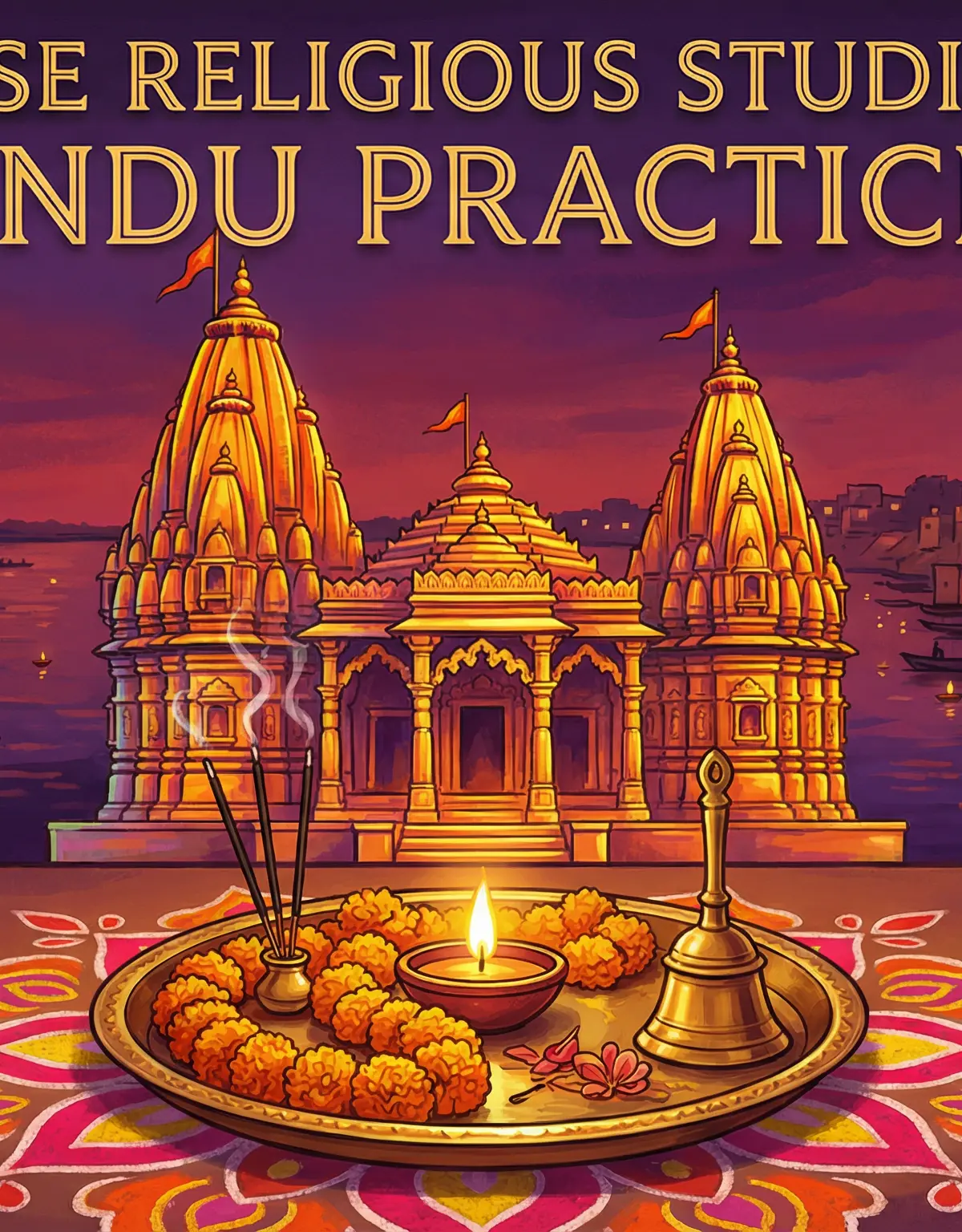
Overview
This guide explores the vibrant and diverse religious practices of Hinduism, a core component of the WJEC GCSE Religious Studies specification. Examiners expect candidates to demonstrate a deep understanding of not just what Hindus do, but why they do it. This means connecting every ritual, festival, and rite of passage to the foundational beliefs of Dharma (duty), Karma (action), Samsara (the cycle of rebirth), and Moksha (liberation). This topic requires a shift from generic descriptions to precise analysis, using correct Sanskrit terminology and citing Sources of Wisdom and Authority. A key area of focus is the distinction between worship in the home (Grihastha) and the temple (Mandir), as well as the differences in how these practices are observed in India versus the UK. Marks are awarded for showing how these physical acts of orthopraxy are expressions of a profound spiritual journey towards the realisation of Atman and union with Brahman.
Key Practices & Concepts
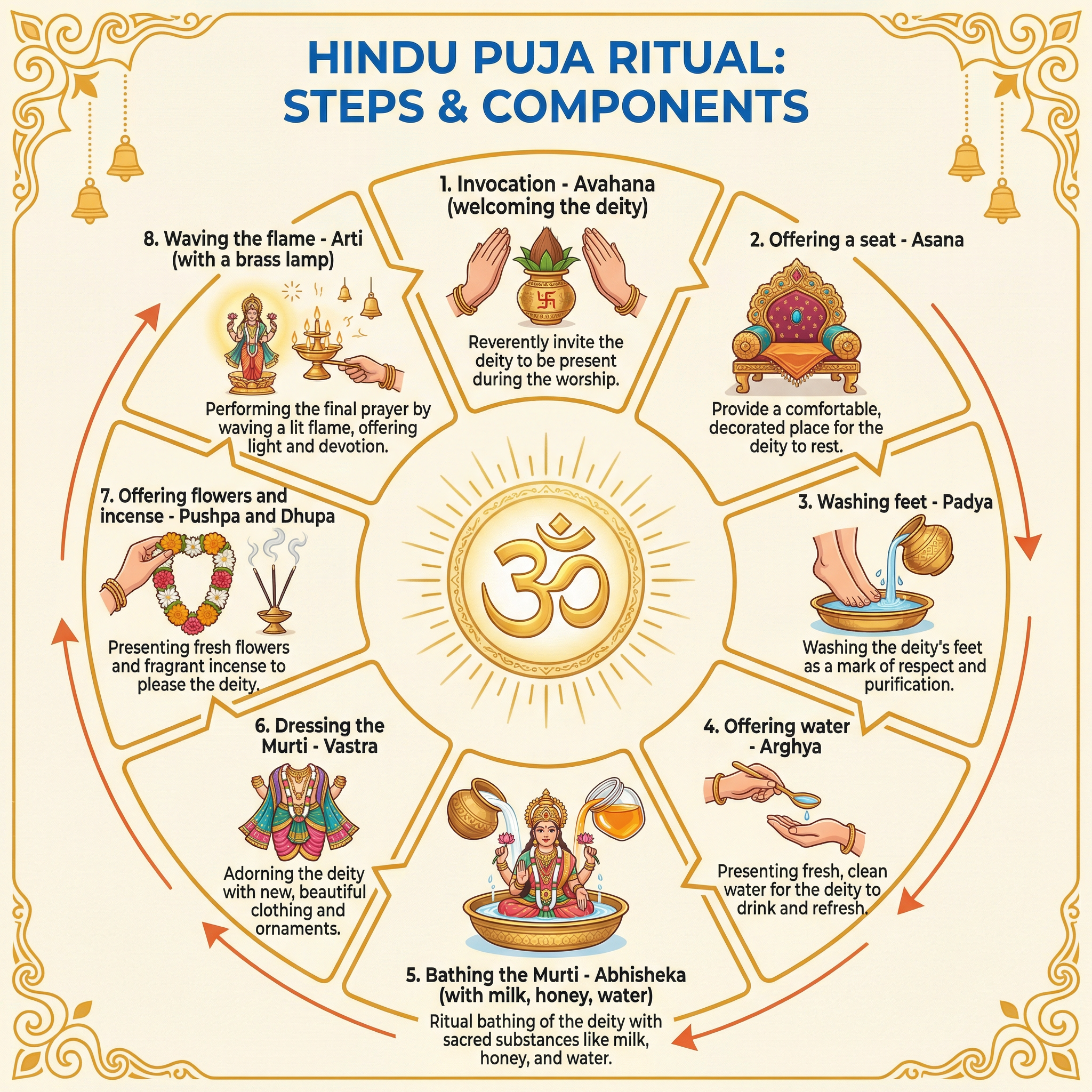
Worship: Puja
What it is: Puja is the daily act of worship performed by Hindus to honour and show devotion (Bhakti) to a deity. It can be a simple ritual at a home shrine or an elaborate ceremony at a Mandir.
Why it matters: Puja is the primary way Hindus connect with the divine. It is a fulfilment of Dharma and a means of generating positive Karma. The act of Darshan (beholding the deity) is a spiritually transformative moment. Examiners credit candidates who explain the Murti not as an ‘idol’, but as a sacred image that serves as a focal point for God’s presence.
Specific Knowledge: Key stages of Puja include Avahana (invocation), Abhisheka (bathing the Murti), offering of flowers and food (Prasada), and the waving of the flame (Arti). A key quote is from the Bhagavad Gita 9:26: ‘If one offers to me with devotion a leaf, a flower, fruit, or water, I accept that offering of love from the pure-hearted.’
Major Festivals
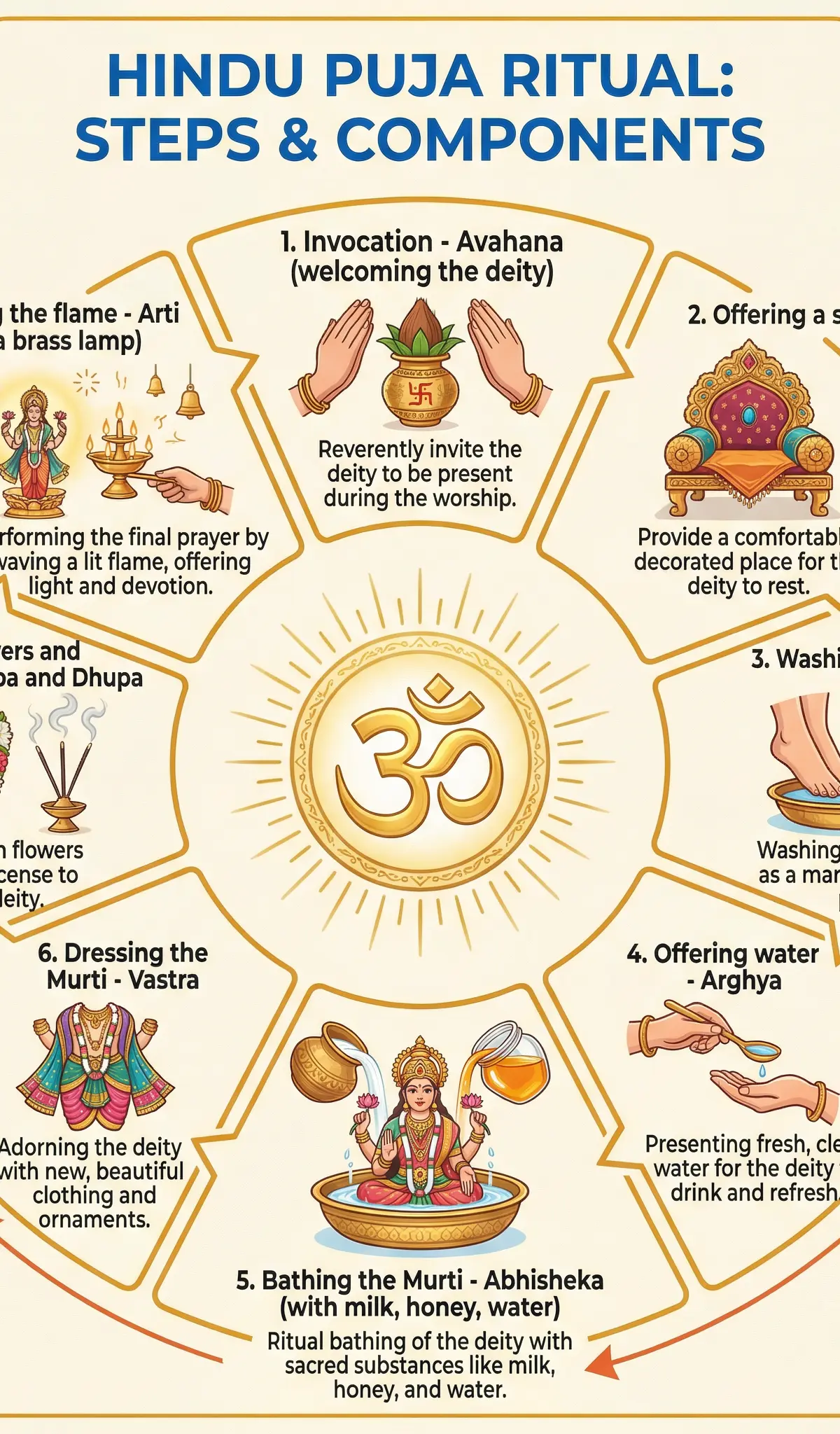
Diwali
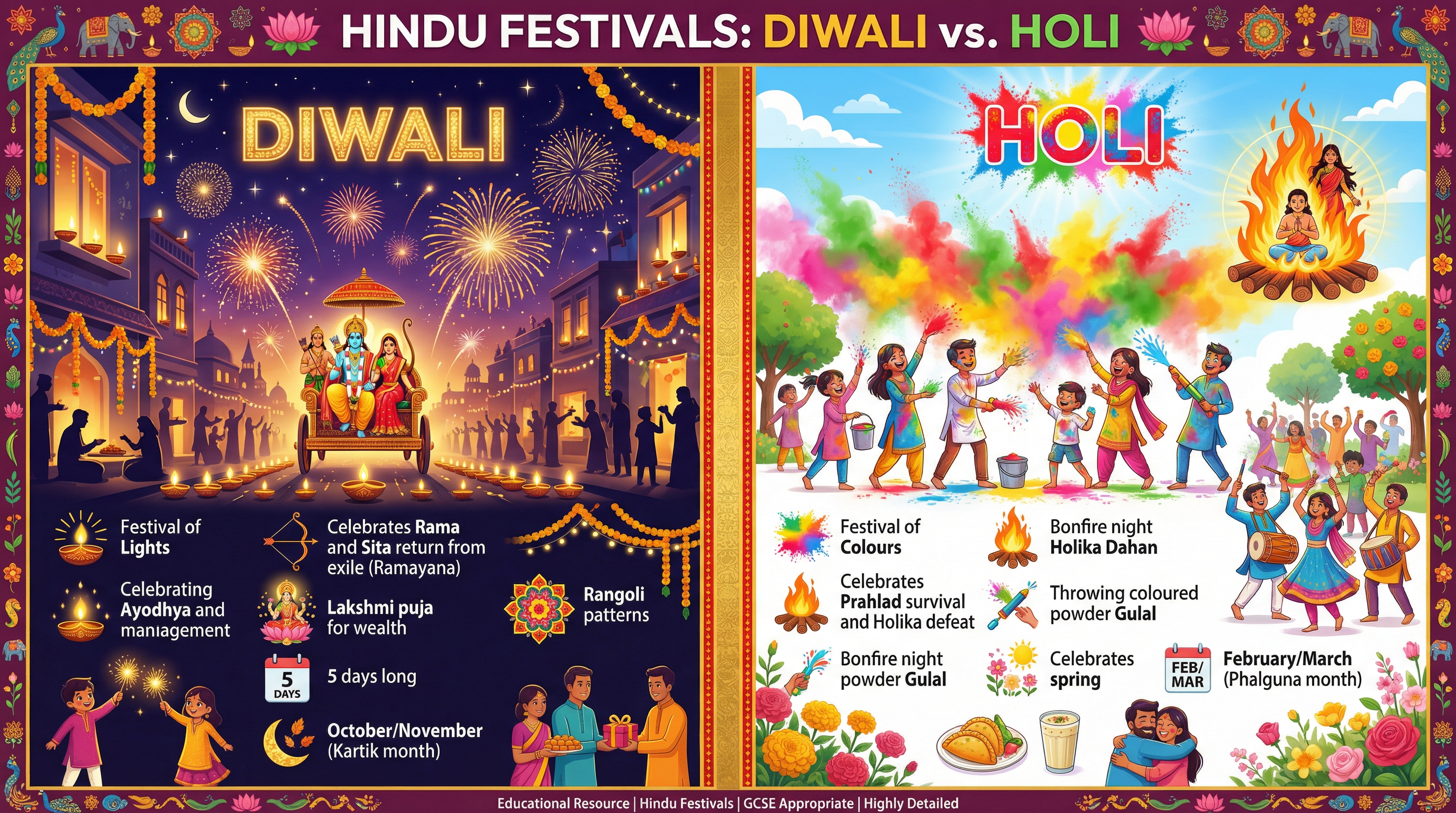
What it is: The ‘Festival of Lights’, celebrated over five days in October/November. It commemorates the return of Rama and Sita from exile, as told in the Ramayana.
Why it matters: Diwali symbolises the victory of light over darkness and good over evil. It is a time for family, feasting, and the worship of Lakshmi, the goddess of wealth and prosperity. For the exam, candidates should link the lighting of Diyas to guiding Rama home and welcoming Lakshmi.
Specific Knowledge: Key practices include lighting Diyas, creating Rangoli patterns, performing Lakshmi Puja, and sharing sweets. In the UK, it is a major cultural event with public celebrations.
Holi
What it is: The ‘Festival of Colours’, celebrated in February/March. It marks the arrival of spring and celebrates the story of Prahlad, who was saved from a fire by his devotion to Vishnu, while the demoness Holika perished.
Why it matters: Holi celebrates the triumph of good over evil and the power of devotion. The throwing of coloured powders (Gulal) breaks down social barriers, uniting people in joy. Candidates must distinguish its origins from Diwali.
Specific Knowledge: Key practices include the lighting of a bonfire (Holika Dahan) on the eve of the festival, and the throwing of coloured powders and water the next day.
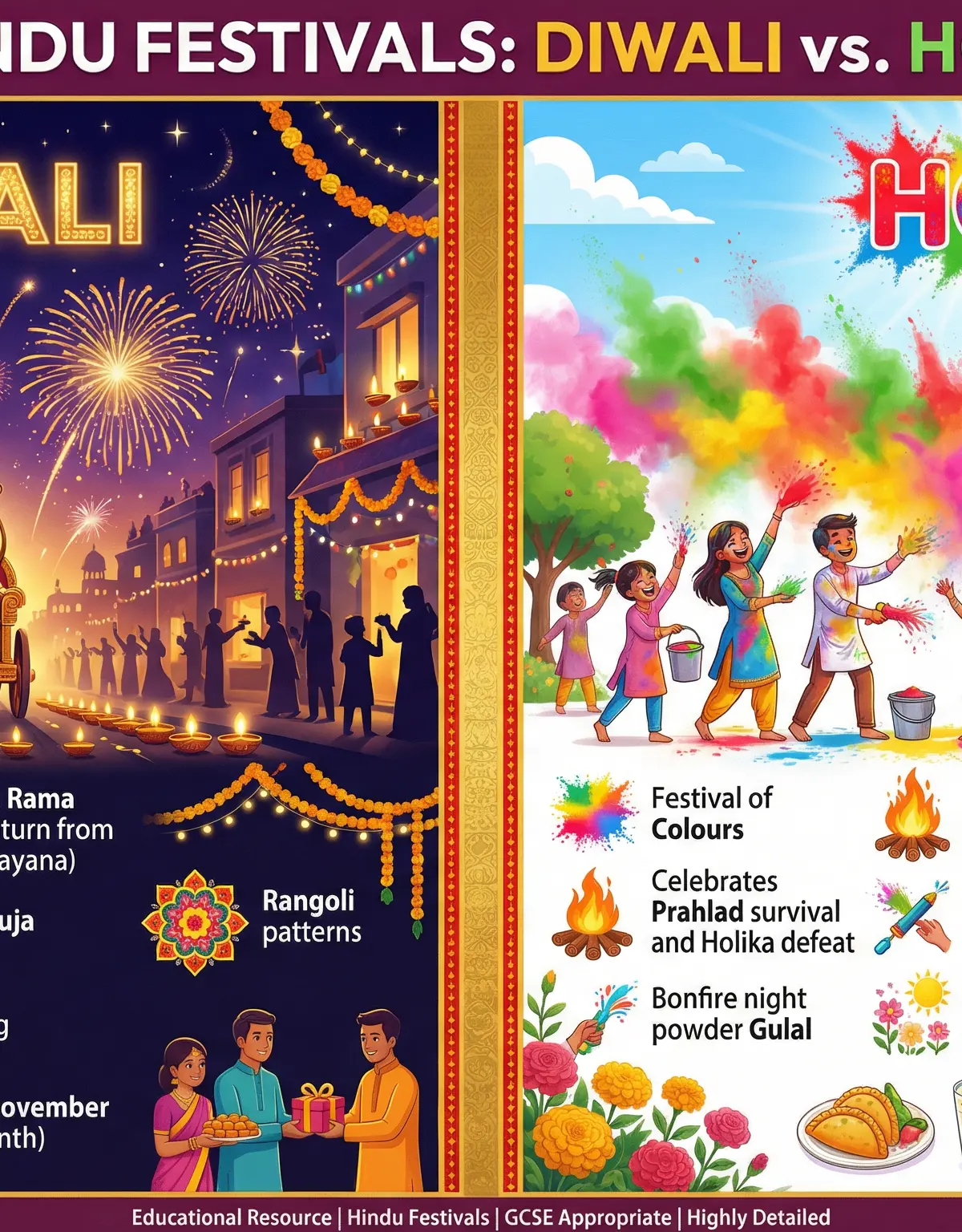
Pilgrimage: Varanasi
What it is: A journey to a sacred place. The most important Hindu pilgrimage site is the city of Varanasi (also known as Kashi) on the banks of the River Ganges.
Why it matters: Hindus believe that bathing in the sacred waters of the Ganges washes away sin and purifies the soul (Atman), helping to erase negative Karma. Dying in Varanasi is believed to grant immediate Moksha. This demonstrates the soteriological (salvation-related) significance of the practice.
Specific Knowledge: Key terms include Tirtha (a sacred ford or crossing place), Ghats (the steps leading down to the river), and the belief that the city is the home of the god Shiva.
Rites of Passage: Samskaras
What it is: The sixteen traditional rites of passage that mark significant life stages.
Why it matters: Samskaras sanctify key moments from birth to death, reinforcing Dharma at each stage. They show that all of life is a spiritual journey.
Specific Knowledge: Candidates should know Namakarana (naming ceremony), Upanayana (sacred thread ceremony for boys entering religious study), and Antyesti (funeral rites, including cremation to release the Atman from the body).
Visual Resources
2 diagrams and illustrations
Interactive Diagrams
1 interactive diagram to visualise key concepts
Conceptual Flow Outline
The relationship between Dharma, Karma, Samsara, and Moksha.
Worked Examples
3 worked examples — open one to explore the question and available guidance.
Practice Questions
Test your understanding — click to reveal model answers
Explain two reasons why the River Ganges is important to Hindus. (5 marks)
Hint: Think about both life and death. Connect your points to core beliefs.
Explain two contrasting ways in which Puja can be performed. (4 marks)
Hint: Think about the location and the people involved.
Explain two features of a Hindu funeral ceremony (Antyesti). (5 marks)
Hint: Focus on the main ritual and what happens after.
Explain the significance of Holi. (8 marks)
Hint: You need to cover its story, its symbolism, and its practices.
‘For a Hindu, fulfilling Dharma is more important than attending festivals.’ Discuss. (15 marks)
Hint: This is an AO2 question. You need to argue for and against the statement and come to a justified conclusion.