AQA · GCSE · Biology
Course version: 8461 · Version from Sept 2018
Stem cells from the embryo are not rejected by the patient’s body so they…
Full specification wording
Stem cells: Stem cells from the embryo are not rejected by the patient’s body so they may be used for medical treatment.
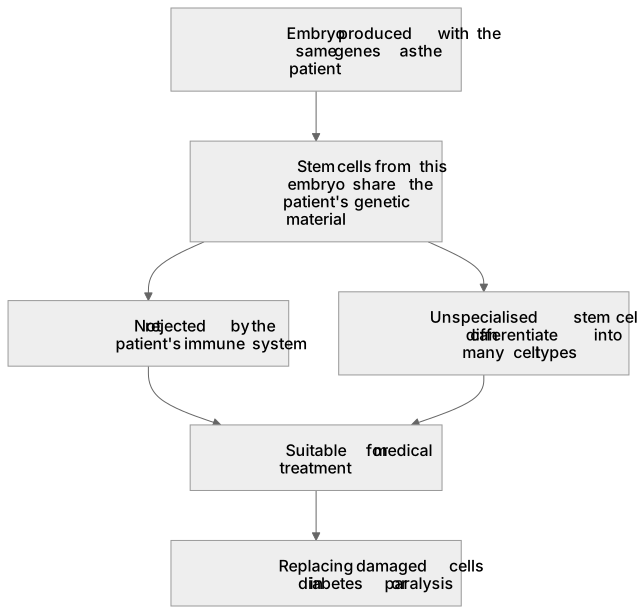
In therapeutic cloning, an embryo is produced with the same genes as the patient.
Checked against the AQA 8461 specification (opens in a new tab) on .
- Point 8 of 11
Study notes
From the checked teaching notes for this specification point.
The idea
In therapeutic cloning, an embryo is produced with the same genes as the patient. Stem cells from this embryo are not rejected by the patient's immune system because they contain the exact same genetic material and therefore the same surface antigens. This makes them highly valuable for medical treatments, as they can differentiate into any type of human cell to replace those lost to disease or injury, such as in diabetes or paralysis. Without therapeutic cloning, donor stem cells might be rejected unless immunosuppressant drugs are used. Understanding this mechanism highlights why these specific embryonic stem cells are so useful in regenerative medicine.
What earns the marks
- In therapeutic cloning, an embryo is produced with the same genes as the patient.
- Stem cells from this embryo are not rejected by the patient's immune system because they share the same genetic material.
Common mistakes and how to put them right
Saying embryonic stem cells are never rejected.
Put it right by specifying that in therapeutic cloning, they are not rejected because they have the same genes as the patient.
Confusing therapeutic cloning with reproductive cloning.
Put it right by stating therapeutic cloning produces cells for medical treatment, not a new individual.
Writing that stem cells themselves treat a disease without explaining differentiation.
Put it right by stating that they divide and become the needed specialised cells.
Exam tips
- Always link the lack of rejection to the fact that the embryo has the same genes as the patient in therapeutic cloning.
- Use the term differentiate correctly when explaining how stem cells replace damaged cells.
Try the lesson
The start of the Stem cells: Stem cells from the embryo are not rejected by the patient’s body so they may be used for medical treatment. lesson, made from checked teaching notes for this specification point.
Have a go first
In therapeutic cloning, an embryo is produced with the same genes as the patient. Why are stem cells from this embryo useful for medical treatment?
Listen
In therapeutic cloning, an embryo is produced with the same genes as the patient. Stem cells from this embryo are not rejected by the patient's immune system because they contain the exact same genetic material and therefore the same surface antigens. This makes them highly valuable for medical treatments, as they can differentiate into any type of human cell to replace those lost to disease or injury, such as in diabetes or paralysis. Without therapeutic cloning, donor stem cells might be rejected unless immunosuppressant drugs are used. Understanding this mechanism highlights why these specific embryonic stem cells are so useful in regenerative medicine. A strong answer earns marks for these points. In therapeutic cloning, an embryo is produced with the same genes as the patient. Stem cells from this embryo are not rejected by the patient's immune system because they share the same genetic material. A common slip: Saying embryonic stem cells are never rejected. Instead, specifying that in therapeutic cloning, they are not rejected because they have the same genes as the patient. Exam tip: Always link the lack of rejection to the fact that the embryo has the same genes as the patient in therapeutic cloning.
See it
Label the diagram
Some boxes have lost their names. Pick the right name for each number.
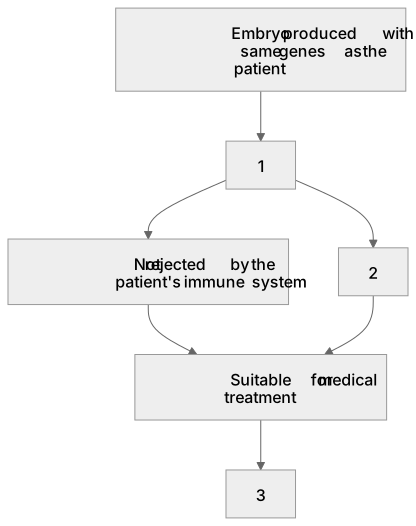
1Box 1
2Box 2
3Box 3
There is more to this lesson
The full lesson goes on to check your understanding and help you earn the marks. Create a free account to carry on, with your progress saved.
A week of Premium from your first lesson · Then the free plan continues · No card, no charge
Test your understanding of Stem cells: Stem cells from the embryo are not rejected by the patient’s body so they may be used for medical treatment.
Active recall beats re-reading. Take an instant quiz now to test what you’ve learned and lock it into long-term memory.
A week of Premium from your first lesson · Then the free plan continues · No card, no charge