AQA · GCSE · Biology
Course version: 8461 · Version from Sept 2018
The use of stem cells has potential risks such as transfer of viral…
Full specification wording
Stem cells: The use of stem cells has potential risks such as transfer of viral infection, and some people have ethical or religious objections.
Stem cell treatments are not risk-free.
Checked against the AQA 8461 specification (opens in a new tab) on .
- Point 9 of 11
Study notes
From the checked teaching notes for this specification point.
The idea
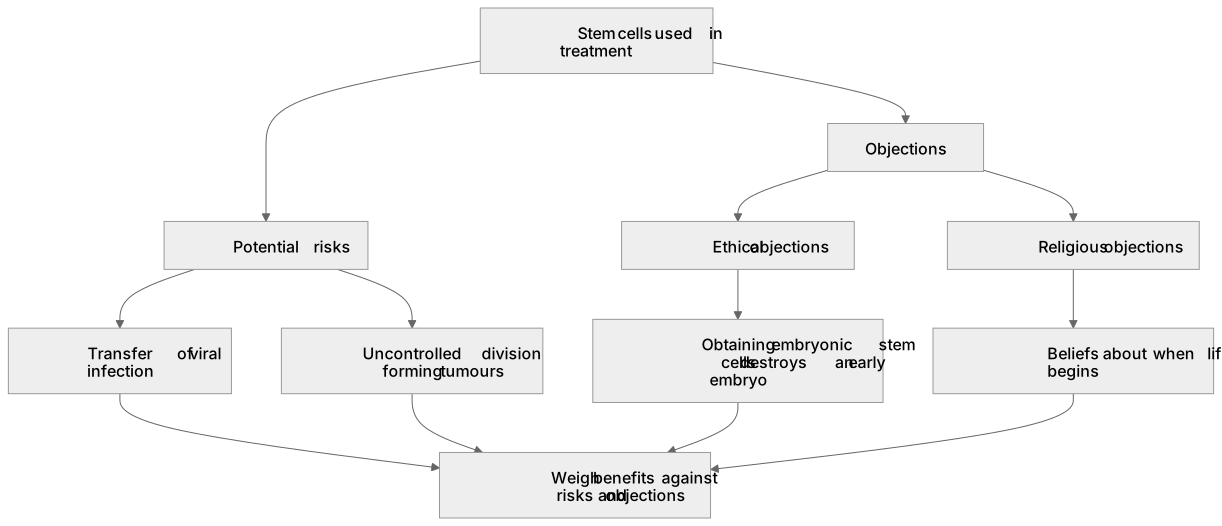
Stem cell treatments are not risk-free. Cells grown in the laboratory can carry viruses, and if those cells are transplanted into a patient, a viral infection could be transferred. There is also a risk that stem cells divide in an uncontrolled way and form tumours, although the statement highlights viral transfer. Separately, some people object on ethical or religious grounds. A common ethical objection is that obtaining embryonic stem cells involves destroying an early embryo, which some people regard as a potential human life. Religious views may also hold that life begins at conception. These objections do not mean the science is invalid; they mean that decisions about using stem cells involve values as well as evidence. Examiners expect balanced discussion of benefits and risks.
What earns the marks
- Stem cells used in treatment can transfer viral infections from the donated or cultured cells to the patient.
- Uncontrolled division of stem cells is another potential risk that can be mentioned alongside viral transfer.
- Some people object on ethical grounds, often because obtaining embryonic stem cells involves destroying an early embryo.
- Some people object on religious grounds, often because of beliefs about when life begins.
- A balanced answer weighs potential benefits of stem cell treatment against these risks and objections.
Common mistakes and how to put them right
Treating ethical objections as scientific evidence.
Put it right by separating factual risks such as viral transfer from value-based objections.
Claiming all religious people oppose stem cell research.
Put it right by writing that some people have religious objections, not that all do.
Listing only benefits or only risks.
Put it right by giving both sides when the question asks for evaluation.
Exam tips
- Use the phrase ‘some people’ when describing ethical or religious objections, because views vary.
- Name a specific risk, such as transfer of viral infection, rather than writing vaguely about safety.
- When evaluating, state a conclusion that follows from the evidence and objections you have given.
Try the lesson
The start of the Stem cells: The use of stem cells has potential risks such as transfer of viral infection, and some people have ethical or religious objections. lesson, made from checked teaching notes for this specification point.
Have a go first
Which of these is a potential medical risk of using stem cells in treatments?
Listen
Stem cell treatments are not risk-free. Cells grown in the laboratory can carry viruses, and if those cells are transplanted into a patient, a viral infection could be transferred. There is also a risk that stem cells divide in an uncontrolled way and form tumours, although the statement highlights viral transfer. Separately, some people object on ethical or religious grounds. A common ethical objection is that obtaining embryonic stem cells involves destroying an early embryo, which some people regard as a potential human life. Religious views may also hold that life begins at conception. These objections do not mean the science is invalid; they mean that decisions about using stem cells involve values as well as evidence. Examiners expect balanced discussion of benefits and risks. A strong answer earns marks for these points. Stem cells used in treatment can transfer viral infections from the donated or cultured cells to the patient. Uncontrolled division of stem cells is another potential risk that can be mentioned alongside viral transfer. Some people object on ethical grounds, often because obtaining embryonic stem cells involves destroying an early embryo. Some people object on religious grounds, often because of beliefs about when life begins. A common slip: Treating ethical objections as scientific evidence. Instead, separating factual risks such as viral transfer from value-based objections. Exam tip: Use the phrase ‘some people’ when describing ethical or religious objections, because views vary.
See it
Label the diagram
Some boxes have lost their names. Pick the right name for each number.
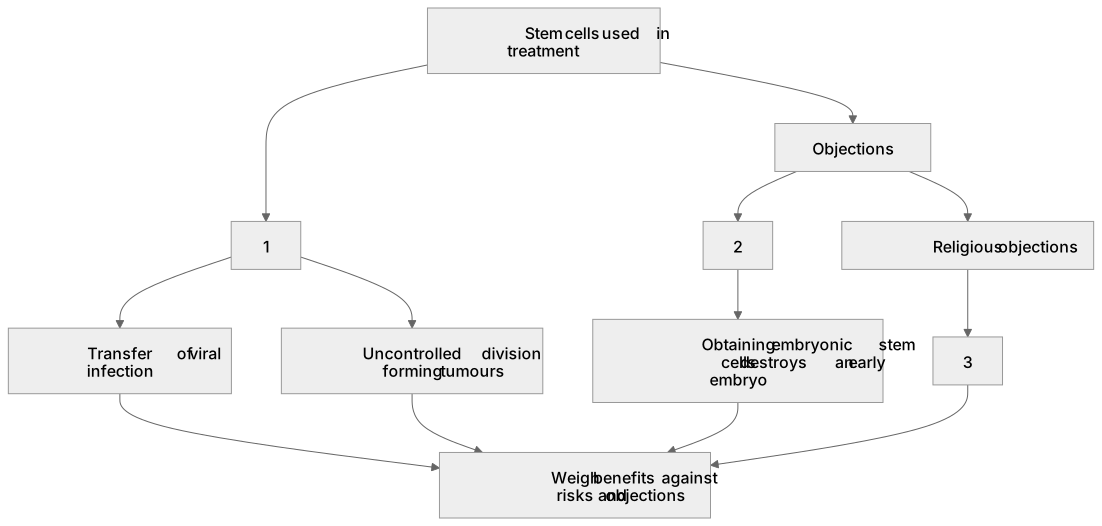
1Box 1
2Box 2
3Box 3
There is more to this lesson
The full lesson goes on to check your understanding and help you earn the marks. Create a free account to carry on, with your progress saved.
A week of Premium from your first lesson · Then the free plan continues · No card, no charge
Test your understanding of Stem cells: The use of stem cells has potential risks such as transfer of viral infection, and some people have ethical or religious objections.
Active recall beats re-reading. Take an instant quiz now to test what you’ve learned and lock it into long-term memory.
A week of Premium from your first lesson · Then the free plan continues · No card, no charge