OCR · GCSE · Biology
Course version: J247 · Version from Sept 2018
Describe the structure and function of the brain (to include: cerebrum,…
Full specification wording
Coordination and control – the nervous system: describe the structure and function of the brain (to include: cerebrum, cerebellum, medulla, hypothalamus, pituitary) (content found only in the biology separate science qualification)
The human brain contains billions of interconnected neurones organised into specialised anatomical regions.
- Point 7 of 9
- 4 key terms
Study notes
From the teaching notes for this specification point.
The idea
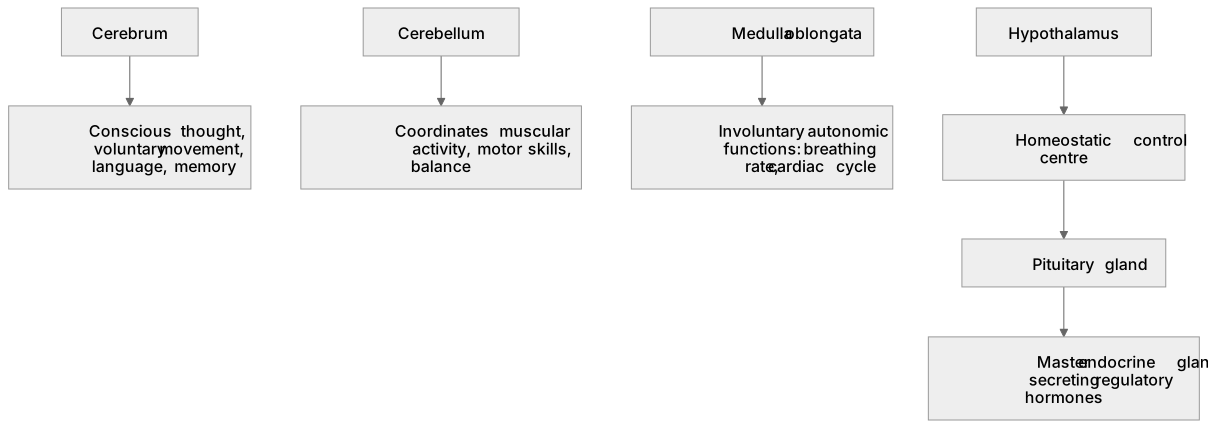
The human brain contains billions of interconnected neurones organised into specialised anatomical regions. The cerebrum forms the large, highly folded outer hemispheres responsible for conscious thought, voluntary motor commands, intelligence, memory, emotion, and language. The cerebellum, located at the back of the brain, coordinates voluntary muscular movement, motor skills, posture, and balance. The medulla oblongata sits in the brainstem, controlling involuntary autonomic life-support functions including heart rate, breathing rate, and gut peristalsis. The hypothalamus monitors blood temperature, osmolarity, and blood glucose, directing homeostatic responses. Directly below, the pituitary gland acts as the master endocrine gland, releasing hormones.
What earns the marks
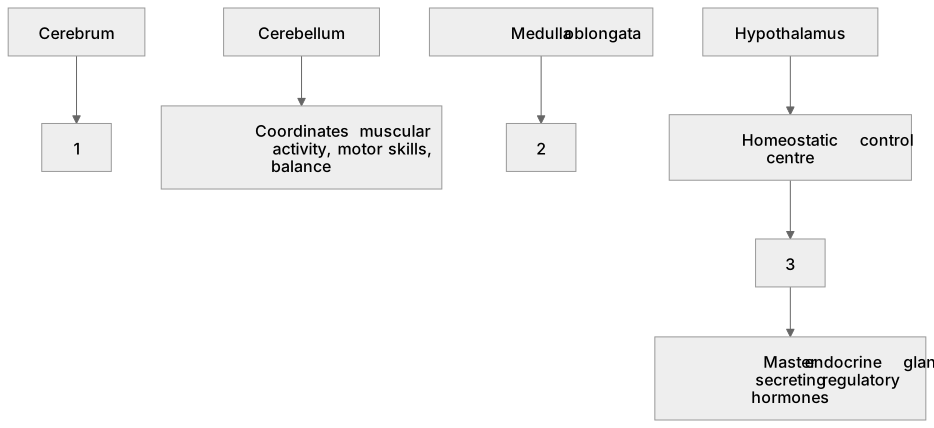
- Describe the cerebrum as the outer folded cerebral cortex controlling conscious thought, voluntary movement, language, and memory.
- State that the cerebellum coordinates muscular activity, motor skills, and balance.
- Explain that the medulla oblongata controls vital unconscious autonomic functions such as breathing rate and cardiac cycle.
- Describe the hypothalamus as the homeostatic control centre and the pituitary gland as the master endocrine gland secreting regulatory hormones.
Common mistakes and how to put them right
Confusing the cerebrum with the cerebellum in both diagrammatic location and physiological function.
Believing the medulla controls conscious decision-making rather than involuntary vital reflexes.
Forgetting that the hypothalamus acts as both a neurological monitoring centre and an endocrine regulator.
Exam tips
- Look for brain folding: the cerebrum has extensive surface convolutions to increase surface area for conscious neurone connections.
- Remember the position of the medulla: it connects directly to the spinal cord at the base of the brainstem and controls automatic life-support functions.
Try the lesson
The start of the Coordination and control – the nervous system: describe the structure and function of the brain (to include: cerebrum, cerebellum, medulla, hypothalamus, pituitary) (content found only in the biology separate science qualification) lesson, made from teaching notes for this specification point.
Have a go first
Which part of the brain controls balance and coordination of movement?
Listen
The human brain contains billions of interconnected neurones organised into specialised anatomical regions. The cerebrum forms the large, highly folded outer hemispheres responsible for conscious thought, voluntary motor commands, intelligence, memory, emotion, and language. The cerebellum, located at the back of the brain, coordinates voluntary muscular movement, motor skills, posture, and balance. The medulla oblongata sits in the brainstem, controlling involuntary autonomic life-support functions including heart rate, breathing rate, and gut peristalsis. The hypothalamus monitors blood temperature, osmolarity, and blood glucose, directing homeostatic responses. Directly below, the pituitary gland acts as the master endocrine gland, releasing hormones. A strong answer earns marks for these points. describe the cerebrum as the outer folded cerebral cortex controlling conscious thought, voluntary movement, language, and memory. state that the cerebellum coordinates muscular activity, motor skills, and balance. explain that the medulla oblongata controls vital unconscious autonomic functions such as breathing rate and cardiac cycle. describe the hypothalamus as the homeostatic control centre and the pituitary gland as the master endocrine gland secreting regulatory hormones. Exam tip: Look for brain folding: the cerebrum has extensive surface convolutions to increase surface area for conscious neurone connections.
See it
Key words
Say what each word means before you turn the card.
cerebrum
Try answering aloud or in your head before turning the card.
cerebellum
Try answering aloud or in your head before turning the card.
medulla oblongata
Try answering aloud or in your head before turning the card.
hypothalamus
Try answering aloud or in your head before turning the card.
See every definition
- cerebrum
- The large, highly folded outer hemispheres responsible for conscious thought, voluntary motor commands, intelligence, memory, emotion, and language.
- cerebellum
- Located at the back of the brain, it coordinates voluntary muscular movement, motor skills, posture, and balance.
- medulla oblongata
- Sits in the brainstem, controlling involuntary autonomic life-support functions including heart rate, breathing rate, and gut peristalsis.
- hypothalamus
- Monitors blood temperature, osmolarity, and blood glucose, directing homeostatic responses.
Label the diagram
Some boxes have lost their names. Pick the right name for each number.
1Box 1
2Box 2
3Box 3
There is more to this lesson
The full lesson goes on to check your understanding and help you earn the marks. Create a free account to carry on, with your progress saved.
A week of Premium from your first lesson · Then the free plan continues · No card, no charge
Test your understanding of Coordination and control – the nervous system: describe the structure and function of the brain (to include: cerebrum, cerebellum, medulla, hypothalamus, pituitary) (content found only in the biology separate science qualification)
Active recall beats re-reading. Take an instant quiz now to test what you’ve learned and lock it into long-term memory.
A week of Premium from your first lesson · Then the free plan continues · No card, no charge