OCR · GCSE · Biology
Course version: J247 · Version from Sept 2018
Explain some of the difficulties of investigating brain function (to…
Full specification wording
Coordination and control – the nervous system: explain some of the difficulties of investigating brain function (to include: the difficulty in obtaining and interpreting case studies and the consideration of ethical issues) (content found only in the biology separate science qualification) (Higher tier only)
Investigating human brain function presents severe methodological and ethical obstacles due to the immense complexity of neural networks and the delicate nature of brain tissue.
- Point 8 of 9
Study notes
From the teaching notes for this specification point.
The idea
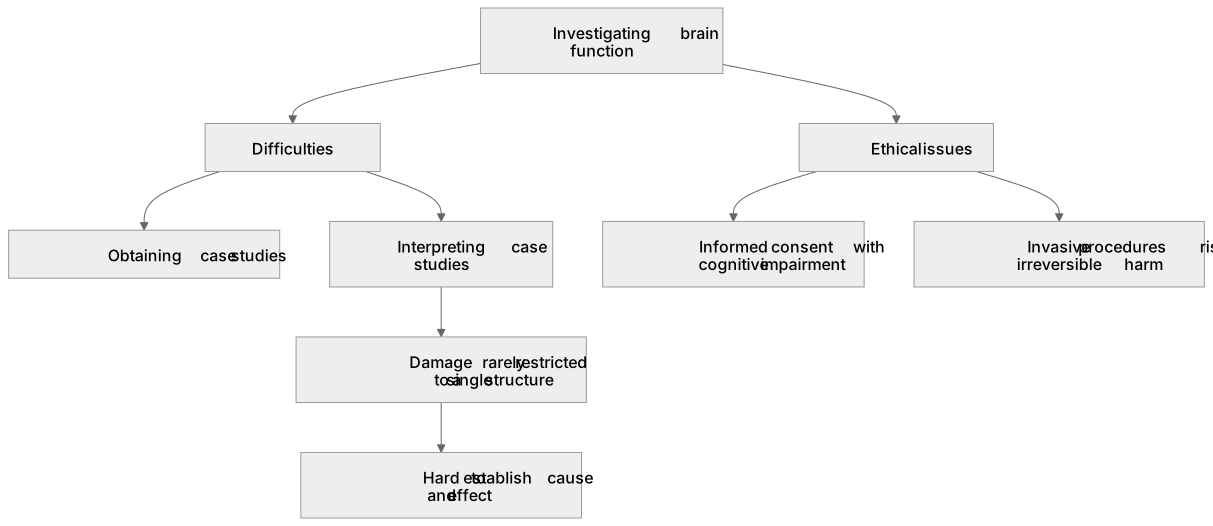
Investigating human brain function presents severe methodological and ethical obstacles due to the immense complexity of neural networks and the delicate nature of brain tissue. Historical neurobiology relied on accidental brain injuries and clinical stroke case studies, such as Phineas Gage. However, lesions are rarely restricted to a single anatomical structure, making it difficult to establish definitive cause-and-effect relationships between brain damage and behavioural changes. Furthermore, obtaining genuine informed consent from patients with severe cognitive impairment raises ethical dilemmas. Invasive procedures, such as inserting physical electrodes or lesioning tissue, risk causing irreversible paralysis, cognitive decline, or personality alterations.
What earns the marks
- Explain that accidental brain injuries and stroke lesions usually affect multiple brain areas simultaneously, preventing precise functional attribution.
- Discuss ethical issues surrounding informed consent when working with cognitively impaired patients.
- Explain why invasive neurosurgical investigation carries high risks of permanent paralysis, speech loss, or severe personality changes.
- Describe the role of non-invasive modern neuroimaging such as functional magnetic resonance imaging in observing active brain metabolism safely.
Common mistakes and how to put them right
Assuming that accidental brain lesions isolate only a single specific cognitive task in clinical case studies.
Overlooking ethical constraints when proposing experimental neurological interventions on human subjects.
Believing modern brain scans allow researchers to read thoughts rather than measuring regional oxygenated blood flow.
Exam tips
- Structure answers around two clear areas: methodological limitations (case study damage is uncontrolled and variable) and ethical constraints (risk of harm and difficulties with informed consent).
- Contrast historical invasive lesion studies with modern non-invasive imaging techniques like functional magnetic resonance imaging.
Try the lesson
The start of the Coordination and control – the nervous system: explain some of the difficulties of investigating brain function (to include: the difficulty in obtaining and interpreting case studies and the consideration of ethical issues) (content found only in the biology separate science qualification) (Higher tier only) lesson, made from teaching notes for this specification point.
Have a go first
Why is it difficult to obtain useful case studies when investigating brain function?
Listen
Investigating human brain function presents severe methodological and ethical obstacles due to the immense complexity of neural networks and the delicate nature of brain tissue. Historical neurobiology relied on accidental brain injuries and clinical stroke case studies, such as Phineas Gage. However, lesions are rarely restricted to a single anatomical structure, making it difficult to establish definitive cause-and-effect relationships between brain damage and behavioural changes. Furthermore, obtaining genuine informed consent from patients with severe cognitive impairment raises ethical dilemmas. Invasive procedures, such as inserting physical electrodes or lesioning tissue, risk causing irreversible paralysis, cognitive decline, or personality alterations. A strong answer earns marks for these points. explain that accidental brain injuries and stroke lesions usually affect multiple brain areas simultaneously, preventing precise functional attribution. discuss ethical issues surrounding informed consent when working with cognitively impaired patients. explain why invasive neurosurgical investigation carries high risks of permanent paralysis, speech loss, or severe personality changes. describe the role of non-invasive modern neuroimaging such as functional magnetic resonance imaging in observing active brain metabolism safely. Exam tip: Structure answers around two clear areas: methodological limitations (case study damage is uncontrolled and variable) and ethical constraints (risk of harm and difficulties with informed consent).
See it
Label the diagram
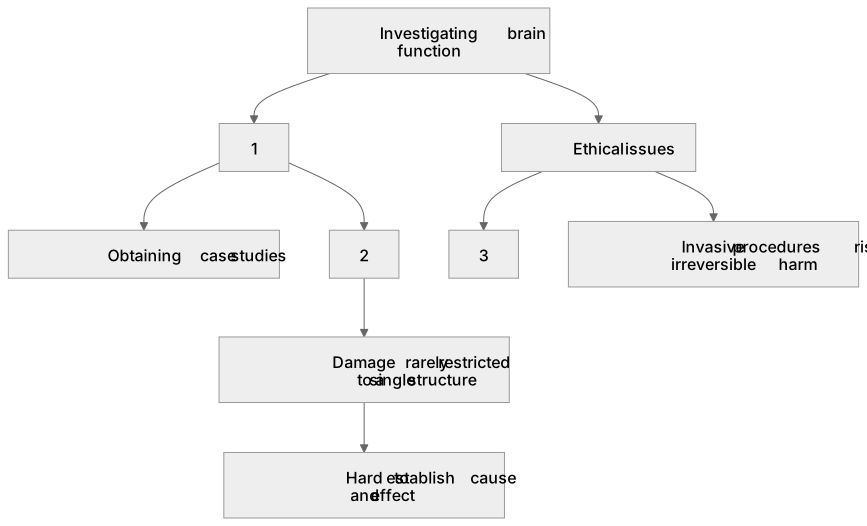
Some boxes have lost their names. Pick the right name for each number.
1Box 1
2Box 2
3Box 3
There is more to this lesson
The full lesson goes on to check your understanding and help you earn the marks. Create a free account to carry on, with your progress saved.
A week of Premium from your first lesson · Then the free plan continues · No card, no charge
Test your understanding of Coordination and control – the nervous system: explain some of the difficulties of investigating brain function (to include: the difficulty in obtaining and interpreting case studies and the consideration of ethical issues) (content found only in the biology separate science qualification) (Higher tier only)
Active recall beats re-reading. Take an instant quiz now to test what you’ve learned and lock it into long-term memory.
A week of Premium from your first lesson · Then the free plan continues · No card, no charge