OCR · GCSE · Biology
Course version: J247 · Version from Sept 2018
Ecosystems: calculate the percentage of mass
Quantitative ecological studies frequently require calculating the percentage of mass represented by specific components within an organism, soil sample, or trophic level.
- Point 2 of 15
- 2 key terms
Study notes
From the teaching notes for this specification point.
The idea
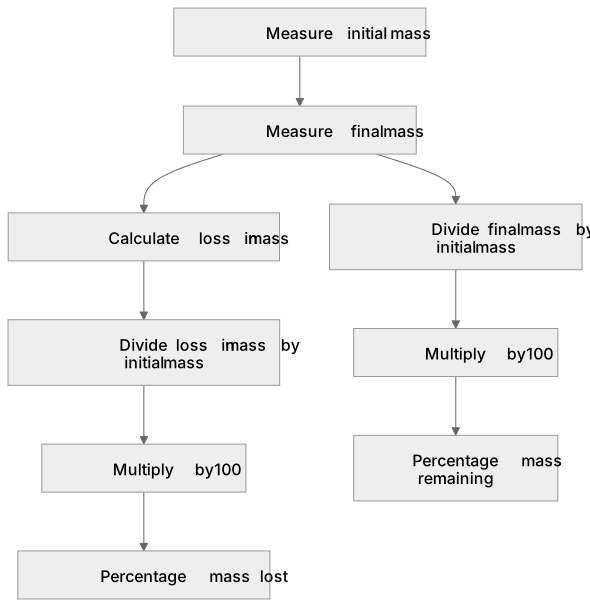
Quantitative ecological studies frequently require calculating the percentage of mass represented by specific components within an organism, soil sample, or trophic level. In decomposition investigations, calculating percentage mass remaining or percentage mass lost standardises comparisons between biological samples of varying starting masses. The formula used is the change in mass divided by the initial starting mass, multiplied by one hundred percent. Similarly, measuring the water content of soil or organic matter involves heating samples until a constant dry mass is obtained; the mass of evaporated water is then expressed as a percentage of the original fresh mass.
What earns the marks
- Calculate percentage mass lost using the formula: (loss in mass / initial mass) multiplied by 100.
- Calculate percentage mass remaining using the formula: (final mass / initial mass) multiplied by 100.
- Calculate the percentage moisture content of soil or organic matter from fresh and dry mass values.
- Show clear working and round the calculated percentage value to the required number of decimal places or significant figures.
Common mistakes and how to put them right
Dividing mass loss by the final mass instead of the original starting mass.
Forgetting to multiply the resulting fraction by 100 to convert it into a percentage.
Rounding intermediate steps prematurely, causing final percentage errors.
Exam tips
- Always check your denominator: percentage change must be calculated relative to the original initial mass.
- Ensure your final answer has the percentage symbol and matches the required significant figures.
Try the lesson
The start of the Ecosystems: calculate the percentage of mass lesson, made from teaching notes for this specification point.
Have a go first
A sample of soil has a total mass of 200 g. The mass of water in the sample is 50 g. Calculate the percentage of the total mass that is water.
Listen
Quantitative ecological studies frequently require calculating the percentage of mass represented by specific components within an organism, soil sample, or trophic level. In decomposition investigations, calculating percentage mass remaining or percentage mass lost standardises comparisons between biological samples of varying starting masses. The formula used is the change in mass divided by the initial starting mass, multiplied by one hundred percent. Similarly, measuring the water content of soil or organic matter involves heating samples until a constant dry mass is obtained; the mass of evaporated water is then expressed as a percentage of the original fresh mass. A strong answer earns marks for these points. calculate percentage mass lost using the formula: (loss in mass / initial mass) multiplied by 100. calculate percentage mass remaining using the formula: (final mass / initial mass) multiplied by 100. calculate the percentage moisture content of soil or organic matter from fresh and dry mass values. show clear working and round the calculated percentage value to the required number of decimal places or significant figures. Exam tip: Always check your denominator: percentage change must be calculated relative to the original initial mass.
See it
Key words
Say what each word means before you turn the card.
percentage mass
Try answering aloud or in your head before turning the card.
moisture content
Try answering aloud or in your head before turning the card.
See every definition
- percentage mass
- Calculated by dividing the change in mass by the initial starting mass and multiplying by one hundred percent.
- moisture content
- The mass of evaporated water expressed as a percentage of the original fresh mass, after heating samples until a constant dry mass is obtained.
There is more to this lesson
The full lesson goes on to check your understanding and help you earn the marks. Create a free account to carry on, with your progress saved.
A week of Premium from your first lesson · Then the free plan continues · No card, no charge
Test your understanding of Ecosystems: calculate the percentage of mass
Active recall beats re-reading. Take an instant quiz now to test what you’ve learned and lock it into long-term memory.
A week of Premium from your first lesson · Then the free plan continues · No card, no charge