OCR · GCSE · Biology
Course version: J247 · Version from Sept 2018
Describe the differences between the trophic levels of organisms within an…
Full specification wording
Ecosystems: describe the differences between the trophic levels of organisms within an ecosystem (to include: use of the terms producer and consumer) (content found only in the biology separate science qualification)
Trophic levels define the hierarchical feeding positions that organisms occupy within food chains and webs.
- Point 13 of 15
- 4 key terms
Study notes
From the teaching notes for this specification point.
The idea
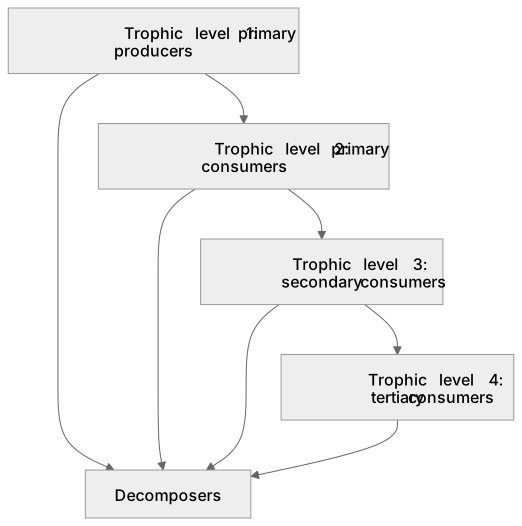
Trophic levels define the hierarchical feeding positions that organisms occupy within food chains and webs. Trophic level one is occupied by primary producers, which are autotrophs (green plants and algae) that synthesise complex organic molecules from carbon dioxide and water using radiant solar energy via photosynthesis. Trophic level two consists of primary consumers, which are herbivores that feed directly on primary producers. Trophic level three contains secondary consumers, which are carnivores that hunt and consume herbivores. Trophic level four consists of tertiary consumers, which are apex predators feeding on secondary consumers. Decomposers occupy a distinct trophic role by recycling matter from all feeding levels.
What earns the marks
- Identify trophic level one as primary producers, which are autotrophs that fix solar energy into organic biomass via photosynthesis.
- Identify trophic level two as primary consumers, which are herbivores that feed directly on producers.
- Identify trophic levels three and four as secondary and tertiary consumers, which are carnivores feeding on other animals.
- Describe the role of apex predators at the top of the food chain that have no natural predators.
Common mistakes and how to put them right
Placing consumers at trophic level one rather than reserving it exclusively for primary producers.
Confusing trophic level number with consumer order (a primary consumer is at trophic level two, not trophic level one).
Forgetting that carnivores can occupy multiple trophic levels depending on the specific food chain within a web.
Exam tips
- Remember the numbering rule: Trophic Level 1 is always the producer, Trophic Level 2 is the primary consumer, Trophic Level 3 is the secondary consumer.
- Always define producers as organisms that produce their own biomass from inorganic sources via photosynthesis.
Try the lesson
The start of the Ecosystems: describe the differences between the trophic levels of organisms within an ecosystem (to include: use of the terms producer and consumer) (content found only in the biology separate science qualification) lesson, made from teaching notes for this specification point.
Have a go first
Which term describes an organism that makes its own food using energy from the Sun?
Listen
Trophic levels define the hierarchical feeding positions that organisms occupy within food chains and webs. Trophic level one is occupied by primary producers, which are autotrophs (green plants and algae) that synthesise complex organic molecules from carbon dioxide and water using radiant solar energy via photosynthesis. Trophic level two consists of primary consumers, which are herbivores that feed directly on primary producers. Trophic level three contains secondary consumers, which are carnivores that hunt and consume herbivores. Trophic level four consists of tertiary consumers, which are apex predators feeding on secondary consumers. Decomposers occupy a distinct trophic role by recycling matter from all feeding levels. A strong answer earns marks for these points. identify trophic level one as primary producers, which are autotrophs that fix solar energy into organic biomass via photosynthesis. identify trophic level two as primary consumers, which are herbivores that feed directly on producers. identify trophic levels three and four as secondary and tertiary consumers, which are carnivores feeding on other animals. describe the role of apex predators at the top of the food chain that have no natural predators. Exam tip: Remember the numbering rule: Trophic Level 1 is always the producer, Trophic Level 2 is the primary consumer, Trophic Level 3 is the secondary consumer.
See it
Key words
Say what each word means before you turn the card.
trophic levels
Try answering aloud or in your head before turning the card.
producers
Try answering aloud or in your head before turning the card.
primary consumers
Try answering aloud or in your head before turning the card.
apex predators
Try answering aloud or in your head before turning the card.
See every definition
- trophic levels
- The hierarchical feeding positions that organisms occupy within food chains and webs.
- producers
- Autotrophs such as green plants and algae that synthesise complex organic molecules from carbon dioxide and water using radiant solar energy via photosynthesis.
- primary consumers
- Herbivores that feed directly on primary producers and occupy trophic level two.
- apex predators
- Tertiary consumers at the top of the food chain that have no natural predators.
Label the diagram
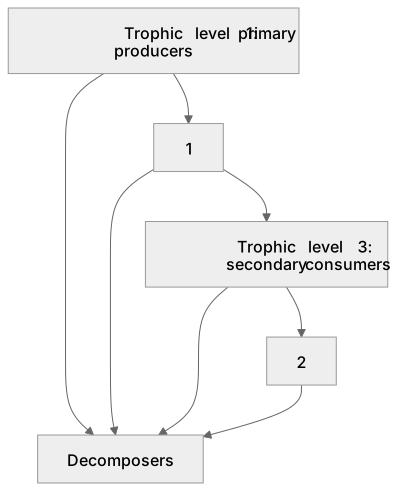
Some boxes have lost their names. Pick the right name for each number.
1Box 1
2Box 2
There is more to this lesson
The full lesson goes on to check your understanding and help you earn the marks. Create a free account to carry on, with your progress saved.
A week of Premium from your first lesson · Then the free plan continues · No card, no charge
Test your understanding of Ecosystems: describe the differences between the trophic levels of organisms within an ecosystem (to include: use of the terms producer and consumer) (content found only in the biology separate science qualification)
Active recall beats re-reading. Take an instant quiz now to test what you’ve learned and lock it into long-term memory.
A week of Premium from your first lesson · Then the free plan continues · No card, no charge