OCR · GCSE · Biology
Course version: J247 · Version from Sept 2018
Describe pyramids of biomass and explain, with examples, how biomass is…
Full specification wording
Ecosystems: describe pyramids of biomass and explain, with examples, how biomass is lost between the different trophic levels (to include: loss of biomass related to egestion, excretion, respiration) (content found only in the biology separate science qualification)
A pyramid of biomass graphically represents the total dry mass of biological material at each successive trophic level within an ecosystem at a specific point in time.
- Point 14 of 15
- 4 key terms
Study notes
From the teaching notes for this specification point.
The idea
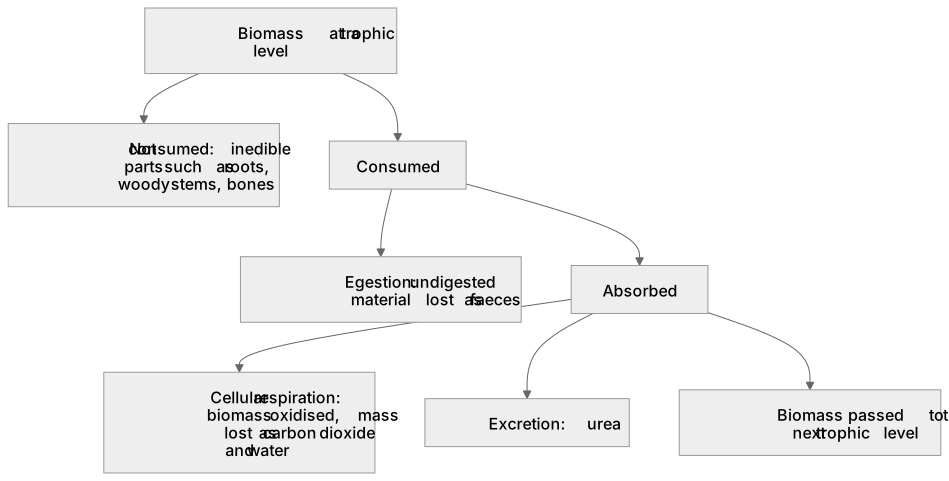
A pyramid of biomass graphically represents the total dry mass of biological material at each successive trophic level within an ecosystem at a specific point in time. Pyramids of biomass are almost always pyramid-shaped because biomass diminishes significantly at each trophic step. This massive loss occurs through three major physiological pathways. First, not all biomass is ingested, as inedible roots, woody stems, and bones are left behind. Second, substantial ingested material cannot be digested and is lost as faeces through egestion. Third, of the biomass absorbed, a large proportion is oxidised in cellular respiration to supply ATP for muscle contraction and heat, with mass lost as carbon dioxide and water; further mass is lost through excretion of urea.
What earns the marks
- Describe a pyramid of biomass as a horizontal bar chart representing the dry mass of living material at each trophic level.
- Explain that biomass is lost because inedible parts of organisms (such as bones, teeth, and wood) are not consumed.
- Explain that ingested biomass that cannot be digested or absorbed is eliminated as faeces via egestion.
- Explain that absorbed biomass is oxidised in cellular respiration, with mass lost as exhaled carbon dioxide, alongside metabolic excretion of urea.
Common mistakes and how to put them right
Confusing egestion (removal of undigested faeces) with excretion (removal of metabolic waste like urea and carbon dioxide).
Drawing pyramids of biomass with inverted bars, confusing them with pyramids of numbers.
Stating that biomass is lost as heat directly, rather than explaining that respiration breaks down biomass and produces heat as a by-product.
Exam tips
- Draw pyramids of biomass with symmetrical, horizontal bars centered on an axis, with producers at the bottom and each bar strictly narrower than the one below.
- Clearly distinguish between egestion (undigested food in faeces) and excretion (metabolic waste products like urea in urine and carbon dioxide in breath).
Try the lesson
The start of the Ecosystems: describe pyramids of biomass and explain, with examples, how biomass is lost between the different trophic levels (to include: loss of biomass related to egestion, excretion, respiration) (content found only in the biology separate science qualification) lesson, made from teaching notes for this specification point.
Have a go first
In a pyramid of biomass, what does the width of each bar represent?
Listen
A pyramid of biomass graphically represents the total dry mass of biological material at each successive trophic level within an ecosystem at a specific point in time. Pyramids of biomass are almost always pyramid-shaped because biomass diminishes significantly at each trophic step. This massive loss occurs through three major physiological pathways. First, not all biomass is ingested, as inedible roots, woody stems, and bones are left behind. Second, substantial ingested material cannot be digested and is lost as faeces through egestion. Third, of the biomass absorbed, a large proportion is oxidised in cellular respiration to supply ATP for muscle contraction and heat, with mass lost as carbon dioxide and water; further mass is lost through excretion of urea. A strong answer earns marks for these points. describe a pyramid of biomass as a horizontal bar chart representing the dry mass of living material at each trophic level. explain that biomass is lost because inedible parts of organisms (such as bones, teeth, and wood) are not consumed. explain that ingested biomass that cannot be digested or absorbed is eliminated as faeces via egestion. explain that absorbed biomass is oxidised in cellular respiration, with mass lost as exhaled carbon dioxide, alongside metabolic excretion of urea. Exam tip: Draw pyramids of biomass with symmetrical, horizontal bars centered on an axis, with producers at the bottom and each bar strictly narrower than the one below.
See it
Key words
Say what each word means before you turn the card.
pyramids of biomass
Try answering aloud or in your head before turning the card.
egestion
Try answering aloud or in your head before turning the card.
excretion
Try answering aloud or in your head before turning the card.
cellular respiration
Try answering aloud or in your head before turning the card.
See every definition
- pyramids of biomass
- A horizontal bar chart representing the dry mass of living material at each trophic level.
- egestion
- Removal of ingested biomass that cannot be digested or absorbed, eliminated as faeces.
- excretion
- Removal of metabolic waste such as urea and carbon dioxide.
- cellular respiration
- Process in which absorbed biomass is oxidised to supply ATP for muscle contraction and heat, with mass lost as carbon dioxide and water.
Label the diagram
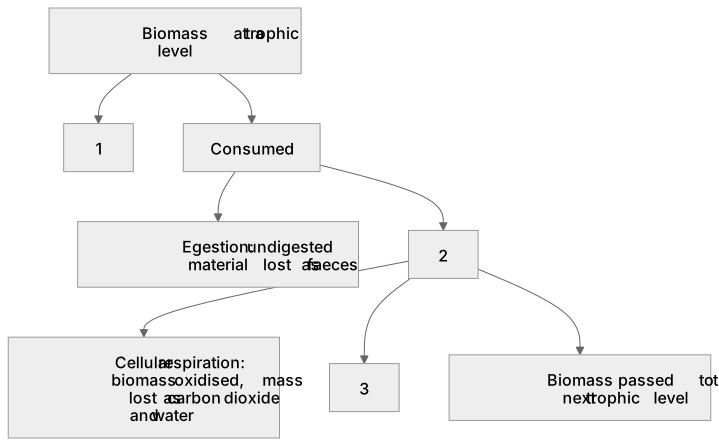
Some boxes have lost their names. Pick the right name for each number.
1Box 1
2Box 2
3Box 3
There is more to this lesson
The full lesson goes on to check your understanding and help you earn the marks. Create a free account to carry on, with your progress saved.
A week of Premium from your first lesson · Then the free plan continues · No card, no charge
Test your understanding of Ecosystems: describe pyramids of biomass and explain, with examples, how biomass is lost between the different trophic levels (to include: loss of biomass related to egestion, excretion, respiration) (content found only in the biology separate science qualification)
Active recall beats re-reading. Take an instant quiz now to test what you’ve learned and lock it into long-term memory.
A week of Premium from your first lesson · Then the free plan continues · No card, no charge