OCR · GCSE · Biology
Course version: J247 · Version from Sept 2018
Explain how abiotic and biotic factors can affect communities (to include:…
Full specification wording
Ecosystems: explain how abiotic and biotic factors can affect communities (to include: temperature, light intensity, moisture level, pH of soil, predators, food)
The distribution, abundance, and diversity of species within an ecological community are governed by dynamic interactions with abiotic and biotic factors.
- Point 11 of 15
- 4 key terms
Study notes
From the teaching notes for this specification point.
The idea
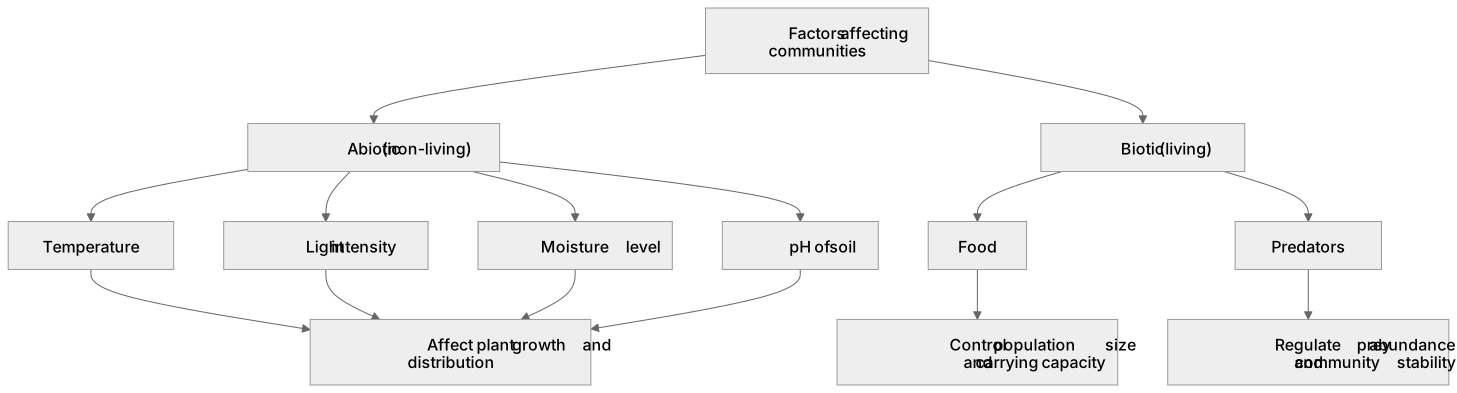
The distribution, abundance, and diversity of species within an ecological community are governed by dynamic interactions with abiotic and biotic factors. Non-living abiotic variables directly influence physiological survival: light intensity determines the rate of photosynthesis in autotrophic producers; temperature affects enzyme activity and metabolic rates; soil moisture and soil pH dictate plant distribution by affecting water uptake and mineral solubility. Living biotic variables involve biological interactions between coexisting organisms: food availability determines carrying capacity and reproductive output; predation regulates prey numbers; competition for limited resources and introduction of pathogens alter community balance.
What earns the marks
- Explain how abiotic factors such as light intensity, temperature, moisture, and soil pH affect plant growth and distribution.
- Describe how food availability acts as a biotic factor controlling population size and community carrying capacity.
- Explain the impact of predators as a biotic factor regulating prey abundance and community stability.
- Distinguish clearly between non-living abiotic factors and living biotic interactions within an ecosystem.
Common mistakes and how to put them right
Classifying food availability as an abiotic factor rather than a biotic factor (food comes from other living organisms).
Stating that low temperature stops plant growth by freezing cells, rather than by slowing enzyme-controlled photosynthesis.
Forgetting that soil pH influences the availability and absorption of essential mineral ions by plant root hair cells.
Exam tips
- Remember that abiotic means non-living (temperature, light, moisture, pH) while biotic means living (food, predators, competitors, pathogens).
- When explaining how light intensity affects a community, link it directly to the rate of photosynthesis in primary producers.
Try the lesson
The start of the Ecosystems: explain how abiotic and biotic factors can affect communities (to include: temperature, light intensity, moisture level, pH of soil, predators, food) lesson, made from teaching notes for this specification point.
Have a go first
Which of these is an abiotic factor that could affect a community?
Listen
The distribution, abundance, and diversity of species within an ecological community are governed by dynamic interactions with abiotic and biotic factors. Non-living abiotic variables directly influence physiological survival: light intensity determines the rate of photosynthesis in autotrophic producers; temperature affects enzyme activity and metabolic rates; soil moisture and soil pH dictate plant distribution by affecting water uptake and mineral solubility. Living biotic variables involve biological interactions between coexisting organisms: food availability determines carrying capacity and reproductive output; predation regulates prey numbers; competition for limited resources and introduction of pathogens alter community balance. A strong answer earns marks for these points. explain how abiotic factors such as light intensity, temperature, moisture, and soil pH affect plant growth and distribution. describe how food availability acts as a biotic factor controlling population size and community carrying capacity. explain the impact of predators as a biotic factor regulating prey abundance and community stability. distinguish clearly between non-living abiotic factors and living biotic interactions within an ecosystem. Exam tip: Remember that abiotic means non-living (temperature, light, moisture, pH) while biotic means living (food, predators, competitors, pathogens).
See it
Key words
Say what each word means before you turn the card.
abiotic factors
Try answering aloud or in your head before turning the card.
biotic factors
Try answering aloud or in your head before turning the card.
carrying capacity
Try answering aloud or in your head before turning the card.
community distribution
Try answering aloud or in your head before turning the card.
See every definition
- abiotic factors
- Non-living variables such as temperature, light intensity, moisture and soil pH that directly influence physiological survival and affect plant growth and distribution.
- biotic factors
- Living variables involving biological interactions between coexisting organisms, including food, predators, competitors and pathogens.
- carrying capacity
- The level determined by food availability, which acts as a biotic factor controlling population size within a community.
- community distribution
- How species are spread within an ecological community, governed by dynamic interactions with abiotic and biotic factors.
Label the diagram
Some boxes have lost their names. Pick the right name for each number.
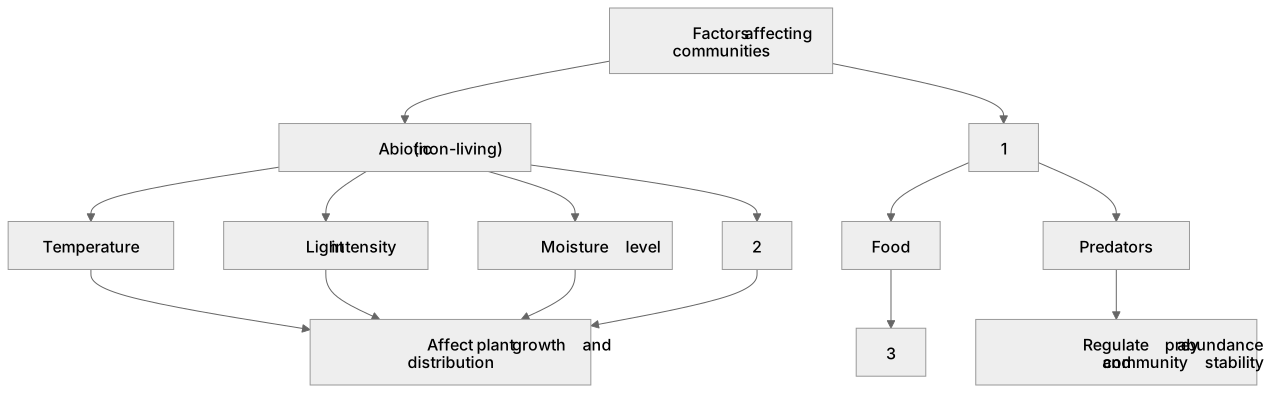
1Box 1
2Box 2
3Box 3
There is more to this lesson
The full lesson goes on to check your understanding and help you earn the marks. Create a free account to carry on, with your progress saved.
A week of Premium from your first lesson · Then the free plan continues · No card, no charge
Test your understanding of Ecosystems: explain how abiotic and biotic factors can affect communities (to include: temperature, light intensity, moisture level, pH of soil, predators, food)
Active recall beats re-reading. Take an instant quiz now to test what you’ve learned and lock it into long-term memory.
A week of Premium from your first lesson · Then the free plan continues · No card, no charge