OCR · GCSE · Biology
Course version: J247 · Version from Sept 2018
Explain the role of microorganisms in the cycling of materials through an…
Full specification wording
Ecosystems: explain the role of microorganisms in the cycling of materials through an ecosystem (to include: the role of microorganisms in decomposition)
Microorganisms, primarily bacteria and microscopic fungi, act as decomposers that drive nutrient recycling in ecosystems.
- Point 7 of 15
- 4 key terms
Study notes
From the teaching notes for this specification point.
The idea
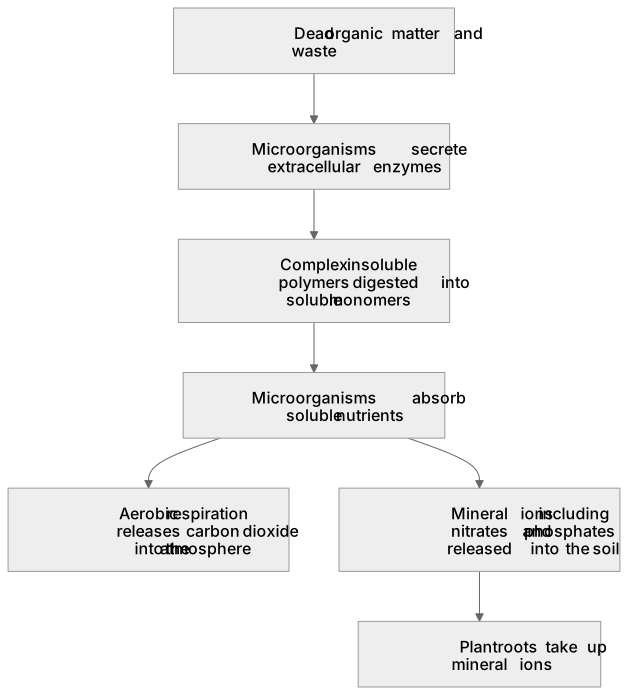
Microorganisms, primarily bacteria and microscopic fungi, act as decomposers that drive nutrient recycling in ecosystems. They break down dead plant matter, animal carcasses, and excreted waste through saprotrophic nutrition. Microorganisms secrete digestive enzymes externally onto dead organic matter; these extracellular enzymes hydrolyse complex insoluble polymers (such as proteins, cellulose, and starch) into soluble monomers (amino acids and glucose). The microorganisms absorb these soluble nutrients by diffusion and active transport. In doing so, they respire aerobically, releasing carbon dioxide back into the atmosphere, while converting organic nitrogen into ammonium ions and nitrates for plant roots.
What earns the marks
- Describe the role of bacteria and fungi as decomposers that break down dead organic matter and waste.
- Explain saprotrophic nutrition: microorganisms secrete extracellular enzymes that digest complex organic polymers into soluble monomers.
- Explain that aerobic cellular respiration by decomposers releases carbon dioxide into the atmosphere.
- Describe how decomposers release mineral ions, including nitrates and phosphates, into the soil for plant root uptake.
Common mistakes and how to put them right
Stating that decomposers ingest large dead matter whole rather than carrying out extracellular digestion.
Forgetting that carbon dioxide is released by decomposers through cellular respiration.
Confusing decomposers with detritivores like earthworms (detritivores ingest dead matter internally, while decomposers digest externally).
Exam tips
- Use the key term 'extracellular digestion': enzymes are secreted outside the microbial cells, and digested soluble products are absorbed.
- Always mention that decomposers respire, which is why carbon dioxide is returned to the atmosphere during decomposition.
Try the lesson
The start of the Ecosystems: explain the role of microorganisms in the cycling of materials through an ecosystem (to include: the role of microorganisms in decomposition) lesson, made from teaching notes for this specification point.
Have a go first
Which type of organism carries out the decomposition of dead plant and animal material in an ecosystem?
Listen
Microorganisms, primarily bacteria and microscopic fungi, act as decomposers that drive nutrient recycling in ecosystems. They break down dead plant matter, animal carcasses, and excreted waste through saprotrophic nutrition. Microorganisms secrete digestive enzymes externally onto dead organic matter; these extracellular enzymes hydrolyse complex insoluble polymers (such as proteins, cellulose, and starch) into soluble monomers (amino acids and glucose). The microorganisms absorb these soluble nutrients by diffusion and active transport. In doing so, they respire aerobically, releasing carbon dioxide back into the atmosphere, while converting organic nitrogen into ammonium ions and nitrates for plant roots. A strong answer earns marks for these points. describe the role of bacteria and fungi as decomposers that break down dead organic matter and waste. explain saprotrophic nutrition: microorganisms secrete extracellular enzymes that digest complex organic polymers into soluble monomers. explain that aerobic cellular respiration by decomposers releases carbon dioxide into the atmosphere. describe how decomposers release mineral ions, including nitrates and phosphates, into the soil for plant root uptake. Exam tip: Use the key term 'extracellular digestion': enzymes are secreted outside the microbial cells, and digested soluble products are absorbed.
See it
Key words
Say what each word means before you turn the card.
decomposers
Try answering aloud or in your head before turning the card.
saprotrophic nutrition
Try answering aloud or in your head before turning the card.
extracellular enzymes
Try answering aloud or in your head before turning the card.
nutrient recycling
Try answering aloud or in your head before turning the card.
See every definition
- decomposers
- Bacteria and microscopic fungi that break down dead plant matter, animal carcasses and excreted waste, driving nutrient recycling in ecosystems.
- saprotrophic nutrition
- A process in which microorganisms secrete digestive enzymes externally onto dead organic matter and absorb the soluble nutrients released.
- extracellular enzymes
- Digestive enzymes secreted externally onto dead organic matter that hydrolyse complex insoluble polymers into soluble monomers.
- nutrient recycling
- The return of carbon dioxide to the atmosphere and mineral ions such as nitrates to the soil for plant root uptake.
Label the diagram
Some boxes have lost their names. Pick the right name for each number.
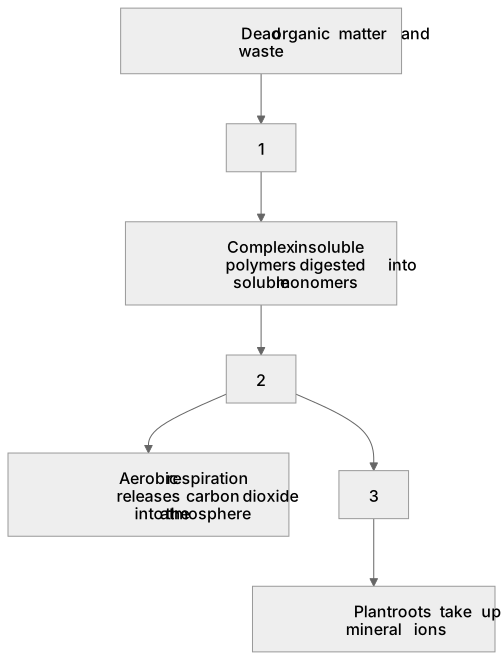
1Box 1
2Box 2
3Box 3
There is more to this lesson
The full lesson goes on to check your understanding and help you earn the marks. Create a free account to carry on, with your progress saved.
A week of Premium from your first lesson · Then the free plan continues · No card, no charge
Test your understanding of Ecosystems: explain the role of microorganisms in the cycling of materials through an ecosystem (to include: the role of microorganisms in decomposition)
Active recall beats re-reading. Take an instant quiz now to test what you’ve learned and lock it into long-term memory.
A week of Premium from your first lesson · Then the free plan continues · No card, no charge