OCR · GCSE · Biology
Course version: J247 · Version from Sept 2018
Explain the importance of the carbon cycle and the water cycle to living…
Full specification wording
Ecosystems: explain the importance of the carbon cycle and the water cycle to living organisms (to include: maintaining habitats, fresh water, flow of nutrients and the stages of the carbon and water cycles)
The carbon and water cycles are fundamental biogeochemical cycles that maintain terrestrial and aquatic habitats, regulate global climate, and sustain life.
- Point 8 of 15
- 4 key terms
Study notes
From the teaching notes for this specification point.
The idea
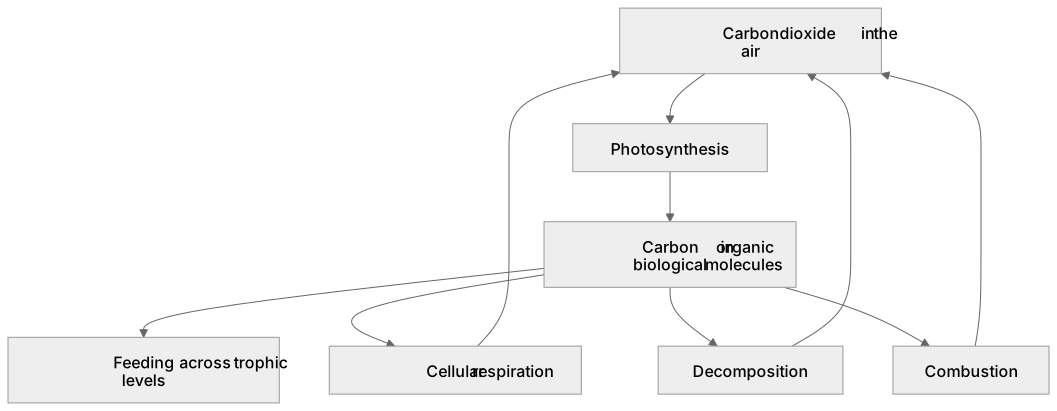
The carbon and water cycles are fundamental biogeochemical cycles that maintain terrestrial and aquatic habitats, regulate global climate, and sustain life. The carbon cycle balances atmospheric carbon dioxide through photosynthesis (carbon fixation into glucose), cellular respiration, decomposition, and combustion. This cycle ensures a continuous flow of carbon for building carbohydrates, lipids, and proteins across trophic levels. The water cycle circulates fresh water essential for terrestrial survival: solar energy drives evaporation from water bodies and transpiration from plant foliage; water vapour cools and condenses into clouds, precipitating as rain or snow to replenish freshwater habitats, rivers, and aquifers.
What earns the marks
- Describe the key stages of the carbon cycle: photosynthesis, cellular respiration, feeding, decomposition, and combustion.
- Describe the key stages of the water cycle: evaporation, transpiration, condensation, precipitation, and percolation or runoff.
- Explain how the carbon cycle maintains the flow of carbon atoms into organic biological molecules across trophic levels.
- Explain how the water cycle provides a continuous supply of fresh water and maintains terrestrial and aquatic habitats.
Common mistakes and how to put them right
Forgetting that plants respire as well as photosynthesise, so plants also release carbon dioxide into the air.
Confusing evaporation (liquid water turning to vapour) with transpiration (evaporation of water from plant leaves).
Thinking rainwater is salty, overlooking that evaporation leaves dissolved salts behind to yield fresh water.
Exam tips
- Remember that photosynthesis is the only major natural process that removes carbon dioxide from the atmosphere.
- Include transpiration alongside evaporation when describing how water vapour enters the atmosphere in the water cycle.
Try the lesson
The start of the Ecosystems: explain the importance of the carbon cycle and the water cycle to living organisms (to include: maintaining habitats, fresh water, flow of nutrients and the stages of the carbon and water cycles) lesson, made from teaching notes for this specification point.
Have a go first
Which process in the carbon cycle removes carbon dioxide from the atmosphere?
Listen
The carbon and water cycles are fundamental biogeochemical cycles that maintain terrestrial and aquatic habitats, regulate global climate, and sustain life. The carbon cycle balances atmospheric carbon dioxide through photosynthesis (carbon fixation into glucose), cellular respiration, decomposition, and combustion. This cycle ensures a continuous flow of carbon for building carbohydrates, lipids, and proteins across trophic levels. The water cycle circulates fresh water essential for terrestrial survival: solar energy drives evaporation from water bodies and transpiration from plant foliage; water vapour cools and condenses into clouds, precipitating as rain or snow to replenish freshwater habitats, rivers, and aquifers. A strong answer earns marks for these points. describe the key stages of the carbon cycle: photosynthesis, cellular respiration, feeding, decomposition, and combustion. describe the key stages of the water cycle: evaporation, transpiration, condensation, precipitation, and percolation or runoff. explain how the carbon cycle maintains the flow of carbon atoms into organic biological molecules across trophic levels. explain how the water cycle provides a continuous supply of fresh water and maintains terrestrial and aquatic habitats. Exam tip: Remember that photosynthesis is the only major natural process that removes carbon dioxide from the atmosphere.
See it
Key words
Say what each word means before you turn the card.
carbon cycle
Try answering aloud or in your head before turning the card.
water cycle
Try answering aloud or in your head before turning the card.
photosynthesis
Try answering aloud or in your head before turning the card.
transpiration
Try answering aloud or in your head before turning the card.
See every definition
- carbon cycle
- Balances atmospheric carbon dioxide through photosynthesis, cellular respiration, decomposition and combustion, ensuring a continuous flow of carbon for building carbohydrates, lipids and proteins across trophic levels.
- water cycle
- Circulates fresh water essential for terrestrial survival, as solar energy drives evaporation and transpiration, water vapour condenses into clouds and precipitates to replenish freshwater habitats, rivers and aquifers.
- photosynthesis
- The process that fixes carbon into glucose and is the only major natural process that removes carbon dioxide from the atmosphere.
- transpiration
- Evaporation of water from plant foliage, driven by solar energy, which enters the atmosphere alongside evaporation from water bodies.
Label the diagram
Some boxes have lost their names. Pick the right name for each number.
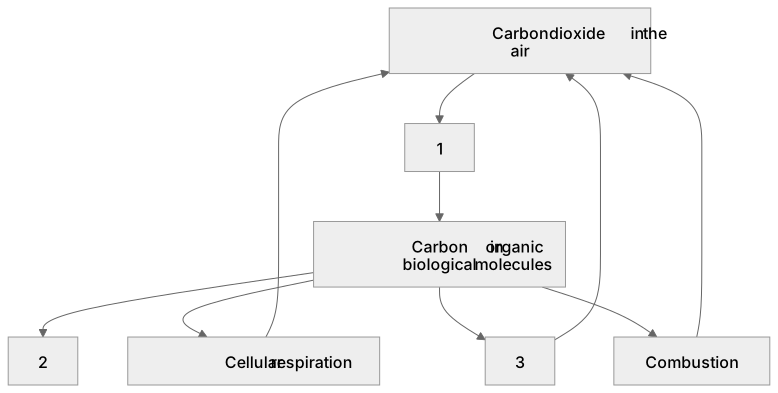
1Box 1
2Box 2
3Box 3
There is more to this lesson
The full lesson goes on to check your understanding and help you earn the marks. Create a free account to carry on, with your progress saved.
A week of Premium from your first lesson · Then the free plan continues · No card, no charge
Test your understanding of Ecosystems: explain the importance of the carbon cycle and the water cycle to living organisms (to include: maintaining habitats, fresh water, flow of nutrients and the stages of the carbon and water cycles)
Active recall beats re-reading. Take an instant quiz now to test what you’ve learned and lock it into long-term memory.
A week of Premium from your first lesson · Then the free plan continues · No card, no charge