OCR · GCSE · Biology
Course version: J247 · Version from Sept 2018
Describe and explain some possible agricultural solutions to the demands…
Full specification wording
Feeding the human race: describe and explain some possible agricultural solutions to the demands of the growing human population (to include: increased use of hydroponics, biological control, gene technology, fertilisers and pesticides) (content found only in the biology separate science qualification)
To meet soaring global food demands, modern agriculture employs technological and ecological solutions.
- Point 3 of 8
- 4 key terms
Study notes
From the teaching notes for this specification point.
The idea
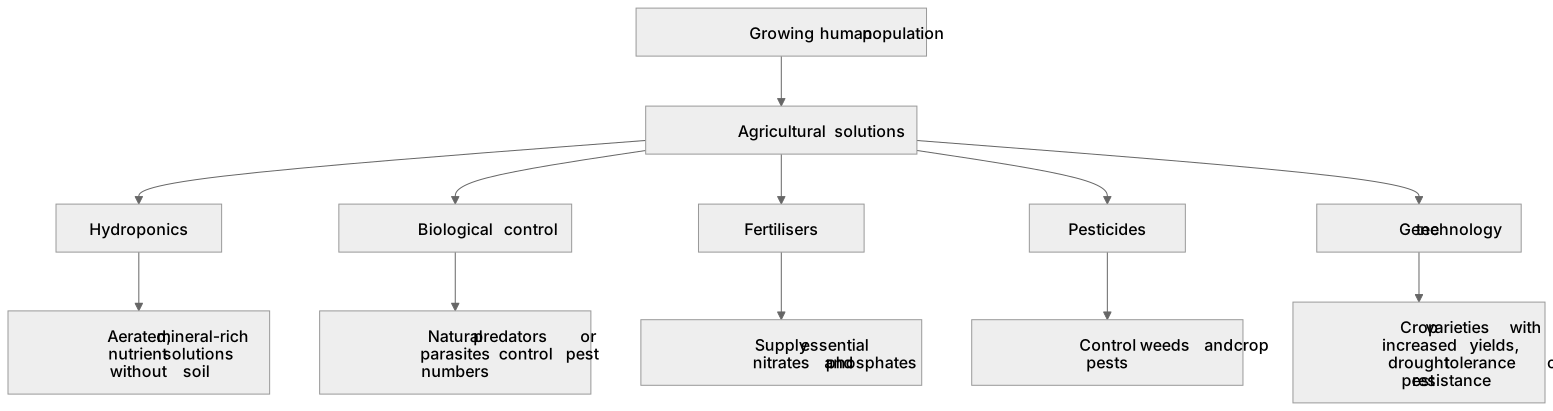
To meet soaring global food demands, modern agriculture employs technological and ecological solutions. Hydroponics cultivates crops in aerated, nutrient-enriched water solutions without soil, enabling vertical farming in urban settings with precise mineral delivery and water recycling. Biological control introduces natural predators or parasites (e.g. parasitic wasps targeting whitefly) to suppress pest populations without toxic chemical residues or pest resistance. Synthetic fertilisers supply essential nitrates and phosphates to boost vegetative growth, while targeted pesticides eradicate crop-destroying insects and fungal blights. Gene technology produces genetically modified crops exhibiting drought tolerance or enhanced yields.
What earns the marks
- Describe hydroponics as growing plants in aerated, mineral-rich nutrient solutions without soil, allowing year-round indoor vertical farming.
- Explain biological control as using natural predators or parasites to control pest numbers without chemical residues.
- Describe how chemical fertilisers replace soil minerals and pesticides control weeds and crop pests.
- Explain how gene technology creates crop varieties with increased yields, drought tolerance, or pest resistance.
Common mistakes and how to put them right
Claiming biological control completely eradicates the pest, whereas it establishes a dynamic equilibrium with low pest numbers.
Assuming fertilisers kill pests, confusing them with chemical pesticides.
Exam tips
- When comparing chemical pesticides with biological control, mention that pests can develop resistance to chemicals, but not to being consumed by a predator.
- Highlight that hydroponics eliminates soil-borne diseases and allows efficient recycling of water and minerals.
Try the lesson
The start of the Feeding the human race: describe and explain some possible agricultural solutions to the demands of the growing human population (to include: increased use of hydroponics, biological control, gene technology, fertilisers and pesticides) (content found only in the biology separate science qualification) lesson, made from teaching notes for this specification point.
Have a go first
Which agricultural method grows plants with their roots in a nutrient solution rather than in soil?
Listen
To meet soaring global food demands, modern agriculture employs technological and ecological solutions. Hydroponics cultivates crops in aerated, nutrient-enriched water solutions without soil, enabling vertical farming in urban settings with precise mineral delivery and water recycling. Biological control introduces natural predators or parasites (e.g. parasitic wasps targeting whitefly) to suppress pest populations without toxic chemical residues or pest resistance. Synthetic fertilisers supply essential nitrates and phosphates to boost vegetative growth, while targeted pesticides eradicate crop-destroying insects and fungal blights. Gene technology produces genetically modified crops exhibiting drought tolerance or enhanced yields. A strong answer earns marks for these points. Describe hydroponics as growing plants in aerated, mineral-rich nutrient solutions without soil, allowing year-round indoor vertical farming. Explain biological control as using natural predators or parasites to control pest numbers without chemical residues. Describe how chemical fertilisers replace soil minerals and pesticides control weeds and crop pests. Explain how gene technology creates crop varieties with increased yields, drought tolerance, or pest resistance. Exam tip: When comparing chemical pesticides with biological control, mention that pests can develop resistance to chemicals, but not to being consumed by a predator.
See it
Key words
Say what each word means before you turn the card.
hydroponics
Try answering aloud or in your head before turning the card.
biological control
Try answering aloud or in your head before turning the card.
fertilisers
Try answering aloud or in your head before turning the card.
pesticides
Try answering aloud or in your head before turning the card.
See every definition
- hydroponics
- Growing plants in aerated, mineral-rich nutrient solutions without soil, allowing year-round indoor vertical farming.
- biological control
- Using natural predators or parasites to control pest numbers without chemical residues.
- fertilisers
- Chemical fertilisers replace soil minerals to boost vegetative growth.
- pesticides
- Chemical pesticides control weeds and crop pests.
Label the diagram
Some boxes have lost their names. Pick the right name for each number.
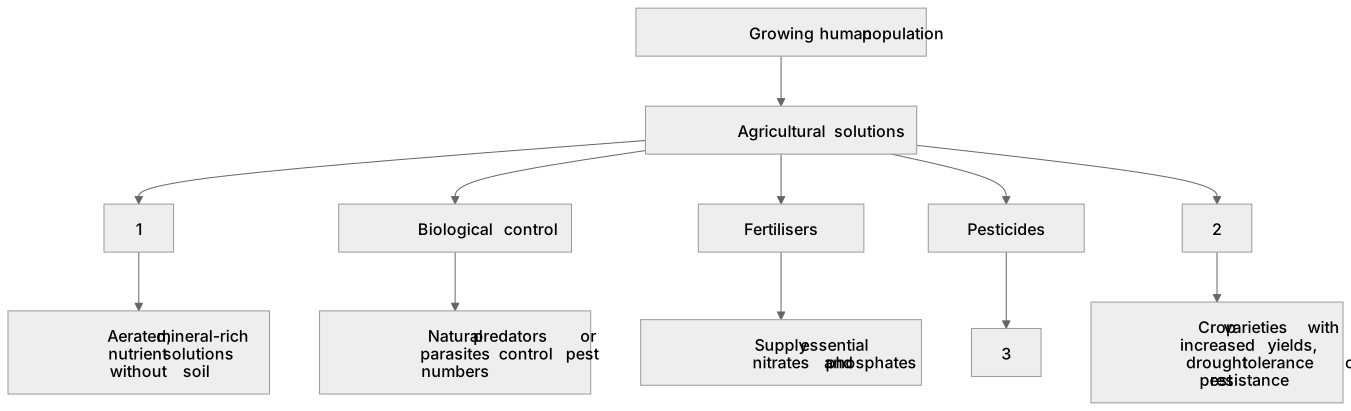
1Box 1
2Box 2
3Box 3
There is more to this lesson
The full lesson goes on to check your understanding and help you earn the marks. Create a free account to carry on, with your progress saved.
A week of Premium from your first lesson · Then the free plan continues · No card, no charge
Test your understanding of Feeding the human race: describe and explain some possible agricultural solutions to the demands of the growing human population (to include: increased use of hydroponics, biological control, gene technology, fertilisers and pesticides) (content found only in the biology separate science qualification)
Active recall beats re-reading. Take an instant quiz now to test what you’ve learned and lock it into long-term memory.
A week of Premium from your first lesson · Then the free plan continues · No card, no charge