OCR · GCSE · Biology
Course version: J247 · Version from Sept 2018
Describe the genome as the entire genetic material of an organism
Full specification wording
Inheritance: describe the genome as the entire genetic material of an organism
The genome is defined as the entire genetic material of an organism.
- Point 5 of 16
- 4 key terms
Study notes
From the teaching notes for this specification point.
The idea
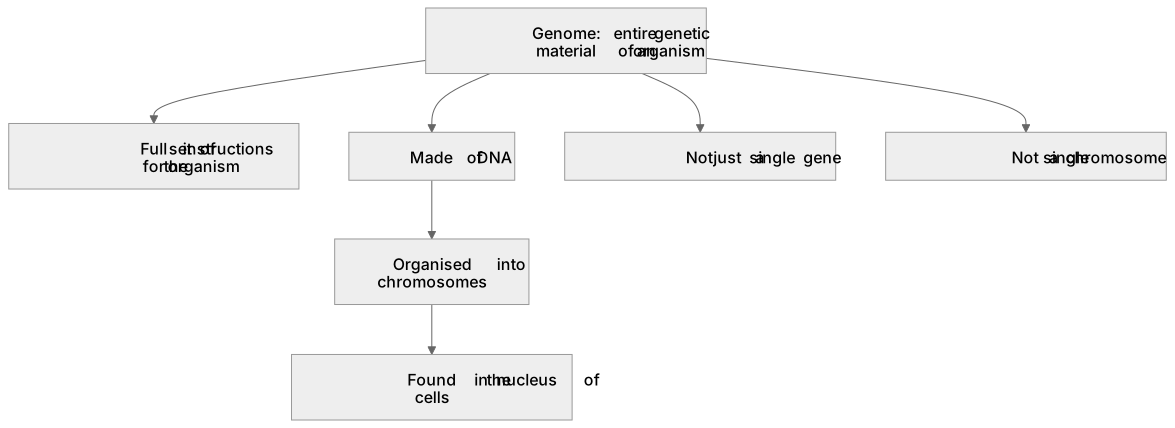
The genome is defined as the entire genetic material of an organism. It is the complete set of instructions for building and maintaining that organism. In most organisms, including humans, the genome is made of DNA. This DNA is organised into structures called chromosomes, which are found in the nucleus of cells. The human genome, for example, contains all the genes needed for a person to develop and function. By studying the entire genome, scientists can understand inheritance, genetic diseases, and evolutionary relationships. The key concept is that the genome refers to the total sum of an organism's DNA, not just a single gene or chromosome. It is the complete blueprint for life.
What earns the marks
- Define the genome as the entire genetic material of an organism.
- State that the genome contains the full set of instructions for an organism.
- Explain that the genome is made of DNA.
- Describe the genome as being organised into chromosomes, which are located in the cell nucleus.
Common mistakes and how to put them right
Confusing the genome with a single gene.
Put it right: The genome contains all the genes of an organism, not just one.
Equating the genome with a single chromosome.
Put it right: The genome is the entire set of chromosomes.
Stating the genome is only the genes.
Put it right: The genome is the entire genetic material, which includes genes and other DNA sequences.
Exam tips
- Learn the concise definition: 'The genome is the entire genetic material of an organism.' This is often worth one mark in an exam.
- Think of the genome as the complete instruction manual for an organism, written in the language of DNA.
Try the lesson
The start of the Inheritance: describe the genome as the entire genetic material of an organism lesson, made from teaching notes for this specification point.
Have a go first
What is meant by the genome of an organism?
Listen
The genome is defined as the entire genetic material of an organism. It is the complete set of instructions for building and maintaining that organism. In most organisms, including humans, the genome is made of DNA. This DNA is organised into structures called chromosomes, which are found in the nucleus of cells. The human genome, for example, contains all the genes needed for a person to develop and function. By studying the entire genome, scientists can understand inheritance, genetic diseases, and evolutionary relationships. The key concept is that the genome refers to the total sum of an organism's DNA, not just a single gene or chromosome. It is the complete blueprint for life. A strong answer earns marks for these points. Define the genome as the entire genetic material of an organism. State that the genome contains the full set of instructions for an organism. Explain that the genome is made of DNA. Describe the genome as being organised into chromosomes, which are located in the cell nucleus. A common slip: Confusing the genome with a single gene. Instead, the genome contains all the genes of an organism, not just one. Exam tip: Learn the concise definition: 'The genome is the entire genetic material of an organism. This is often worth one mark in an exam.
See it
Key words
Say what each word means before you turn the card.
genome
Try answering aloud or in your head before turning the card.
DNA
Try answering aloud or in your head before turning the card.
chromosomes
Try answering aloud or in your head before turning the card.
genes
Try answering aloud or in your head before turning the card.
See every definition
- genome
- The entire genetic material of an organism, which is the complete set of instructions for building and maintaining that organism.
- DNA
- The material that the genome is made of in most organisms, including humans.
- chromosomes
- Structures into which DNA is organised, found in the nucleus of cells.
- genes
- The genome contains all of these, and it is not just a single one.
Label the diagram
Some boxes have lost their names. Pick the right name for each number.
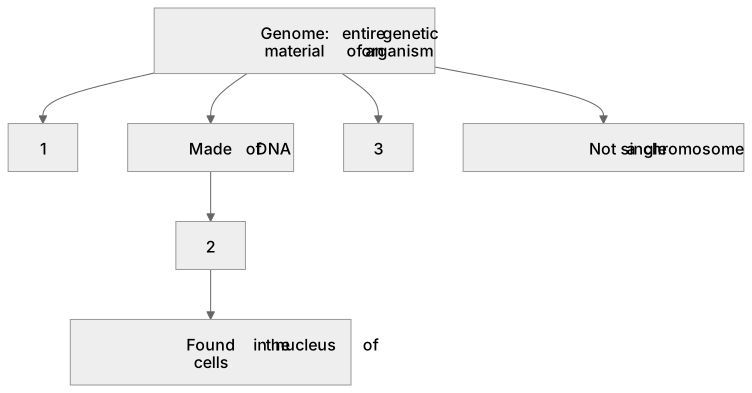
1Box 1
2Box 2
3Box 3
There is more to this lesson
The full lesson goes on to check your understanding and help you earn the marks. Create a free account to carry on, with your progress saved.
A week of Premium from your first lesson · Then the free plan continues · No card, no charge
Test your understanding of Inheritance: describe the genome as the entire genetic material of an organism
Active recall beats re-reading. Take an instant quiz now to test what you’ve learned and lock it into long-term memory.
A week of Premium from your first lesson · Then the free plan continues · No card, no charge