OCR · GCSE · Biology
Course version: J247 · Version from Sept 2018
Compare type 1 and type 2 diabetes and explain how they can be treated
Full specification wording
Maintaining internal environments: compare type 1 and type 2 diabetes and explain how they can be treated
Diabetes mellitus is a metabolic disorder characterised by an inability to control blood glucose levels.
- Point 6 of 11
- 2 key terms
Study notes
From the teaching notes for this specification point.
The idea
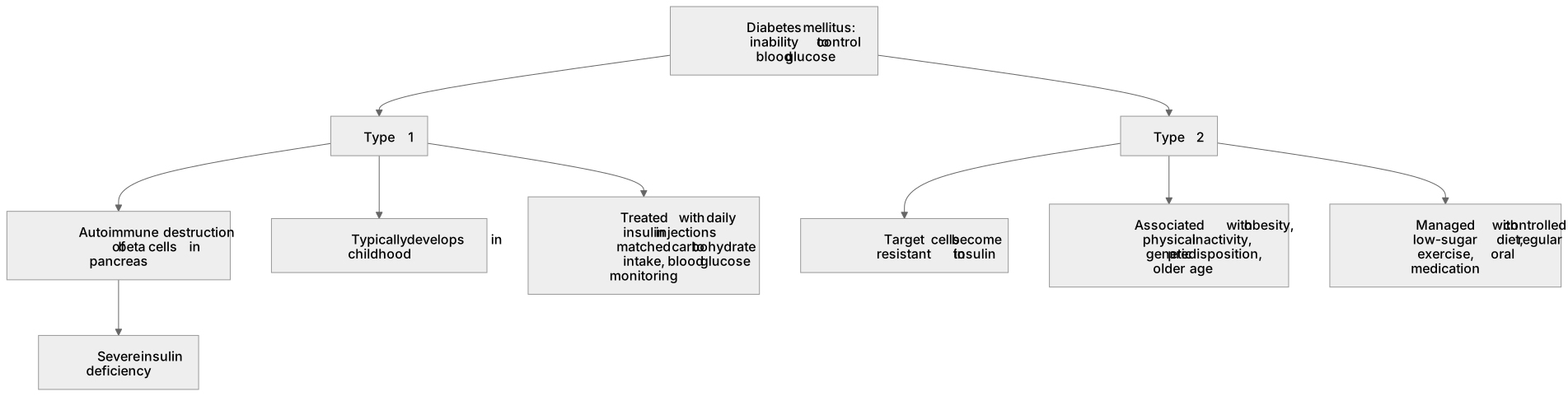
Diabetes mellitus is a metabolic disorder characterised by an inability to control blood glucose levels. Type 1 diabetes is an autoimmune condition typically developing during childhood, where the body's immune system destroys insulin-producing beta cells in the pancreas, resulting in severe insulin deficiency. It is treated with daily subcutaneous insulin injections matched to dietary carbohydrate intake, accompanied by regular blood glucose monitoring. Type 2 diabetes typically develops later in life and is strongly correlated with obesity, physical inactivity, and genetic predisposition; the pancreas still produces insulin, but body target cells become resistant to it. Type 2 is managed with a controlled low-sugar diet, regular exercise, and oral medication.
What earns the marks
- Compare causes: Type 1 is an autoimmune destruction of pancreatic beta cells, whereas Type 2 involves insulin resistance in target cells.
- Compare typical age and risk factors: Type 1 usually develops in childhood, while Type 2 is associated with obesity and older age.
- Explain treatments for Type 1: daily insulin injections, carbohydrate monitoring, and potential pancreatic transplants.
- Explain treatments for Type 2: a carbohydrate-controlled diet, regular physical exercise, weight reduction, and oral medications.
Common mistakes and how to put them right
Assuming insulin injections are the primary first-line treatment for Type 2 diabetes.
Stating that Type 1 diabetes is caused by eating too much sugar, rather than being an autoimmune disease.
Failing to distinguish between insulin deficiency (Type 1) and insulin resistance (Type 2).
Exam tips
- Use a comparison table approach in revision: cause, age of onset, risk factors, insulin production, and primary treatments.
- Never state that eating sugar causes Type 1 diabetes; Type 1 is caused by autoimmune destruction of beta cells.
Try the lesson
The start of the Maintaining internal environments: compare type 1 and type 2 diabetes and explain how they can be treated lesson, made from teaching notes for this specification point.
Have a go first
Which type of diabetes is usually treated with insulin injections?
Listen
Diabetes mellitus is a metabolic disorder characterised by an inability to control blood glucose levels. Type 1 diabetes is an autoimmune condition typically developing during childhood, where the body's immune system destroys insulin-producing beta cells in the pancreas, resulting in severe insulin deficiency. It is treated with daily subcutaneous insulin injections matched to dietary carbohydrate intake, accompanied by regular blood glucose monitoring. Type 2 diabetes typically develops later in life and is strongly correlated with obesity, physical inactivity, and genetic predisposition; the pancreas still produces insulin, but body target cells become resistant to it. Type 2 is managed with a controlled low-sugar diet, regular exercise, and oral medication. A strong answer earns marks for these points. compare causes: Type 1 is an autoimmune destruction of pancreatic beta cells, whereas Type 2 involves insulin resistance in target cells. compare typical age and risk factors: Type 1 usually develops in childhood, while Type 2 is associated with obesity and older age. explain treatments for Type 1: daily insulin injections, carbohydrate monitoring, and potential pancreatic transplants. explain treatments for Type 2: a carbohydrate-controlled diet, regular physical exercise, weight reduction, and oral medications. Exam tip: Use a comparison table approach in revision: cause, age of onset, risk factors, insulin production, and primary treatments.
See it
Key words
Say what each word means before you turn the card.
diabetes mellitus
Try answering aloud or in your head before turning the card.
insulin resistance
Try answering aloud or in your head before turning the card.
See every definition
- diabetes mellitus
- A metabolic disorder characterised by an inability to control blood glucose levels.
- insulin resistance
- A condition in which the body's target cells become resistant to insulin, while the pancreas still produces it.
Label the diagram
Some boxes have lost their names. Pick the right name for each number.
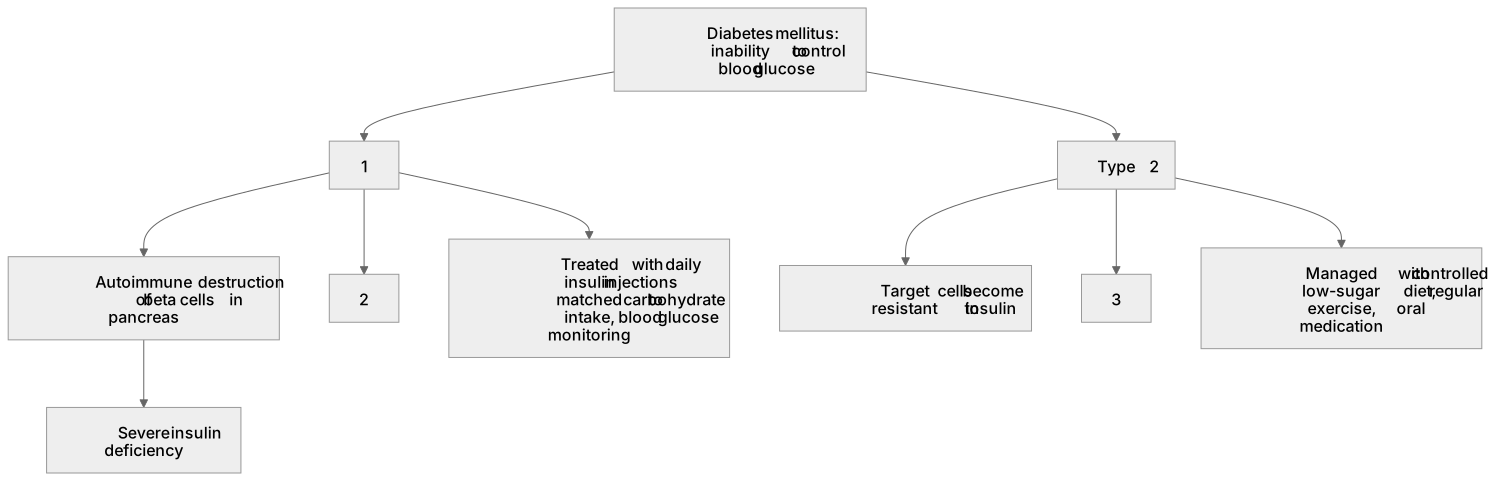
1Box 1
2Box 2
3Box 3
There is more to this lesson
The full lesson goes on to check your understanding and help you earn the marks. Create a free account to carry on, with your progress saved.
A week of Premium from your first lesson · Then the free plan continues · No card, no charge
Test your understanding of Maintaining internal environments: compare type 1 and type 2 diabetes and explain how they can be treated
Active recall beats re-reading. Take an instant quiz now to test what you’ve learned and lock it into long-term memory.
A week of Premium from your first lesson · Then the free plan continues · No card, no charge