OCR · GCSE · Biology
Course version: J247 · Version from Sept 2018
Describe the function of the skin in the control of body temperature (to…
Full specification wording
Maintaining internal environments: describe the function of the skin in the control of body temperature (to include: detection of external temperature, sweating, shivering, change to blood flow in terms of vasoconstriction and vasodilation) (content found only in the biology separate science qualification)
The skin is a key effector organ in thermoregulation, coordinated by the hypothalamus.
- Point 3 of 11
- 4 key terms
Study notes
From the teaching notes for this specification point.
The idea
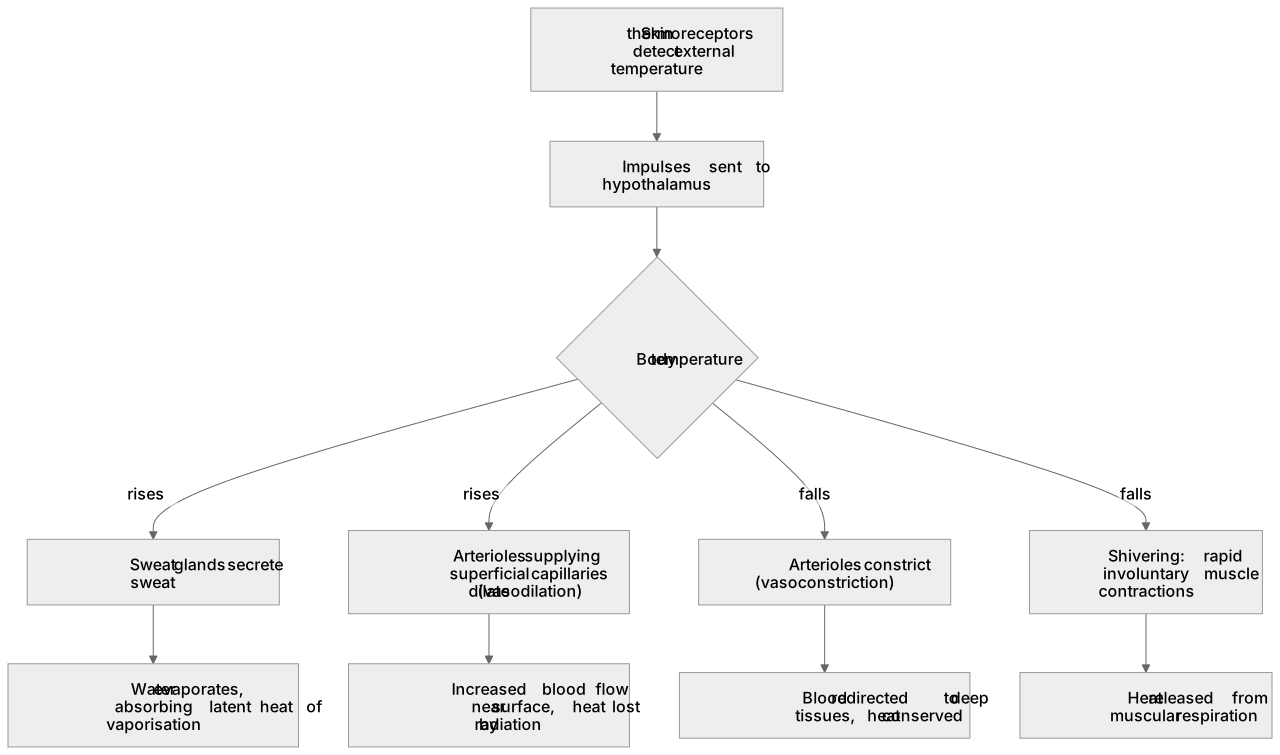
The skin is a key effector organ in thermoregulation, coordinated by the hypothalamus. Peripheral thermoreceptors in the dermis detect external temperature changes. When body temperature rises, sweat glands secrete sweat; as water evaporates from the skin surface, it absorbs latent heat of vaporisation, cooling the body. Concurrently, arterioles supplying superficial capillary loops dilate (vasodilation), increasing blood flow near the surface to dissipate heat via radiation. When cold, these arterioles constrict (vasoconstriction), redirecting blood to deep tissues to conserve heat. Involuntary rapid skeletal muscle contractions (shivering) generate metabolic heat through respiration, while hair erector muscles contract to trap air.
What earns the marks
- Describe the role of skin thermoreceptors in detecting external temperature changes and sending impulses to the hypothalamus.
- Explain vasodilation: arterioles supplying skin capillaries dilate, increasing superficial blood flow and heat radiation into the surroundings.
- Explain vasoconstriction: arterioles constrict, reducing superficial blood flow to minimise radiative heat loss.
- Describe cooling by sweating via the evaporation of water, and warming by shivering via heat released from muscular respiration.
Common mistakes and how to put them right
Stating that capillaries move closer to the skin surface or constrict directly, rather than stating arterioles dilate or constrict.
Forgetting that shivering generates heat because contracting muscle cells respire exothermically.
Suggesting that sweat cools the body simply by being wet, rather than by evaporative heat loss.
Exam tips
- Be precise with vascular terminology: always write that arterioles dilate or constrict, never capillaries.
- Explain that shivering involves rapid involuntary muscle contractions that release heat energy via cellular respiration.
Try the lesson
The start of the Maintaining internal environments: describe the function of the skin in the control of body temperature (to include: detection of external temperature, sweating, shivering, change to blood flow in terms of vasoconstriction and vasodilation) (content found only in the biology separate science qualification) lesson, made from teaching notes for this specification point.
Have a go first
When the body becomes too hot, which change in the skin helps to increase heat loss?
Listen
The skin is a key effector organ in thermoregulation, coordinated by the hypothalamus. Peripheral thermoreceptors in the dermis detect external temperature changes. When body temperature rises, sweat glands secrete sweat; as water evaporates from the skin surface, it absorbs latent heat of vaporisation, cooling the body. Concurrently, arterioles supplying superficial capillary loops dilate (vasodilation), increasing blood flow near the surface to dissipate heat via radiation. When cold, these arterioles constrict (vasoconstriction), redirecting blood to deep tissues to conserve heat. Involuntary rapid skeletal muscle contractions (shivering) generate metabolic heat through respiration, while hair erector muscles contract to trap air. A strong answer earns marks for these points. describe the role of skin thermoreceptors in detecting external temperature changes and sending impulses to the hypothalamus. explain vasodilation: arterioles supplying skin capillaries dilate, increasing superficial blood flow and heat radiation into the surroundings. explain vasoconstriction: arterioles constrict, reducing superficial blood flow to minimise radiative heat loss. describe cooling by sweating via the evaporation of water, and warming by shivering via heat released from muscular respiration. Exam tip: Be precise with vascular terminology: always write that arterioles dilate or constrict, never capillaries.
See it
Key words
Say what each word means before you turn the card.
thermoregulation
Try answering aloud or in your head before turning the card.
vasodilation
Try answering aloud or in your head before turning the card.
vasoconstriction
Try answering aloud or in your head before turning the card.
sweating and shivering
Try answering aloud or in your head before turning the card.
See every definition
- thermoregulation
- The control of body temperature by the skin as a key effector organ, coordinated by the hypothalamus.
- vasodilation
- Arterioles supplying superficial capillary loops dilate, increasing blood flow near the surface to dissipate heat via radiation.
- vasoconstriction
- Arterioles constrict, reducing superficial blood flow to minimise radiative heat loss and redirecting blood to deep tissues to conserve heat.
- sweating and shivering
- Sweat glands secrete sweat, which cools the body as water evaporates, while rapid involuntary skeletal muscle contractions generate metabolic heat through respiration.
Label the diagram
Some boxes have lost their names. Pick the right name for each number.
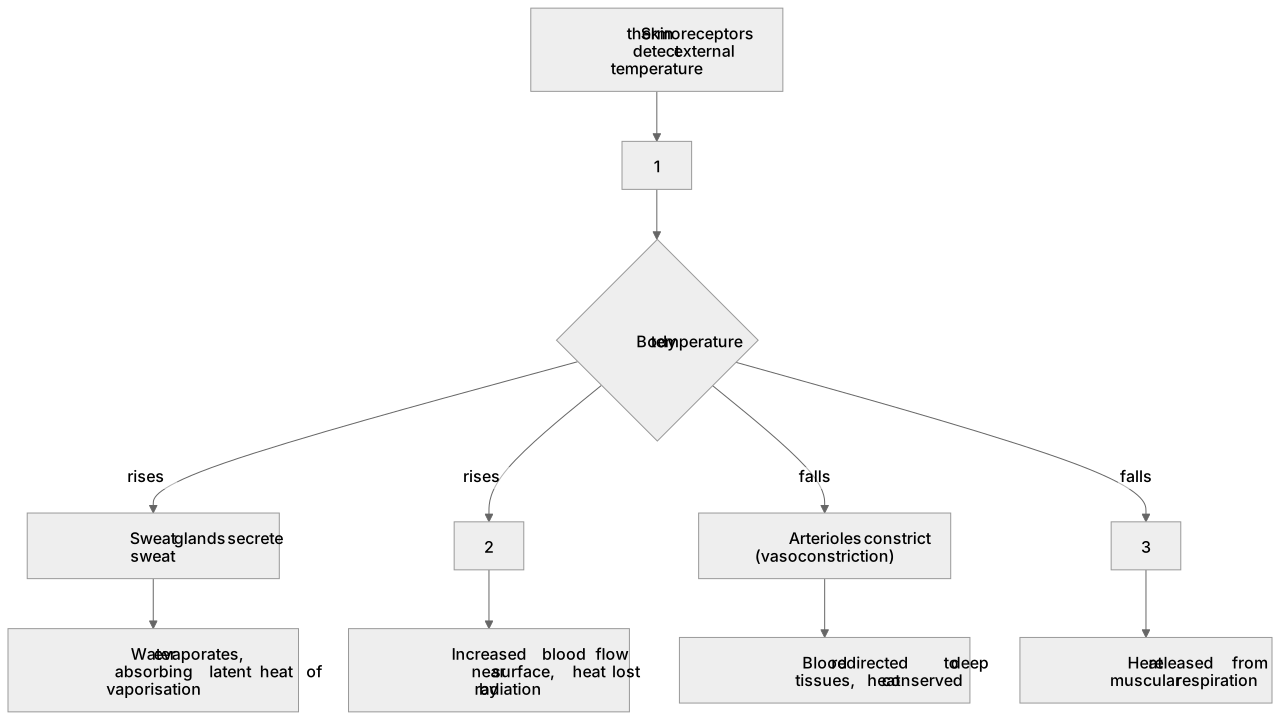
1Box 1
2Box 2
3Box 3
There is more to this lesson
The full lesson goes on to check your understanding and help you earn the marks. Create a free account to carry on, with your progress saved.
A week of Premium from your first lesson · Then the free plan continues · No card, no charge
Test your understanding of Maintaining internal environments: describe the function of the skin in the control of body temperature (to include: detection of external temperature, sweating, shivering, change to blood flow in terms of vasoconstriction and vasodilation) (content found only in the biology separate science qualification)
Active recall beats re-reading. Take an instant quiz now to test what you’ve learned and lock it into long-term memory.
A week of Premium from your first lesson · Then the free plan continues · No card, no charge