OCR · GCSE · Biology
Course version: J247 · Version from Sept 2018
Safe use of appropriate heating devices and techniques including use of a…
Full specification wording
Microbiological techniques: Safe use of appropriate heating devices and techniques including use of a Bunsen burner and a water bath or electric heater
Safe heating underpins aseptic technique.
- Point 3 of 4
- 4 key terms
Study notes
From the teaching notes for this specification point.
The idea
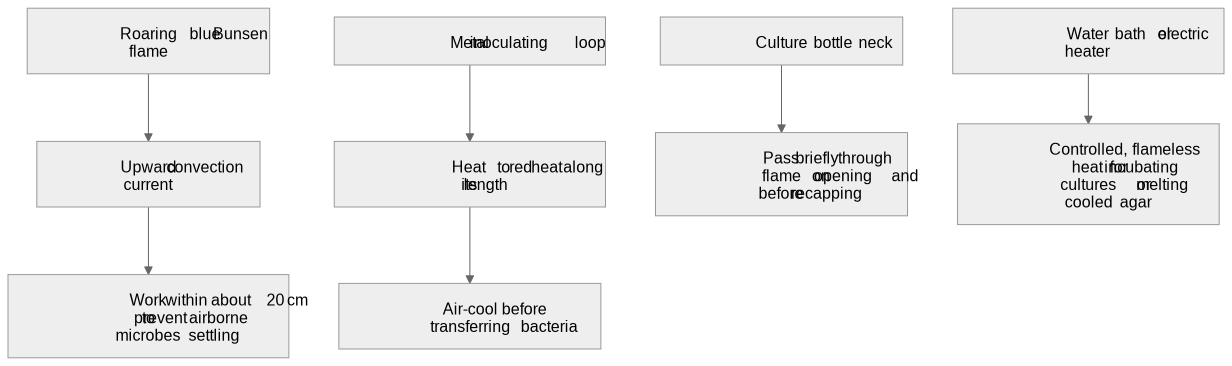
Safe heating underpins aseptic technique. A roaring blue Bunsen flame creates an upward convection current; working within about 20 cm of it prevents airborne microbes settling on open agar plates. Metal inoculating loops are flamed to red heat along their length and air-cooled before transferring bacteria, and culture bottle necks are passed briefly through the flame on opening and before recapping. A water bath or electric heater provides a controlled, flameless heat source for incubating cultures or melting cooled agar at a set temperature, avoiding the risk of overheating or igniting flammable materials. In school laboratories, inoculated petri dishes are taped with two pieces of adhesive tape (not sealed completely airtight) and incubated inverted at a maximum of 25 °C to prevent pathogen growth.
What earns the marks
- Work within the sterile upward convection current created by a roaring blue Bunsen burner flame to prevent airborne contamination.
- Sterilise metal inoculating loops by heating to red heat in a Bunsen flame and allowing them to cool before sampling cultures.
- Flame the necks of culture bottles immediately upon opening and prior to recapping to prevent airborne microbes entering the broth.
- Use a water bath or electric heater to provide controlled, flameless heating, for example to keep molten agar at about 45 °C or to incubate cultures at a set temperature.
- Incubate sealed agar plates inverted at a maximum temperature of 25 °C in schools to prevent the selective growth of human pathogens.
Common mistakes and how to put them right
Sealing the petri dish completely with tape around the entire circumference, creating anaerobic conditions that favour dangerous pathogenic bacteria.
Using an inoculating loop immediately after flaming while it is still red-hot, which kills the bacteria being sampled.
Incubating culture plates at 37 °C (human body temperature) in school laboratories, creating serious biological hazard risks.
Using a naked Bunsen flame to heat flammable liquids or placing a water bath or electric heater where it can overheat or ignite materials.
Exam tips
- If an exam question asks why school cultures are incubated at 25 °C rather than 37 °C, answer: 'to prevent the growth of pathogens harmful to humans'.
- State why petri dishes are taped with only two strips: 'to allow oxygen to enter, preventing the growth of harmful anaerobic bacteria'.
- When asked about a water bath or electric heater, link it to controlled temperature and safety: no naked flame, so flammable materials are not ignited.
Try the lesson
The start of the Microbiological techniques: Safe use of appropriate heating devices and techniques including use of a Bunsen burner and a water bath or electric heater lesson, made from teaching notes for this specification point.
Have a go first
Which piece of equipment is used to heat a liquid to a steady temperature below 100 °C?
Listen
Safe heating underpins aseptic technique. A roaring blue Bunsen flame creates an upward convection current; working within about 20 cm of it prevents airborne microbes settling on open agar plates. Metal inoculating loops are flamed to red heat along their length and air-cooled before transferring bacteria, and culture bottle necks are passed briefly through the flame on opening and before recapping. A water bath or electric heater provides a controlled, flameless heat source for incubating cultures or melting cooled agar at a set temperature, avoiding the risk of overheating or igniting flammable materials. In school laboratories, inoculated petri dishes are taped with two pieces of adhesive tape (not sealed completely airtight) and incubated inverted at a maximum of 25 °C to prevent pathogen growth. A strong answer earns marks for these points. Work within the sterile upward convection current created by a roaring blue Bunsen burner flame to prevent airborne contamination. Sterilise metal inoculating loops by heating to red heat in a Bunsen flame and allowing them to cool before sampling cultures. Flame the necks of culture bottles immediately upon opening and prior to recapping to prevent airborne microbes entering the broth. Use a water bath or electric heater to provide controlled, flameless heating, for example to keep molten agar at about 45 °C or to incubate cultures at a set temperature. Exam tip: If an exam question asks why school cultures are incubated at 25 °C rather than 37 °C, answer: 'to prevent the growth of pathogens harmful to humans'.
See it
Key words
Say what each word means before you turn the card.
convection current
Try answering aloud or in your head before turning the card.
loop flaming
Try answering aloud or in your head before turning the card.
water bath
Try answering aloud or in your head before turning the card.
25 °C
Try answering aloud or in your head before turning the card.
See every definition
- convection current
- A roaring blue Bunsen flame creates an upward current; working within about 20 cm of it prevents airborne microbes settling on open agar plates.
- loop flaming
- Metal inoculating loops are heated to red heat along their length and air-cooled before transferring bacteria.
- water bath
- A controlled, flameless heat source for incubating cultures or melting cooled agar at a set temperature, avoiding overheating or igniting flammable materials.
- 25 °C
- The maximum incubation temperature for inoculated petri dishes in school laboratories, used to prevent pathogen growth.
Label the diagram
Some boxes have lost their names. Pick the right name for each number.
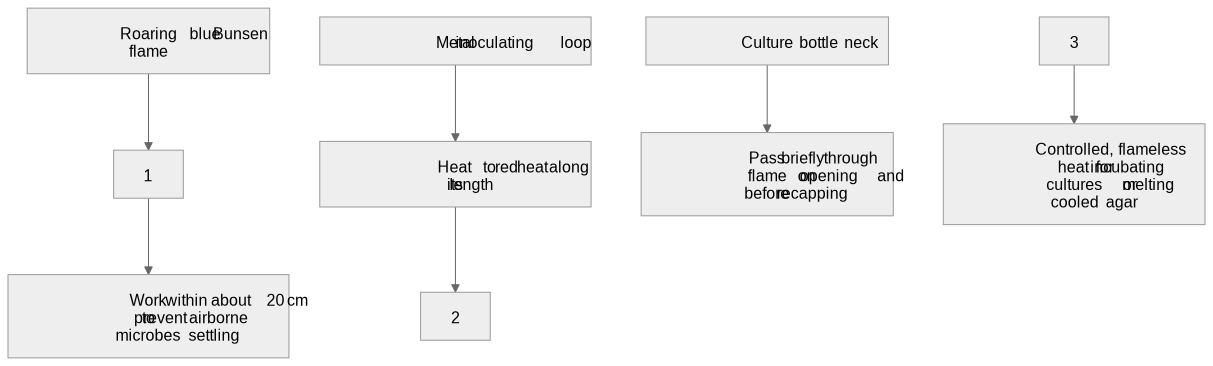
1Box 1
2Box 2
3Box 3
There is more to this lesson
The full lesson goes on to check your understanding and help you earn the marks. Create a free account to carry on, with your progress saved.
A week of Premium from your first lesson · Then the free plan continues · No card, no charge
Test your understanding of Microbiological techniques: Safe use of appropriate heating devices and techniques including use of a Bunsen burner and a water bath or electric heater
Active recall beats re-reading. Take an instant quiz now to test what you’ve learned and lock it into long-term memory.
A week of Premium from your first lesson · Then the free plan continues · No card, no charge