OCR · GCSE · Biology
Course version: J247 · Version from Sept 2018
Describe a minimum of one common human infection, one plant disease and…
Full specification wording
Monitoring and maintaining health: describe a minimum of one common human infection, one plant disease and sexually transmitted infections in humans including HIV/AIDS (to include: human infections: one example of each viral, fungal, bacterial plant diseases: viral tobacco mosaic virus TMV, fungal Erysiphe graminis barley powdery mildew, bacterial Agrobacterium tumefaciens crown gall disease)
Pathogens cause characteristic diseases in humans and plants.
- Point 11 of 29
- 4 key terms
Study notes
From the teaching notes for this specification point.
The idea
Pathogens cause characteristic diseases in humans and plants. Human examples: measles is viral, spread by airborne droplets, causing fever and red rash; Salmonella is bacterial, from contaminated food, causing vomiting and diarrhoea; athlete's foot is fungal, causing itchy peeling skin. HIV is a sexually transmitted retrovirus that destroys helper T cells; AIDS is the late stage of immune deficiency, not the same as HIV. Plant examples: tobacco mosaic virus (TMV) gives mottled leaf discolouration, reducing chlorophyll so less light is absorbed, less photosynthesis occurs and growth is stunted; the fungus Erysiphe graminis causes barley powdery mildew, coating leaves with white hyphae; the bacterium Agrobacterium tumefaciens transfers plasmid DNA into plant cells, inducing crown gall tumours.
What earns the marks
- Describe one human infection for each pathogen type: viral measles (fever, red rash, airborne droplets), bacterial Salmonella (food poisoning with vomiting and diarrhoea) and fungal athlete's foot (itchy, peeling skin).
- Describe sexually transmitted infections in humans, including HIV as a retrovirus spread sexually or through blood, and distinguish HIV (the pathogen) from AIDS (the late-stage syndrome of immune deficiency).
- Explain how HIV leads to AIDS by destroying helper T cells, reducing immune function so opportunistic infections become life-threatening.
- Describe plant diseases: viral TMV causing mottled leaves, fungal Erysiphe graminis causing barley powdery mildew, and bacterial Agrobacterium tumefaciens causing crown gall tumours.
- Explain the TMV chain: mosaic discolouration means less chlorophyll, so less light absorbed, less photosynthesis, less glucose made and stunted growth.
Common mistakes and how to put them right
Writing 'athlete foot' instead of the correct term athlete's foot.
Treating HIV and AIDS as identical.
Put it right: HIV is the virus; AIDS is the late-stage syndrome of immune deficiency that may develop after HIV infection.
Stopping at 'TMV makes leaves mottled' without linking this to reduced chlorophyll, reduced light absorption, reduced photosynthesis and stunted growth.
Exam tips
- For TMV, always give the full chain: mosaic pattern, less chlorophyll, less light absorbed, less photosynthesis, less glucose, stunted growth.
- When describing Agrobacterium tumefaciens, state that it transfers bacterial plasmid DNA into plant cells, producing crown gall tumours.
Try the lesson
The start of the Monitoring and maintaining health: describe a minimum of one common human infection, one plant disease and sexually transmitted infections in humans including HIV/AIDS (to include: human infections: one example of each viral, fungal, bacterial plant diseases: viral tobacco mosaic virus TMV, fungal Erysiphe graminis barley powdery mildew, bacterial Agrobacterium tumefaciens crown gall disease) lesson, made from teaching notes for this specification point.
Have a go first
Which of these is a viral disease of plants?
Listen
Pathogens cause characteristic diseases in humans and plants. Human examples: measles is viral, spread by airborne droplets, causing fever and red rash; Salmonella is bacterial, from contaminated food, causing vomiting and diarrhoea; athlete's foot is fungal, causing itchy peeling skin. HIV is a sexually transmitted retrovirus that destroys helper T cells; AIDS is the late stage of immune deficiency, not the same as HIV. Plant examples: tobacco mosaic virus (TMV) gives mottled leaf discolouration, reducing chlorophyll so less light is absorbed, less photosynthesis occurs and growth is stunted; the fungus Erysiphe graminis causes barley powdery mildew, coating leaves with white hyphae; the bacterium Agrobacterium tumefaciens transfers plasmid DNA into plant cells, inducing crown gall tumours. A strong answer earns marks for these points. Describe one human infection for each pathogen type: viral measles (fever, red rash, airborne droplets), bacterial Salmonella (food poisoning with vomiting and diarrhoea) and fungal athlete's foot (itchy, peeling skin). Describe sexually transmitted infections in humans, including HIV as a retrovirus spread sexually or through blood, and distinguish HIV (the pathogen) from AIDS (the late-stage syndrome of immune deficiency). Explain how HIV leads to AIDS by destroying helper T cells, reducing immune function so opportunistic infections become life-threatening. Describe plant diseases: viral TMV causing mottled leaves, fungal Erysiphe graminis causing barley powdery mildew, and bacterial Agrobacterium tumefaciens causing crown gall tumours. Exam tip: For TMV, always give the full chain: mosaic pattern, less chlorophyll, less light absorbed, less photosynthesis, less glucose, stunted growth.
See it
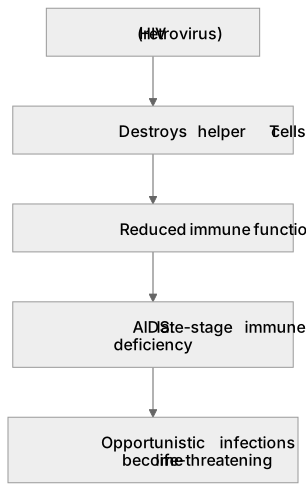
Put it in order
Put these steps in the order they happen.
- 1. Destroys helper T cells
- 2. Reduced immune function
- 3. HIV (retrovirus)
- 4. Opportunistic infections become life-threatening
- 5. AIDS: late-stage immune deficiency
Key words
Say what each word means before you turn the card.
HIV
Try answering aloud or in your head before turning the card.
AIDS
Try answering aloud or in your head before turning the card.
TMV
Try answering aloud or in your head before turning the card.
crown gall
Try answering aloud or in your head before turning the card.
See every definition
- HIV
- A sexually transmitted retrovirus that destroys helper T cells, reducing immune function.
- AIDS
- The late stage of immune deficiency, not the same as HIV, in which opportunistic infections become life-threatening.
- TMV
- Tobacco mosaic virus gives mottled leaf discolouration, reducing chlorophyll so less light is absorbed, less photosynthesis occurs and growth is stunted.
- crown gall
- The bacterium Agrobacterium tumefaciens transfers plasmid DNA into plant cells, inducing crown gall tumours.
Label the diagram
Some boxes have lost their names. Pick the right name for each number.
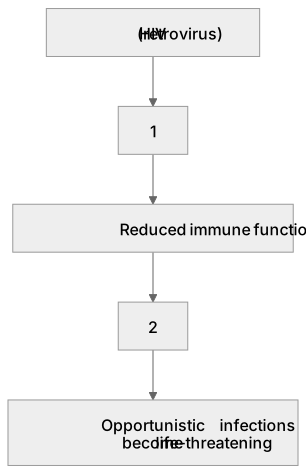
1Box 1
2Box 2
There is more to this lesson
The full lesson goes on to check your understanding and help you earn the marks. Create a free account to carry on, with your progress saved.
A week of Premium from your first lesson · Then the free plan continues · No card, no charge
Test your understanding of Monitoring and maintaining health: describe a minimum of one common human infection, one plant disease and sexually transmitted infections in humans including HIV/AIDS (to include: human infections: one example of each viral, fungal, bacterial plant diseases: viral tobacco mosaic virus TMV, fungal Erysiphe graminis barley powdery mildew, bacterial Agrobacterium tumefaciens crown gall disease)
Active recall beats re-reading. Take an instant quiz now to test what you’ve learned and lock it into long-term memory.
A week of Premium from your first lesson · Then the free plan continues · No card, no charge