OCR · GCSE · Biology
Course version: J247 · Version from Sept 2018
Describe physical plant defence responses to disease (to include: leaf…
Full specification wording
Monitoring and maintaining health: describe physical plant defence responses to disease (to include: leaf cuticle, cell wall) (content found only in the biology separate science qualification)
Plants possess passive physical barriers that prevent pathogens from entering plant tissues.
- Point 12 of 29
- 3 key terms
Study notes
From the teaching notes for this specification point.
The idea
Plants possess passive physical barriers that prevent pathogens from entering plant tissues. The waxy leaf cuticle forms an impermeable, hydrophobic lipid layer covering the upper and lower epidermal surfaces, preventing water accumulation where fungal spores could germinate and blocking microbial entry. Beneath the cuticle, tough cell walls composed of cellulose microfibrils provide a rigid mechanical barrier around individual plant cells, stopping bacterial and fungal hyphae from invading the cytoplasm. Additional physical defences include layers of dead bark cells on tree trunks that shed regularly, carrying pathogens away.
What earns the marks
- Describe the waxy leaf cuticle as a hydrophobic physical barrier preventing pathogen entry and water pooling on leaf surfaces.
- Describe the cellulose cell wall as a tough mechanical barrier surrounding plant cells that blocks pathogen penetration.
- Identify additional physical defences such as thick bark on stems that sloughs off to shed surface pathogens.
Common mistakes and how to put them right
Calling the waxy cuticle a cell wall, failing to distinguish the acellular waxy layer from the cellular cellulose wall.
Believing the plant cell wall is completely impenetrable, forgetting that fungal pathogens can secrete enzymes like cellulase.
Exam tips
- Specify the biochemical components: waxy cuticle is made of waterproof lipids; cell wall is made of cellulose fibres.
- Explain that the cuticle repels water, which stops fungal spores from germinating because spores require moisture to grow.
Try the lesson
The start of the Monitoring and maintaining health: describe physical plant defence responses to disease (to include: leaf cuticle, cell wall) (content found only in the biology separate science qualification) lesson, made from teaching notes for this specification point.
Have a go first
Which physical feature of a leaf helps to stop pathogens entering the plant?
Listen
Plants possess passive physical barriers that prevent pathogens from entering plant tissues. The waxy leaf cuticle forms an impermeable, hydrophobic lipid layer covering the upper and lower epidermal surfaces, preventing water accumulation where fungal spores could germinate and blocking microbial entry. Beneath the cuticle, tough cell walls composed of cellulose microfibrils provide a rigid mechanical barrier around individual plant cells, stopping bacterial and fungal hyphae from invading the cytoplasm. Additional physical defences include layers of dead bark cells on tree trunks that shed regularly, carrying pathogens away. A strong answer earns marks for these points. Describe the waxy leaf cuticle as a hydrophobic physical barrier preventing pathogen entry and water pooling on leaf surfaces. Describe the cellulose cell wall as a tough mechanical barrier surrounding plant cells that blocks pathogen penetration. Identify additional physical defences such as thick bark on stems that sloughs off to shed surface pathogens. Exam tip: Specify the biochemical components: waxy cuticle is made of waterproof lipids; cell wall is made of cellulose fibres.
See it
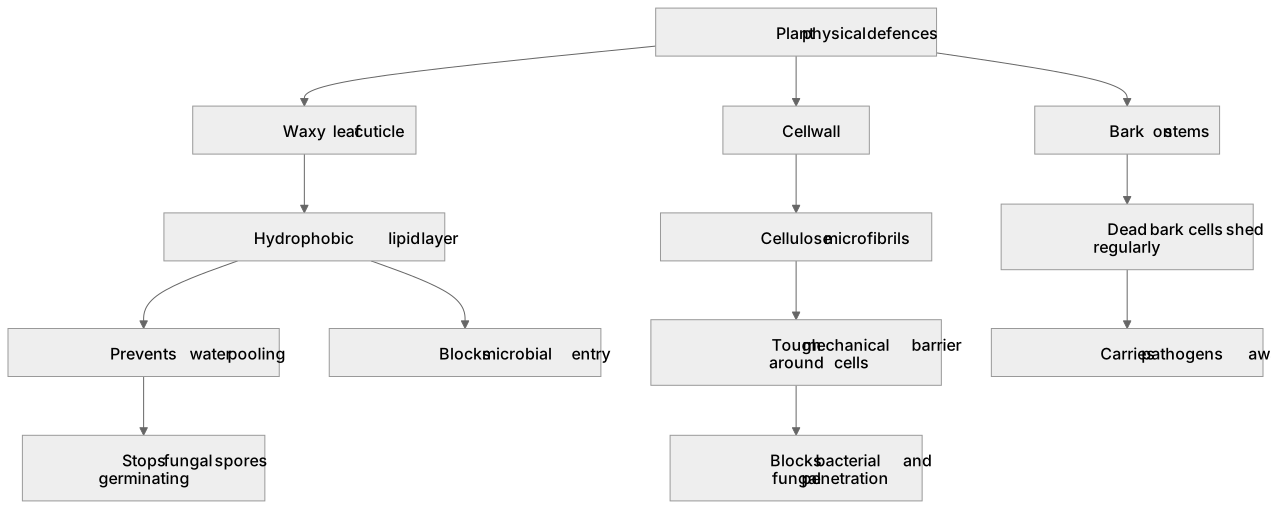
Key words
Say what each word means before you turn the card.
waxy cuticle
Try answering aloud or in your head before turning the card.
cellulose cell wall
Try answering aloud or in your head before turning the card.
bark
Try answering aloud or in your head before turning the card.
See every definition
- waxy cuticle
- An impermeable, hydrophobic lipid layer covering the upper and lower epidermal surfaces, preventing water accumulation where fungal spores could germinate and blocking microbial entry.
- cellulose cell wall
- A tough mechanical barrier composed of cellulose microfibrils around individual plant cells, stopping bacterial and fungal hyphae from invading the cytoplasm.
- bark
- Layers of dead cells on tree trunks that shed regularly, carrying pathogens away.
Label the diagram
Some boxes have lost their names. Pick the right name for each number.
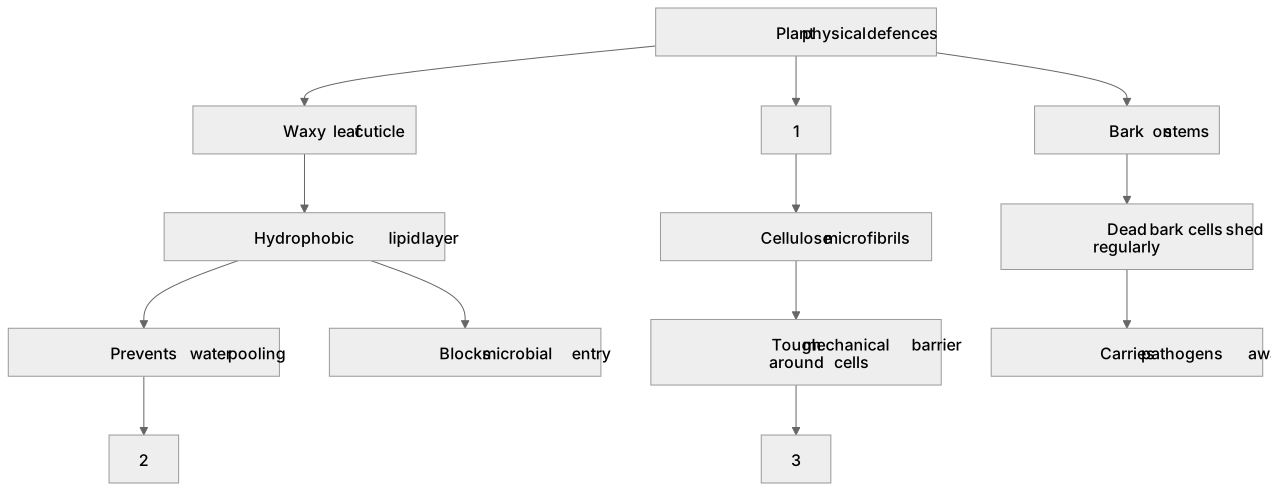
1Box 1
2Box 2
3Box 3
There is more to this lesson
The full lesson goes on to check your understanding and help you earn the marks. Create a free account to carry on, with your progress saved.
A week of Premium from your first lesson · Then the free plan continues · No card, no charge
Test your understanding of Monitoring and maintaining health: describe physical plant defence responses to disease (to include: leaf cuticle, cell wall) (content found only in the biology separate science qualification)
Active recall beats re-reading. Take an instant quiz now to test what you’ve learned and lock it into long-term memory.
A week of Premium from your first lesson · Then the free plan continues · No card, no charge