OCR · GCSE · Biology
Course version: J247 · Version from Sept 2018
Describe different ways plant diseases can be detected and identified, in…
Full specification wording
Monitoring and maintaining health: describe different ways plant diseases can be detected and identified, in the lab and in the field (to include: the laboratory detection of the DNA or antigen from the disease causing organism. The field diagnosis by observation and microscopy) (content found only in the biology separate science qualification) (Higher tier only)
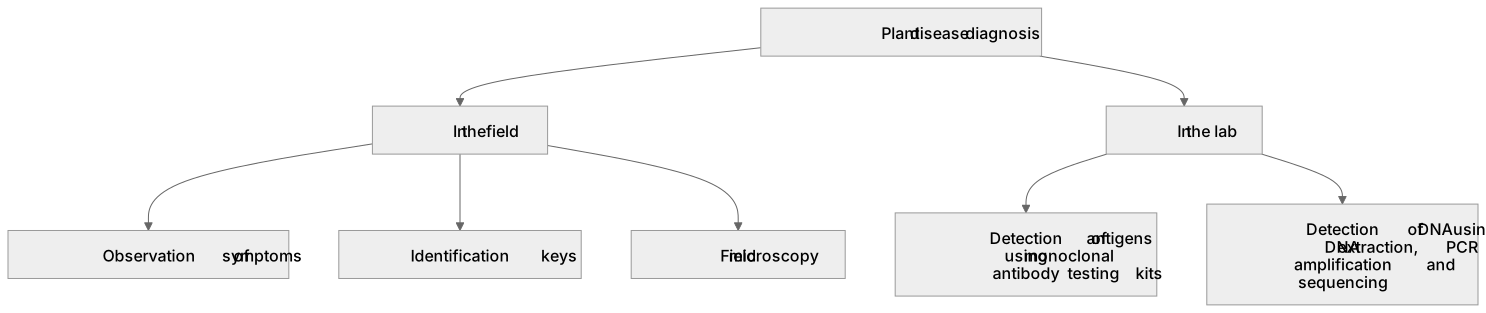
Diagnosing plant diseases involves field observation and laboratory analysis.
- Point 14 of 29
- 4 key terms
Study notes
From the teaching notes for this specification point.
The idea
Diagnosing plant diseases involves field observation and laboratory analysis. In the field, agronomists inspect crops for macroscopic symptoms such as leaf spots, mosaic discolouration, wilting, galls, or stunting, consulting horticultural reference guides or dichotomous keys; portable light microscopes examine tissue smears for fungal spores or bacterial exudates. In diagnostic laboratories, advanced molecular techniques ensure definitive identification: monoclonal antibody test kits bind pathogen-specific antigens via ELISA assays, and PCR DNA testing amplifies unique pathogen DNA sequences, allowing precise pathogen identification before widespread crop damage occurs.
What earns the marks
- Describe field diagnosis methods: visual inspection of symptoms (spots, wilting, galls), identification keys, and field microscopy.
- Describe laboratory detection of pathogen antigens using monoclonal antibody testing kits.
- Describe laboratory detection of pathogen DNA using DNA extraction, PCR amplification, and sequencing.
- Explain why rapid laboratory identification is critical to preventing widespread agricultural epidemics.
Common mistakes and how to put them right
Assuming visual field inspection is completely reliable, overlooking that different pathogens can cause identical wilting or yellowing symptoms.
Confusing antigen testing (detecting unique pathogen surface proteins) with DNA testing (detecting pathogen genetic sequences).
Exam tips
- Structure your answer into two distinct locations: IN THE FIELD (observation of symptoms, keys, light microscopy) versus IN THE LAB (monoclonal antibodies for antigens, DNA analysis/PCR).
- Mention that laboratory testing is necessary when visual symptoms are non-specific or ambiguous.
Try the lesson
The start of the Monitoring and maintaining health: describe different ways plant diseases can be detected and identified, in the lab and in the field (to include: the laboratory detection of the DNA or antigen from the disease causing organism. The field diagnosis by observation and microscopy) (content found only in the biology separate science qualification) (Higher tier only) lesson, made from teaching notes for this specification point.
Have a go first
Which method can be used in the field to help detect and identify a plant disease?
Listen
Diagnosing plant diseases involves field observation and laboratory analysis. In the field, agronomists inspect crops for macroscopic symptoms such as leaf spots, mosaic discolouration, wilting, galls, or stunting, consulting horticultural reference guides or dichotomous keys; portable light microscopes examine tissue smears for fungal spores or bacterial exudates. In diagnostic laboratories, advanced molecular techniques ensure definitive identification: monoclonal antibody test kits bind pathogen-specific antigens via ELISA assays, and PCR DNA testing amplifies unique pathogen DNA sequences, allowing precise pathogen identification before widespread crop damage occurs. A strong answer earns marks for these points. Describe field diagnosis methods: visual inspection of symptoms (spots, wilting, galls), identification keys, and field microscopy. Describe laboratory detection of pathogen antigens using monoclonal antibody testing kits. Describe laboratory detection of pathogen DNA using DNA extraction, PCR amplification, and sequencing. Explain why rapid laboratory identification is critical to preventing widespread agricultural epidemics. Exam tip: Structure your answer into two distinct locations: IN THE FIELD (observation of symptoms, keys, light microscopy) versus IN THE LAB (monoclonal antibodies for antigens, DNA analysis/PCR).
See it
Key words
Say what each word means before you turn the card.
field diagnosis
Try answering aloud or in your head before turning the card.
antigen detection with antibodies
Try answering aloud or in your head before turning the card.
DNA testing and PCR
Try answering aloud or in your head before turning the card.
microscopy
Try answering aloud or in your head before turning the card.
See every definition
- field diagnosis
- Diagnosis by observation and microscopy, inspecting crops for macroscopic symptoms and examining tissue smears with portable light microscopes.
- antigen detection with antibodies
- Laboratory detection of the antigen from the disease causing organism, using monoclonal antibody test kits that bind pathogen-specific antigens.
- DNA testing and PCR
- Laboratory detection of the DNA from the disease causing organism, using DNA extraction, PCR amplification and sequencing to identify the pathogen definitively.
- microscopy
- Examination of tissue smears with portable light microscopes for fungal spores or bacterial exudates, used in field diagnosis.
Label the diagram
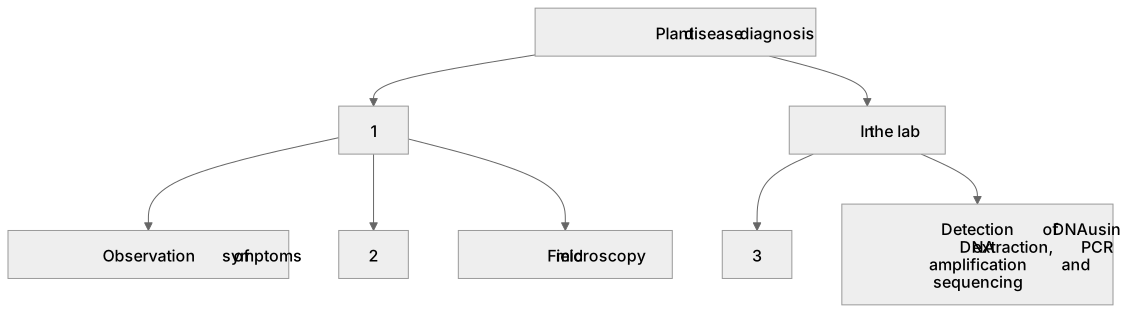
Some boxes have lost their names. Pick the right name for each number.
1Box 1
2Box 2
3Box 3
There is more to this lesson
The full lesson goes on to check your understanding and help you earn the marks. Create a free account to carry on, with your progress saved.
A week of Premium from your first lesson · Then the free plan continues · No card, no charge
Test your understanding of Monitoring and maintaining health: describe different ways plant diseases can be detected and identified, in the lab and in the field (to include: the laboratory detection of the DNA or antigen from the disease causing organism. The field diagnosis by observation and microscopy) (content found only in the biology separate science qualification) (Higher tier only)
Active recall beats re-reading. Take an instant quiz now to test what you’ve learned and lock it into long-term memory.
A week of Premium from your first lesson · Then the free plan continues · No card, no charge