OCR · GCSE · Biology
Course version: J247 · Version from Sept 2018
Describe chemical plant defence responses (to include: antimicrobial…
Full specification wording
Monitoring and maintaining health: describe chemical plant defence responses (to include: antimicrobial substances) (content found only in the biology separate science qualification)
When physical barriers are breached, plants deploy chemical defence responses to inhibit or kill pathogens.
- Point 13 of 29
- 4 key terms
Study notes
From the teaching notes for this specification point.
The idea
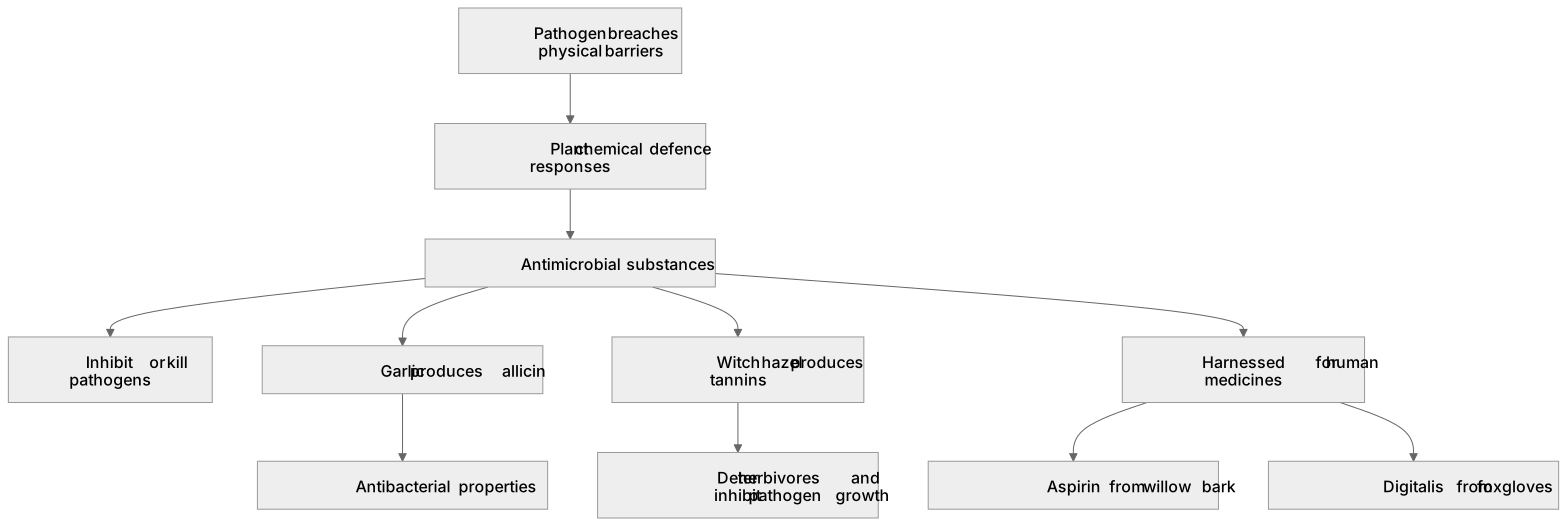
When physical barriers are breached, plants deploy chemical defence responses to inhibit or kill pathogens. Many plants synthesize antimicrobial compounds that disrupt bacterial cell membranes or inhibit microbial enzyme systems. For example, garlic produces allicin, which possesses potent antibacterial properties; witch hazel produces astringent tannins that deter herbivores and inhibit pathogen growth. Humans have harnessed these plant defence chemicals for medicinal pharmaceuticals, including the extraction of aspirin (an analgesic derived from salicin in willow bark) and digitalis for cardiac arrhythmias from foxgloves.
What earns the marks
- Describe how plants produce antimicrobial chemicals to destroy or inhibit bacterial and fungal pathogens.
- Give examples of plant chemical defences, such as antibacterial allicin in garlic or tannins in witch hazel.
- Explain how plant defence compounds have been developed into human medicines, including aspirin from willow and digitalis from foxgloves.
Common mistakes and how to put them right
Thinking plants have antibodies like animals, rather than non-specific antimicrobial chemicals.
Confusing physical defences (spines, cuticle) with chemical responses (antimicrobial substances, poisons).
Exam tips
- Learn the standard drug examples: aspirin comes from willow bark; digitalis comes from foxgloves.
- State that antimicrobial chemicals either kill microorganisms directly or inhibit their growth and reproduction.
Try the lesson
The start of the Monitoring and maintaining health: describe chemical plant defence responses (to include: antimicrobial substances) (content found only in the biology separate science qualification) lesson, made from teaching notes for this specification point.
Have a go first
Which type of chemical do some plants produce to kill or stop the growth of disease-causing microorganisms?
Listen
When physical barriers are breached, plants deploy chemical defence responses to inhibit or kill pathogens. Many plants synthesize antimicrobial compounds that disrupt bacterial cell membranes or inhibit microbial enzyme systems. For example, garlic produces allicin, which possesses potent antibacterial properties; witch hazel produces astringent tannins that deter herbivores and inhibit pathogen growth. Humans have harnessed these plant defence chemicals for medicinal pharmaceuticals, including the extraction of aspirin (an analgesic derived from salicin in willow bark) and digitalis for cardiac arrhythmias from foxgloves. A strong answer earns marks for these points. Describe how plants produce antimicrobial chemicals to destroy or inhibit bacterial and fungal pathogens. Give examples of plant chemical defences, such as antibacterial allicin in garlic or tannins in witch hazel. Explain how plant defence compounds have been developed into human medicines, including aspirin from willow and digitalis from foxgloves. Exam tip: Learn the standard drug examples: aspirin comes from willow bark; digitalis comes from foxgloves.
See it
Key words
Say what each word means before you turn the card.
antimicrobial compounds
Try answering aloud or in your head before turning the card.
allicin
Try answering aloud or in your head before turning the card.
tannins
Try answering aloud or in your head before turning the card.
aspirin
Try answering aloud or in your head before turning the card.
See every definition
- antimicrobial compounds
- Chemicals synthesised by plants that destroy or inhibit bacterial and fungal pathogens.
- allicin
- An antibacterial chemical produced by garlic as a chemical defence.
- tannins
- Astringent chemicals produced by witch hazel that deter herbivores and inhibit pathogen growth.
- aspirin
- An analgesic medicine extracted from salicin in willow bark, developed from plant defence chemicals.
Label the diagram
Some boxes have lost their names. Pick the right name for each number.
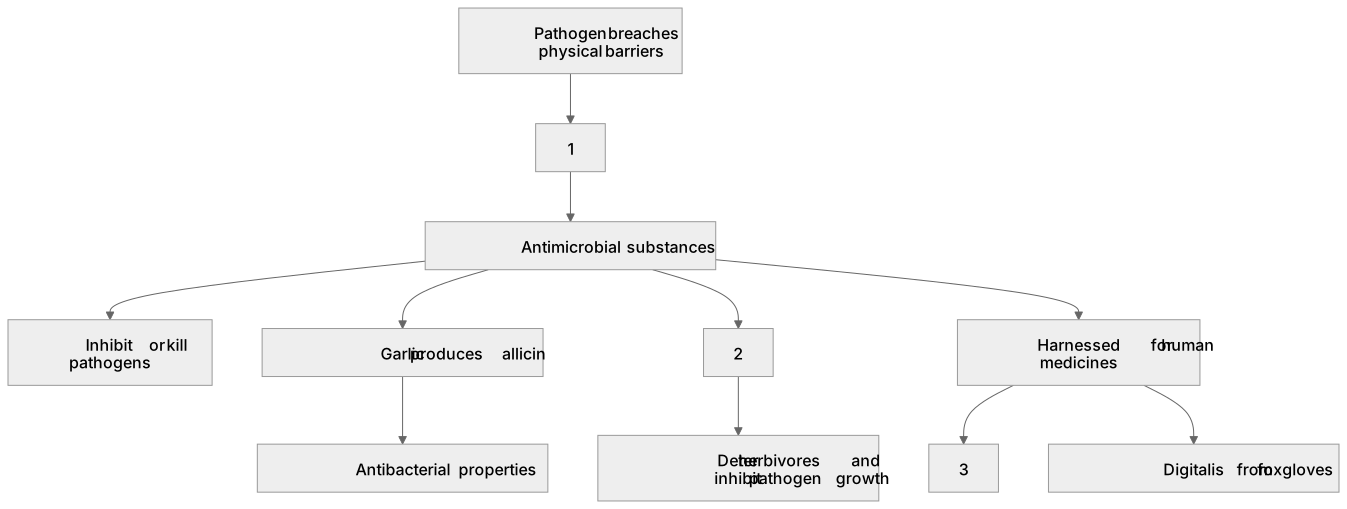
1Box 1
2Box 2
3Box 3
There is more to this lesson
The full lesson goes on to check your understanding and help you earn the marks. Create a free account to carry on, with your progress saved.
A week of Premium from your first lesson · Then the free plan continues · No card, no charge
Test your understanding of Monitoring and maintaining health: describe chemical plant defence responses (to include: antimicrobial substances) (content found only in the biology separate science qualification)
Active recall beats re-reading. Take an instant quiz now to test what you’ve learned and lock it into long-term memory.
A week of Premium from your first lesson · Then the free plan continues · No card, no charge