OCR · GCSE · Biology
Course version: J247 · Version from Sept 2018
Describe how monoclonal antibodies are produced (content found only in the…
Full specification wording
Monitoring and maintaining health: describe how monoclonal antibodies are produced (content found only in the biology separate science qualification) (Higher tier only)
Monoclonal antibodies are identical antibodies specific to a single binding site on a target antigen, produced using hybridoma technology.
- Point 18 of 29
- 2 key terms
Study notes
From the teaching notes for this specification point.
The idea
Monoclonal antibodies are identical antibodies specific to a single binding site on a target antigen, produced using hybridoma technology. A mouse is injected with a specific antigen, stimulating spleen B lymphocytes to make complementary antibodies. These antibody-producing lymphocytes are extracted from the mouse spleen and fused with tumour cells (myeloma cells), which possess the capacity to divide indefinitely in laboratory cell culture. The resulting hybrid cell is termed a hybridoma. Individual hybridoma cells are separated and cloned to produce large populations of identical cells that secrete identical monoclonal antibodies, which are collected and purified for clinical applications.
What earns the marks
- Describe injecting a mouse with a specific antigen to stimulate B lymphocytes to produce complementary antibodies.
- Describe extracting spleen lymphocytes and fusing them with tumour (myeloma) cells to create hybridoma cells.
- Explain that hybridoma cells can divide indefinitely while producing specific identical antibodies.
- Describe cloning the hybridoma cell and harvesting large quantities of identical monoclonal antibodies.
Common mistakes and how to put them right
Thinking lymphocytes divide continuously on their own without needing fusion with myeloma tumour cells.
Believing the mouse produces monoclonal antibodies directly in its bloodstream rather than harvesting hybridomas in culture.
Exam tips
- Memorise the fusion equation: mouse B lymphocyte + myeloma tumour cell = hybridoma cell.
- State clearly why myeloma cells are used: they divide rapidly and indefinitely in culture.
Try the lesson
The start of the Monitoring and maintaining health: describe how monoclonal antibodies are produced (content found only in the biology separate science qualification) (Higher tier only) lesson, made from teaching notes for this specification point.
Have a go first
Which two types of cell are fused together to produce a hybridoma cell that makes monoclonal antibodies?
Listen
Monoclonal antibodies are identical antibodies specific to a single binding site on a target antigen, produced using hybridoma technology. A mouse is injected with a specific antigen, stimulating spleen B lymphocytes to make complementary antibodies. These antibody-producing lymphocytes are extracted from the mouse spleen and fused with tumour cells (myeloma cells), which possess the capacity to divide indefinitely in laboratory cell culture. The resulting hybrid cell is termed a hybridoma. Individual hybridoma cells are separated and cloned to produce large populations of identical cells that secrete identical monoclonal antibodies, which are collected and purified for clinical applications. A strong answer earns marks for these points. Describe injecting a mouse with a specific antigen to stimulate B lymphocytes to produce complementary antibodies. Describe extracting spleen lymphocytes and fusing them with tumour (myeloma) cells to create hybridoma cells. Explain that hybridoma cells can divide indefinitely while producing specific identical antibodies. Describe cloning the hybridoma cell and harvesting large quantities of identical monoclonal antibodies. Exam tip: Memorise the fusion equation: mouse B lymphocyte + myeloma tumour cell = hybridoma cell.
See it
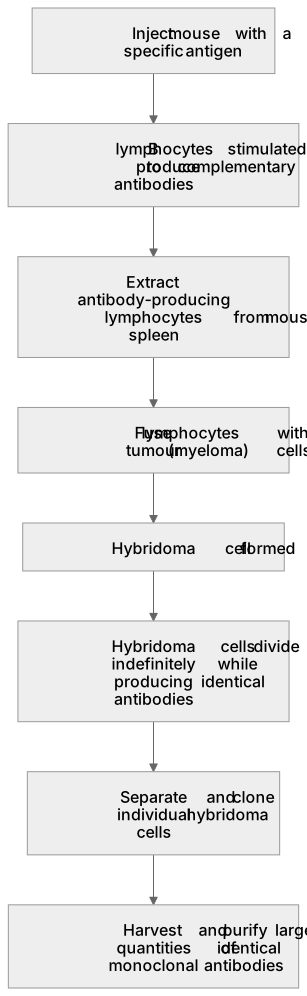
Put it in order
Put these steps in the order they happen.
- 1. Hybridoma cell formed
- 2. Harvest and purify large quantities of identical monoclonal antibodies
- 3. Hybridoma cells divide indefinitely while producing identical antibodies
- 4. Inject mouse with a specific antigen
- 5. B lymphocytes stimulated to produce complementary antibodies
- 6. Separate and clone individual hybridoma cells
- 7. Extract antibody-producing lymphocytes from mouse spleen
- 8. Fuse lymphocytes with tumour (myeloma) cells
Key words
Say what each word means before you turn the card.
hybridoma technology
Try answering aloud or in your head before turning the card.
myeloma tumour cells
Try answering aloud or in your head before turning the card.
See every definition
- hybridoma technology
- A mouse is injected with a specific antigen, then antibody-producing lymphocytes from its spleen are fused with myeloma cells to form hybridoma cells.
- myeloma tumour cells
- Cells that possess the capacity to divide indefinitely in laboratory cell culture and are fused with antibody-producing lymphocytes.
Label the diagram
Some boxes have lost their names. Pick the right name for each number.
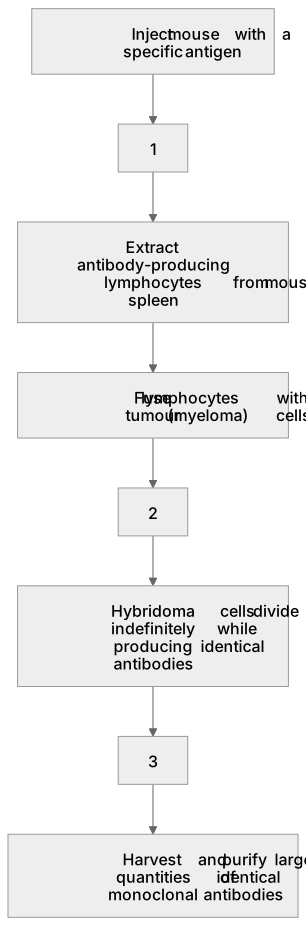
1Box 1
2Box 2
3Box 3
There is more to this lesson
The full lesson goes on to check your understanding and help you earn the marks. Create a free account to carry on, with your progress saved.
A week of Premium from your first lesson · Then the free plan continues · No card, no charge
Test your understanding of Monitoring and maintaining health: describe how monoclonal antibodies are produced (content found only in the biology separate science qualification) (Higher tier only)
Active recall beats re-reading. Take an instant quiz now to test what you’ve learned and lock it into long-term memory.
A week of Premium from your first lesson · Then the free plan continues · No card, no charge