OCR · GCSE · Biology
Course version: J247 · Version from Sept 2018
Explain some of the possible benefits and risks of using gene technology…
Full specification wording
Monitoring and maintaining health: explain some of the possible benefits and risks of using gene technology in medicine (to include: practical and ethical considerations)
Gene technology in clinical medicine encompasses recombinant DNA technology and gene therapy.
- Point 28 of 29
- 4 key terms
Study notes
From the teaching notes for this specification point.
The idea
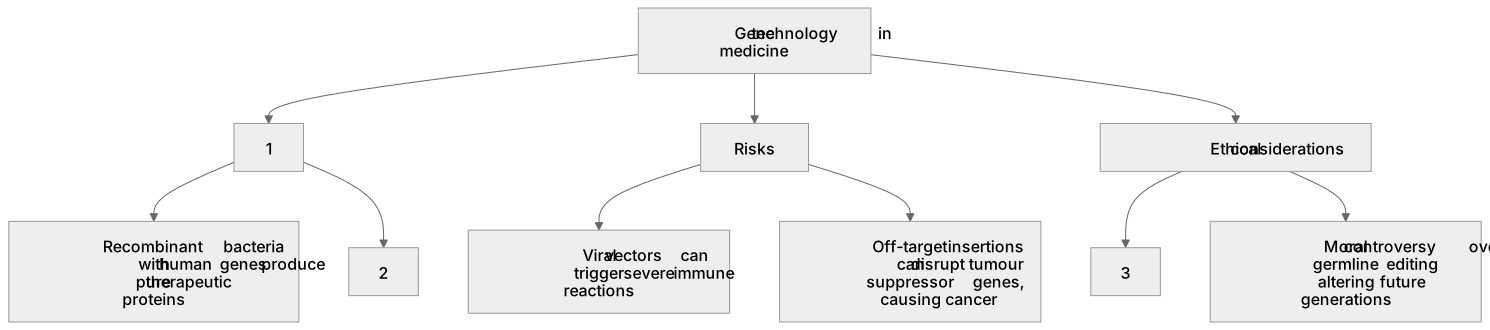
Gene technology in clinical medicine encompasses recombinant DNA technology and gene therapy. Recombinant bacteria engineered with human genes produce abundant, pure therapeutic proteins, such as human insulin for diabetes and factor VIII for haemophilia, eliminating risks of animal pathogen transmission. Gene therapy aims to correct genetic disorders (such as cystic fibrosis) by introducing functional alleles into target cells using viral vectors. However, significant practical risks exist: viral vectors can trigger severe immune reactions, and off-target insertions can disrupt tumour suppressor genes, causing cancer. Ethical dilemmas include astronomical treatment costs creating unequal access, and moral controversies surrounding germline editing that permanently alters future generations.
What earns the marks
- Explain medical benefits: producing pure human therapeutic proteins (like insulin) in bacteria, and gene therapy replacing faulty alleles in monogenic disorders.
- Describe practical risks: viral vectors triggering immune responses or causing off-target mutations that disrupt tumour suppressor genes, causing cancer.
- Discuss ethical and practical dilemmas: high treatment costs leading to social inequality, and moral controversies surrounding germline genetic modification.
Common mistakes and how to put them right
Thinking somatic gene therapy alters the DNA of the patient offspring, failing to distinguish somatic cells from germline sperm and egg cells.
Assuming gene therapy is 100% effective today, overlooking technical challenges in delivering genes into enough target cells.
Exam tips
- Use insulin production in GM bacteria as a clear example of successful medical gene technology.
- Clearly contrast somatic cell gene therapy (affects patient only) with germline gene editing (inherited by future generations, raising major ethical concerns).
Try the lesson
The start of the Monitoring and maintaining health: explain some of the possible benefits and risks of using gene technology in medicine (to include: practical and ethical considerations) lesson, made from teaching notes for this specification point.
Have a go first
Which of these is a possible benefit of using gene technology in medicine?
Listen
Gene technology in clinical medicine encompasses recombinant DNA technology and gene therapy. Recombinant bacteria engineered with human genes produce abundant, pure therapeutic proteins, such as human insulin for diabetes and factor VIII for haemophilia, eliminating risks of animal pathogen transmission. Gene therapy aims to correct genetic disorders (such as cystic fibrosis) by introducing functional alleles into target cells using viral vectors. However, significant practical risks exist: viral vectors can trigger severe immune reactions, and off-target insertions can disrupt tumour suppressor genes, causing cancer. Ethical dilemmas include astronomical treatment costs creating unequal access, and moral controversies surrounding germline editing that permanently alters future generations. A strong answer earns marks for these points. Explain medical benefits: producing pure human therapeutic proteins (like insulin) in bacteria, and gene therapy replacing faulty alleles in monogenic disorders. Describe practical risks: viral vectors triggering immune responses or causing off-target mutations that disrupt tumour suppressor genes, causing cancer. Discuss ethical and practical dilemmas: high treatment costs leading to social inequality, and moral controversies surrounding germline genetic modification. Exam tip: Use insulin production in GM bacteria as a clear example of successful medical gene technology.
See it

Key words
Say what each word means before you turn the card.
recombinant insulin
Try answering aloud or in your head before turning the card.
gene therapy risks and vectors
Try answering aloud or in your head before turning the card.
bioethics and germline editing
Try answering aloud or in your head before turning the card.
medical gene technology
Try answering aloud or in your head before turning the card.
See every definition
- recombinant insulin
- Recombinant bacteria engineered with human genes produce abundant, pure therapeutic proteins, such as human insulin for diabetes.
- gene therapy risks and vectors
- Gene therapy introduces functional alleles into target cells using viral vectors, but these can trigger severe immune reactions and off-target insertions can disrupt tumour suppressor genes, causing cancer.
- bioethics and germline editing
- Ethical dilemmas include astronomical treatment costs creating unequal access and moral controversies surrounding germline editing that permanently alters future generations.
- medical gene technology
- Gene technology in clinical medicine encompasses recombinant DNA technology and gene therapy, with practical and ethical considerations.
Label the diagram
Some boxes have lost their names. Pick the right name for each number.
1Box 1
2Box 2
3Box 3
There is more to this lesson
The full lesson goes on to check your understanding and help you earn the marks. Create a free account to carry on, with your progress saved.
A week of Premium from your first lesson · Then the free plan continues · No card, no charge
Test your understanding of Monitoring and maintaining health: explain some of the possible benefits and risks of using gene technology in medicine (to include: practical and ethical considerations)
Active recall beats re-reading. Take an instant quiz now to test what you’ve learned and lock it into long-term memory.
A week of Premium from your first lesson · Then the free plan continues · No card, no charge