OCR · GCSE · Biology
Course version: J247 · Version from Sept 2018
Explain the use of vaccines and medicines in the prevention and treatment…
Full specification wording
Monitoring and maintaining health: explain the use of vaccines and medicines in the prevention and treatment of disease (to include: antibiotics, antivirals and antiseptics)
Vaccines and medicines prevent and treat disease through distinct biological mechanisms.
- Point 20 of 29
- 3 key terms
Study notes
From the teaching notes for this specification point.
The idea
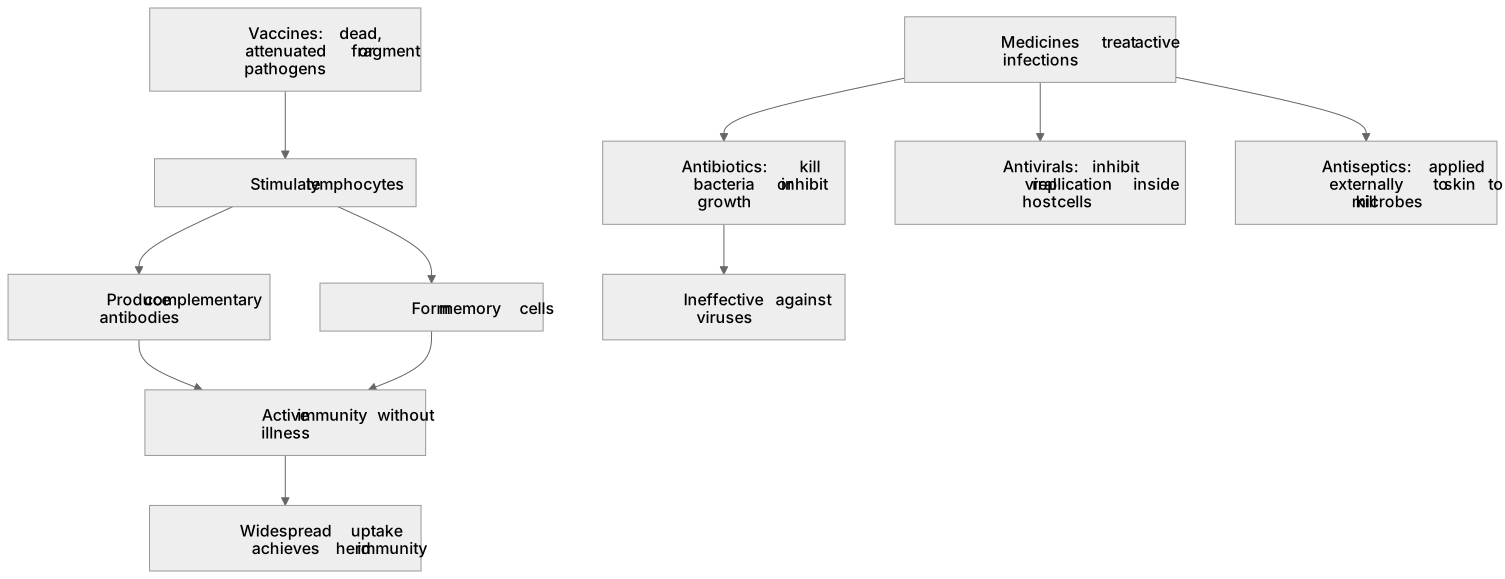
Vaccines and medicines prevent and treat disease through distinct biological mechanisms. Vaccines introduce dead, attenuated, or fragment pathogens containing specific antigens into the body. This stimulates lymphocytes to produce complementary antibodies and long-lived memory cells without causing illness, establishing active immunity; widespread uptake achieves herd immunity. Medicines treat active infections: antibiotics (like penicillin) specifically kill bacteria or inhibit their growth (e.g. disrupting peptidoglycan cell walls) without harming human cells, but are completely ineffective against viruses. Antivirals treat viral infections by inhibiting specific viral enzymes and replication stages inside host cells. Antiseptics are non-specific chemical antimicrobials applied externally to living skin to destroy pathogens and prevent wound infection.
What earns the marks
- Explain that vaccines introduce dead, attenuated, or fragment pathogens to stimulate lymphocyte antibody production and memory cell formation without causing disease.
- Explain that antibiotics specifically kill bacteria or inhibit their growth (such as disrupting cell wall synthesis), but cannot treat viral infections.
- Describe antivirals as drugs that inhibit viral replication inside host cells, and antiseptics as chemical agents applied externally to skin to kill microbes.
Common mistakes and how to put them right
Demanding antibiotics for viral infections like colds or influenza, failing to recognize that viruses reproduce inside host cells and lack bacterial structures like peptidoglycan walls.
Thinking vaccines contain antibodies rather than antigens that stimulate the recipient immune system to produce its own antibodies.
Exam tips
- State clearly: antibiotics kill bacteria only; they do not kill viruses because viruses live inside host cells and lack bacterial cell walls.
- Explain herd immunity as vaccinating a large proportion of a population so that pathogens cannot spread, protecting vulnerable unvaccinated individuals.
Try the lesson
The start of the Monitoring and maintaining health: explain the use of vaccines and medicines in the prevention and treatment of disease (to include: antibiotics, antivirals and antiseptics) lesson, made from teaching notes for this specification point.
Have a go first
What is the main purpose of a vaccine?
Listen
Vaccines and medicines prevent and treat disease through distinct biological mechanisms. Vaccines introduce dead, attenuated, or fragment pathogens containing specific antigens into the body. This stimulates lymphocytes to produce complementary antibodies and long-lived memory cells without causing illness, establishing active immunity; widespread uptake achieves herd immunity. Medicines treat active infections: antibiotics (like penicillin) specifically kill bacteria or inhibit their growth (e.g. disrupting peptidoglycan cell walls) without harming human cells, but are completely ineffective against viruses. Antivirals treat viral infections by inhibiting specific viral enzymes and replication stages inside host cells. Antiseptics are non-specific chemical antimicrobials applied externally to living skin to destroy pathogens and prevent wound infection. A strong answer earns marks for these points. Explain that vaccines introduce dead, attenuated, or fragment pathogens to stimulate lymphocyte antibody production and memory cell formation without causing disease. Explain that antibiotics specifically kill bacteria or inhibit their growth (such as disrupting cell wall synthesis), but cannot treat viral infections. Describe antivirals as drugs that inhibit viral replication inside host cells, and antiseptics as chemical agents applied externally to skin to kill microbes. Exam tip: State clearly: antibiotics kill bacteria only; they do not kill viruses because viruses live inside host cells and lack bacterial cell walls.
See it
Key words
Say what each word means before you turn the card.
vaccination and herd immunity
Try answering aloud or in your head before turning the card.
antibiotics versus antivirals
Try answering aloud or in your head before turning the card.
antiseptic chemicals
Try answering aloud or in your head before turning the card.
See every definition
- vaccination and herd immunity
- Introducing dead, attenuated, or fragment pathogens containing specific antigens stimulates lymphocytes to produce complementary antibodies and memory cells, and widespread uptake means pathogens cannot spread, protecting vulnerable unvaccinated individuals.
- antibiotics versus antivirals
- Antibiotics specifically kill bacteria or inhibit their growth without harming human cells but are ineffective against viruses, whereas antivirals inhibit specific viral enzymes and replication stages inside host cells.
- antiseptic chemicals
- Non-specific chemical antimicrobials applied externally to living skin to destroy pathogens and prevent wound infection.
Label the diagram
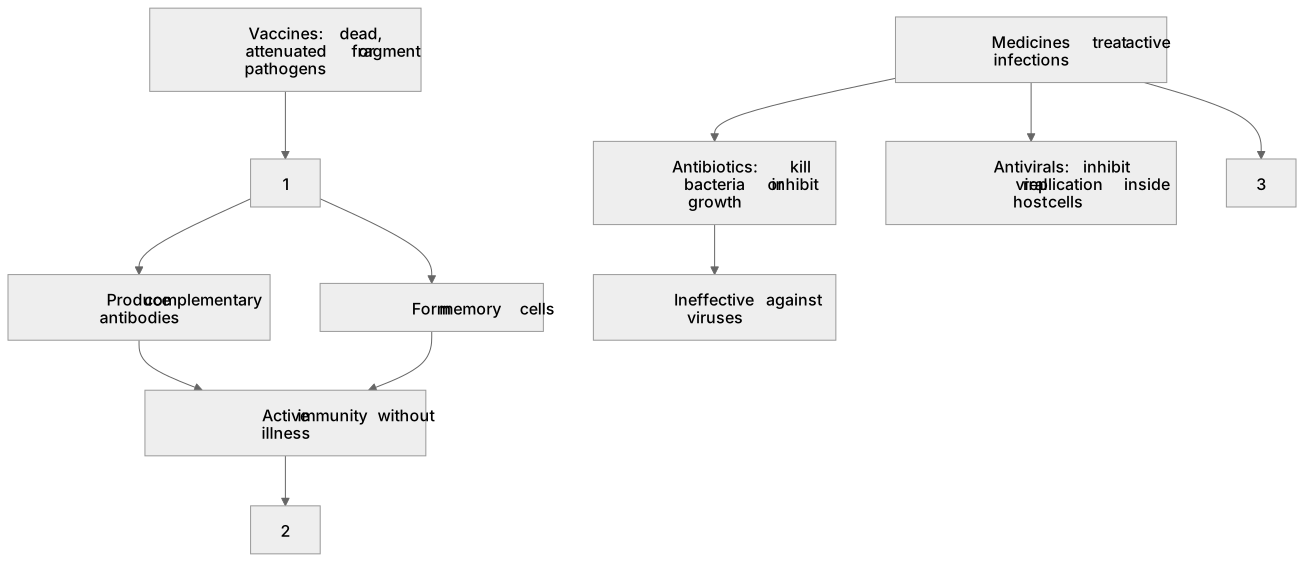
Some boxes have lost their names. Pick the right name for each number.
1Box 1
2Box 2
3Box 3
There is more to this lesson
The full lesson goes on to check your understanding and help you earn the marks. Create a free account to carry on, with your progress saved.
A week of Premium from your first lesson · Then the free plan continues · No card, no charge
Test your understanding of Monitoring and maintaining health: explain the use of vaccines and medicines in the prevention and treatment of disease (to include: antibiotics, antivirals and antiseptics)
Active recall beats re-reading. Take an instant quiz now to test what you’ve learned and lock it into long-term memory.
A week of Premium from your first lesson · Then the free plan continues · No card, no charge