OCR · GCSE · Biology
Course version: J247 · Version from Sept 2018
Explain the aseptic techniques used in culturing organisms (to include:…
Full specification wording
Monitoring and maintaining health: explain the aseptic techniques used in culturing organisms (to include: use of alcohol, flaming, autoclaving of glassware and growth media, and measures used to stop contaminants falling onto/into the growth media (e.g. working around a Bunsen burner)) (content found only in the biology separate science qualification)
Aseptic techniques prevent contamination of pure microbial cultures and protect the investigator.
- Point 21 of 29
- 4 key terms
Study notes
From the teaching notes for this specification point.
The idea
Aseptic techniques prevent contamination of pure microbial cultures and protect the investigator. Nutrient agar and glassware are sterilised in an autoclave using steam under pressure at 121 °C. Work surfaces are disinfected with alcohol. Metal inoculating loops are flamed in a roaring blue Bunsen burner until red hot to incinerate microbes, then cooled before transferring bacteria. Working close to a Bunsen flame creates an upward convection current carrying airborne microbes away from open plates. Petri dish lids are opened minimally at an angle, taped without airtight sealing to maintain aerobic conditions, and incubated inverted at a maximum of 25 °C in schools to prevent cultivating human pathogens.
What earns the marks
- Explain that autoclaving sterilises glassware and nutrient agar growth media at high temperature and pressure (121 °C).
- Describe flaming wire inoculating loops in a roaring blue Bunsen flame to sterilise them by incinerating contaminating microorganisms.
- Explain that working near a lit Bunsen burner creates upward convection currents that prevent airborne microbes from falling into media.
- Describe securing the Petri dish lid with tape without sealing completely to allow aerobic conditions, incubating inverted at maximum 25 °C in schools.
Common mistakes and how to put them right
Sealing Petri dishes completely with tape, which creates anaerobic conditions that encourage the growth of dangerous pathogenic bacteria.
Using an inoculating loop immediately after flaming, which kills the bacteria being sampled due to extreme heat.
Exam tips
- Explain that incubating plates inverted (upside down) prevents condensation droplets from dripping onto the agar surface and ruining colonies.
- Always state that school cultures must be incubated at 25 °C or below to prevent the growth of human pathogens that thrive at 37 °C body temperature.
Try the lesson
The start of the Monitoring and maintaining health: explain the aseptic techniques used in culturing organisms (to include: use of alcohol, flaming, autoclaving of glassware and growth media, and measures used to stop contaminants falling onto/into the growth media (e.g. working around a Bunsen burner)) (content found only in the biology separate science qualification) lesson, made from teaching notes for this specification point.
Have a go first
When preparing an agar lawn plate using aseptic technique, what is the purpose of passing the wire inoculating loop through a roaring blue Bunsen flame?
Listen
Aseptic techniques prevent contamination of pure microbial cultures and protect the investigator. Nutrient agar and glassware are sterilised in an autoclave using steam under pressure at 121 °C. Work surfaces are disinfected with alcohol. Metal inoculating loops are flamed in a roaring blue Bunsen burner until red hot to incinerate microbes, then cooled before transferring bacteria. Working close to a Bunsen flame creates an upward convection current carrying airborne microbes away from open plates. Petri dish lids are opened minimally at an angle, taped without airtight sealing to maintain aerobic conditions, and incubated inverted at a maximum of 25 °C in schools to prevent cultivating human pathogens. A strong answer earns marks for these points. Explain that autoclaving sterilises glassware and nutrient agar growth media at high temperature and pressure (121 °C). Describe flaming wire inoculating loops in a roaring blue Bunsen flame to sterilise them by incinerating contaminating microorganisms. Explain that working near a lit Bunsen burner creates upward convection currents that prevent airborne microbes from falling into media. Describe securing the Petri dish lid with tape without sealing completely to allow aerobic conditions, incubating inverted at maximum 25 °C in schools. Exam tip: Explain that incubating plates inverted (upside down) prevents condensation droplets from dripping onto the agar surface and ruining colonies.
See it
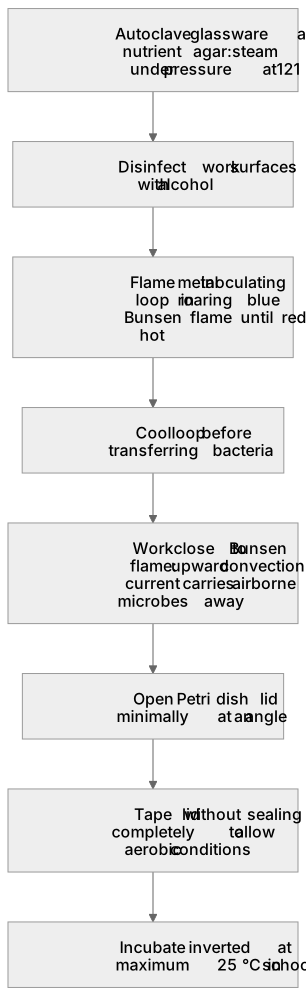
Put it in order
Put these steps in the order they happen.
- 1. Work close to Bunsen flame: upward convection current carries airborne microbes away
- 2. Incubate inverted at maximum 25 °C in schools
- 3. Open Petri dish lid minimally at an angle
- 4. Autoclave glassware and nutrient agar: steam under pressure at 121 °C
- 5. Disinfect work surfaces with alcohol
- 6. Tape lid without sealing completely to allow aerobic conditions
- 7. Flame metal inoculating loop in roaring blue Bunsen flame until red hot
- 8. Cool loop before transferring bacteria
Key words
Say what each word means before you turn the card.
autoclaving
Try answering aloud or in your head before turning the card.
flaming
Try answering aloud or in your head before turning the card.
convection currents
Try answering aloud or in your head before turning the card.
aseptic techniques
Try answering aloud or in your head before turning the card.
See every definition
- autoclaving
- Sterilises glassware and nutrient agar growth media using steam under pressure at 121 °C.
- flaming
- Heating metal inoculating loops in a roaring blue Bunsen burner until red hot to incinerate contaminating microorganisms.
- convection currents
- Upward currents created by working close to a Bunsen flame that carry airborne microbes away from open plates.
- aseptic techniques
- Measures that prevent contamination of pure microbial cultures and protect the investigator.
Label the diagram
Some boxes have lost their names. Pick the right name for each number.
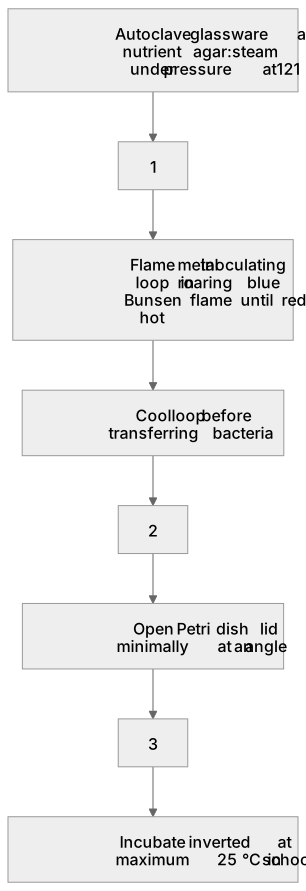
1Box 1
2Box 2
3Box 3
There is more to this lesson
The full lesson goes on to check your understanding and help you earn the marks. Create a free account to carry on, with your progress saved.
A week of Premium from your first lesson · Then the free plan continues · No card, no charge
Test your understanding of Monitoring and maintaining health: explain the aseptic techniques used in culturing organisms (to include: use of alcohol, flaming, autoclaving of glassware and growth media, and measures used to stop contaminants falling onto/into the growth media (e.g. working around a Bunsen burner)) (content found only in the biology separate science qualification)
Active recall beats re-reading. Take an instant quiz now to test what you’ve learned and lock it into long-term memory.
A week of Premium from your first lesson · Then the free plan continues · No card, no charge