OCR · GCSE · Biology
Course version: J247 · Version from Sept 2018
Describe both positive and negative human interactions within ecosystems…
Full specification wording
Monitoring and maintaining the environment: describe both positive and negative human interactions within ecosystems and explain their impact on biodiversity (to include: the conservation of individual species and selected habitats and threats from land use and hunting)
Anthropogenic activities exert powerful positive and negative influences on ecosystems and global biodiversity.
- Point 7 of 9
- 4 key terms
Study notes
From the teaching notes for this specification point.
The idea
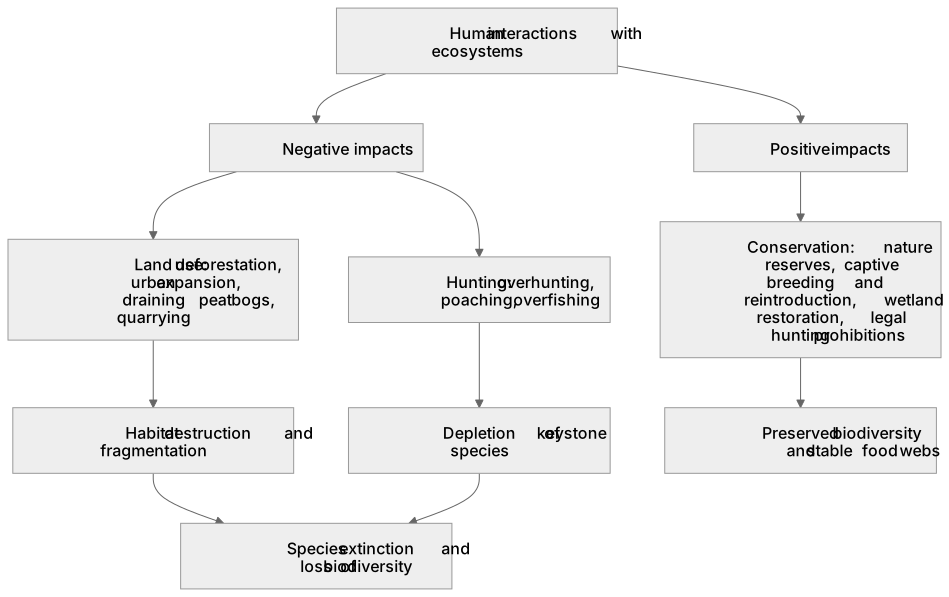
Anthropogenic activities exert powerful positive and negative influences on ecosystems and global biodiversity. Negative impacts stem from intensive land use: deforestation for cattle ranching, urban expansion, draining peat bogs for agriculture, and quarrying destroy natural habitats, fragmenting populations and triggering species extinctions. Overhunting, poaching, and overfishing deplete keystone species, destabilising food webs. Conversely, positive human interactions preserve biodiversity through conservation initiatives, including designating nature reserves, breeding endangered animals in captivity for reintroduction, restoring wetlands, and implementing legal hunting prohibitions.
What earns the marks
- Describe negative human impacts on biodiversity, including habitat destruction from agriculture, deforestation, and urban sprawl.
- Explain how overhunting, poaching, or overfishing destabilises ecosystems and leads to species extinction.
- Describe positive human conservation strategies, including establishing protected nature reserves, rewilding, and captive breeding programs.
- Explain how protecting keystone species preserves the balance and stability of entire food webs.
Common mistakes and how to put them right
Writing general answers like 'humans pollute the Earth' without naming specific activities like peat bog destruction or deforestation.
Thinking conservation only involves saving single charismatic animals, overlooking habitat preservation.
Exam tips
- Always pair negative human impacts (e.g. land clearing destroying habitats) with positive mitigation measures (e.g. reforestation and nature reserves).
- Explain that peat bog destruction releases stored carbon dioxide while eliminating unique wetland microhabitats.
Try the lesson
The start of the Monitoring and maintaining the environment: describe both positive and negative human interactions within ecosystems and explain their impact on biodiversity (to include: the conservation of individual species and selected habitats and threats from land use and hunting) lesson, made from teaching notes for this specification point.
Have a go first
Which human activity is a positive interaction that helps to conserve a species?
Listen
Anthropogenic activities exert powerful positive and negative influences on ecosystems and global biodiversity. Negative impacts stem from intensive land use: deforestation for cattle ranching, urban expansion, draining peat bogs for agriculture, and quarrying destroy natural habitats, fragmenting populations and triggering species extinctions. Overhunting, poaching, and overfishing deplete keystone species, destabilising food webs. Conversely, positive human interactions preserve biodiversity through conservation initiatives, including designating nature reserves, breeding endangered animals in captivity for reintroduction, restoring wetlands, and implementing legal hunting prohibitions. A strong answer earns marks for these points. Describe negative human impacts on biodiversity, including habitat destruction from agriculture, deforestation, and urban sprawl. Explain how overhunting, poaching, or overfishing destabilises ecosystems and leads to species extinction. Describe positive human conservation strategies, including establishing protected nature reserves, rewilding, and captive breeding programs. Explain how protecting keystone species preserves the balance and stability of entire food webs. Exam tip: Always pair negative human impacts (e.g. land clearing destroying habitats) with positive mitigation measures (e.g. reforestation and nature reserves).
See it
Key words
Say what each word means before you turn the card.
habitat destruction
Try answering aloud or in your head before turning the card.
species conservation
Try answering aloud or in your head before turning the card.
biodiversity preservation
Try answering aloud or in your head before turning the card.
human ecosystem impact
Try answering aloud or in your head before turning the card.
See every definition
- habitat destruction
- Intensive land use such as deforestation, urban expansion, draining peat bogs and quarrying destroys natural habitats, fragmenting populations and triggering species extinctions.
- species conservation
- Positive human interactions preserve biodiversity through initiatives including designating nature reserves, breeding endangered animals in captivity for reintroduction, restoring wetlands and implementing legal hunting prohibitions.
- biodiversity preservation
- Conservation initiatives such as nature reserves, captive breeding for reintroduction, wetland restoration and legal hunting prohibitions preserve biodiversity.
- human ecosystem impact
- Anthropogenic activities exert powerful positive and negative influences on ecosystems and global biodiversity, from land use and hunting to conservation initiatives.
Label the diagram
Some boxes have lost their names. Pick the right name for each number.
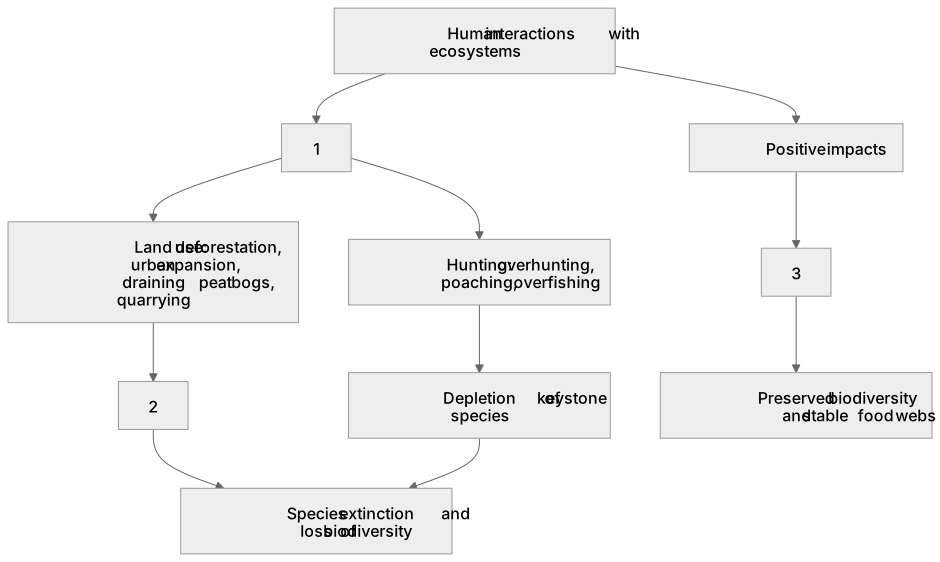
1Box 1
2Box 2
3Box 3
There is more to this lesson
The full lesson goes on to check your understanding and help you earn the marks. Create a free account to carry on, with your progress saved.
A week of Premium from your first lesson · Then the free plan continues · No card, no charge
Test your understanding of Monitoring and maintaining the environment: describe both positive and negative human interactions within ecosystems and explain their impact on biodiversity (to include: the conservation of individual species and selected habitats and threats from land use and hunting)
Active recall beats re-reading. Take an instant quiz now to test what you’ve learned and lock it into long-term memory.
A week of Premium from your first lesson · Then the free plan continues · No card, no charge