OCR · GCSE · Biology
Course version: J247 · Version from Sept 2018
Evaluate the evidence for the impact of environmental changes on the…
Full specification wording
Monitoring and maintaining the environment: evaluate the evidence for the impact of environmental changes on the distribution of organisms, with reference to water and atmospheric gases (content found only in the biology separate science qualification) (Higher tier only)
Environmental changes directly shift the geographical distribution of organisms across terrestrial and aquatic ecosystems.
- Point 9 of 9
- 4 key terms
Study notes
From the teaching notes for this specification point.
The idea
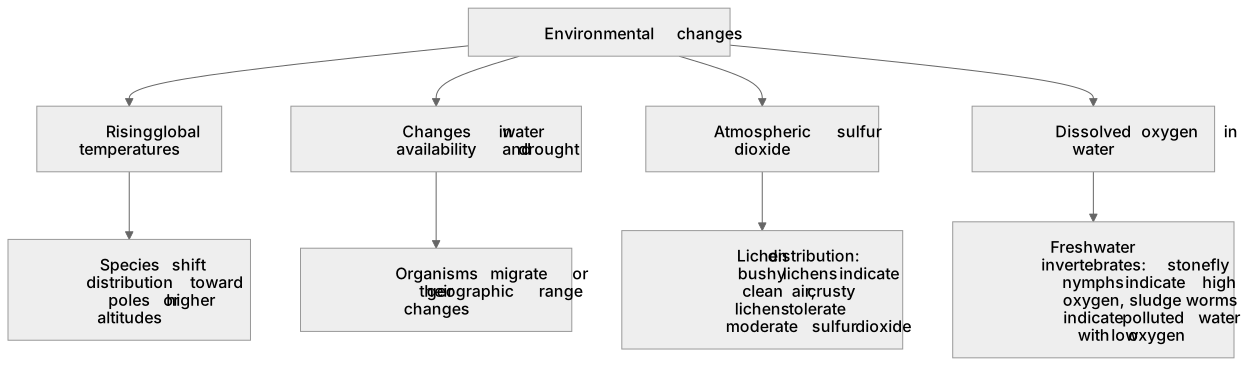
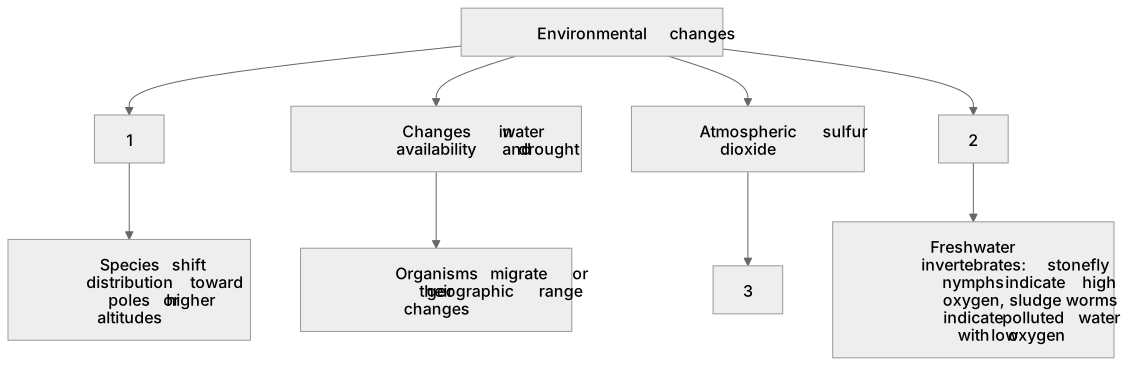
Environmental changes directly shift the geographical distribution of organisms across terrestrial and aquatic ecosystems. Rising atmospheric carbon dioxide and global temperatures induce shifts in species ranges toward polar latitudes or higher altitudes, causing range contractions in alpine species. Water availability patterns, such as prolonged droughts or altered rainfall, drive desertification and force wetland bird and plant populations to migrate or decline. Bioindicator organisms provide biological evidence: lichens reveal atmospheric sulfur dioxide levels, while freshwater invertebrates (such as stonefly nymphs requiring high dissolved oxygen versus sludge worms tolerating depleted oxygen) indicate aquatic organic pollution.
What earns the marks
- Evaluate evidence showing that rising global temperatures cause species to shift their geographic distribution toward poles or higher altitudes.
- Explain how changes in water availability and drought force changes in organism migration and geographic range.
- Describe how atmospheric gases like sulfur dioxide affect lichen distribution as indicator species.
- Explain how dissolved oxygen levels in water determine the distribution of freshwater invertebrate bioindicators such as stonefly nymphs or sludge worms.
Common mistakes and how to put them right
Stating that animals die immediately from small temperature rises, rather than explaining their distribution shifts or migrations.
Confusing lichens (indicators of air pollution like sulfur dioxide) with water bioindicators (like bloodworms or stonefly nymphs).
Exam tips
- Specify indicator species clearly: bushy lichens indicate clean air, crusty lichens tolerate moderate sulfur dioxide; stonefly nymphs indicate high oxygen, sludge worms indicate polluted water with low oxygen.
- Evaluate data by linking changes in abiotic measurements (temperature, dissolved oxygen) directly to biological distribution.
Try the lesson
The start of the Monitoring and maintaining the environment: evaluate the evidence for the impact of environmental changes on the distribution of organisms, with reference to water and atmospheric gases (content found only in the biology separate science qualification) (Higher tier only) lesson, made from teaching notes for this specification point.
Have a go first
A river receives warm water from a factory. Surveys show that a fish species is found further downstream than before. Which conclusion is best supported by this evidence?
Listen
Environmental changes directly shift the geographical distribution of organisms across terrestrial and aquatic ecosystems. Rising atmospheric carbon dioxide and global temperatures induce shifts in species ranges toward polar latitudes or higher altitudes, causing range contractions in alpine species. Water availability patterns, such as prolonged droughts or altered rainfall, drive desertification and force wetland bird and plant populations to migrate or decline. Bioindicator organisms provide biological evidence: lichens reveal atmospheric sulfur dioxide levels, while freshwater invertebrates (such as stonefly nymphs requiring high dissolved oxygen versus sludge worms tolerating depleted oxygen) indicate aquatic organic pollution. A strong answer earns marks for these points. Evaluate evidence showing that rising global temperatures cause species to shift their geographic distribution toward poles or higher altitudes. Explain how changes in water availability and drought force changes in organism migration and geographic range. Describe how atmospheric gases like sulfur dioxide affect lichen distribution as indicator species. Explain how dissolved oxygen levels in water determine the distribution of freshwater invertebrate bioindicators such as stonefly nymphs or sludge worms. Exam tip: Specify indicator species clearly: bushy lichens indicate clean air, crusty lichens tolerate moderate sulfur dioxide; stonefly nymphs indicate high oxygen, sludge worms indicate polluted water with low oxygen.
See it
Key words
Say what each word means before you turn the card.
environmental change
Try answering aloud or in your head before turning the card.
species distribution shifts
Try answering aloud or in your head before turning the card.
bioindicator species
Try answering aloud or in your head before turning the card.
atmospheric gases and water availability
Try answering aloud or in your head before turning the card.
See every definition
- environmental change
- A change that directly shifts the geographical distribution of organisms across terrestrial and aquatic ecosystems.
- species distribution shifts
- Movements of species ranges toward polar latitudes or higher altitudes, with range contractions in alpine species, caused by rising atmospheric carbon dioxide and global temperatures.
- bioindicator species
- Organisms that provide biological evidence, such as lichens revealing atmospheric sulfur dioxide levels or freshwater invertebrates indicating aquatic organic pollution.
- atmospheric gases and water availability
- Conditions whose changes affect organisms, with sulfur dioxide affecting lichen distribution and drought or altered rainfall forcing migration and geographic range changes.
Label the diagram
Some boxes have lost their names. Pick the right name for each number.
1Box 1
2Box 2
3Box 3
There is more to this lesson
The full lesson goes on to check your understanding and help you earn the marks. Create a free account to carry on, with your progress saved.
A week of Premium from your first lesson · Then the free plan continues · No card, no charge
Test your understanding of Monitoring and maintaining the environment: evaluate the evidence for the impact of environmental changes on the distribution of organisms, with reference to water and atmospheric gases (content found only in the biology separate science qualification) (Higher tier only)
Active recall beats re-reading. Take an instant quiz now to test what you’ve learned and lock it into long-term memory.
A week of Premium from your first lesson · Then the free plan continues · No card, no charge