OCR · GCSE · Biology
Course version: J247 · Version from Sept 2018
Respiration: describe cellular respiration as an exothermic reaction
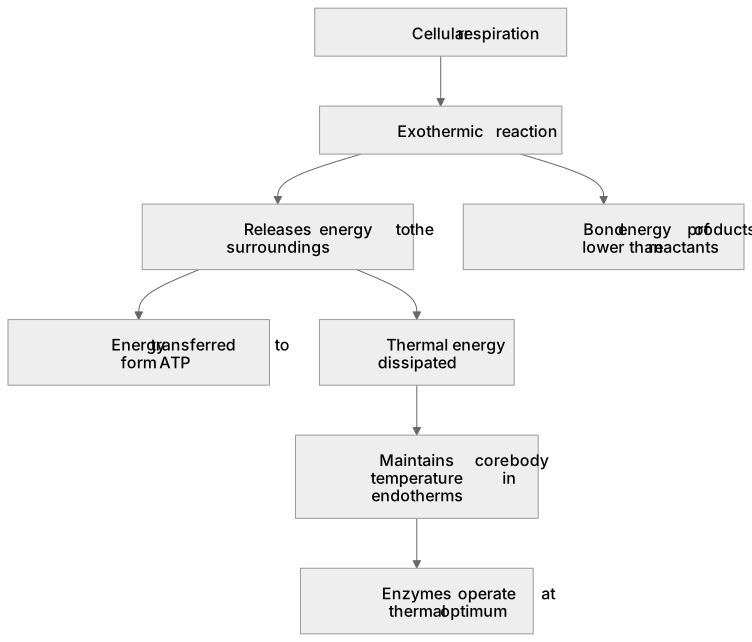
Cellular respiration is classified chemically as an exothermic reaction because the total bond energy of the products is lower than that of the reactants, resulting in a net transfer of energy to…
- Point 2 of 6
- 4 key terms
Study notes
From the teaching notes for this specification point.
The idea
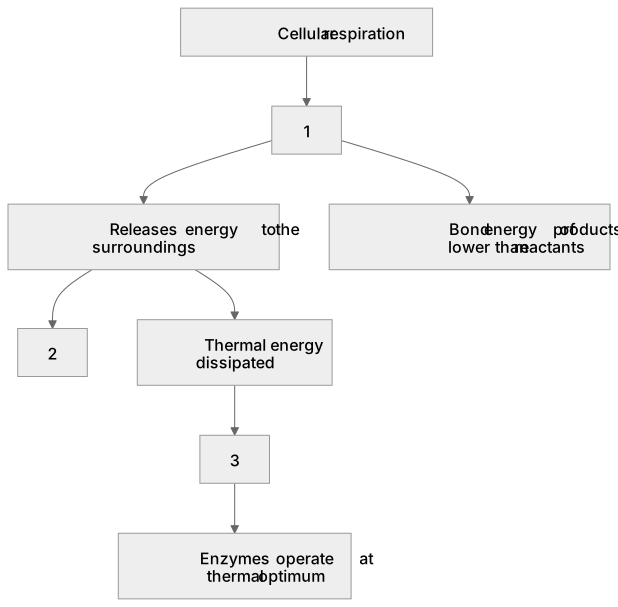
Cellular respiration is classified chemically as an exothermic reaction because the total bond energy of the products is lower than that of the reactants, resulting in a net transfer of energy to the cellular surroundings. As chemical bonds within glucose are dismantled, energy is transferred to form ATP molecules, while a substantial portion is dissipated as thermal energy. In endothermic animals such as mammals and birds, this released heat is essential for maintaining a constant internal core body temperature independent of external environmental fluctuations, enabling metabolic enzymes to operate at their thermal optimum.
What earns the marks
- Defining cellular respiration as exothermic because it releases energy to the surroundings.
- Explaining that bond energy released forming products exceeds bond energy required to break reactants.
- Stating that thermal energy dissipated during respiration maintains homeostatic body temperature in endotherms.
Common mistakes and how to put them right
Calling respiration endothermic because it requires activation energy or enzymes to begin.
Failing to recognize that heat dissipation is a natural consequence of the exothermic nature of respiration.
Exam tips
- Pair the terms: Photosynthesis is endothermic (absorbs light), while Respiration is exothermic (releases energy).
- Connect the exothermic release of heat to thermoregulation in warm-blooded organisms.
Try the lesson
The start of the Respiration: describe cellular respiration as an exothermic reaction lesson, made from teaching notes for this specification point.
Have a go first
Which statement best describes cellular respiration?
Listen
Cellular respiration is classified chemically as an exothermic reaction because the total bond energy of the products is lower than that of the reactants, resulting in a net transfer of energy to the cellular surroundings. As chemical bonds within glucose are dismantled, energy is transferred to form ATP molecules, while a substantial portion is dissipated as thermal energy. In endothermic animals such as mammals and birds, this released heat is essential for maintaining a constant internal core body temperature independent of external environmental fluctuations, enabling metabolic enzymes to operate at their thermal optimum. A strong answer earns marks for these points. defining cellular respiration as exothermic because it releases energy to the surroundings. explaining that bond energy released forming products exceeds bond energy required to break reactants. stating that thermal energy dissipated during respiration maintains homeostatic body temperature in endotherms. Exam tip: Pair the terms: Photosynthesis is endothermic (absorbs light), while Respiration is exothermic (releases energy).
See it
Key words
Say what each word means before you turn the card.
exothermic reaction
Try answering aloud or in your head before turning the card.
energy transfer
Try answering aloud or in your head before turning the card.
thermal energy
Try answering aloud or in your head before turning the card.
homeostasis
Try answering aloud or in your head before turning the card.
See every definition
- exothermic reaction
- Cellular respiration is classified chemically as this because the total bond energy of the products is lower than that of the reactants.
- energy transfer
- A net transfer of energy to the cellular surroundings results from the products having lower total bond energy than the reactants.
- thermal energy
- A substantial portion of the energy released during respiration is dissipated in this form.
- homeostasis
- In endothermic animals, released heat maintains a constant internal core body temperature independent of external environmental fluctuations.
Label the diagram
Some boxes have lost their names. Pick the right name for each number.
1Box 1
2Box 2
3Box 3
There is more to this lesson
The full lesson goes on to check your understanding and help you earn the marks. Create a free account to carry on, with your progress saved.
A week of Premium from your first lesson · Then the free plan continues · No card, no charge
Test your understanding of Respiration: describe cellular respiration as an exothermic reaction
Active recall beats re-reading. Take an instant quiz now to test what you’ve learned and lock it into long-term memory.
A week of Premium from your first lesson · Then the free plan continues · No card, no charge